Discover flattering haircuts and dimensional hair color ideas for women over 50, from silver blending to warm balayage and volume tips
Hair advice aimed at women over 50 too often defaults to a short list of “safe” options, as though the goal is simply to minimize risk rather than actually look and feel good. The reality is this age group has more genuine styling range than that narrow framing suggests — from rich, dimensional color work to cuts that add movement and shine without requiring hours of daily maintenance.
What tends to shift most at this stage isn’t what looks good, but what’s realistic to maintain — texture, density, and porosity all change gradually, and the most flattering results usually come from working with those changes rather than styling as though nothing is different. That’s a very different conversation than “appropriate” versus “inappropriate,” and it opens up far more options than the usual short list suggests.
This guide covers the cuts, colors, and styling techniques that are actually working well for women over 50 right now, organized around what tends to matter most at this stage: manageable maintenance, flattering shape, and color that looks intentional rather than an attempt to erase the years..
Flattering Cuts Worth Considering
The Long Layered Bob — Sitting just above or at the shoulders with soft, blended layers, this cut adds movement around the face while remaining low-maintenance enough for daily styling. It’s frequently recommended as a starting point for anyone transitioning from very long hair, since it keeps meaningful length while immediately adding shape and body.
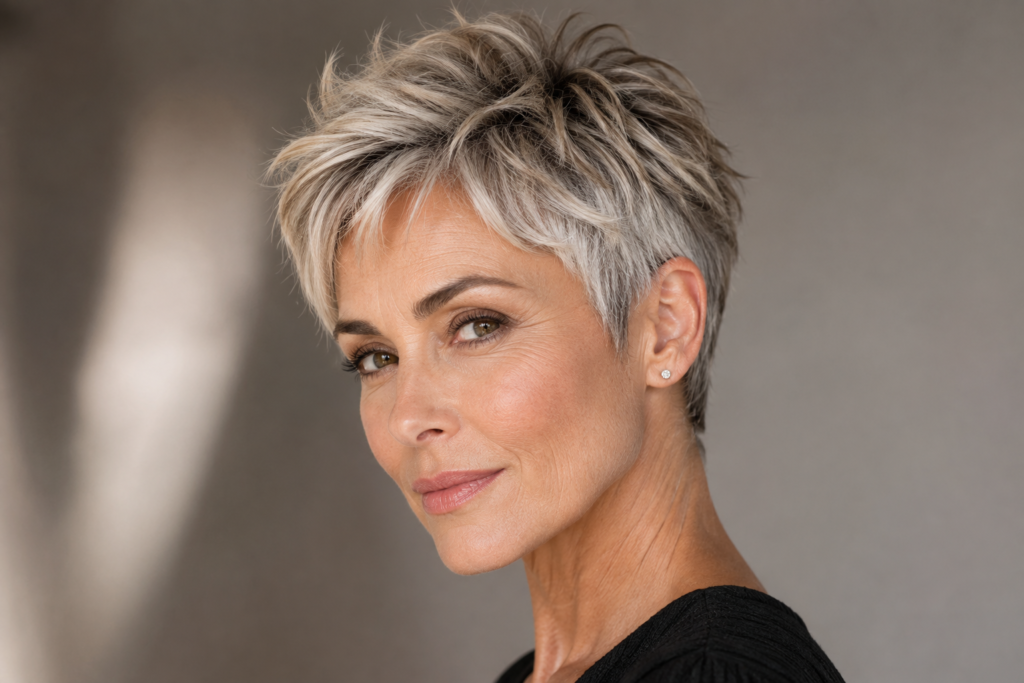
The Textured Pixie — For those wanting a shorter, lower-maintenance option, a textured pixie with a bit of length on top offers versatility between sleek and tousled styling. The extra length on top gives it more range than a traditional close-cropped pixie, allowing it to be styled slightly differently day to day.
The Shoulder-Length Shag — Soft, choppy layers throughout add volume and movement, particularly useful for hair that has become finer over time and benefits from the illusion of added density. The shag’s uneven layering also tends to hide the natural thinning that can occur at the ends better than a one-length cut.
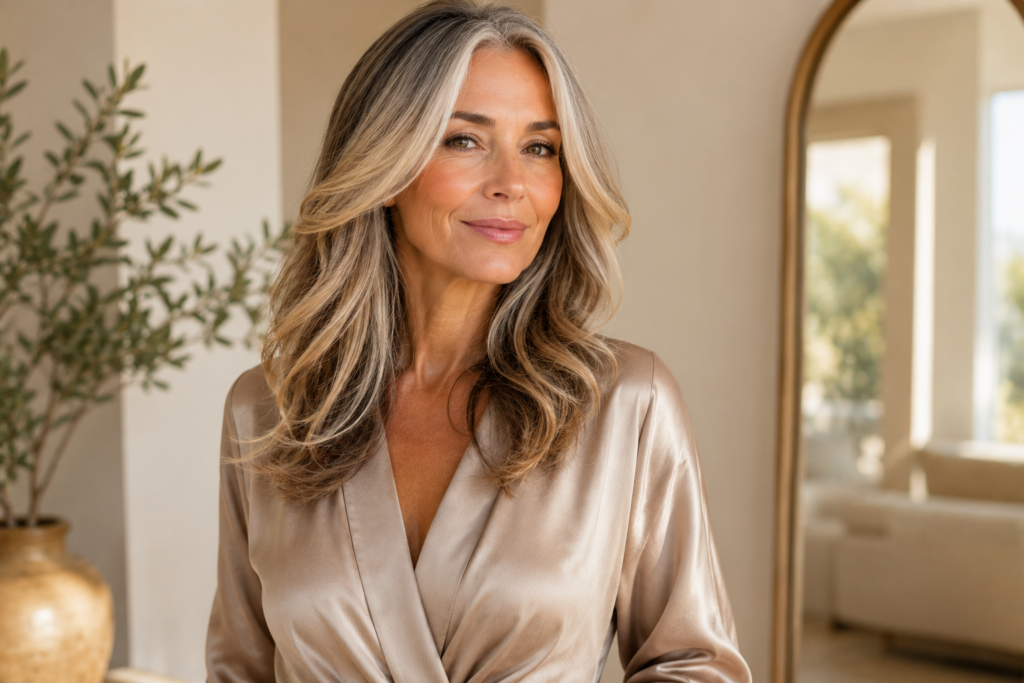
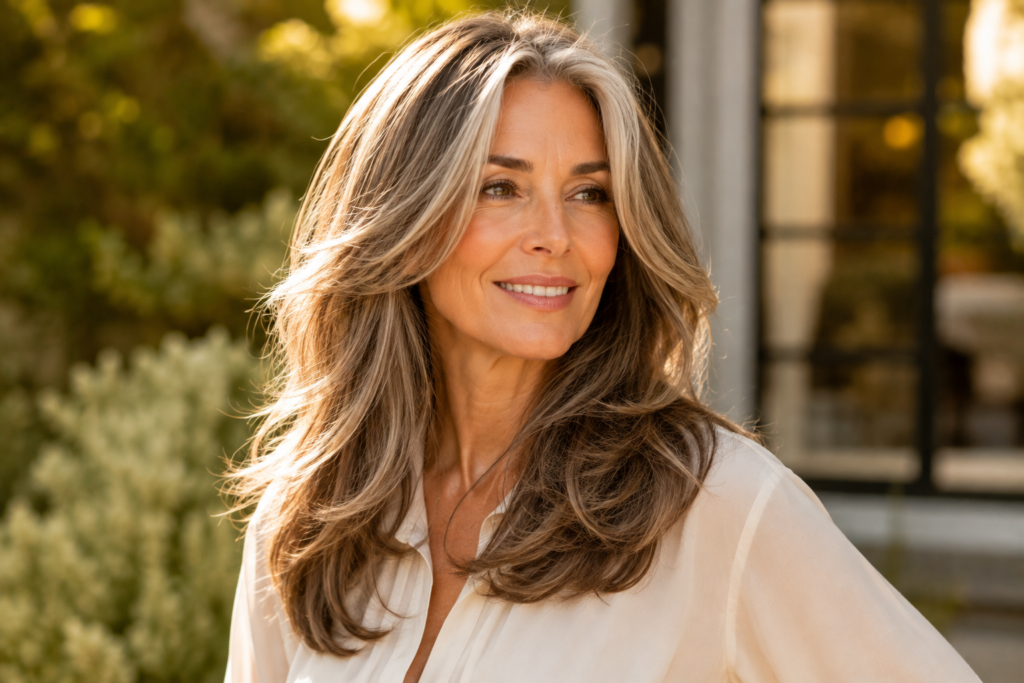
The Classic Long Layers — For those keeping length, incorporating soft layers throughout prevents hair from looking heavy or flat, especially as texture and density naturally shift with age. Layers concentrated from the cheekbone down tend to work best here, adding movement without removing so much weight that the ends look wispy.
The Angled Bob — A bob cut slightly longer in the front and shorter in the back adds a subtle, modern asymmetry that also happens to be flattering for softening a rounder jawline. It requires a bit more precision at cutting time but very little extra daily styling effort once it’s shaped.
The Soft Curly Crop — For those with naturally curly or wavy hair, a shorter, curl-shaped cut that works with the natural pattern rather than fighting it tends to look fuller and more current than trying to straighten or heavily style curls into a different shape.
Color Options That Add Dimension
Silver and Gray Blending — Rather than fighting natural gray, many are choosing to blend it intentionally with lighter face-framing pieces, creating a soft, cohesive transition rather than a stark contrast. This approach also tends to grow out more gracefully than trying to cover gray completely, since the blended pieces soften the regrowth line.
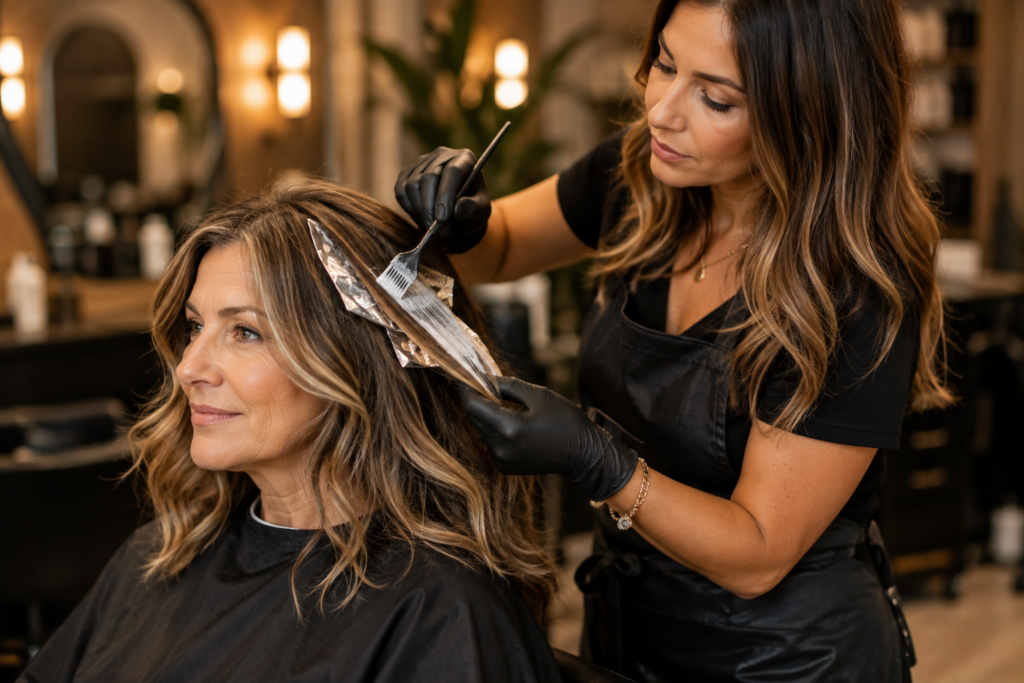
Warm Balayage — Hand-painted, dimensional color in warm caramel or honey tones adds richness and brightness around the face without requiring a full base color change or frequent root touch-ups. Because the color is painted on rather than applied uniformly from the root, the regrowth is far less noticeable than with traditional foil highlights.
Rich, Warm Brunette — A deep, warm brunette base can add fullness and depth, particularly flattering for those wanting to avoid the sometimes harsh look of very dark, flat single-process color. Adding a few lighter babylights around the face keeps a deep brunette from looking one-dimensional or overly severe.
Soft Copper Tones — A subtler take on red, soft copper adds warmth and vibrancy against most skin tones without the higher maintenance of a full vivid red. Copper does tend to fade faster than other tones, so a color-safe shampoo and periodic gloss treatments help maintain the vibrancy between full color appointments.
Champagne and Cool Blonde — A softer, cooler blonde with subtle silver undertones has become a popular alternative to warmer golden blondes, particularly for those with naturally cooler skin undertones or hair that’s already carrying a fair amount of natural gray.
Tortoiseshell Dimension — A multi-tonal technique that blends warm and cool pieces together, tortoiseshell color creates depth and movement that catches the light differently depending on how the hair falls, making it a particularly good option for anyone wanting color that looks different from multiple angles.
Styling Techniques for Volume and Shine
As hair density and texture naturally shift over time, a few styling adjustments help maintain a fuller, healthier-looking result. A volumizing mousse applied at the roots before blow-drying helps counteract any thinning at the crown, particularly when the hair is dried with the head tipped forward to maximize lift before the style is set.
A round brush used while blow-drying adds lift and bounce, particularly effective on layered cuts. Working section by section, rather than trying to dry the whole head at once, tends to produce a more even, longer-lasting result.
Finishing with a lightweight, shine-boosting serum rather than a heavier oil helps hair look glossy without appearing weighed down or flat. A small amount applied to the mid-lengths and ends, avoiding the roots, keeps shine from tipping into greasy-looking buildup by the end of the day.
For those noticing more scalp visibility than before, a root-concealing powder or spray applied at the part line can immediately add the appearance of density in photos and in person, without requiring any change to the cut or color itself.
Caring for Hair as Texture and Density Change
Hair tends to become drier and more porous over time, which means products and routines that worked well in earlier decades don’t always deliver the same results now. A moisture-focused shampoo and conditioner, rather than a volumizing formula that can be drying, tends to strike a better balance for most hair in this stage. Incorporating a weekly deep conditioning treatment helps offset the dryness that comes with both natural aging and any color processing.
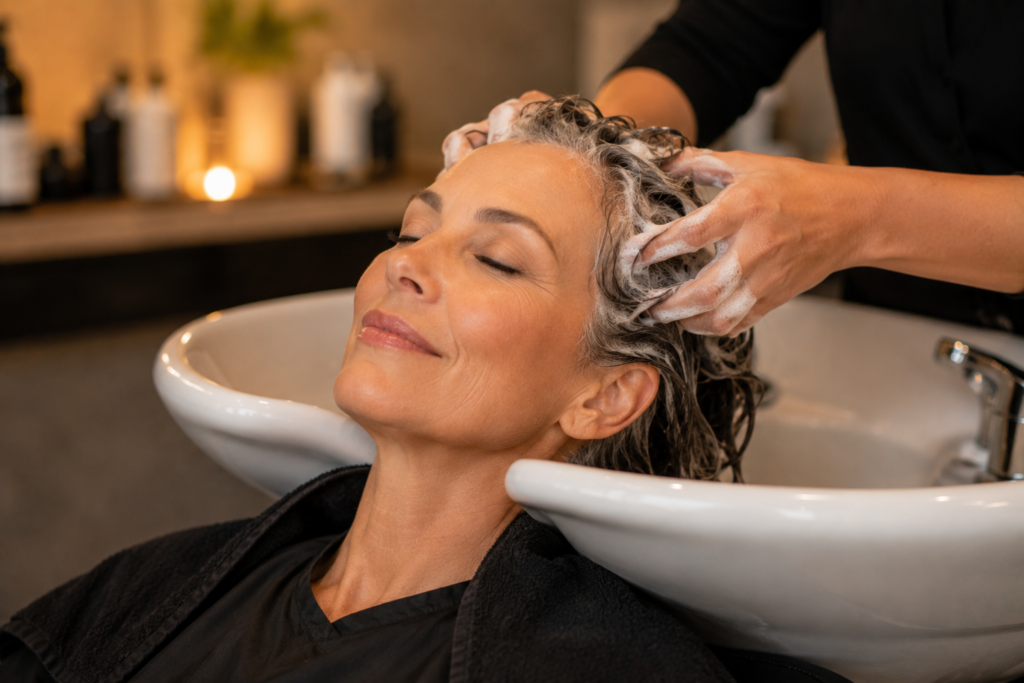
Scalp health also plays a bigger role in overall hair appearance than many people realize. A gentle scalp massage during shampooing, or a dedicated scalp serum for those noticing thinning, can support the health of the hair follicle itself over time, even though results are gradual rather than immediate.
Regular trims, generally every six to eight weeks, matter more for texture-heavy cuts like the shag or textured pixie than for simpler shapes like the classic bob, since these styles rely on crisp layering to maintain their look.
Choosing What’s Right for Your Hair and Lifestyle
For Low-Maintenance Priorities, a textured pixie or a balayage color that grows out gracefully without harsh root lines tends to require the least frequent salon visits.
For Those Wanting Maximum Versatility, the long layered bob offers the widest range of styling options, from sleek and polished to loose and textured, without committing to a shorter length.
For Those Embracing Natural Gray, working with a stylist on strategic blending rather than attempting a single dramatic transition tends to produce a smoother, more flattering result over time.
For Those Prioritizing Hair Health Above All, minimizing chemical processing frequency and choosing techniques like balayage or babylights that concentrate color away from the root and scalp helps reduce cumulative stress on hair that may already be more fragile than it once was.
Final Thoughts
The most flattering hairstyles and colors for women over 50 aren’t defined by a fixed set of “appropriate” options they’re defined by what actually works with your hair’s current texture, density, and natural color, styled with intention rather than caution. Whether that means embracing silver, adding warm dimensional color, or choosing a cut that adds movement and body, the goal is a look that feels current and genuinely like you, not a compromise. The common thread across every option in this guide is working with your hair as it actually is right now, rather than styling around it or trying to disguise it entirely.
Frequently Asked Questions (FAQ)
Q1: Does hair really need to be cut shorter as we age? Not necessarily — while some prefer shorter styles for ease of maintenance, longer hair with the right layering can look just as healthy and flattering, provided it’s cared for well.
Q2: What’s the best way to transition to gray hair without a jarring in-between phase? Working with a colorist on strategic silver blending or a gradual lowlight process tends to smooth the transition far more than simply letting hair grow out untouched.
Q3: Are warmer or cooler hair colors generally more flattering after 50? This depends heavily on individual skin tone rather than age alone, though warmer tones like caramel and copper tend to counteract the sometimes duller complexion changes that can occur over time.
Q4: How can thinning hair be disguised without extensions? Strategic layering, a volumizing styling routine, and sometimes a slightly shorter cut can all help create the appearance of fuller, denser hair without added extensions.
Q5: Is balayage a good option for those who don’t want frequent salon visits? Yes, balayage is specifically designed to grow out gracefully without an obvious root line, making it one of the lower-maintenance coloring techniques available.
Q6: What haircut works best for very fine hair as it thins with age? A blunt or slightly textured bob tends to create the appearance of more density than very long layers, which can make fine hair look even sparser at the ends.
Q7: Does hair care routine need to change significantly at this stage? Yes, generally — shifting toward more moisture-focused products, regular deep conditioning, and gentler scalp care tends to serve hair better than routines built around oilier or coarser hair from earlier decades.
Q8: How often should color-treated hair be trimmed to stay healthy? Every six to eight weeks is a reasonable baseline, though hair that’s more heavily processed or prone to dryness may benefit from slightly more frequent trims to prevent split ends from traveling further up the shaft.