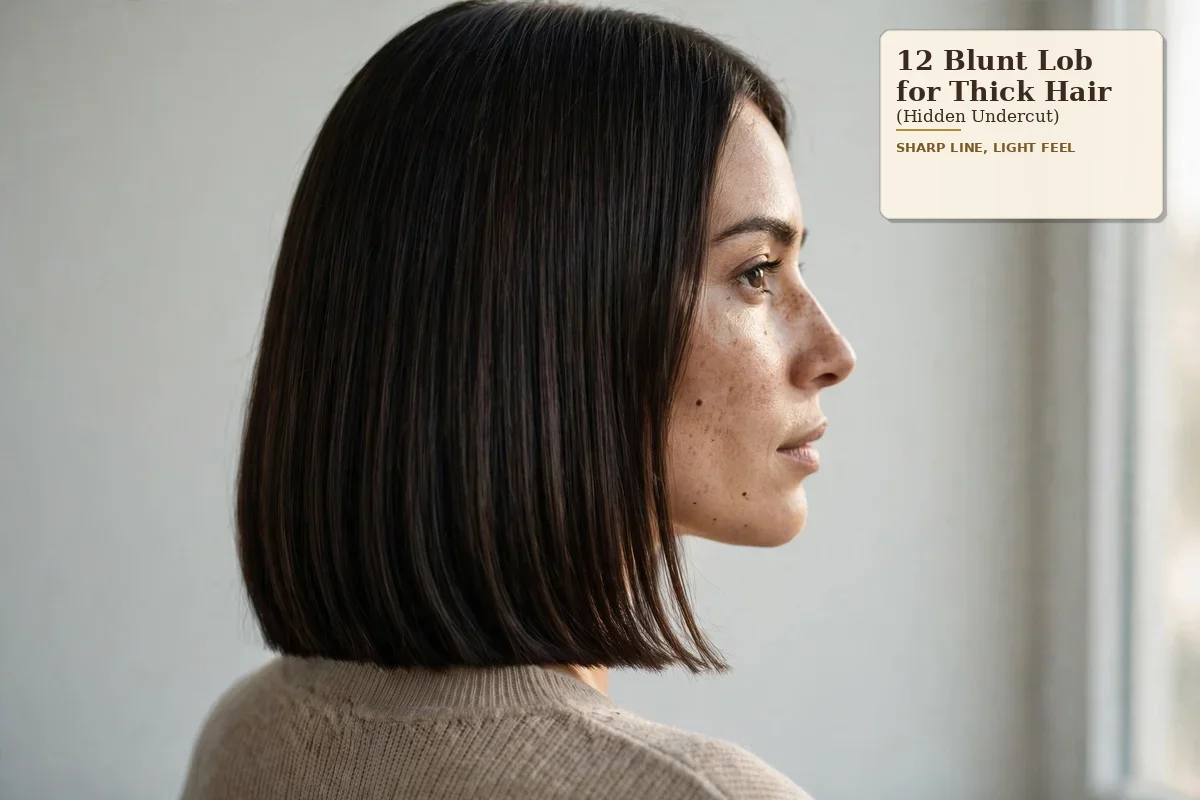
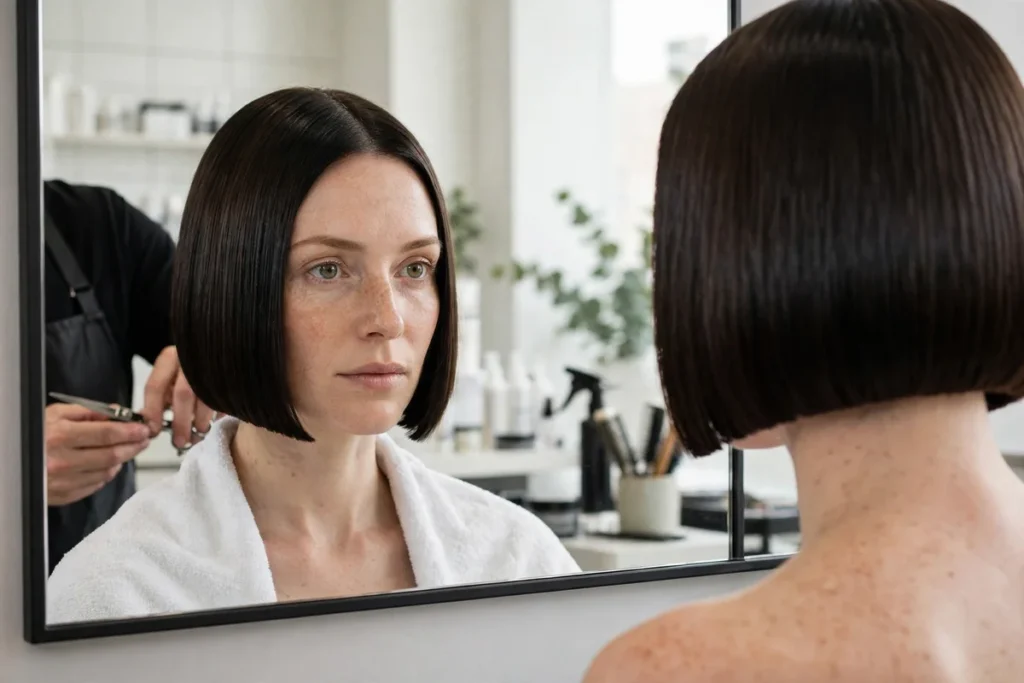
A blunt lob for thick hair with a hidden undercut is a collarbone-grazing, one-length cut where a small section at the nape or underneath is clippered short and covered by the longer hair above. It suits women with thick, dense, straight to wavy hair who love a crisp edge but are tired of the triangle shape that bulk creates in a blunt lob for thick hair. Because the weight is removed from underneath, the lob sits flat and sleek instead of puffing out at the ends. The honest caveat: the shorter section can show when you wear your hair up, so it is not ideal if ponytails and buns are your daily default.
The 12 ideas below are organised from the foundations to the finishing touches. Ideas 1 to 4 explain how the cut works, from nape and underlayer placement to clipper lengths. Ideas 5 to 8 cover styling, from sleek and bent finishes to a deep side part and curtain bangs. Ideas 9 to 12 deal with colour, wearing it up, grow-out and upkeep. Every blunt lob for thick hair in this list works the same way, by removing weight underneath so the sharp line on top can shine. Mix details as you like, and always discuss the undercut with your stylist before any clippers come out, because the right size depends on your density, growth pattern and lifestyle.
Table of Contents
- The Classic Nape Undercut Blunt Lob for Thick Hair
- The Underlayer Panel Lob
- The Soft Guard Lob
- The Weight-Release Lob for Very Dense Hair
- The Glass-Sleek Straight Lob
- The Slight Bend Lob
- The Deep Side Part Lob
- The Curtain Bang Lob
- The Colour-Pop Peek Lob
- The Half-Up Reveal Lob
- The Grow-Out Friendly Lob
- The Six-to-Eight Week Maintenance Lob
1. The Classic Nape Undercut Blunt Lob for Thick Hair
The nape undercut is the simplest way to start a blunt lob for thick hair. The stylist clips a small, low section across the back of the neck, roughly two to three fingers tall, and leaves everything above it long to fall over the top. That single change removes the densest layer of hair, so the blunt hem lands neatly on your shoulders rather than flipping out. It suits thick straight or wavy hair, oval and heart-shaped faces, and anyone who wants a polished office look with a quiet secret. Ask your stylist to keep the clipped patch narrow and well below the crown. Show a photo of the back view, because that is where this cut lives.
How to wear it: Blow-dry with a paddle brush and a light heat protectant spray for a smooth, flat finish on your blunt lob for thick hair.
2. The Underlayer Panel Lob
Instead of only the nape, this blunt lob for thick hair clips a wider horizontal panel beneath the top layer, running from ear to ear at the back. It releases far more bulk, which makes it a favourite for very thick, coarse or high-density hair that still feels bulky after thinning shears. The top layer, usually the upper half of the head, stays fully intact and acts like a curtain, so nothing shows when the hair is down. It works on round and square faces because the slimmer sides sit closer to the jaw. Ask your stylist to section carefully and leave a clear border between clipped and uncut hair, so regrowth stays tidy.
How to wear it: Use a lightweight smoothing cream on damp hair, then air-dry or blow-dry your blunt lob for thick hair straight.
3. The Soft Guard Lob
Not everyone wants a dramatic shave, and you really do not need one. A soft guard version of a blunt lob for thick hair uses a longer clipper attachment, typically a number three to a number five, so the underneath section is short but still has some length rather than skin-close stubble. That makes it far gentler on the eye if it ever peeks out, and far easier to grow out. It is ideal for first-timers, professional workplaces and women over forty who want lighter hair without a statement. Ask your stylist to start with a longer guard and go shorter at the next visit if you love the result. You can always take more off, never add it back.
How to wear it: Finish with a few drops of shine serum on the ends of your blunt lob for thick hair for a glossy hem.
4. The Weight-Release Lob for Very Dense Hair
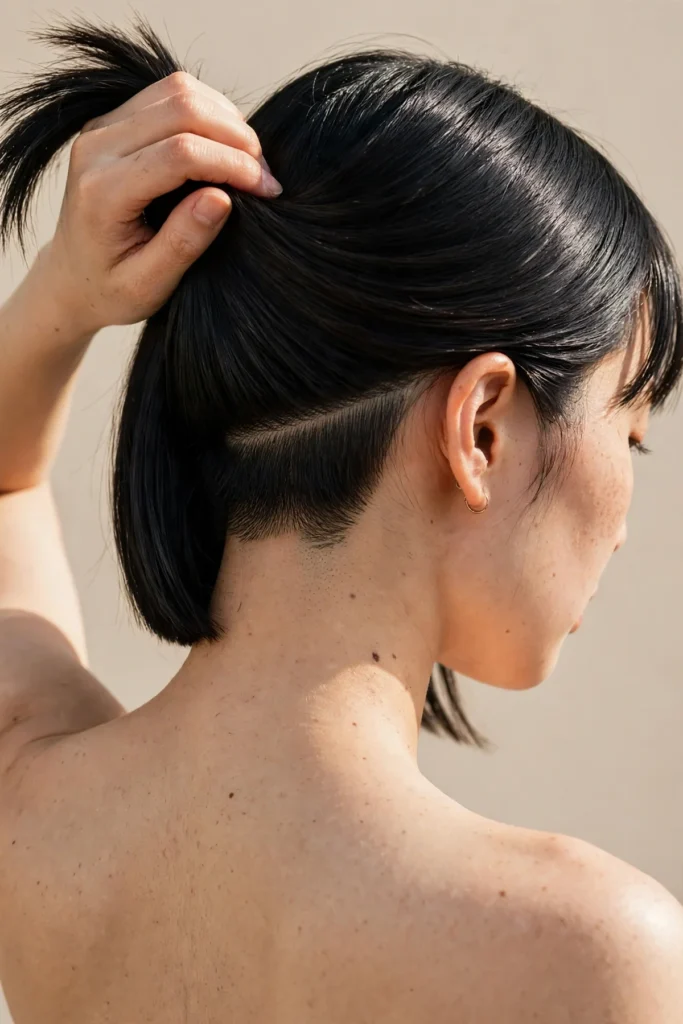
If your hair is thick enough to feel like a helmet at the ends, this blunt lob for thick hair targets weight where it builds up most. The stylist clips a narrow channel behind each ear and across the lower back, then blends it into the longer hair above with a soft transition rather than a hard line. The blunt perimeter stays untouched, so you keep that strong, expensive-looking edge. It suits Afro-textured hair stretched straight, thick Asian hair and heavy Mediterranean waves, and works well for hot climates where bulk traps heat. Ask your stylist to check the weight by lifting sections and letting them drop, adjusting the clipped area until the hem collapses flat.
How to wear it: Prep with a volumising-free, smoothing shampoo and keep conditioner to the mid-lengths of your blunt lob for thick hair.
5. The Glass-Sleek Straight Lob
This is the purest expression of the cut: a blunt lob for thick hair that is dead-straight, mirror-shiny and cut in one length at the collarbone. With the weight removed underneath, thick hair finally falls straight down instead of fanning out, which is why the undercut matters most on this look. It flatters oval, long and diamond faces, suits corporate settings and evening events, and photographs beautifully. It does need confident, even cutting, so book with a stylist comfortable with precision haircuts. Ask for the line to be cut dry or with minimal tension, so the final length does not jump up after drying. Skip heavy layers entirely.
How to wear it: Flat-iron small sections of your blunt lob for thick hair once at a medium temperature, then add a thin coat of anti-frizz serum.
6. The Slight Bend Lob
A gentle bend, with ends tucked slightly under or turned just a touch out, makes the blunt lob for thick hair feel relaxed and modern. The hidden undercut keeps the curve neat because it removes the lumpy density that makes thick hair kick out unpredictably. This look suits wavy and slightly textured hair, round faces that like a softer line, and women who dislike fussy styling. Ask your stylist to cut the hem a touch longer at the front so the bend frames your jaw. Remember the underneath stays short, so curling is easiest when you work with the top layer only and leave the clippered section alone.
How to wear it: Use a one-inch curling iron on the ends of your blunt lob for thick hair only, then loosen with your fingers.
7. The Deep Side Part Lob
A deep side part sweeps a heavy curtain of hair across one side of the face, which makes it the perfect partner for a blunt lob for thick hair with a hidden undercut. The extra hair on the heavier side gives you more coverage, so the clippered area is even better concealed, while the lighter side looks sleek and tucked behind the ear. It flatters square, round and heart-shaped faces, adds instant lift at the root, and works for work meetings and cocktail evenings alike. Ask your stylist to cut your lob with your natural parting in mind, and to place the undercut on the side opposite your usual sweep so it stays hidden.
How to wear it: Part your blunt lob for thick hair on damp hair, then blow-dry the root away from the part for lift.
8. The Curtain Bang Lob
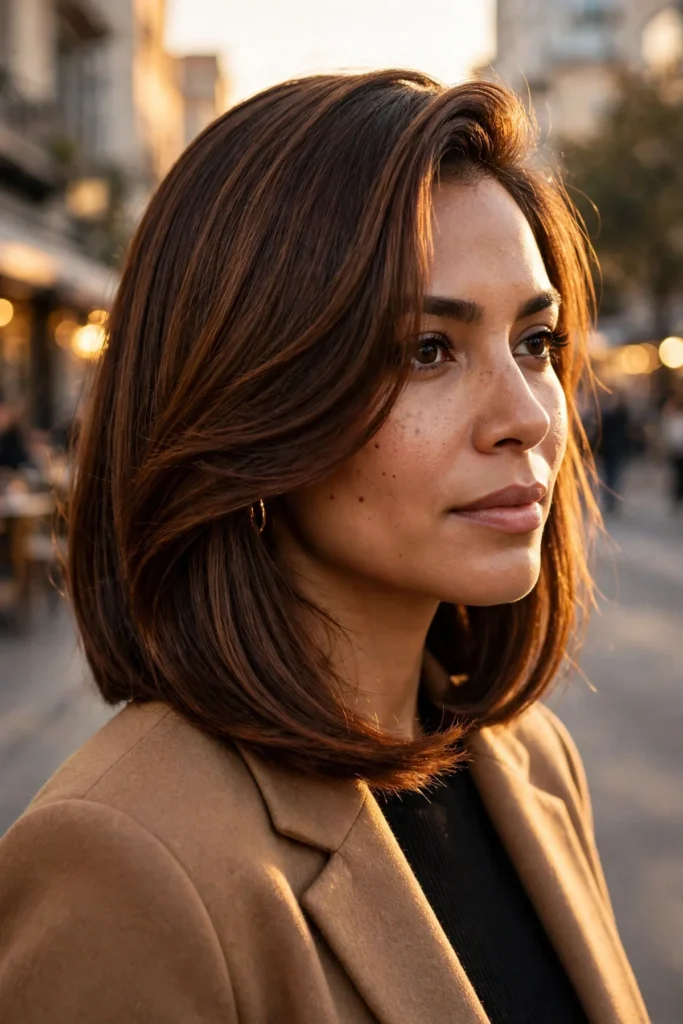
Curtain bangs split in the middle and sweep to either side, blending into the blunt lob for thick hair for a soft, face-framing finish. On thick hair, the fringe can feel heavy, but because the bulk beneath has been cleaned out, the whole shape reads lighter and more balanced. This look suits oval, long and heart faces, helps soften a strong forehead, and works for women who want something fresh without a full blunt fringe. Ask your stylist to cut the bangs slightly longer than you think, around cheekbone to chin, and to blend them into the lob rather than leaving a hard shelf. Trims between visits are usually quick and affordable.
How to wear it: Dry the bangs of your blunt lob for thick hair first with a small round brush, flipping each side outward.
9. The Colour-Pop Peek Lob
For a playful twist on a blunt lob for thick hair, you can colour the clippered section, though your hair needs to be healthy first. Deep violet, copper or soft rose underneath looks subtle when the lob is down and flashes through when you tuck, flip or tie the hair. It suits creative careers, festivals, weekends and anyone with naturally dark hair who wants a hint of personality. On the top layer, a rich chocolate, espresso or glossy black keeps the blunt line looking crisp. Ask your stylist to apply colour to the short section only, since shorter hair lifts quickly, and to book a gloss every few weeks for lasting tone.
How to wear it: Use a colour-safe shampoo and rinse in cool water to protect the shade on your blunt lob for thick hair.
10. The Half-Up Reveal Lob
A half-up style is where the undercut peeks out, and on a blunt lob for thick hair it can look intentional and cool if you plan for it. Gather the top section into a small knot or clip, leave the lower hair down, and the clippered area shows as a neat panel at the back. It suits women with a confident, edgy style, particularly with sleek dark or silver tones. Be honest with yourself here: if you wear full ponytails most days, the undercut will show every time, so ask your stylist for a higher, narrower or softer version. A low pony usually hides a nape undercut but a high ponytail never will.
How to wear it: Secure your blunt lob for thick hair with a claw clip or a small hair tie and smooth flyaways with a toothbrush and hairspray.
11. The Grow-Out Friendly Lob
Worried you might change your mind about a blunt lob for thick hair? Plan the grow-out from the start. A soft guard, a narrow area and a gradual blend make regrowth far less awkward than a harsh, close shave. Typical clippered hair needs several months to blend back into the longer layers, so patience and a few strategic trims help. This approach suits women who like to experiment, new mothers, and anyone who changes their look with the seasons. Ask your stylist how they would grow it out before you book the cut, and ask them to avoid a sharp line between short and long so the transition stays soft and neat.
How to wear it: Use a little texture spray to blend the growing section of your blunt lob for thick hair into the longer lengths.
12. The Six-to-Eight Week Maintenance Lob
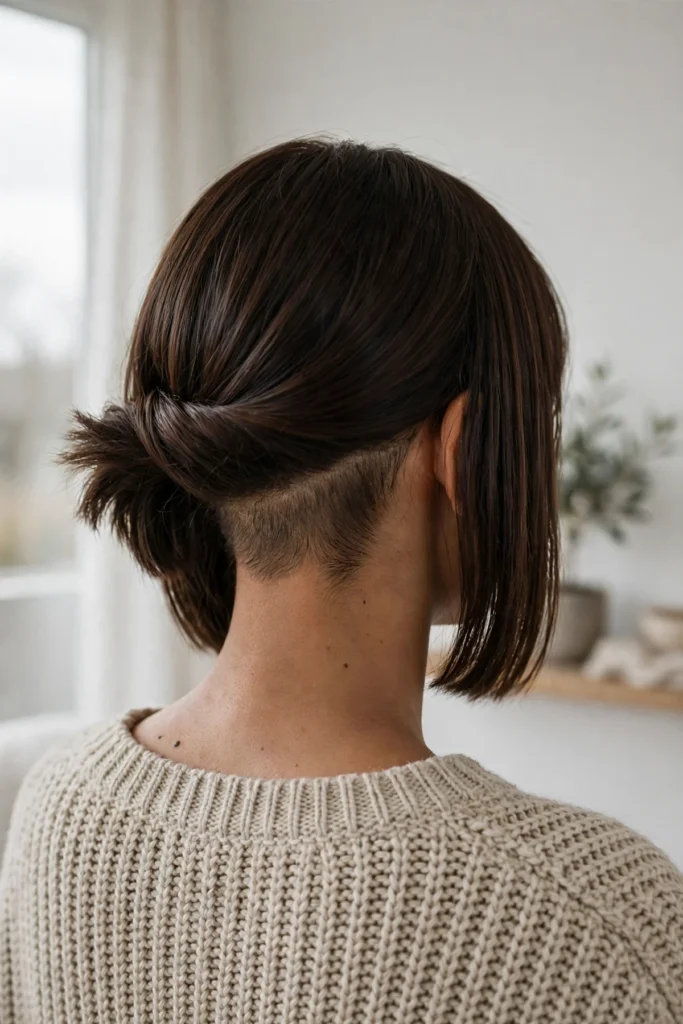
This blunt lob for thick hair is only as good as its upkeep. Blunt lines look best when fresh, and the clippered area grows out noticeably quickly, so plan on a salon visit every six to eight weeks to tidy the hem and refresh the undercut. Between visits, a good stylist can teach you to use a small trimmer at home, though it is wise to leave the edges to a professional. This suits organised women who enjoy a regular salon ritual and want their hair to look expensive year-round. Ask for a rebooking plan at the end of each appointment, and ask whether a quick nape touch-up visit is cheaper than a full cut.
How to wear it: Sleep on a silk pillowcase and use a weekly deep conditioner on the ends of your blunt lob for thick hair.
FAQ
Will a hidden undercut make thick hair thinner?
Yes, in a controlled way. Removing hair from the underlayer takes out volume where thick hair stacks up, so a blunt lob for thick hair lies flatter and the hem looks less triangular. It does not thin the top layer, which stays full. Because it is removed at the root, the effect is more noticeable than thinning shears, and results depend on your density.
Does the undercut show when my hair is down?
Not when it is placed and sized correctly. The longer top layer of a blunt lob for thick hair falls over it, so it is invisible in normal movement. It may peek out in wind, when you tuck hair behind your ears or when you lift your hair for a ponytail. A narrow nape section stays most discreet, and your stylist can adjust the height.
What clipper length is best for a first undercut?
A longer guard, such as a number three to five, is a gentle starting point for a first blunt lob for thick hair with an undercut because it leaves some length and looks softer if it shows. You can always go shorter at the next visit. Guard numbers vary between brands, so describe the look and let your stylist choose. Avoid skin-close lengths until you are sure.
Can I wear a ponytail or bun with this cut?
You can, but the undercut will usually show, especially in a high style. A low ponytail often hides a nape undercut, while a high bun reveals it fully. If you tie your blunt lob for thick hair up most days, ask for a very small or higher-placed section, or consider a classic blunt lob with internal layers instead.
How long does it take to grow out?
It depends on how short it was cut and your growth rate, but expect several months for the clippered area to blend into the longer hair. Hair grows around half an inch a month on average. A soft guard on a blunt lob for thick hair grows out more gracefully, and regular trims help the transition look intentional rather than awkward.
If you love the clean line of this blunt lob for thick hair, you will also like our Italian Bob for Thick Hair, a shorter take on the same sharp shape. For more medium-length ideas, start with our guide to Medium Length Hairstyles for Thick Hair, which explains how a blunt lob for thick hair fits into a full routine. Professional stylists agree the technique works: ARC Scissors ambassador Jack Mead shows how a hidden undercut removes bulk from a blunt bob on thick hair while keeping the one-length line crisp.
A blunt lob for thick hair with a hidden undercut gives thick hair what it has always wanted: all the sharpness of a strong line without the heaviness that spoils it. Whether you choose a narrow nape section, a wider underlayer, a soft guard or a hint of colour, the secret is placement and honest conversation. Talk through your daily routine, especially how often you wear your hair up, before the clippers appear. Bring photos, start gentle, book trims every six to eight weeks, and enjoy a blunt lob for thick hair that looks polished from every angle.
One Comment