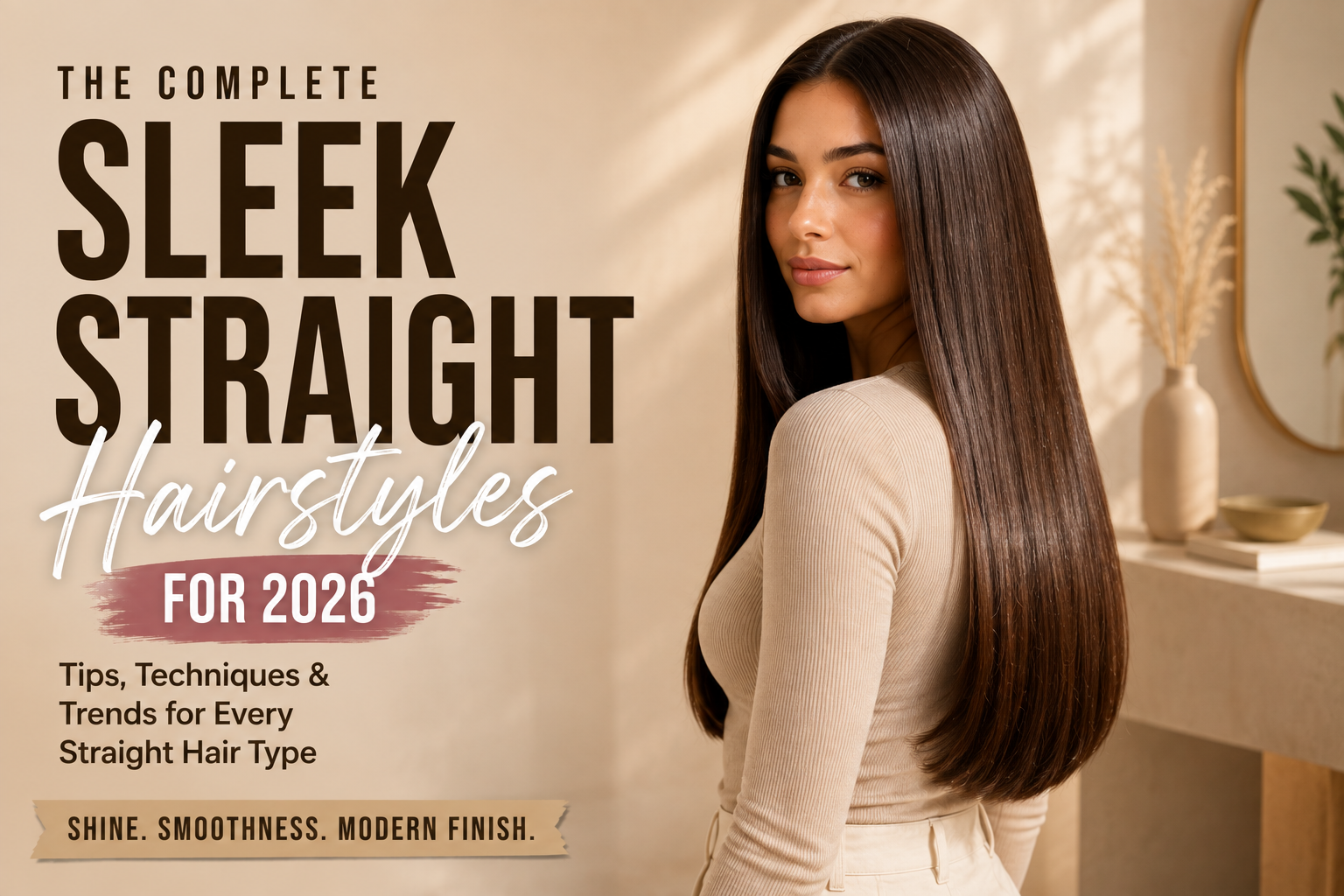
Discover 2026’s sleek straight hairstyle trends, from glass hair shine to soft bend finishes, adapted for short, medium, and long hair.
Straight hair has gone through more reinventions than most trends give it credit for. It’s never really left, but the way it’s being worn in 2026 looks noticeably different from the flat-ironed, single-texture styles of a few years ago. This year’s version leans into shine, subtle movement, and styling techniques that make straight hair feel intentional rather than simply “done,” whatever the length.
What’s changed most isn’t the straightening itself but the finishing. Where straight hair once meant one uniform texture from root to end, the current approach treats different sections of the hair differently volume at the root, glass-like smoothness through the mid-lengths, and a small amount of directional movement at the very ends. The result reads as more considered, and noticeably less flat, than the pin-straight styles that dominated in years past.
This guide walks through the techniques currently defining sleek straight styling, how the look translates across different lengths, and the product and heat-protection habits that keep straight hair looking healthy rather than overprocessed.
The Techniques Behind This Year’s Sleek Look
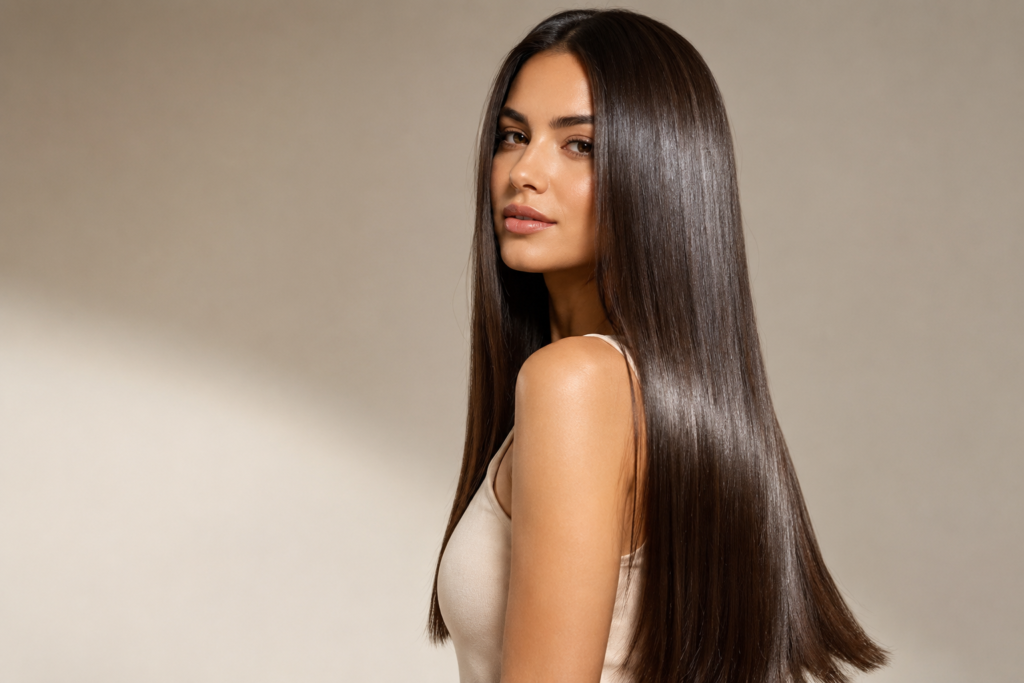
The Glass Hair Finish — Achieved through a combination of a smoothing serum and a final cool-shot pass with a blow dryer or flat iron, this technique produces the ultra-reflective, almost liquid-looking shine that’s become closely associated with modern straight styling. The cool-shot step matters more than most people realize, since sealing the cuticle with cold air right at the end locks in shine that a purely hot finish tends to lose within an hour.
The Soft Bend Finish — Rather than pin-straight hair with no movement at all, this technique curls the very ends slightly inward or outward with a flat iron, softening the overall look without adding true curl or wave. It’s become the default finishing move for most straight styles this year, since fully flat ends can read a little dated compared to a subtle bend.
The Root-Lift Blowout — Focusing volume specifically at the roots while keeping the mid-lengths and ends sleek prevents straight hair from looking flat against the scalp, particularly useful for finer hair types. This is typically achieved by blow-drying the roots upward and away from the head with a paddle brush before smoothing the rest of the length flat.
The Silk Press — A heat-based technique traditionally used on naturally curly or coily hair to achieve a temporary straight result, the silk press has become a mainstream go-to for anyone wanting maximum shine and smoothness without permanent chemical straightening. Because it relies on a specific sequence of products and blow-dry tension rather than a single pass of the flat iron, results tend to last longer than a standard straightening session.
The Two-Pass Flat Iron Method — Rather than running the flat iron over each section repeatedly at high heat, this technique uses two lower-heat passes instead of one high-heat pass, producing a smoother result with noticeably less thermal stress on the hair shaft. It takes slightly longer but tends to leave less frizz and fewer flyaways than a rushed single pass.
The Overnight Smoothing Wrap — Wrapping freshly straightened hair around the head and securing it with a silk scarf or wide-tooth clip before bed helps preserve the style overnight, reducing the need to reheat and restyle the next morning. This has become a popular way to stretch a sleek style across multiple days without repeated heat exposure.
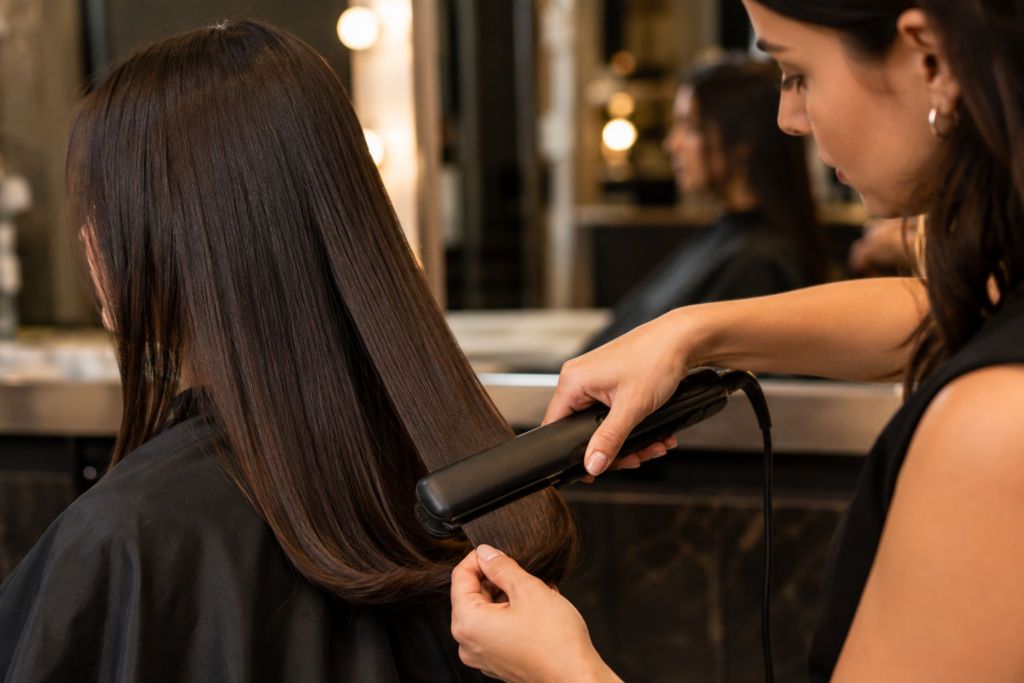
Straight Styles for Long Hair
Long hair offers the most dramatic canvas for sleek styling, since the length itself does much of the visual work.
The Center-Part Sheet — A precise, symmetrical center part combined with fully smoothed length creates a clean, almost architectural look that has become a signature of minimalist styling. This style depends heavily on precision, so an uneven part tends to stand out far more here than it would on a textured style.
The Low Ponytail Wrap — Pulling straight hair into a low, sleek ponytail and wrapping a small section around the base hides the elastic and extends the polished look into a secured style. Smoothing any remaining flyaways with a boar-bristle brush before securing keeps the ponytail itself as glass-like as the loose length.
Face-Framing Straight Layers — Even fully straight styles benefit from subtle face-framing layers, which soften the overall silhouette without disrupting the sleek finish through the rest of the length. These layers work best when they’re long enough to blend seamlessly rather than creating a visibly separate section.
The Long Straight Half-Up — Securing just the crown section while leaving the rest of the length down keeps hair off the face for long straight styles without interrupting the sheet-like effect through the back and sides.
Straight Styles for Medium-Length Hair
Medium hair, including lobs and longer bobs, tends to hold a straight style particularly well, since there’s enough weight to keep the ends smooth without the added length that can sometimes cause flyaways.
The Sleek Tucked-Behind-Ears Look — Simple but effective, tucking straight medium-length hair behind the ears on both sides creates a clean, put-together look with essentially no extra styling time required.
The Blunt-Ends Finish — Ensuring the ends are cut and styled blunt rather than textured amplifies the sleek effect on medium lengths, since blunt ends catch and reflect light more evenly.
The Straight Lob with Side Part — Shifting from a center part to a deep side part on a straight lob changes the entire feel of the cut, adding a bit of asymmetry and face-framing coverage without any additional styling technique.
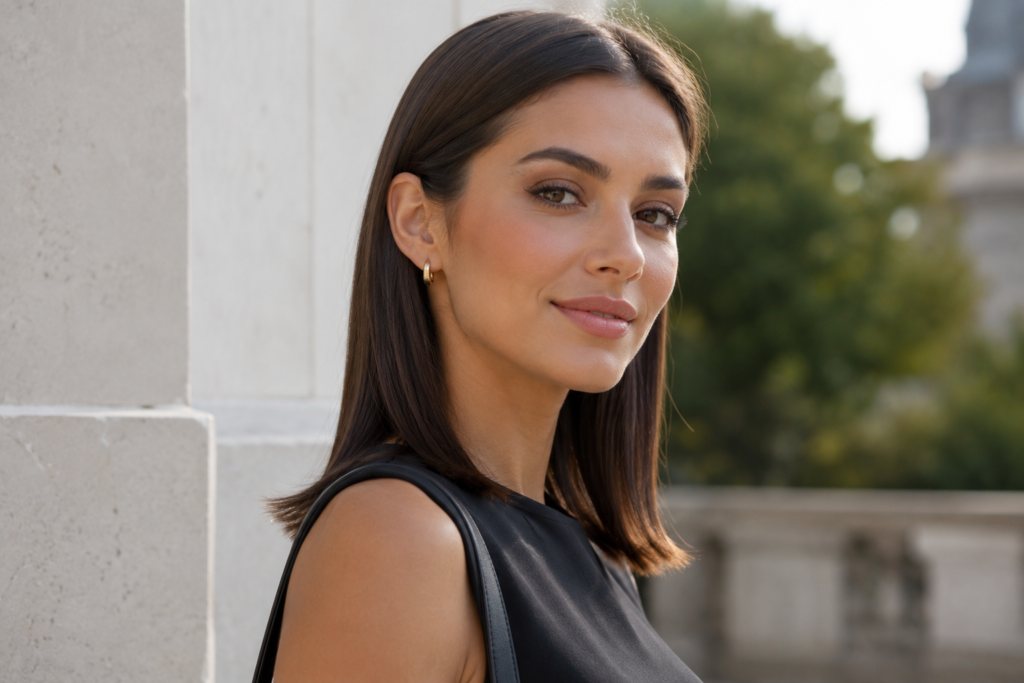
Straight Styles for Short Hair
Short straight styles rely more heavily on precision cutting than on the styling technique itself, since there’s less length available to disguise an uneven finish.
The Sleek Bob — A classic straight bob, kept smooth and glossy with a flat iron and finishing serum, remains one of the most reliably flattering short straight styles across face shapes.
The Side-Swept Pixie — Straightening and directing a pixie cut to one side rather than styling it upward adds a slightly softer, more polished feel than the more textured pixie looks that have dominated recent years.
The Chin-Length Micro Bob — An even shorter take on the sleek bob, sitting right at the chin, that depends almost entirely on a precise blunt cut to read as intentional rather than accidental. This length shows growth and uneven ends faster than any other style in this guide, so more frequent trims are essential.
Products and Heat Protection for Straight Styling
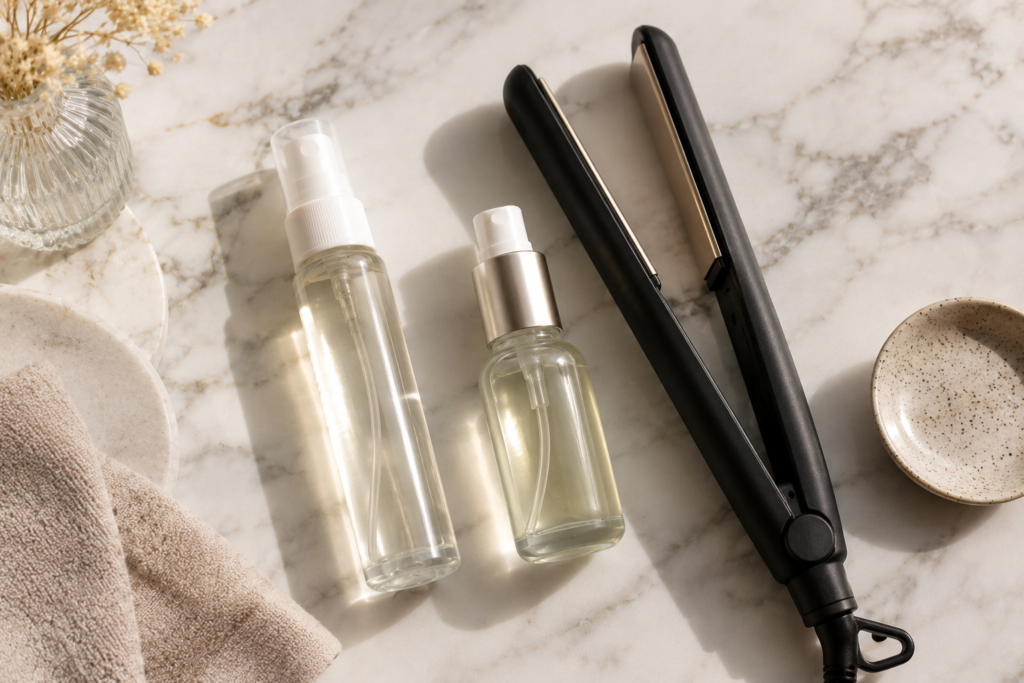
Since sleek straight styles generally rely on regular heat tool use, protecting the hair from cumulative damage matters as much as the styling technique itself. A heat protectant spray applied before any flat iron or blow dryer use is non-negotiable, particularly for color-treated hair, since color-treated strands are already more porous and prone to heat damage than virgin hair.
A lightweight smoothing serum, applied sparingly to avoid weighing hair down, enhances shine without leaving a greasy finish. Applying it to damp hair before blow-drying, rather than to already-dry hair, tends to distribute it more evenly and reduces the temptation to overapply.
For those straightening frequently, incorporating a weekly deep conditioning or bond-repair treatment helps offset the cumulative dryness heat styling can cause over time. A clarifying shampoo used every couple of weeks also helps prevent the product buildup that heavy serum and spray use can leave behind, which left unchecked can make hair look dull even immediately after straightening.
Choosing the right flat iron plate material matters more than most people account for — ceramic and tourmaline plates distribute heat more evenly than plain metal plates, which reduces the number of passes needed and therefore the overall heat exposure per styling session.
Maintaining a Sleek Style Between Wash Days
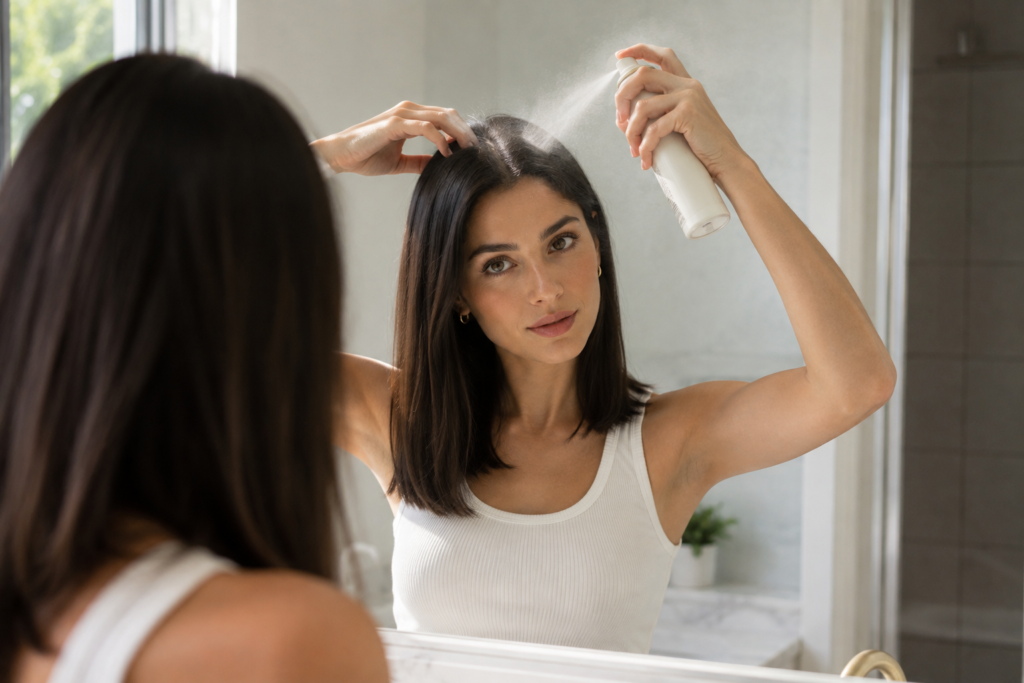
Straight styles are particularly prone to looking flat or oily at the roots faster than textured styles, since there’s no wave or curl pattern to disguise oil buildup. A dry shampoo applied at the roots the morning after washing helps absorb excess oil while adding a small amount of texture back at the scalp. Sleeping on a silk or satin pillowcase reduces friction overnight, which helps prevent both frizz and the flattening that can happen against a cotton pillowcase. For longer straight styles specifically, loosely braiding the hair before bed — without fully undoing the straightness — can help the style last an extra day by reducing tangling and friction at the ends.
Final Thoughts
Sleek straight hair in 2026 isn’t about eliminating all texture or movement it’s about controlled shine, precise finishing, and a bit of subtle softness at the ends rather than a completely rigid result. Whatever the length, the same principles apply: protect the hair before applying heat, focus finishing products where they’ll do the most visible good, and let a small amount of natural movement keep the style from looking stiff. The styles that read as most current this year are the ones that look effortless up close even though they’re the product of careful, repeatable technique.
Frequently Asked Questions (FAQ)
Q1: How often can hair be flat-ironed without causing damage? Limiting heat styling to two or three times a week, combined with consistent heat protectant use, generally allows hair to maintain a sleek look without significant cumulative damage.
Q2: What’s the difference between a silk press and simply flat-ironing hair? A silk press typically involves a specific blow-dry and flat-iron process using particular products designed for curly or coily hair textures, producing longer-lasting smoothness than a standard flat-iron session alone.
Q3: Does naturally wavy hair hold a straight style as long as naturally straight hair? Naturally wavy or curly hair tends to revert to its natural pattern faster, particularly in humidity, so a stronger hold product or an anti-humidity spray is usually necessary for longer-lasting results.
Q4: Is a root-lift blowout necessary for all hair types? It’s most useful for fine or thin hair that tends to look flat at the scalp; thicker hair types often don’t need this step to achieve volume at the root.
Q5: Can straight styling work well on very short hair? Yes, though precision cutting matters more on shorter lengths, since there’s less hair to disguise unevenness once it’s fully straightened.
Q6: What’s the best way to prevent straight hair from looking greasy by the end of the day? Using a lightweight, non-oil-based serum and avoiding heavy products near the roots helps prevent buildup that can make straight styles look greasy sooner than textured styles.
Q7: Does flat iron plate material actually make a difference in styling results? Yes — ceramic and tourmaline plates heat more evenly than basic metal plates, which typically means fewer passes are needed to achieve a smooth result and less cumulative heat exposure per session.
Q8: How can a sleek straight style be extended to a second or third day without rewashing? Dry shampoo at the roots, a silk pillowcase to reduce overnight friction, and a light loose braid before bed are the most effective ways to stretch a straight style across multiple days.