Learn how to wear your hair up without causing breakage, from choosing the right hair ties to rotating placement and protecting your hairline.
Pulling hair back feels like the safest styling choice there is no heat, no chemicals, just hair off the face and out of the way. Which is exactly why it’s so easy to overlook as a source of real damage. The tension at the hairline, the friction from certain elastics, the same part and placement repeated day after day these small, repeated stresses add up in ways that a single bad blowout never could.
This guide breaks down where breakage from updos actually comes from and the specific adjustments that let you keep wearing your hair up without slowly wearing it down.
Why Pulled-Back Styles Cause Breakage
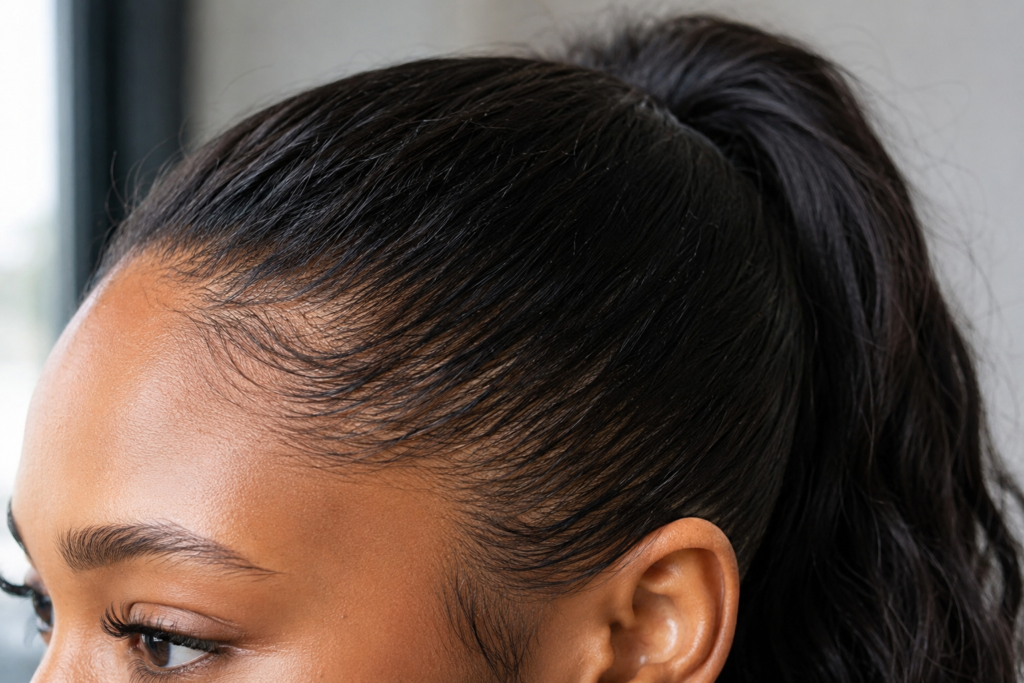
The damage from updos rarely comes from a single dramatic event. It builds gradually from a few specific, repeated stresses. Constant tension at the same point along the hairline, especially at the temples and nape, gradually weakens the hair follicle and can lead to thinning in those exact spots over time. Certain elastics, particularly ones with metal closures or very thin rubber bands, catch and snag strands with every wear, causing small breaks that accumulate. Repeatedly parting or pulling hair back in the exact same direction concentrates stress on the same strands rather than distributing it, which is part of why the same few sections tend to show damage first.
Choosing Tools That Actually Protect Hair
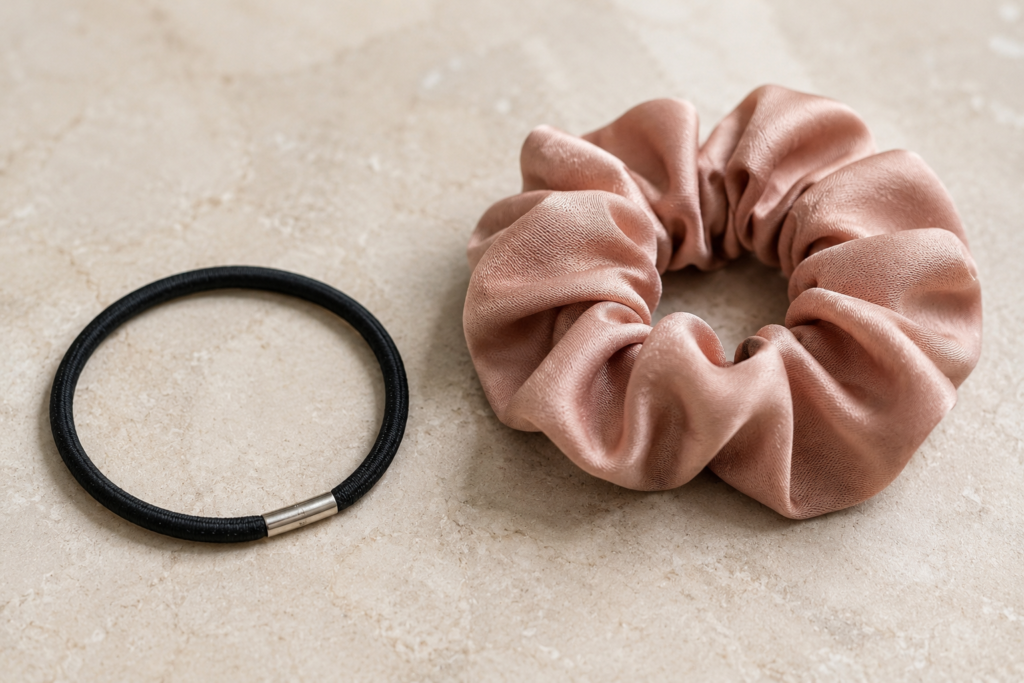
Fabric-Covered Scrunchies distribute tension more evenly around the hair than a thin elastic, since the fabric adds a cushioning layer between the band and the strands.
Spiral or Coil Hair Ties wrap around the hair without pulling as tightly as a traditional elastic, reducing the compression that leads to breakage at the point where the tie sits.
Snag-Free Elastics, specifically designed without seams or metal closures, are worth the investment for anyone who wears their hair up daily, since even small daily snags add up significantly over months.
Wide-Tooth Combs and Boar-Bristle Brushes cause less friction when styling hair back than fine-tooth combs or synthetic bristles, which matters most in the moments right before securing a style.
Rotating Placement and Tension
One of the simplest, most overlooked habits for preventing breakage is genuinely varying how a style is worn from day to day. Alternating between a high ponytail, a low bun, and a half-up style throughout the week prevents the same section of hair and scalp from bearing repeated tension in the same spot. Loosening the tightness slightly on days when hair doesn’t strictly need to be fully secured reduces cumulative stress at the hairline. Switching which side hair is parted on, even occasionally, helps prevent thinning that can develop from a consistently repeated part line.

Preparing Hair Before Securing It Back
A few habits in the moments right before pulling hair back can meaningfully reduce the friction and tension that lead to breakage. Applying a small amount of leave-in conditioner or lightweight oil before styling reduces friction between strands as they’re gathered and secured. Gently detangling with a wide-tooth comb before pulling hair back, rather than styling over knots, prevents unnecessary pulling at already-tangled sections. Securing styles on slightly damp rather than bone-dry hair can reduce breakage for some hair types, since fully dry hair tends to be more brittle at the point of tension.
Signs That an Updo Habit Is Causing Damage
A few warning signs are worth paying attention to before damage becomes more difficult to reverse. Persistent thinning specifically at the temples or hairline, rather than evenly across the scalp, often points to tension-related stress from repeated styling. Noticeable shorter, wispy regrowth along the hairline can indicate that hair has been breaking rather than simply not growing in that area. Ongoing tenderness or soreness at the scalp after removing a style suggests the tension used was tighter than the hair and scalp can comfortably tolerate.
A Healthier Approach to Everyday Updos
None of this means avoiding pulled-back hairstyles altogether they remain one of the most practical, versatile options for daily wear. The goal is simply approaching them with slightly more intention: choosing gentler tools, varying placement and tension, and giving the hairline occasional breaks from being pulled back at all. Over time, these small adjustments protect against the kind of gradual damage that’s much easier to prevent than to reverse.
Final Thoughts
Wearing hair up doesn’t have to come at the cost of long-term hair health. Most of the damage associated with pulled-back styles comes down to a handful of avoidable habits the wrong elastic, too much repeated tension in the same spot, or skipping small preparation steps that reduce friction. With a few adjustments, updos can remain a genuinely low-maintenance, low-damage option in a regular styling rotation.
Frequently Asked Questions (FAQ)
Q1: Is wearing a tight ponytail every single day actually harmful? Wearing the same tight style daily without variation can contribute to tension-related thinning over time, particularly at the hairline, so alternating styles and tension levels is generally a safer long-term habit.
Q2: Can hair that’s already thinned from tension grow back? In many cases, hair affected by tension-related thinning can regrow once the source of tension is reduced, though more prolonged, severe cases may benefit from a dermatologist’s input.
Q3: Are silk or satin hair ties actually better than regular ones? Silk and satin-covered ties do reduce friction similarly to fabric scrunchies, making them a reasonable choice, particularly for those with fine or fragile hair.
Q4: How tight should a ponytail or bun actually be? A style should feel secure without causing noticeable pulling or discomfort at the hairline; genuine tightness that causes headaches or visible skin tension is a sign to loosen it.
Q5: Does sleeping in a ponytail or bun make breakage worse? Sleeping in a tightly secured style adds hours of additional tension, so switching to a looser style or leaving hair fully down overnight is generally better for minimizing damage.
Q6: What’s the fastest way to tell if breakage is from styling tension versus something else? Breakage concentrated specifically at the hairline or in the exact spot where an elastic typically sits is more likely tension-related, whereas more evenly distributed thinning may have other underlying causes worth discussing with a professional.