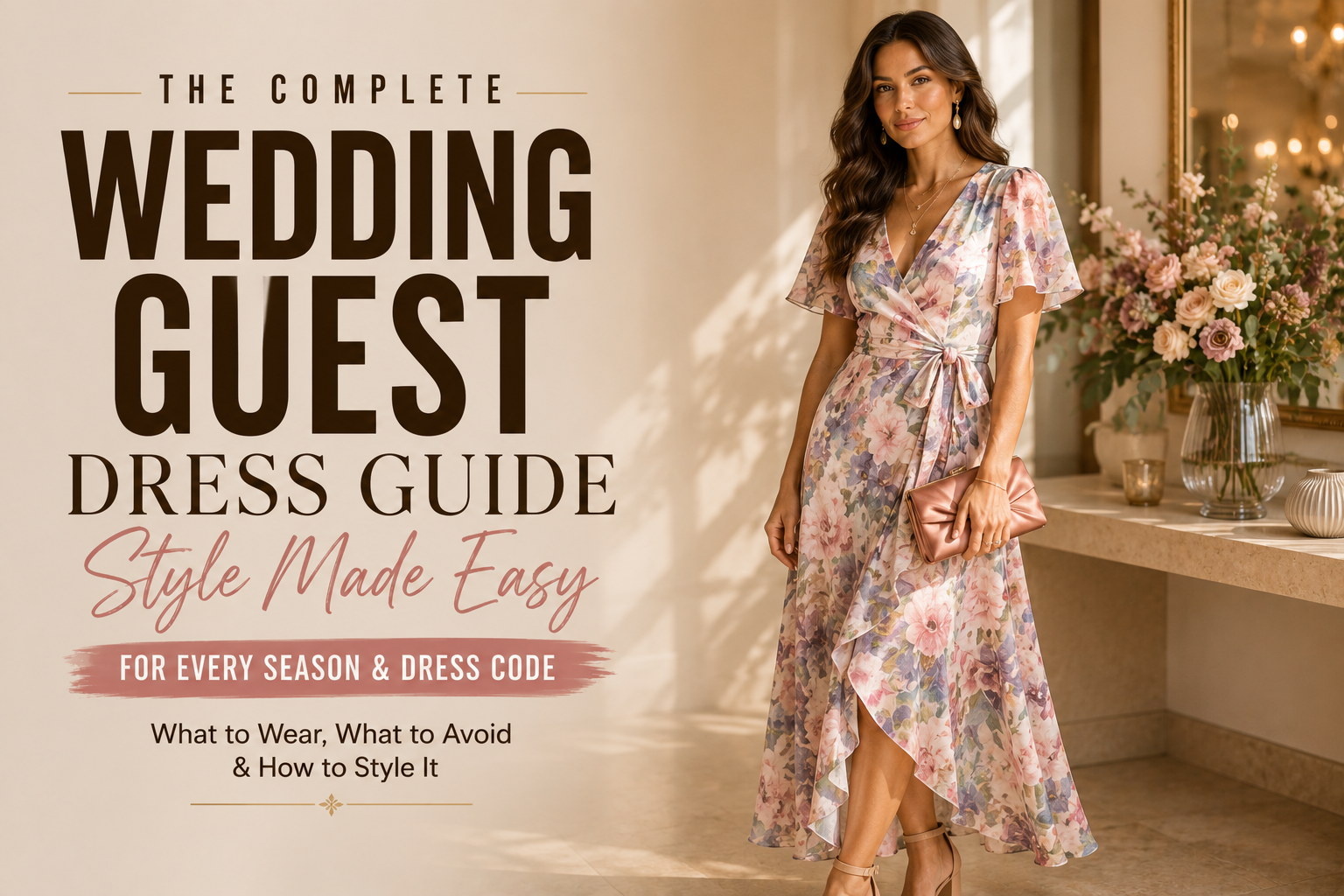
Discover elegant wedding guest dresses for every season and dress code from breezy summer florals to rich winter velvets. Find your perfect look for any celebration.
Getting invited to a wedding is exciting until you open your closet and realize nothing quite fits the moment. Wedding guest dressing sits in its own strange category: you need to look polished without outshining anyone, comfortable enough to dance until midnight, and appropriate for whatever season and venue the couple has chosen. It’s a balancing act, but once you understand the season-by-season and dress-code-by-dress-code logic, it becomes second nature.
This guide breaks down exactly what to wear as a wedding guest, no matter the time of year, formality level, or body type, so you can RSVP “yes” with total confidence.
Why Wedding Guest Dressing Feels So Tricky
Unlike everyday outfit planning, wedding dressing comes with unspoken rules. You’re dressing for someone else’s biggest day, which means color choices, hemlines, and even fabric weight all carry a little more weight than usual. Add in outdoor ceremonies, formal ballrooms, beach receptions, and winter chapels, and it’s easy to see why so many women default to the “safe” black dress every single time.
But playing it safe isn’t the only option and honestly, it’s not always the best one. The right wedding guest dress should feel like you, just dressed up for the occasion. It should photograph well, move well on the dance floor, and hold up through a full day of hugging relatives, standing for photos, and sitting through a ceremony without wrinkling into oblivion.
Spring Wedding Guest Dresses
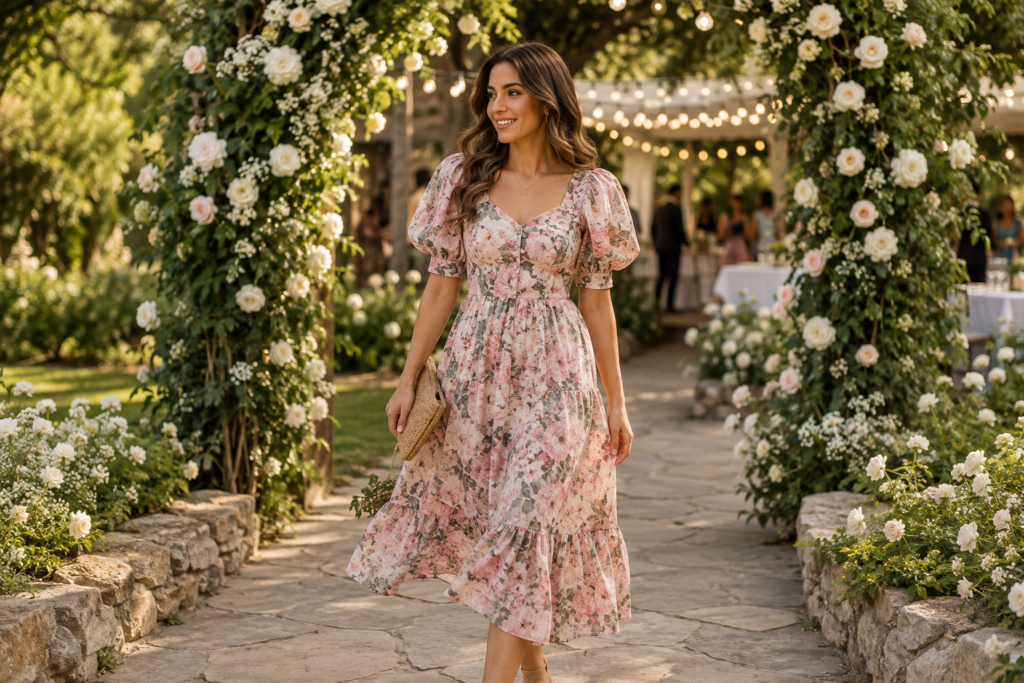
Spring weddings call for lightness both in fabric and in mood. Think garden ceremonies, greenhouse receptions, and soft pastel color palettes.
What works:
- Floral midi dresses in soft pastels or watercolor prints
- Pale blush, lilac, sage, or buttery yellow tones
- Lightweight fabrics like chiffon, crepe, or cotton-blend
- Puff sleeves and delicate ruffle details for a romantic touch
What to avoid: Heavy fabrics like velvet or wool, and anything all-white or ivory, which is still considered a hard no for guests at most weddings.
A tea-length floral dress paired with strappy block heels is nearly foolproof for a daytime spring wedding, while a longer pastel gown with a light shawl works beautifully for an evening spring affair. If the ceremony is outdoors on grass, skip anything with a thin stiletto heel — you’ll thank yourself later.
Summer Wedding Guest Dresses
Summer weddings are often outdoors, which means breathability matters just as much as style. Beach ceremonies, vineyard receptions, and rooftop parties all call for dresses that move well and don’t wilt in the heat.
What works:
- Linen and cotton-blend maxi dresses
- Bright florals, tropical prints, or bold solid colors like coral, turquoise, or citrus tones
- Off-the-shoulder or halter necklines for a breezy feel
- Flowy silhouettes that allow airflow
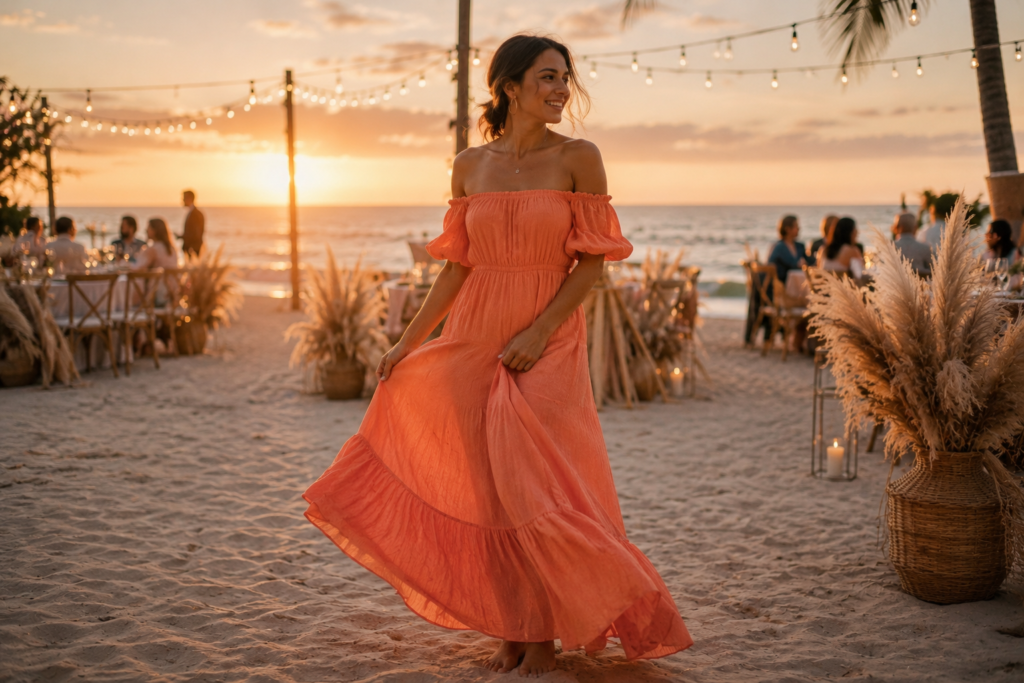
Pro tip: For beach weddings specifically, avoid stiletto heels wedges or dressy flat sandals are far more practical on sand while still looking elegant. If the reception stretches into evening, bring a light cardigan or wrap since coastal evenings cool down fast.
Fall Wedding Guest Dresses
Fall weddings bring some of the richest color palettes of the year. Rust, burgundy, deep emerald, and mustard tones photograph beautifully against changing leaves and warm, moody lighting.
What works:
- Midi or maxi dresses in jewel tones or warm earthy hues
- Fabrics with a bit more structure velvet accents, ribbed knits, or satin
- Long sleeves or dresses that pair well with a tailored blazer or wrap
- Deep floral prints instead of bright pastels
A burgundy wrap dress with a pair of suede heels captures the essence of fall wedding style: warm, elegant, and just slightly moody in the best way. Fall is also a forgiving season for layering, so don’t hesitate to add a fitted blazer or shawl if the venue transitions from an outdoor ceremony to an indoor reception.
Winter Wedding Guest Dresses
Winter weddings tend to be the most formal of the four seasons, often held indoors in ballrooms, historic venues, or intimate chapel settings. This is where you can lean into richer textures and deeper glamour.
What works:
- Velvet dresses in emerald, wine, navy, or black
- Long sleeves or dresses paired with a faux-fur wrap or tailored coat
- Metallic accents — subtle sequins, satin sheens, or jewel-toned brocade
- Floor-length gowns for black-tie winter weddings
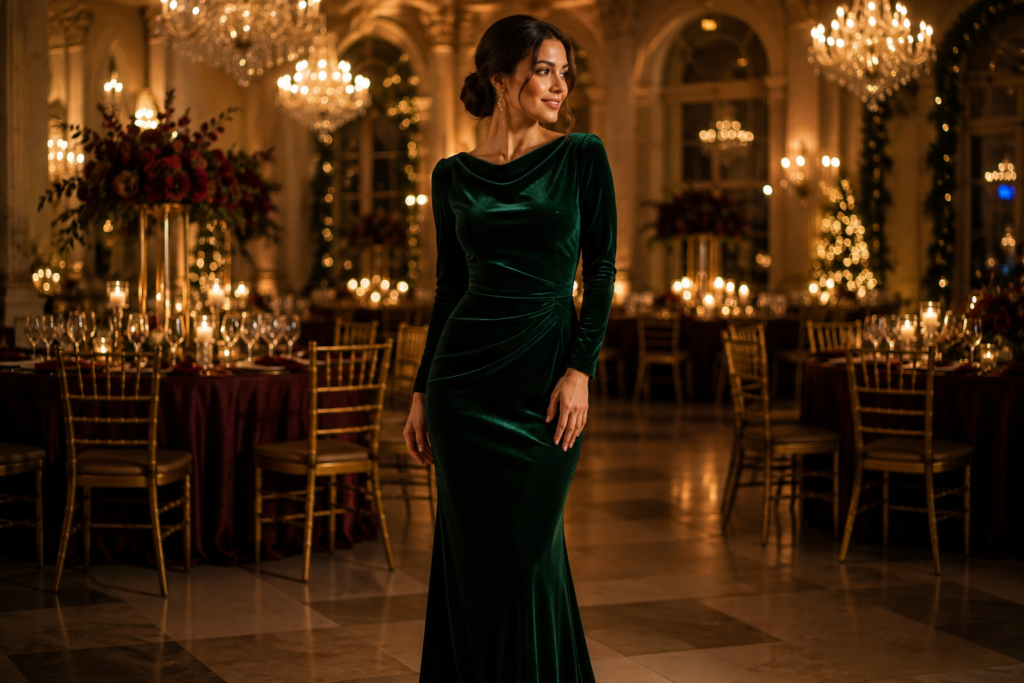
Layering matters here. A dress that looks perfect indoors can leave you freezing during outdoor photos, so always plan for a coat, wrap, or shawl that complements rather than clashes. Opaque tights in a shade that matches your dress or shoes also help bridge the gap between elegance and practicality.
Decoding Wedding Dress Codes
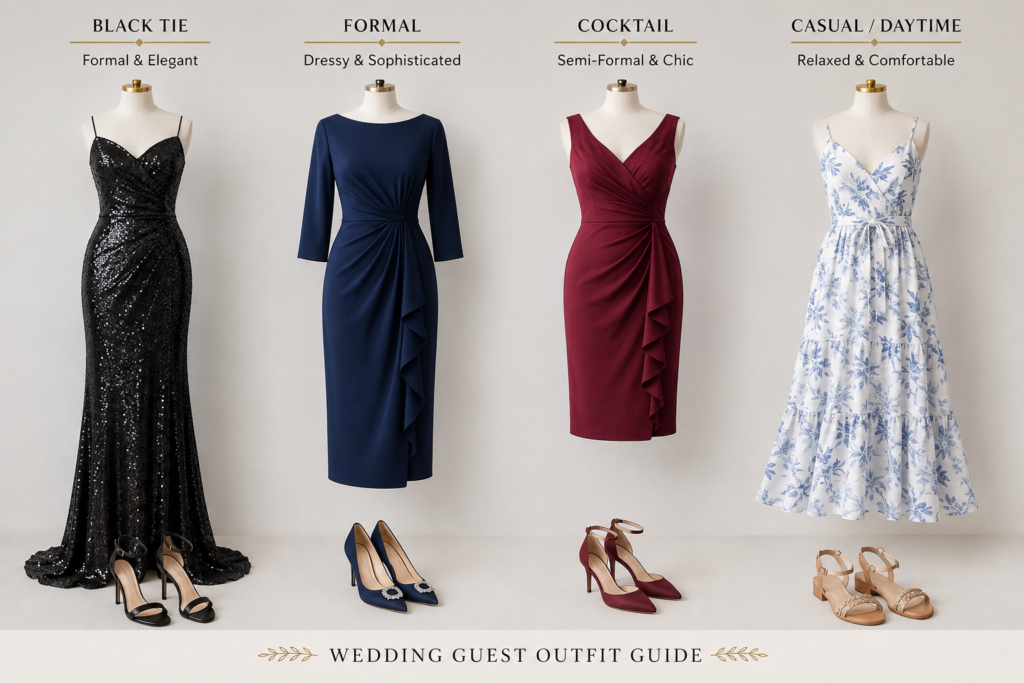
Beyond the season, the invitation itself often gives you a dress code. Here’s how to interpret the most common ones:
Black Tie: Floor-length gowns are the standard. Rich fabrics, subtle sparkle, and formal silhouettes are appropriate. Avoid casual fabrics like cotton or denim entirely.
Formal / Semi-Formal: Midi to floor-length dresses in elevated fabrics. This is the most common wedding dress code and gives room for creativity — cocktail dresses, elegant jumpsuits, or tea-length dresses all work.
Cocktail: Knee-length to midi dresses in polished fabrics. This is a great opportunity for bold color, interesting necklines, or statement sleeves.
Casual / Beach Formal: Sundresses, linen maxi dresses, or relaxed midi dresses. Comfort and breathability take priority, but “casual” still means put-together not everyday wear.
When the invitation doesn’t specify a dress code at all, the safest bet is to look at the venue and time. A vineyard at noon suggests something breezier; a downtown hotel ballroom at 7 PM suggests something more polished.
Choosing a Dress for Your Body Type
Wedding guest dresses aren’t one-size-fits-all in more ways than one the right silhouette can make a huge difference in how confident you feel all day.
- Pear shapes often look best in A-line or fit-and-flare dresses that balance the hips with structure through the shoulders.
- Apple shapes tend to feel most comfortable in wrap dresses or empire waists that skim rather than cling around the midsection.
- Hourglass figures can lean into fitted silhouettes like sheath or bodycon midi dresses that follow the natural waistline.
- Petite frames benefit from higher hemlines or monochromatic looks that elongate the body, while very long or heavily layered dresses can visually shorten a smaller frame.
- Tall frames can experiment with maxi lengths, dramatic sleeves, or bold prints without worrying about being overwhelmed by fabric.
There’s no universal “correct” dress the goal is choosing a cut that makes you feel good enough to forget about the outfit entirely and actually enjoy the day.
Colors to Avoid as a Wedding Guest
A few color rules remain fairly universal across seasons and dress codes:
- White, ivory, and champagne are reserved for the bride, even if they seem like a small detail on your dress.
- All-black is generally acceptable today, though some cultures and religious ceremonies still consider it inappropriate — when in doubt, check with the couple or another guest.
- Overly flashy metallics head-to-toe can compete with bridal party attire, so it’s best to treat metallics as an accent rather than the entire look.
Accessorizing Your Wedding Guest Dress
The dress does most of the work, but the right accessories elevate the whole outfit:
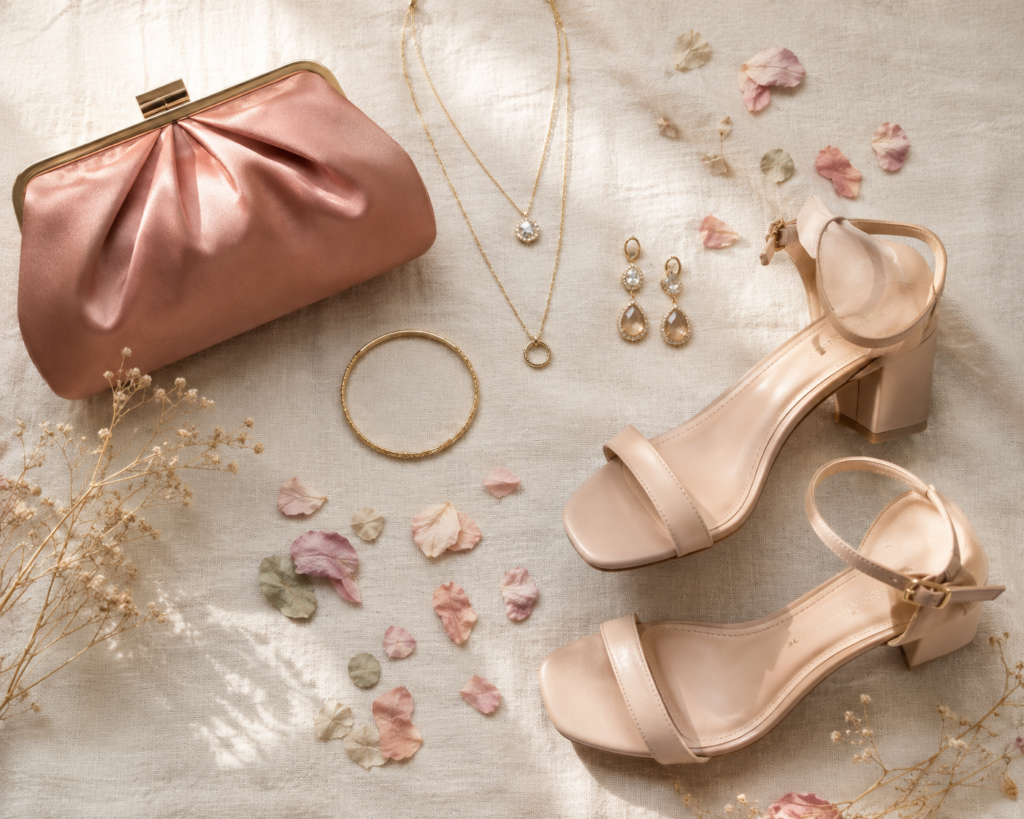
- Shoes: Match the formality and venue — block heels for gardens and beaches, sleek heels for ballrooms, and comfortable flats or wedges for all-day outdoor celebrations.
- Bags: A small clutch is almost always the right call; save the tote bags for another day.
- Jewelry: Let the dress lead. A bold printed or embellished dress pairs best with simple jewelry, while a solid-color dress can handle a statement earring or necklace.
- Wraps and jackets: Especially useful for spring evenings and winter ceremonies, a well-chosen wrap adds warmth without disrupting the silhouette.
Common Wedding Guest Dressing Mistakes
Even with the best intentions, a few missteps tend to repeat themselves at wedding after wedding:
- Choosing fabric over function. A gorgeous dress that wrinkles the moment you sit down for an hour-long ceremony will haunt your photos. Look for wrinkle-resistant blends when possible.
- Forgetting the weather shift. Outdoor ceremonies at 4 PM can feel very different by 9 PM once the sun goes down — always pack a layer.
- Overlooking the venue terrain. Grass, sand, and cobblestone are all notoriously unkind to thin heels. Block heels or wedges are almost always the smarter choice.
- Matching the bridal party too closely. If you know the wedding colors in advance, it’s polite to avoid wearing the exact same shade as the bridesmaids.
Building a Wedding Guest Capsule
If weddings are a regular part of your calendar, it’s worth investing in two or three versatile dresses that can be restyled across seasons and dress codes:
- A midi wrap dress in a rich jewel tone — works for fall, winter, and semi-formal events
- A floral chiffon dress — perfect for spring and summer garden or outdoor weddings
- A classic solid-color dress in a flattering neutral easy to dress up or down depending on the accessories and season
Rotating accessories, shawls, and shoes between these three pieces means you’ll always have something appropriate without needing an entirely new dress for every invitation. Over time, this small capsule can save both money and the last-minute stress of shopping the week before an event.
Final Thoughts
Wedding guest dressing doesn’t have to be stressful once you understand the season, the dress code, and your own silhouette. Let the venue and time of year guide your fabric and color choices, respect the couple’s dress code, and choose pieces that let you feel confident enough to actually enjoy the celebration because at the end of the day, that’s what being a great guest is really about.
FAQ
Can I wear a short dress to a formal wedding?
Generally, formal and black-tie weddings call for midi or floor-length dresses. A short dress is better suited for cocktail or casual dress codes unless it’s an elevated, structured cocktail dress explicitly appropriate for semi-formal events.
Is it ever okay to wear white as a wedding guest?
It’s best avoided entirely, even in a supporting role like a print with white as the dominant color. Stick to any other shade to keep the spotlight on the bride.
What should I wear to an outdoor summer wedding to stay cool but still look elegant?
Choose breathable fabrics like linen or cotton-blend in a flowy silhouette, opt for lighter colors or bright prints, and pair with wedges or dressy sandals instead of heels that might sink into grass.
How do I dress for a winter wedding without freezing in outdoor photos?
Layer a tailored coat, faux-fur wrap, or elegant shawl over your dress. Choose richer fabrics like velvet that also add warmth, and consider tights in a shade that complements your dress if it’s shorter.
What dress silhouette works best if I’m unsure about my body type?
A wrap dress is one of the most universally flattering options since it cinches at the natural waist and skims rather than clings, making it a safe and elegant choice for almost any figure.