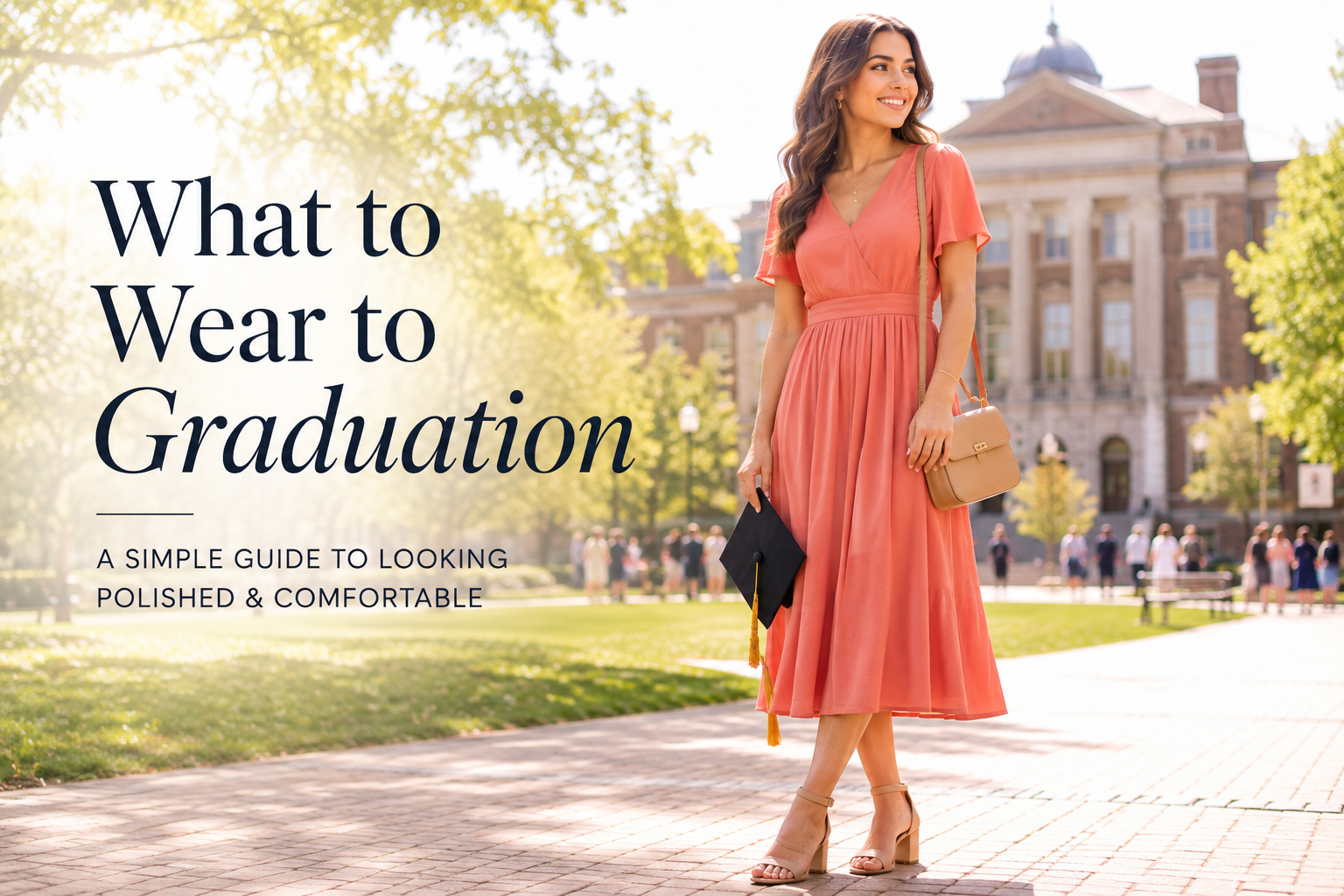
Find the perfect graduation dress with fresh, flattering styles for the ceremony, the parties, and every photo in between. Ideas for every dress code and body type.
Graduation day comes with a strange amount of pressure for a single outfit to carry. It needs to survive hours sitting under a gown, look effortless the moment that gown comes off for photos, and hold up through a full day of hugging family, walking across campus, and probably at least one celebratory dinner afterward. Add in the fact that most ceremonies happen outdoors in unpredictable spring or early-summer weather, and it’s easy to see why so many graduates end up scrambling for an outfit the week before.
This guide breaks down exactly how to choose a graduation dress that photographs beautifully, survives the whole day comfortably, and still feels like a genuine reflection of personal style on one of the biggest days of the year.
Why Graduation Dressing Comes With Its Own Challenges
Unlike most special occasions, graduation outfits have to work under a cap and gown for at least part of the day. That means the dress needs a hem, sleeve length, and silhouette that won’t bunch up, wrinkle badly, or peek out awkwardly from beneath the robe. It also needs to transition seamlessly the moment the gown comes off, since that’s typically when the bulk of the photos happen.
On top of the ceremony itself, graduation day often includes a lunch or dinner with family, a party with friends, or both. A dress that can flex between “sitting through a two-hour ceremony,” “photos in the sun,” and “dinner at a nice restaurant” without a full outfit change is the real goal here.
There’s also an emotional layer to this particular shopping trip that other occasions don’t quite have. Graduation marks the end of a chapter, and a lot of graduates want an outfit that feels like a genuine reflection of who they are now, not just something borrowed from a formal-event closet. That’s part of why graduation dressing tends to feel more personal and less rule-bound than something like wedding guest attire there’s more room to let personality lead..
Colors That Work for Graduation
Graduation dresses tend to look best in colors that photograph well against a cap, gown, and often a bright, sunny outdoor setting.
What works:
- Soft pastels like blush, sky blue, and lavender for a fresh, spring-appropriate feel
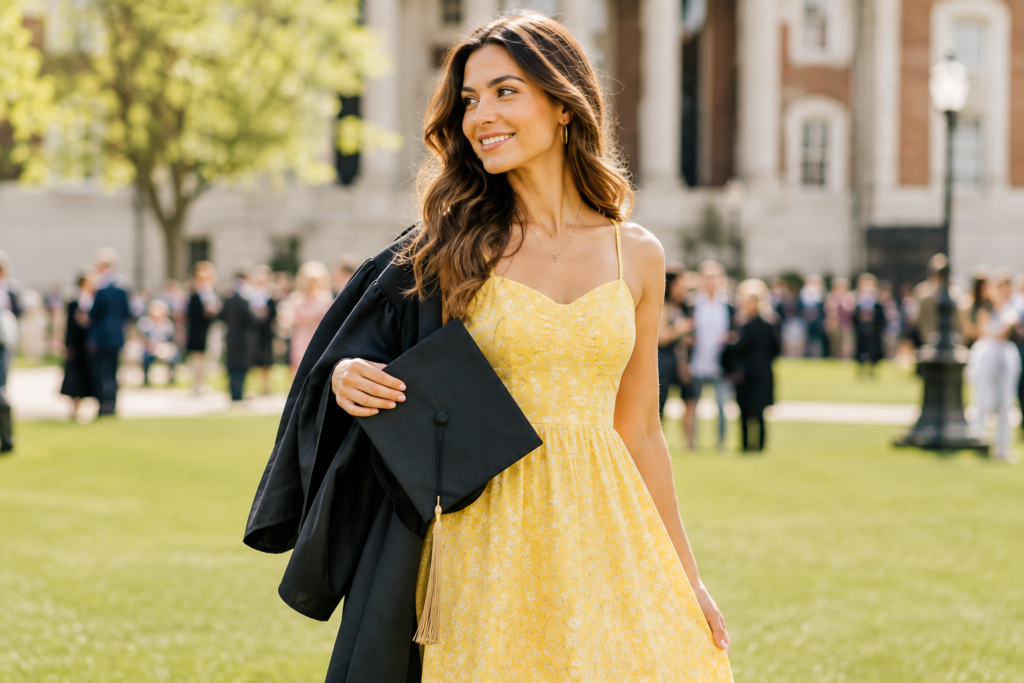
- Bold solids like yellow, coral, or emerald for a more vibrant, celebratory look
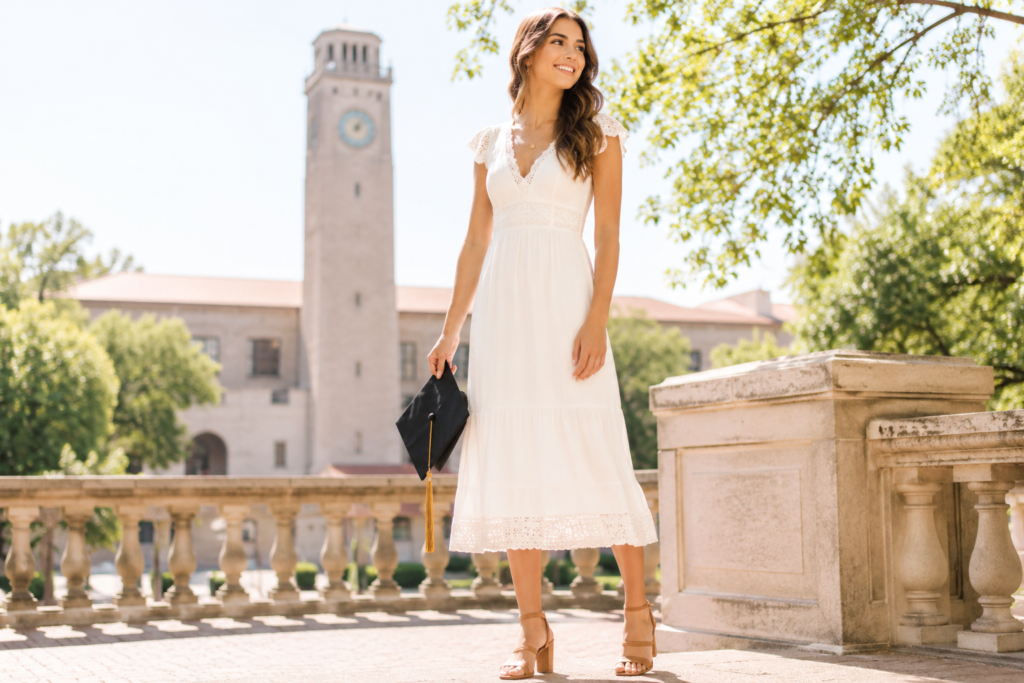
- White or ivory, which many schools’ colors and traditions make a popular (and often expected) choice for the ceremony itself
- Classic navy or black for a more polished, timeless option that suits both the ceremony and any evening celebration afterward
What to avoid: Overly busy or clashing prints can look chaotic in group photos with dozens of other graduates, and very dark, heavy fabrics can feel uncomfortably warm under a gown in spring or summer heat. Some schools also request no true white for undergraduate ceremonies to avoid confusion with certain academic regalia — it’s worth checking your school’s guidelines in advance.
Fabrics and Silhouettes That Survive a Full Day
Since a graduation dress has to work under a robe for hours and then hold up through photos and celebrations, fabric choice is more important than it might initially seem.
What works:
- Lightweight cotton or linen-blend dresses that breathe well under a heavy gown
- Wrinkle-resistant fabrics like certain crepes or synthetic blends that bounce back after hours of sitting
- Simple, low-bulk silhouettes sheath or A-line dresses that don’t create extra volume under the gown
- Sundresses with adjustable straps, useful for comfort during a long ceremony
- Midi lengths that stay elegant whether the gown is on or off
What to avoid: Heavily structured or boned bodices, which can feel restrictive after hours of sitting, and anything with a high level of bulk or ruffles that could bunch unattractively beneath a gown.
Weather Planning for Outdoor Ceremonies
Most graduation ceremonies happen outdoors in late spring or early summer, which means weather can shift dramatically between the morning processional and the afternoon reception. Checking the forecast a few days out is worth the effort, since it shapes almost every other decision about the outfit.
- For a hot, sunny forecast: Prioritize lightweight, breathable fabric and consider a hat or sunglasses that can be added once the gown comes off.
- For a cooler or overcast forecast: A slightly heavier fabric like a cotton-blend knit works well, and a cardigan or light jacket becomes a near-essential rather than an optional extra.
- For a forecast with rain: A dress in a quick-drying fabric, paired with a small collapsible umbrella tucked into a bag, prevents an unexpected downpour from ruining the day’s photos.
Since gowns themselves add a layer of warmth regardless of the weather, erring toward the lighter end of whatever the forecast suggests is almost always the safer call.
Dressing for Under the Gown
Since most of the ceremony happens with the gown on, it’s worth thinking through what actually needs to work well hidden from view.
- Choose a simple neckline. V-necks and scoop necks tend to show cleanly at the collar of most gowns without bunching.
- Avoid anything too voluminous. A full ball-gown skirt or heavily ruffled dress can create an uncomfortable, bulky silhouette under a robe.
- Consider the hem length carefully. A dress that’s slightly shorter than the gown avoids awkward peeking at the bottom, while a floor-length gown-length dress can look elegant if the school allows the robe to be worn open.
- Prioritize breathable fabric. Ceremonies often run long, and a heavy academic gown adds significant warmth, especially outdoors in late spring.
Dressing for After the Ceremony
Once the cap and gown come off, this is where the dress gets to be the main event and where most of the day’s photos happen.
- Bold colors and prints that might feel like “too much” under a gown can shine once it comes off, especially for the family photo session.
- Statement sleeves or an interesting back detail are easy to miss under a robe but make a real difference in photos afterward.
- A pop of color in accessories shoes, a bag, or jewelry adds personality without needing to change the whole outfit.
It’s worth planning this transition moment in advance, since it often happens quickly and in front of a crowd. Knowing exactly how the dress looks and feels once the gown is off rather than discovering it for the first time on the lawn after the ceremony makes that transition feel effortless instead of rushed.
Dress Codes by Type of Ceremony
Not every graduation has the same formality level, and matching the specific occasion matters.
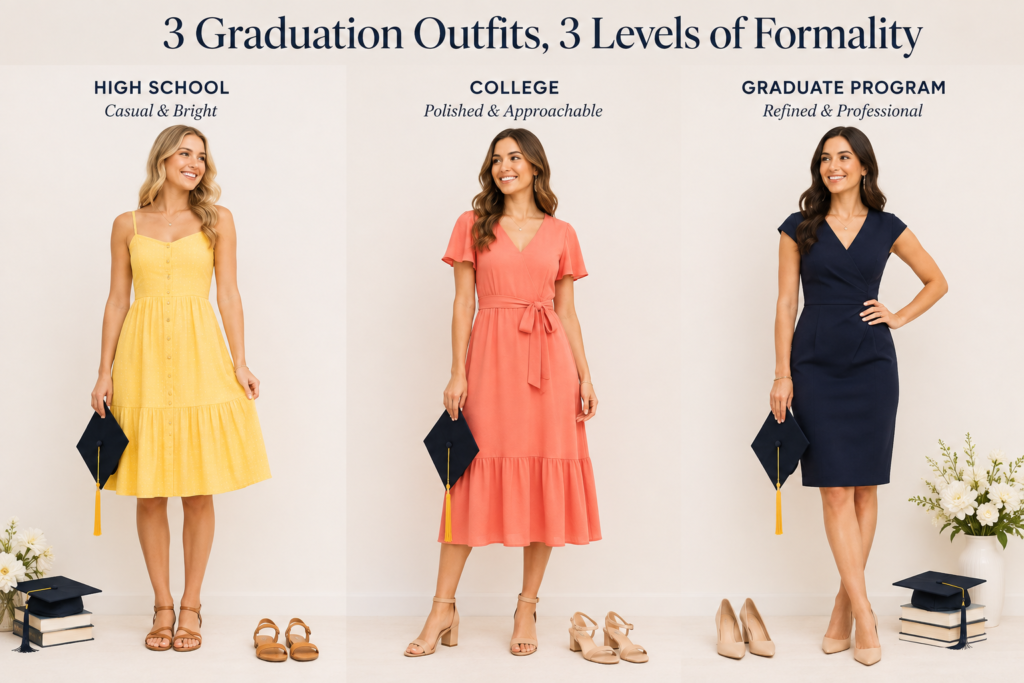
- High school graduation: Often more casual a sundress or fit-and-flare dress in a bright color works well, especially for an outdoor daytime ceremony.
- College or university graduation: Slightly more polished a midi dress in a solid color or subtle print, paired with dressier sandals or low heels.
- Graduate school or professional program graduation: Leans more formal a tailored sheath dress or an elevated wrap dress fits the more serious tone of these ceremonies.
- Evening or indoor ceremonies: Call for a dressier fabric, such as satin or crepe, since there’s less concern about heat and sun exposure..
Choosing Your Silhouette by Body Type
- Pear shapes look balanced in A-line or fit-and-flare dresses that add structure through the shoulders while skimming the hips.
- Apple shapes benefit from wrap dresses or empire waists that flow past the midsection comfortably, especially useful for hours spent sitting under a gown.
- Hourglass figures can lean into fitted sheath or wrap dresses that highlight the natural waistline.
- Petite frames do well with a shorter hemline and a single solid color to keep the silhouette elongated in photos.
- Tall frames can experiment with maxi lengths or bolder prints without feeling overwhelmed by the fabric.
Beyond body type, it’s worth factoring in how much sitting the ceremony involves. A dress with some stretch in the fabric and a skirt with enough ease to sit comfortably for two or three hours will hold up far better than something rigid and fitted, no matter how flattering it looks standing up.
Accessorizing a Graduation Look
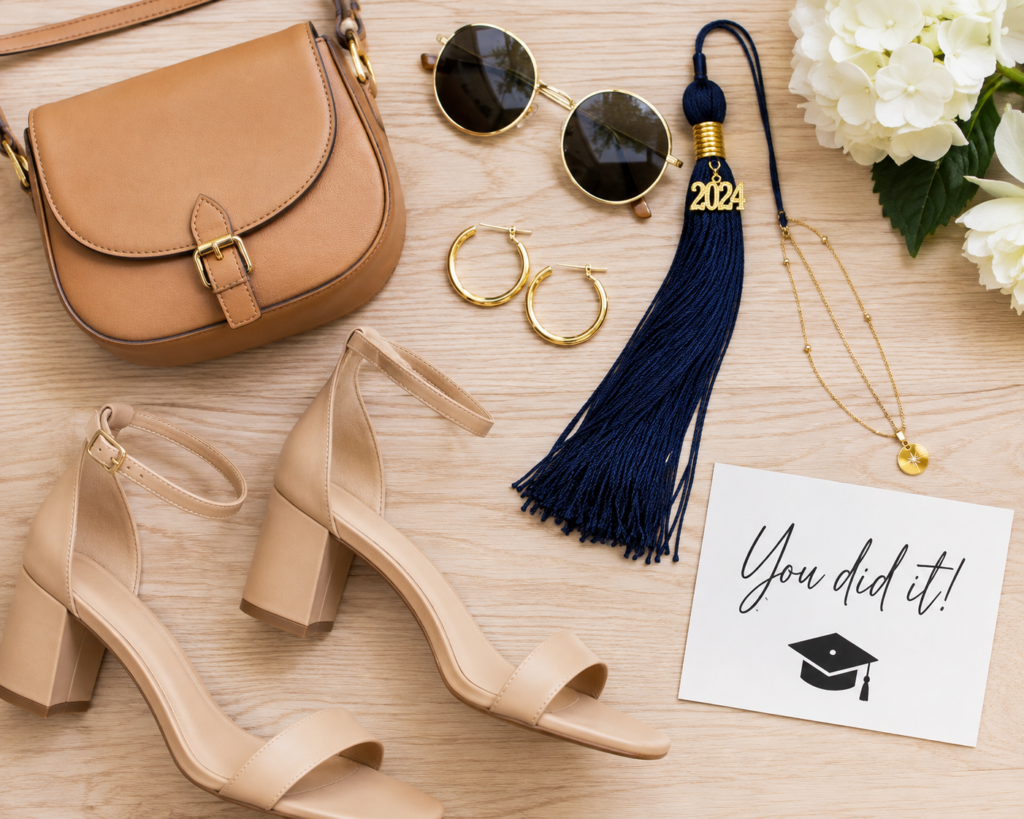
- Shoes: Comfortable sandals, low block heels, or wedges are ideal, since graduation day usually involves a lot of walking across campus and standing for photos.
- Bags: A small crossbody bag is more practical than a clutch, since it frees up hands for hugging family and holding a diploma or bouquet of flowers.
- Jewelry: Simple, understated pieces work best under a gown, though it’s fine to add a slightly bolder earring or necklace for the after-ceremony photos.
- Sun protection: A pair of stylish sunglasses and, if the ceremony is outdoors, a small parasol or fan can make a genuinely long day more comfortable.
Common Graduation Dressing Mistakes
- Choosing a dress that’s too warm. Academic gowns trap heat, and an outdoor ceremony in the sun can get uncomfortably hot fast breathable fabric matters more than it seems.
- Wearing uncomfortable shoes. Between walking to get a seat, crossing a stage, and standing for photos afterward, graduation day involves far more walking than most people expect.
- Forgetting to check the hemline under the gown. A dress that rides up while sitting can peek out unflatteringly beneath a gown it’s worth doing a seated test at home first.
- Overlooking family photo coordination. If the family is planning group photos, it’s worth a quick check on the general color palette everyone is wearing to avoid a chaotic clash.
- Skipping a backup layer. Many ceremonies happen outdoors in unpredictable spring weather a light cardigan or blazer is worth having on hand in case of wind or a cooler morning.
- Not testing the outfit seated for a full run-through. Ceremonies routinely run longer than the printed program suggests, so a quick at-home test sitting in the dress for a full hour while doing something else reveals any discomfort long before the actual day.
Building a Graduation Day Wardrobe
Since graduation day often includes a ceremony, family photos, and an evening celebration, a small, coordinated set of pieces works better than a single dress trying to do everything:
- A breathable midi dress in a solid, photo-friendly color for the ceremony itself
- A pair of comfortable sandals or block heels that can handle walking, standing, and sitting all day
- A statement accessory bold earrings or a colorful bag that can be swapped in for evening celebrations to freshen the look without a full outfit change
This kind of small, flexible wardrobe means one thoughtfully chosen dress can genuinely carry the whole day, from the processional to the last photo of the night.
Final Thoughts
Graduation dressing comes down to planning for the whole day, not just the ceremony photo. Choose a breathable, low-bulk silhouette that works comfortably under a gown, pick a color that photographs well in bright daylight, and prioritize shoes that can handle hours of walking and standing. Get those fundamentals right, and the dress becomes one less thing to think about on a day that deserves your full attention.
FAQ
Can I wear a short dress under my graduation gown? Yes, as long as the length feels comfortable while seated and doesn’t ride up noticeably. A knee-length or midi dress tends to work most reliably under most gown lengths.
What color should I avoid wearing to graduation? Check your school’s specific guidelines first, since some restrict true white for undergraduate ceremonies. Beyond that, avoid overly busy prints that can look chaotic in large group photos.
How do I stay cool under a graduation gown on a hot day? Choose breathable natural fabrics like cotton or linen-blend, avoid heavy layers underneath, and consider a dress with some airflow, like a looser A-line cut rather than a fitted sheath.
What shoes are best for a graduation ceremony? Comfortable sandals, wedges, or low block heels are ideal, since the day usually involves significant walking and standing, often on grass or uneven outdoor terrain.
Should my graduation dress match my school’s colors? It’s a nice touch but not a requirement. A neutral or solid color that photographs well is just as appropriate, and many graduates prefer to save any school-color styling for accessories instead.