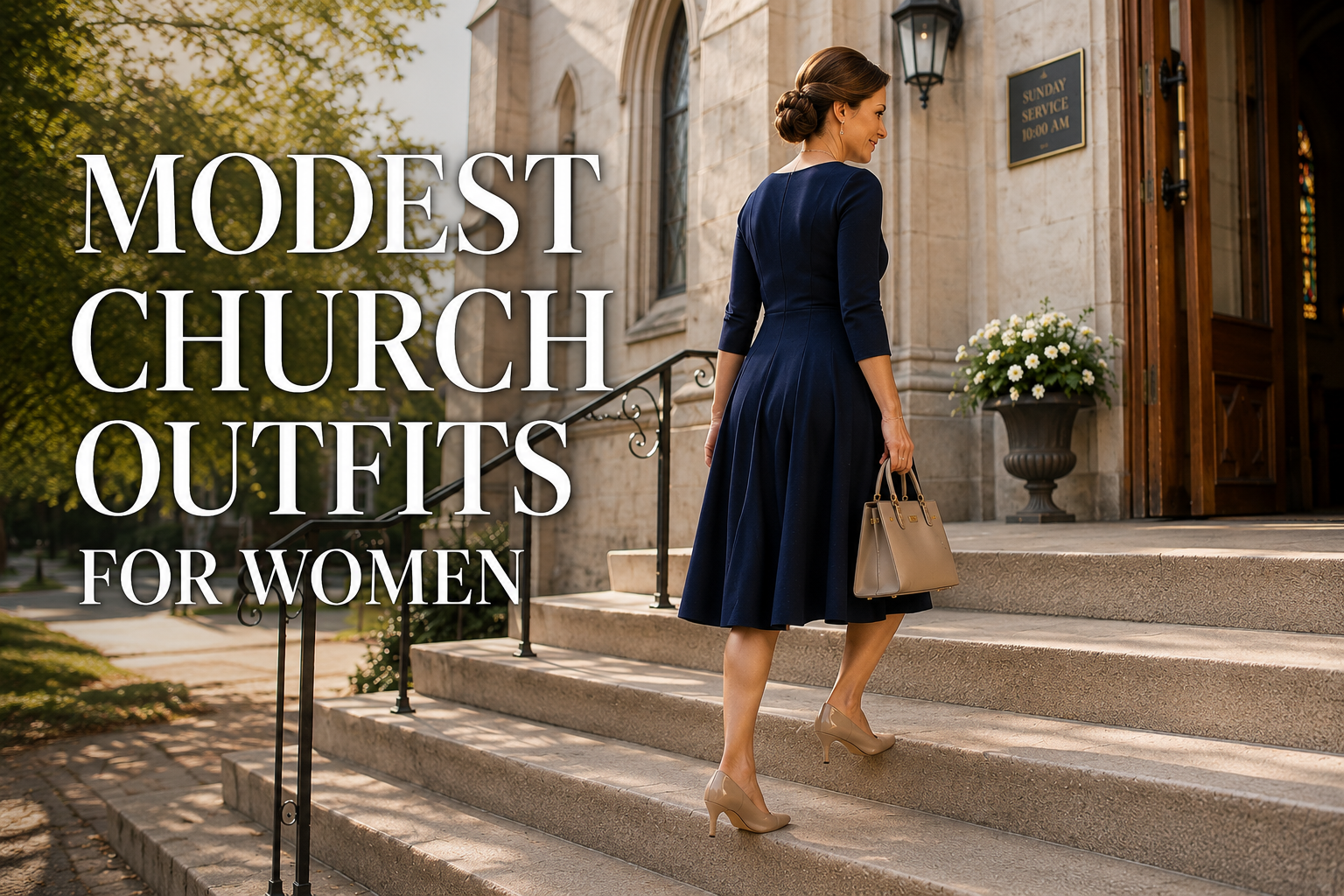
Discover modest, elegant church dresses for weekly worship and special services alike flattering silhouettes, appropriate necklines, and seasonal ideas.
Getting dressed for church is one of those quiet, recurring style decisions that doesn’t get talked about nearly as much as it should. Unlike a wedding or a party, there’s no invitation spelling out a dress code just a general sense of wanting to look put-together, respectful, and comfortable enough to sit through a service without fidgeting or adjusting a neckline every few minutes. Add in the fact that church dressing happens weekly for a lot of people, and it quickly becomes clear why having a reliable rotation of modest, elegant dresses matters so much.
This guide walks through the necklines, lengths, fabrics, and colors that make a dress genuinely “church appropriate,” along with ideas for building a small wardrobe that works every single Sunday, plus special services throughout the year.
What “Modest” Actually Means in Practice
Modesty in church dressing isn’t about a single strict rule — it’s a general sense of coverage and understatement that varies slightly from congregation to congregation. That said, a few common threads run through most modest dressing guidelines.
Necklines that avoid a deep plunge, hemlines that sit at or below the knee, and sleeves that cover at least the shoulder are the most consistent markers of a modest silhouette. Fabric that isn’t overly clingy or sheer also plays a role a dress can be fitted and still feel modest as long as it isn’t tight enough to feel restrictive or overly revealing when sitting, standing, or kneeling during a service.
It’s also worth remembering that modesty standards genuinely vary by congregation, region, and denomination. Some communities favor a fairly relaxed, contemporary approach, while others hold to more traditional expectations around coverage and formality. Paying attention to what other members of the congregation typically wear over a few visits is one of the easiest ways to calibrate the right level for a specific church without having to ask directly.
Necklines and Sleeves for Church Dressing
The neckline and sleeve length tend to matter more in church dressing than almost any other detail, since a service involves a lot of sitting, standing, and occasionally kneeling.
What works:
- Scoop, boat, or crew necklines that sit comfortably without gaping
- Three-quarter or full-length sleeves, especially for more traditional or formal congregations
- Cap sleeves or short sleeves for warmer months, as long as the shoulder is covered
- A modest V-neck, as long as it doesn’t plunge too deeply
What to avoid: Spaghetti straps, strapless necklines, or deep plunging necklines without a cardigan or shawl to layer over them.
Hemlines and Silhouettes
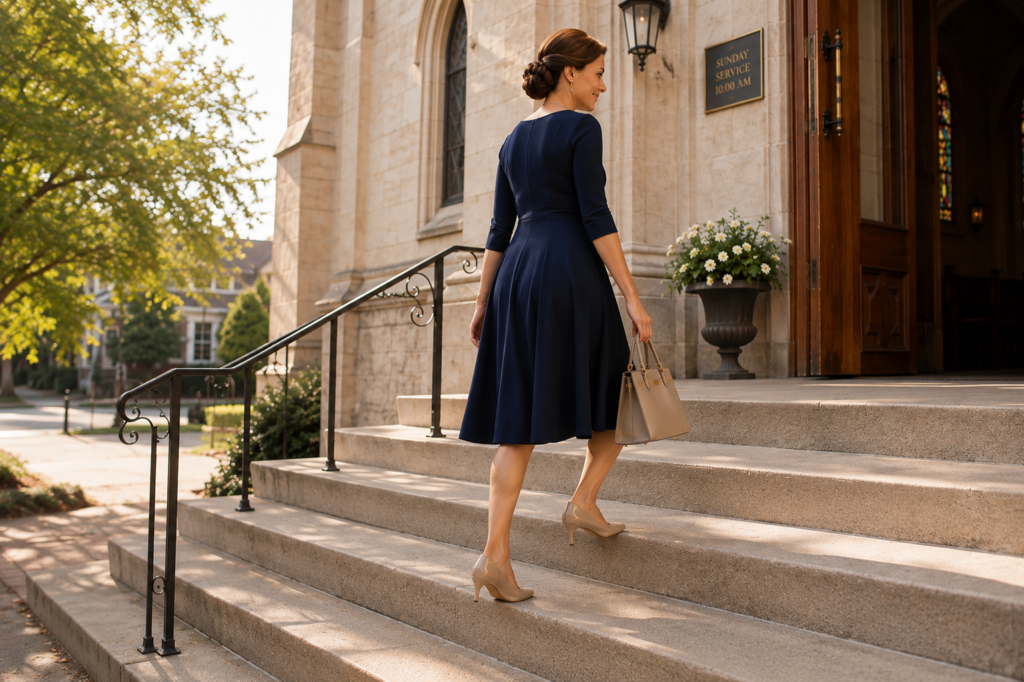
- Knee-length or midi dresses are the most universally appropriate choice across denominations and congregations.
- A-line silhouettes flatter a wide range of body types while maintaining a modest, comfortable fit.
- Fit-and-flare dresses work well as long as the fit through the bodice isn’t overly tight.
- Maxi dresses are a great option for warmer months, offering full coverage without sacrificing comfort.
- Wrap dresses in a slightly heavier fabric (to avoid gaping) are flattering and easy to move in throughout a full service.
Fabrics That Balance Comfort and Elegance
Since church dressing often means sitting for an extended period, fabric choice plays a bigger role in comfort than people initially expect.
What works:
- Soft cotton and cotton-blend fabrics that breathe well, especially for warmer climates
- Ponte knit for a structured yet stretchy option that holds its shape through a long service
- Lightweight wool blends for cooler months, adding warmth without excess bulk
- Chiffon or crepe overlays for a slightly dressier, more elevated look on special occasions
What to avoid: Overly sheer fabrics without a slip underneath, and anything too stiff or structured that becomes uncomfortable after an hour or more of sitting.
Layering for Year-Round Comfort
Church buildings often run cooler than expected, whether from older architecture, high ceilings, or simply strong air conditioning in summer. A thoughtful layering piece solves this without needing to change the dress itself.
- A lightweight cardigan in a neutral tone works over nearly any sleeveless or short-sleeve dress and can be removed easily if the room warms up.
- A tailored blazer adds a slightly more polished, put-together look for a more formal service or special occasion.
- A pashmina or soft shawl offers an elegant option for colder months or evening services, and doubles as an easy way to add modesty over a lower neckline.
- Tights or opaque hosiery extend the wearability of a favorite dress into cooler months without needing a seasonal wardrobe change.
Keeping one or two of these layering pieces on hand means a single dress can genuinely work across several months and multiple types of weather.
Colors for Church Dressing
Church dressing tends to favor a slightly more understated color palette than other occasions, though there’s still plenty of room for personal expression.
- Soft neutrals like navy, camel, gray, and cream work well nearly every week and pair easily with a range of accessories.
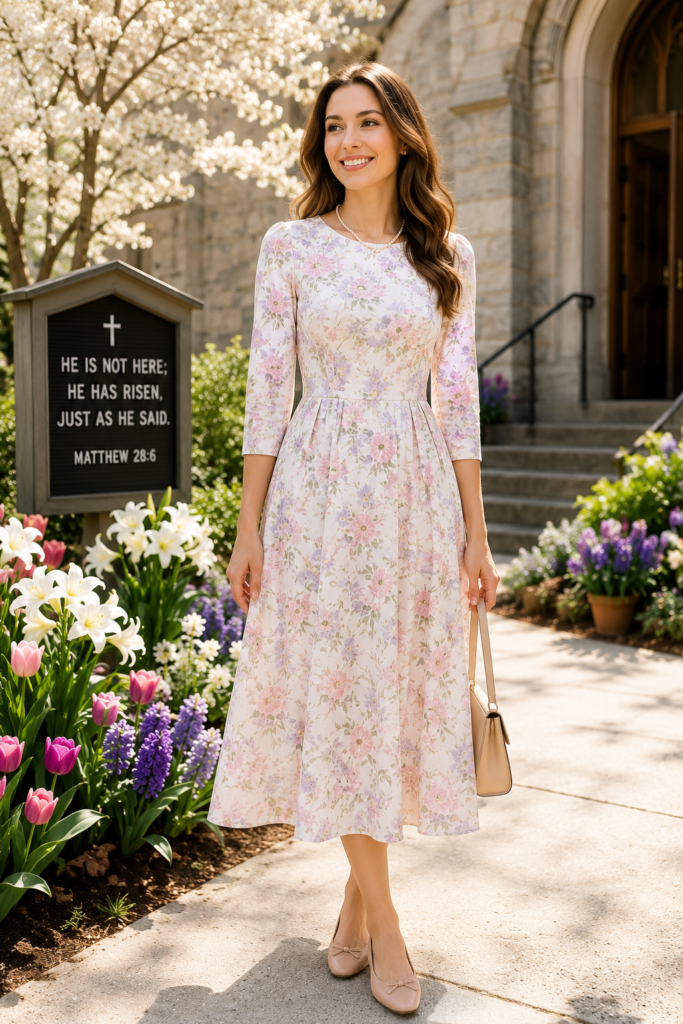
- Muted pastels suit spring and summer services, especially around holidays like Easter.
- Deep jewel tones burgundy, emerald, or plum feel appropriate for fall and winter services or more formal occasions like a baptism or confirmation.
- Subtle prints, such as small florals or delicate polka dots, add interest without feeling too bold for a worship setting.
It’s also worth noting that color can carry meaning in some traditions and liturgical calendars certain denominations observe specific colors during seasons like Advent or Lent. This isn’t a strict rule for most congregants, but it’s a nice detail to be aware of if a church leans more traditional or liturgical in its practices.
Dressing for Special Church Occasions
Beyond the weekly service, certain church events call for a slightly more elevated approach.
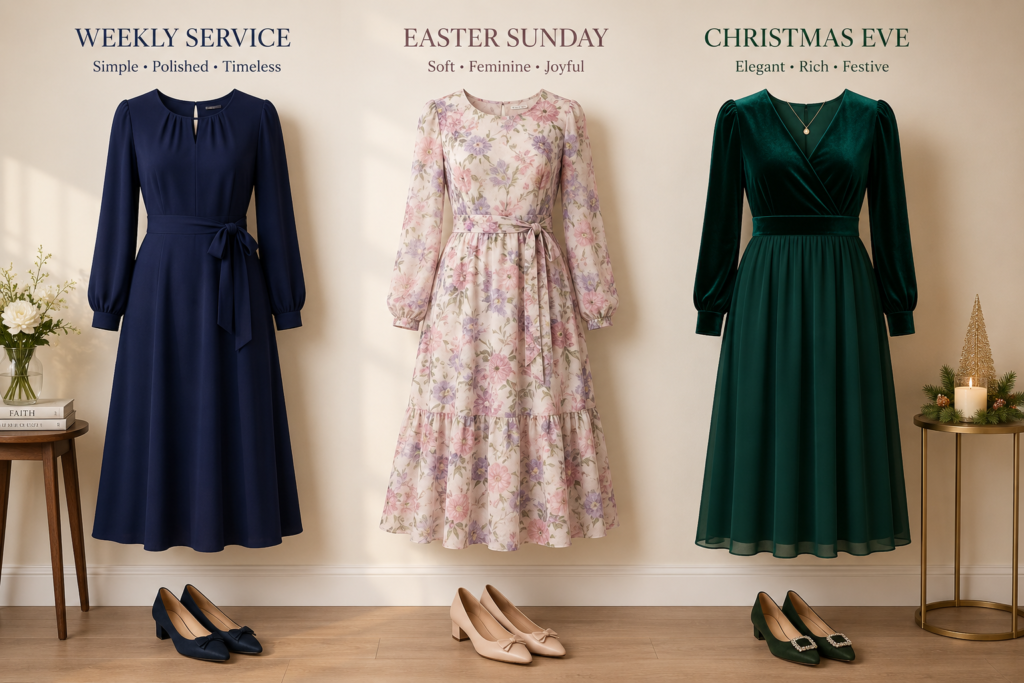
- Easter services are often the most dressed-up Sunday of the year pastel florals, soft prints, and a slightly more festive silhouette all feel appropriate.
- Christmas Eve services suit richer colors like deep red, emerald, or navy, often paired with a velvet or satin accent.
- Baptisms, confirmations, or first communions call for a slightly more formal dress, often in white, ivory, or a soft pastel, depending on the family’s role in the ceremony.
- Funerals or memorial services call for the most subdued end of the palette black, navy, or gray in a simple, unembellished silhouette.
Choosing Your Silhouette by Body Type
- Pear shapes look balanced in A-line dresses that add gentle structure through the shoulders while skimming the hips.
- Apple shapes benefit from wrap dresses or empire waists that flow past the midsection comfortably during a long service.
- Hourglass figures can lean into fitted, knee-length sheath dresses in a slightly heavier fabric that holds its shape without clinging.
- Petite frames do well with a knee-length hem and a single solid color to keep the silhouette elongated.
- Tall frames can experiment with maxi lengths or delicate prints without being overwhelmed by the fabric.
Comfort while seated deserves just as much consideration as flattering fit. A dress that looks polished standing but rides up or feels tight while sitting through a full sermon will be a source of distraction rather than confidence, so it’s worth doing a quick seated test before committing to a new piece.
Accessorizing a Church Look
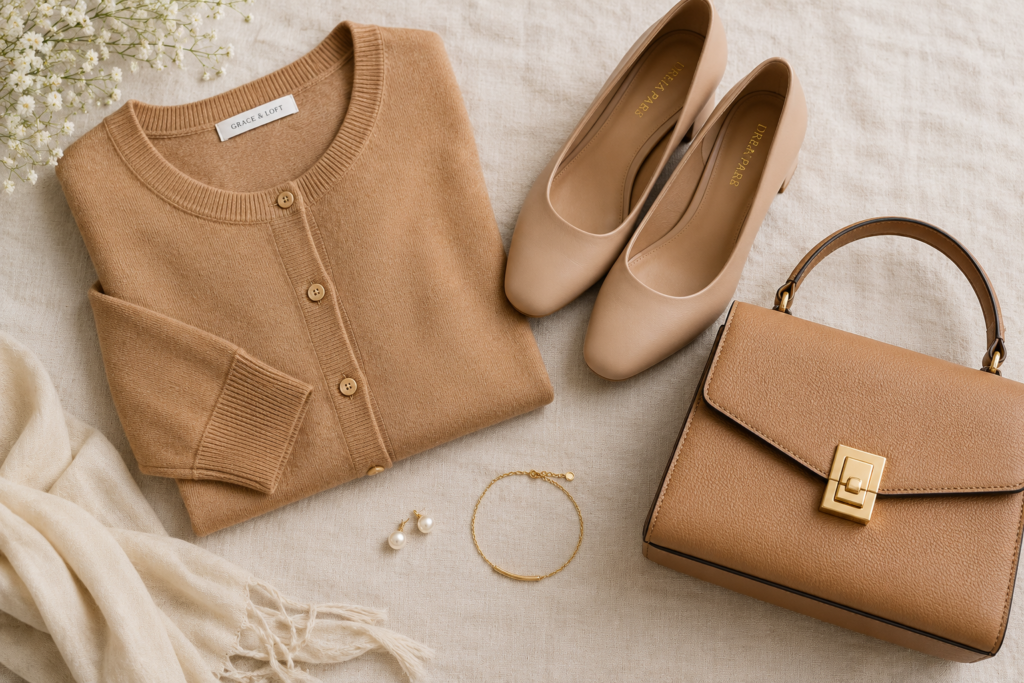
- Shoes: Low block heels, elegant flats, or modest pumps are the most practical choice for a service that involves standing, sitting, and sometimes walking to receive communion or greet others afterward.
- Bags: A small structured handbag is both practical and appropriate, offering enough room for essentials without feeling casual.
- Jewelry: Delicate, understated pieces — small studs, a thin necklace, or a simple bracelet complement a modest dress without drawing too much attention.
- Cardigans and shawls: A lightweight cardigan or shawl is one of the most versatile pieces in a church wardrobe, easily added over a sleeveless or short-sleeve dress to adjust modesty and warmth as needed.
Common Church Dressing Mistakes
- Choosing a neckline that gapes when bending forward. Many services involve moments of bowing the head or leaning down, so it’s worth testing any deeper neckline in that position before wearing it.
- Forgetting a layering piece. Air conditioning or drafty older buildings can make a sleeveless dress uncomfortably cold a cardigan solves this without changing the whole outfit.
- Wearing a dress that wrinkles badly while sitting. A dress that looks pristine standing but creases heavily after an hour of sitting can look less polished by the time the service ends.
- Choosing shoes that aren’t practical for kneeling or walking to the front. Certain services involve kneeling or walking forward for communion, so overly high or unstable heels can become a genuine liability.
- Overlooking the specific congregation’s norms. Some churches lean more formal, others more relaxed paying attention to what longtime members typically wear helps calibrate the right level of dressiness.
- Relying on a single dress for every temperature. Without a cardigan or shawl on hand, an otherwise perfect dress can feel wrong for a chilly morning service or an overly air-conditioned sanctuary in summer.
Building a Church Dress Capsule
Since church dressing often happens weekly, a small rotating capsule saves both money and decision fatigue:
- A navy or neutral midi dress that works nearly every week regardless of season
- A soft floral or pastel dress for spring and summer services, including Easter
- A jewel-toned dress in a slightly heavier fabric for fall, winter, and Christmas Eve services
- A versatile cardigan that layers over any of the three, adjusting warmth and modesty as needed
Rotating a small set of shoes, jewelry, and cardigans between these pieces means every Sunday can feel put-together without requiring an entirely new outfit each week.
Final Thoughts
Church dressing rewards consistency more than almost any other occasion on this list — the same core principles of modest coverage, comfortable fabric, and a flattering silhouette apply whether it’s an ordinary Sunday or a major holiday service. Build a small capsule around a few reliable pieces, and getting dressed for church stops being a weekly decision and starts feeling effortless.
FAQ
What neckline is most appropriate for church? Scoop, boat, or crew necklines tend to work well across most congregations. A modest V-neck is also fine as long as it doesn’t plunge too deeply, especially when bending forward.
Is it okay to wear sleeveless dresses to church? Yes, particularly in warmer months, as long as a cardigan or shawl is available to layer on top for a slightly more modest or formal moment, such as receiving communion.
What length should a church dress be? Knee-length to midi is the most common and universally appropriate range, though maxi dresses are also a comfortable, modest option for warmer weather.
How do I dress modestly without looking outdated? Focus on current silhouettes like a modern wrap dress or A-line midi in a modest neckline and sleeve length. Modesty and current style are not mutually exclusive; it’s mostly about coverage rather than the overall cut.
What should I wear to a more formal church event, like a baptism? A slightly more elevated dress in white, ivory, or a soft pastel usually works well, though it’s worth checking with the family or church about any specific expectations for that particular service.