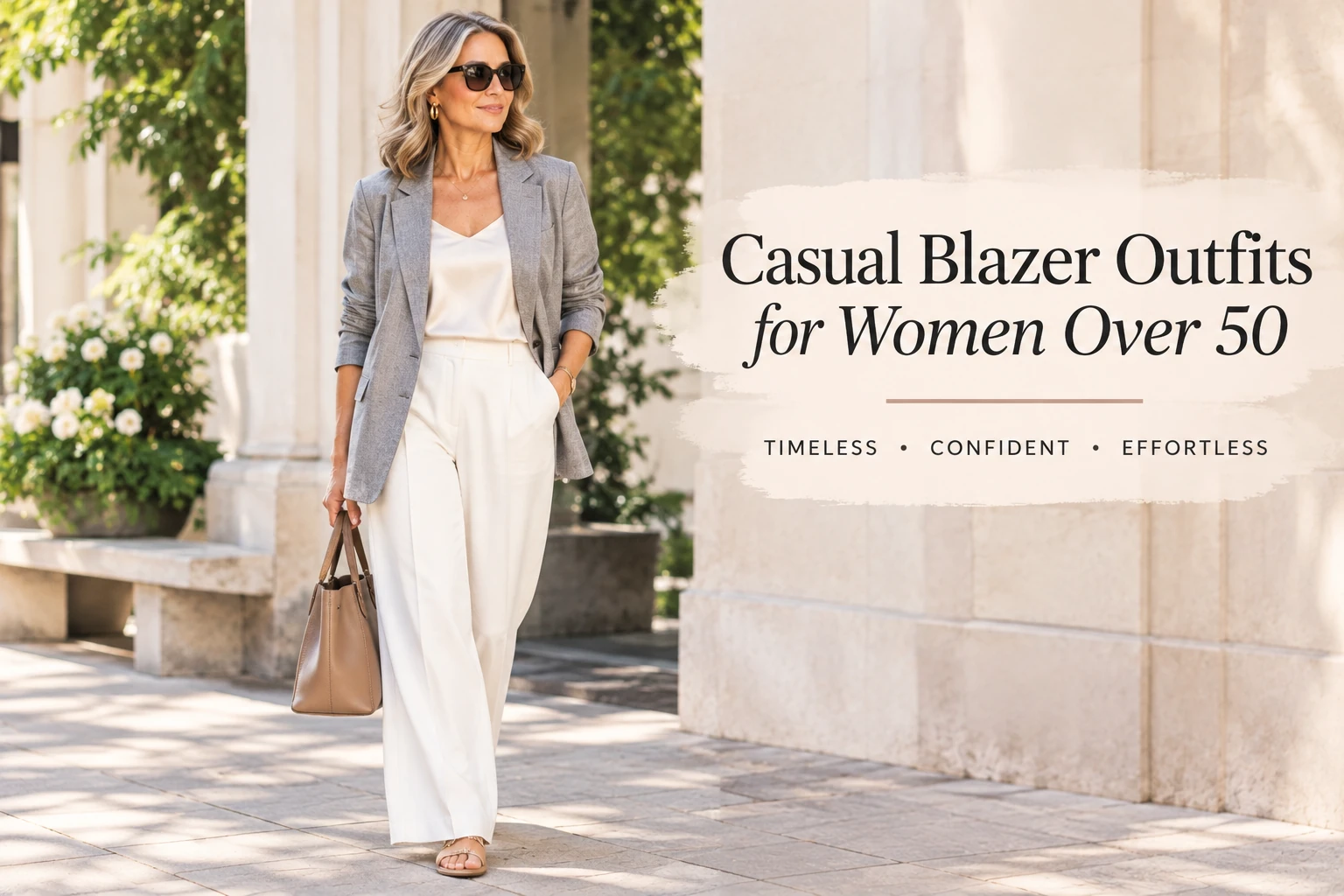
Casual blazer outfits for women over 50 tend to strike a balance that’s genuinely hard to find elsewhere in fashion advice: polished enough to feel intentional, relaxed enough to feel like you, not a costume borrowed from a younger decade. A blazer is one of the few pieces that does this naturally. It has built-in structure and confidence, but the way you style it, the fabric, the fit, what you wear underneath, determines whether it feels current and comfortable or stiff and dated. The good news is that getting it right doesn’t require an overhaul of your closet, just a few intentional choices.
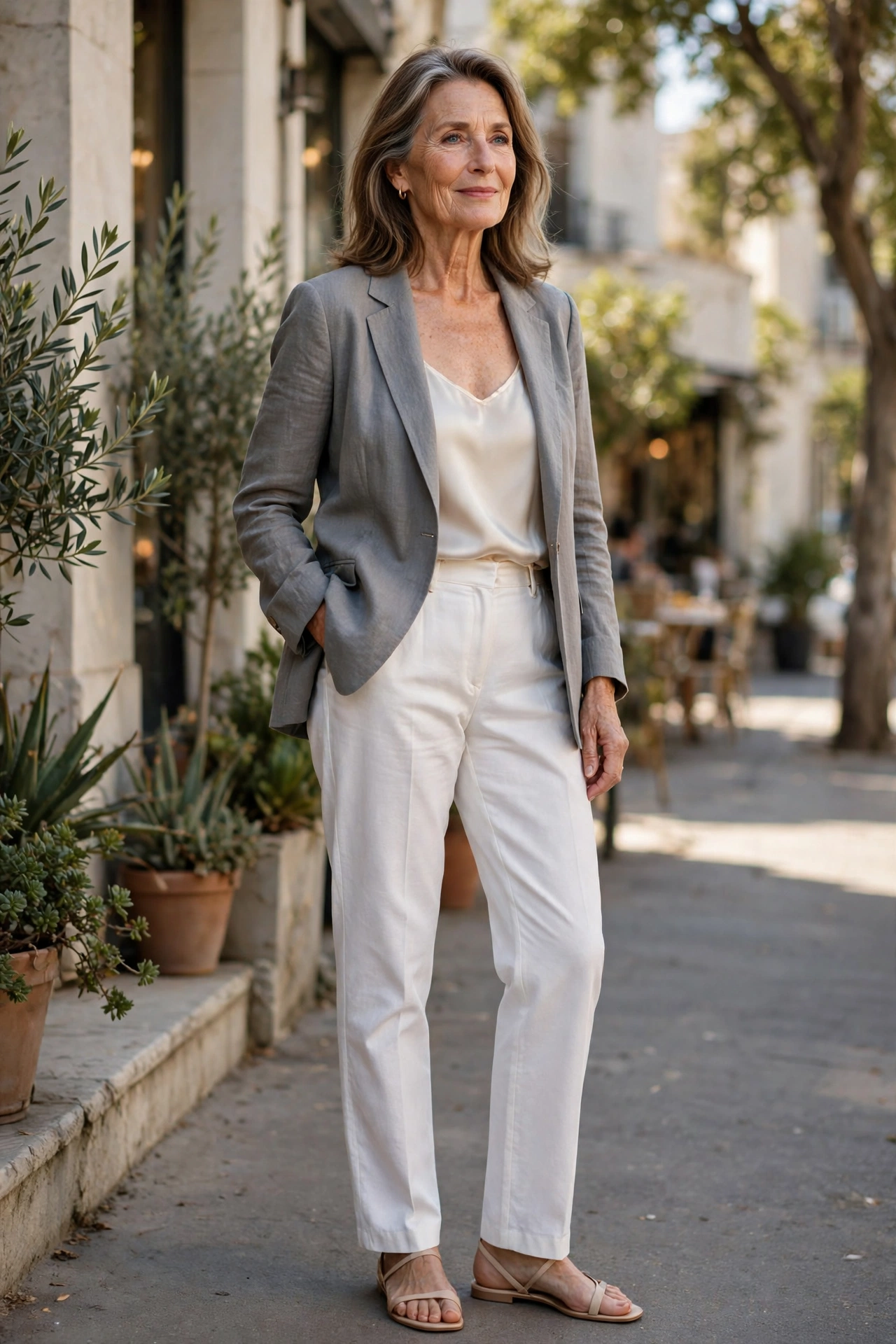
This guide covers the fit and fabric choices that make blazers feel effortless at this stage of life, along with outfit formulas that work for everything from errands to lunch with friends.
Why a Blazer Works So Well at Every Age
A blazer’s defined shoulder line and clean silhouette do a lot of visual work without requiring anything tight, trendy, or fussy. It’s a piece that reads as intentional the moment you put it on, which makes it one of the most efficient ways to look styled with minimal effort, a real advantage on busy days when getting dressed needs to be quick but still feel like you made a choice, not just grabbed whatever was closest.
Unlike some trend-driven pieces, blazers have also stayed remarkably consistent in their appeal across decades, which means investing in a couple of well-made ones tends to pay off for years rather than becoming dated after a season or two.
Choosing a Softer, More Relaxed Silhouette
The biggest style shift that tends to make blazers feel more current and comfortable for women over 50 is moving away from very structured, boxy shoulders toward a softer, slightly unconstructed shape. An unlined or partially lined blazer drapes more naturally on the body and moves with you rather than holding a stiff shape all day. This doesn’t mean giving up structure entirely, a well-tailored shoulder still matters, it just means looking for blazers with a bit of natural drape rather than heavy padding or a very rigid cut.
Fabrics Worth Prioritizing
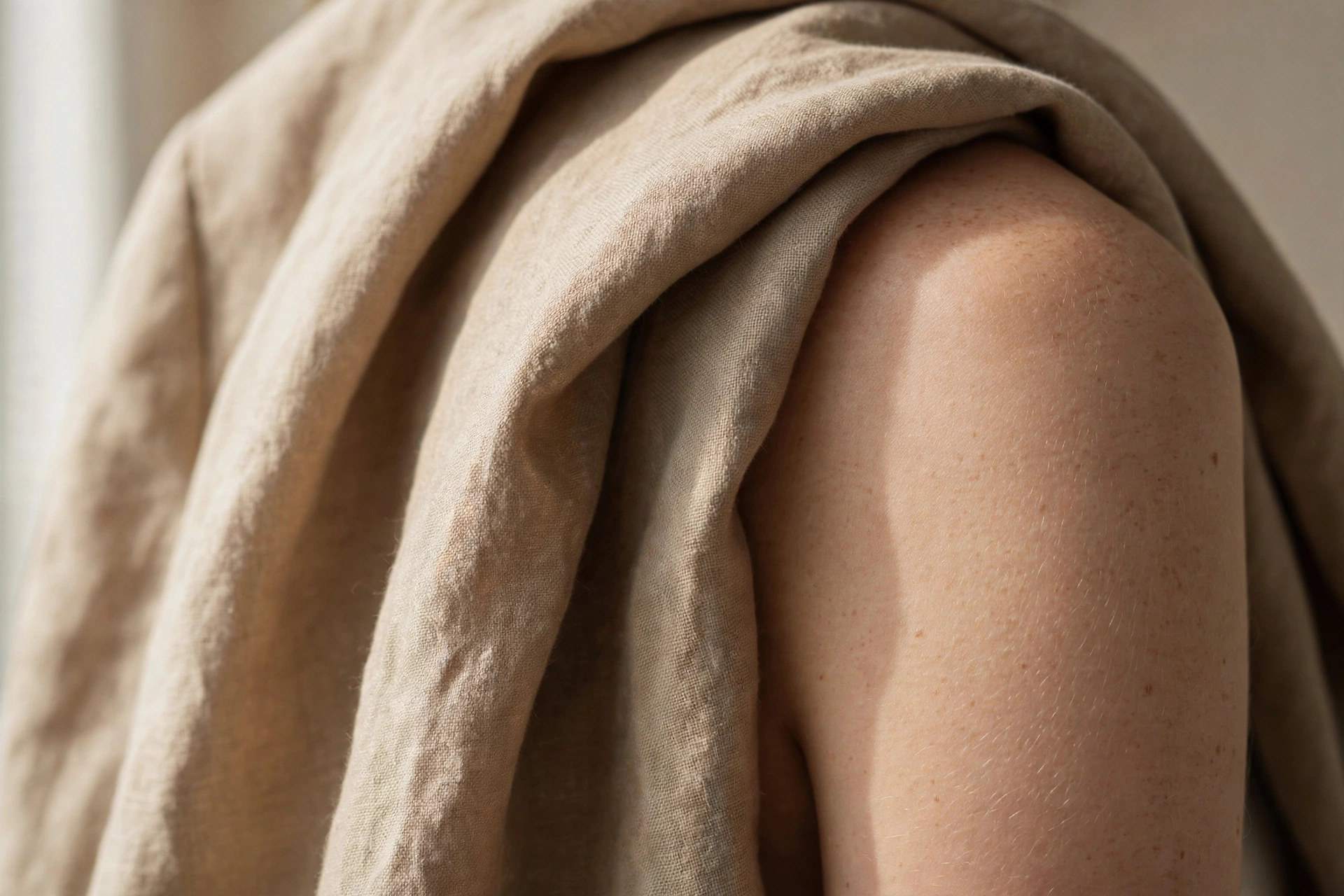
Ponte knit blazers are especially popular in this category because they move like a cardigan but hold the shape of a blazer, genuinely comfortable for all-day wear. Soft linen-blends work beautifully for warmer months and add a relaxed, slightly textured look. Lightweight wool crepe drapes well and transitions easily between seasons without feeling heavy. Avoiding very stiff, heavily interfaced fabrics generally leads to a more comfortable, more naturally flattering result.
Outfit Formula 1: Blazer with Wide-Leg Trousers
A relaxed blazer paired with wide-leg trousers in a coordinating or matching tone creates an elegant, elongated silhouette that feels put-together without being restrictive anywhere. This combination works especially well in neutral tones like ivory, taupe, or soft grey, finished with a simple flat sandal or low block heel.
Outfit Formula 2: Blazer Over a Simple Knit Top and Jeans
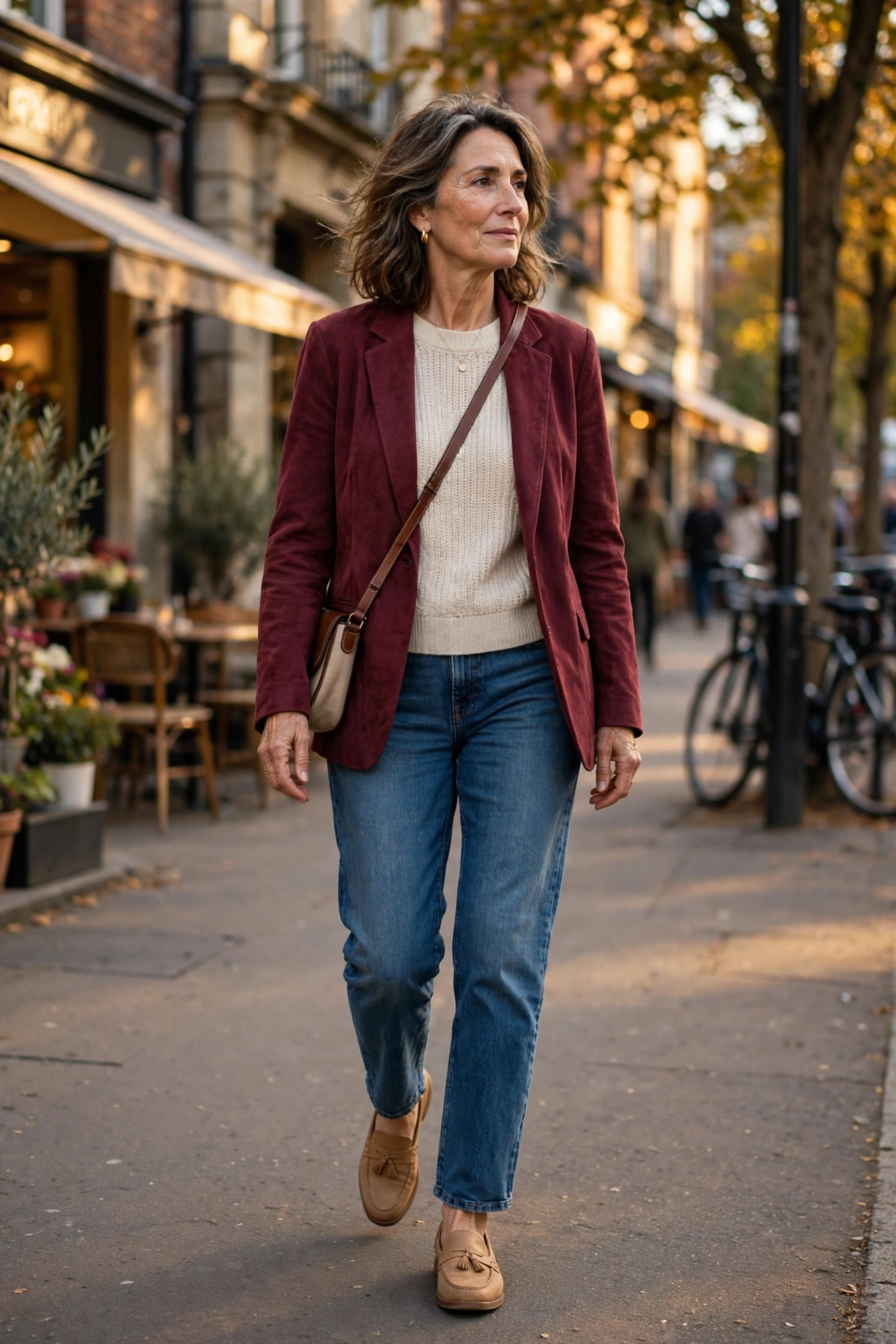
For a more casual everyday version, a soft blazer layered over a simple crew-neck or V-neck knit top, paired with straight-leg jeans, is an easy formula that works for lunch dates, errands, or casual outings. Choosing a blazer in a slightly richer color, burgundy, forest green, or navy, adds visual interest without straying from an easy, comfortable base.
Outfit Formula 3: Blazer with a Midi Skirt
Pairing a blazer with a flowing midi skirt creates a look that’s feminine and comfortable at once. A soft, A-line or gently pleated midi skirt in a solid color or subtle print, paired with a fitted or semi-fitted blazer on top, balances proportions nicely. Finish with a low heel or a flat, structured sandal depending on the occasion.
Outfit Formula 4: Blazer as a Layer Over a Dress
Rather than treating a blazer as a separate top-and-bottom outfit piece, layering it open over a simple shift or wrap dress adds warmth and structure on cooler days without requiring a full outfit change. This is a particularly efficient formula for transitional weather, when mornings are cool but afternoons warm up.
Color Choices That Feel Fresh, Not Dated
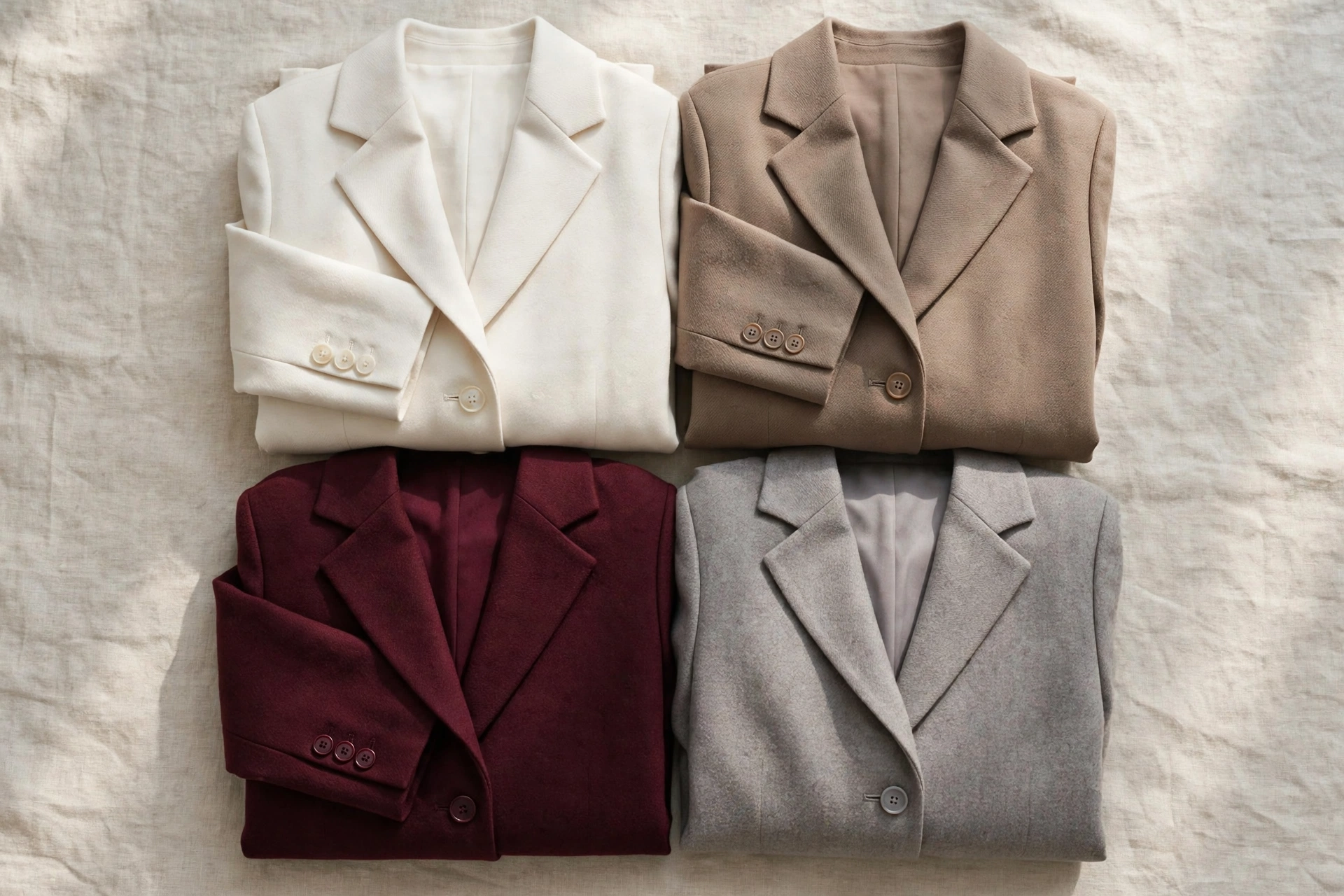
Soft neutrals, ivory, taupe, soft grey, and camel, remain the most versatile and universally flattering starting points, especially in gentler, slightly warmer tones rather than stark black or white, which can sometimes feel harsher against changing skin tones. Once a neutral base is established, richer jewel tones like emerald, burgundy, or deep teal add depth and interest without feeling trend-driven. Soft pastels, particularly in dusty or muted shades rather than bright, saturated ones, also tend to read as fresh and current rather than overly youthful or costume-like.
Fit Details Worth Paying Attention To
A blazer that fits well through the shoulders but has room to move through the arms tends to feel the most comfortable for all-day wear. Three-quarter sleeves, which have remained a popular styling choice in this category, are a flattering option that also allows for a bit of jewelry, a simple bracelet or watch, to show at the wrist. Length-wise, a blazer that hits around the hip is generally the most versatile, working equally well with trousers, jeans, or skirts.
Accessorizing Thoughtfully
Since the blazer already provides visual structure, accessories work best when they add warmth or personality rather than competing for attention. A soft scarf draped loosely at the neck, simple pearl or gold stud earrings, and a structured handbag in a complementary tone all pair well without overwhelming the outfit. Comfortable, well-made footwear, loafers, flat sandals, or a low block heel, tends to serve this styling category better than very high or narrow heels.
Common Mistakes to Avoid
Choosing a blazer that’s too structured or heavily padded. This can feel stiff and dated rather than current; softer, more relaxed shoulders generally photograph and wear better.
Sticking only to black. While black is easy, softer neutrals like ivory, taupe, and soft grey often feel more flattering and current against a range of skin tones and hair colors.
Avoiding color or pattern altogether. A single richer-toned blazer, burgundy, emerald, or navy, can refresh an entire wardrobe of neutral basics without requiring a big style leap.
Overlooking fabric quality. Because a blazer is meant to be worn often and for extended periods, investing slightly more in a fabric with natural drape and a bit of stretch generally pays off in comfort over time.
For more foundational blazer styling ideas across ages and occasions, see our full casual blazer outfits guide.
For further reading on building a considered wardrobe at this life stage, Who What Wear’s guide to dressing over 50 offers additional perspective.
Final Thoughts
Casual blazer outfits for women over 50 work best when the blazer feels like an extension of your existing style rather than a formal add-on. A softer silhouette, a fabric that moves comfortably, and a color palette that flatters rather than overwhelms are really all it takes to make a blazer feel effortless. Once you find that combination, it becomes one of the easiest, most reliable pieces to reach for, no matter the occasion.
FAQ
What blazer silhouette is most flattering for women over 50?
A softer, slightly unstructured silhouette with natural drape tends to feel more comfortable and current than a heavily padded, rigid shoulder shape.
What’s the best blazer length for everyday wear?
A blazer that hits around the hip is generally the most versatile, pairing easily with trousers, jeans, or skirts alike.
Are bright colors okay, or should I stick to neutrals?
Both work well. Soft neutrals are the easiest starting point, but richer jewel tones like burgundy or emerald can add depth without feeling trend-driven.
Can a blazer be worn over a dress?
Yes, layering a blazer open over a simple shift or wrap dress adds structure and warmth, and works especially well for transitional weather.
What fabric is most comfortable for all-day blazer wear?
Ponte knit and soft wool-blends are among the most comfortable, since they move naturally with the body while still holding their shape.
4 Comments