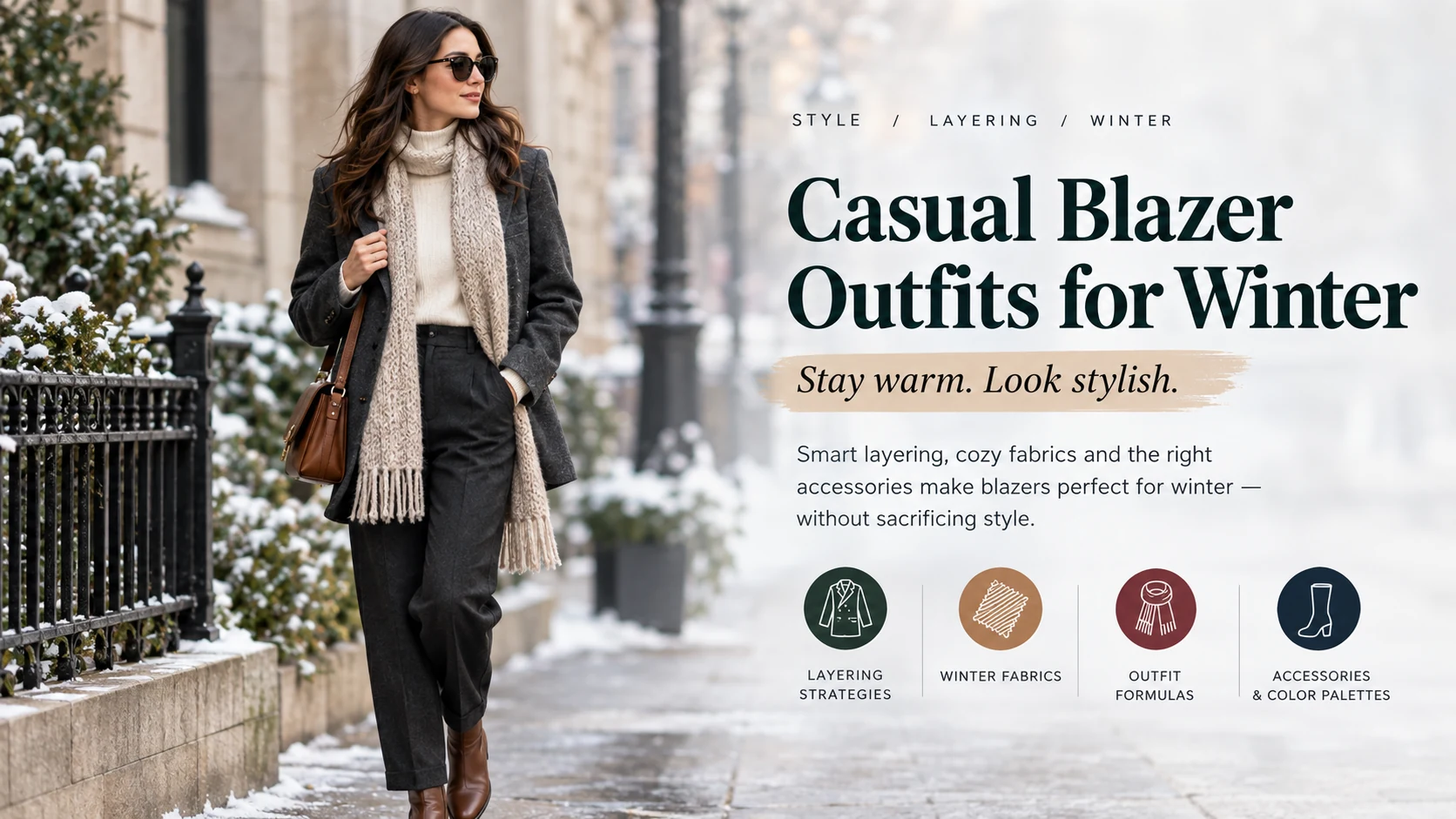
Casual Blazer Outfits for Winter: Warm, Stylish Layering Ideas
Casual blazer outfits for winter require a slightly different approach than the rest of the year, mainly because a blazer alone isn’t built to handle real cold. The trick isn’t abandoning blazers once temperatures drop, it’s learning how to layer around them so they stay part of the outfit’s visual structure while everything underneath (and sometimes over top) does the actual work of keeping you warm. Once you get the layering order right, a blazer becomes just as useful in January as it is in April.
This guide covers the layering strategies, fabric choices, and outfit formulas that make casual blazer outfits for winter both practical and stylish.
The Layering Order That Actually Works
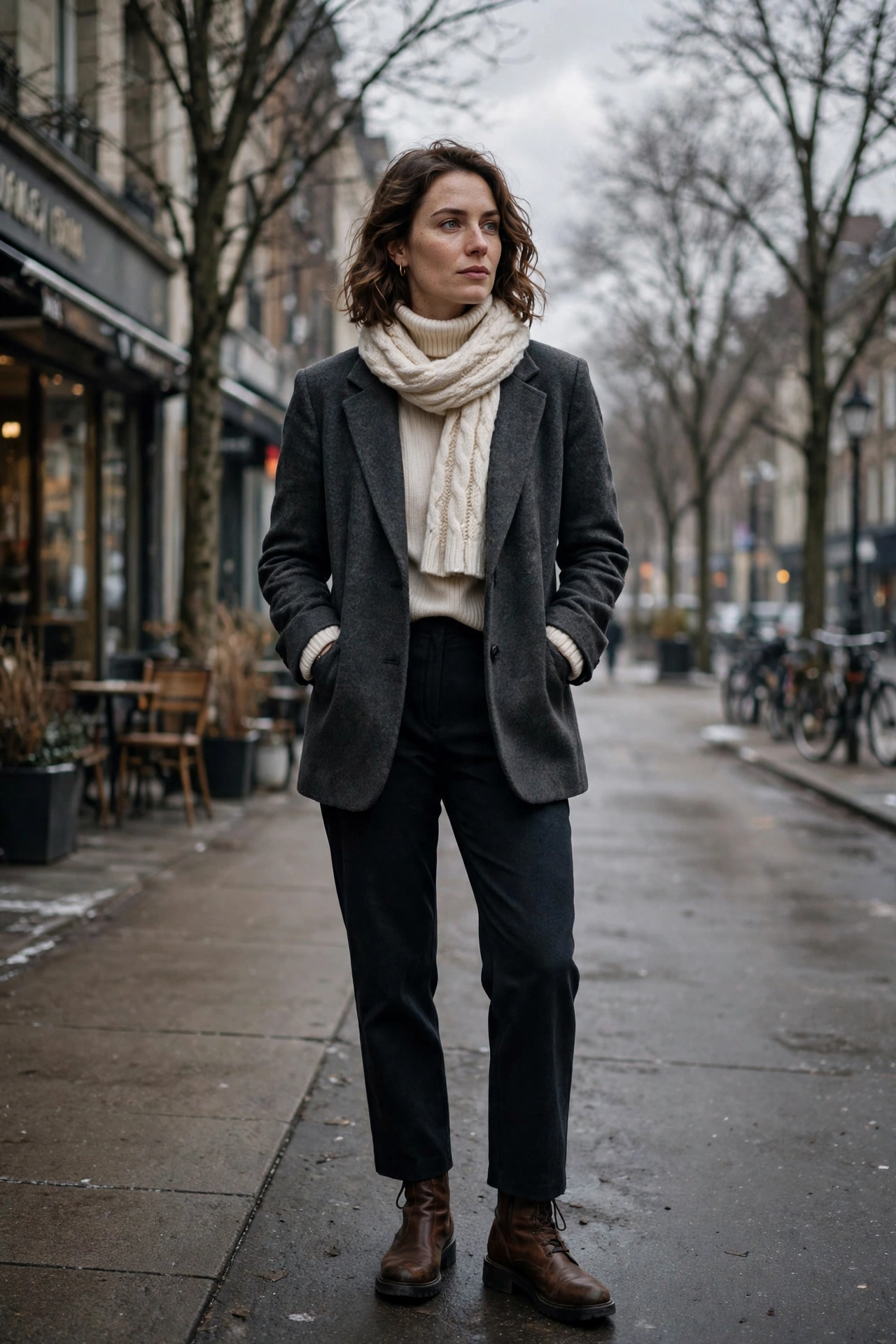
The most common mistake with winter blazer outfits is treating the blazer as the outermost, warmth-providing layer, which it isn’t, and trying to make it one usually leaves you cold. Instead, think of the blazer as a mid-layer that adds shape and polish, sandwiched between a warm base layer underneath and, when it’s genuinely cold, an actual coat over top.
A reliable order looks like this:
- A fitted turtleneck or long-sleeve base layer closest to the skin.
- The blazer over that for structure.
- A long wool coat, puffer, or trench layered on top whenever you’re outdoors for extended periods.
Indoors, or for short trips between car and building, the blazer-and-turtleneck combination alone is often enough.
Choosing Winter-Appropriate Blazer Fabrics
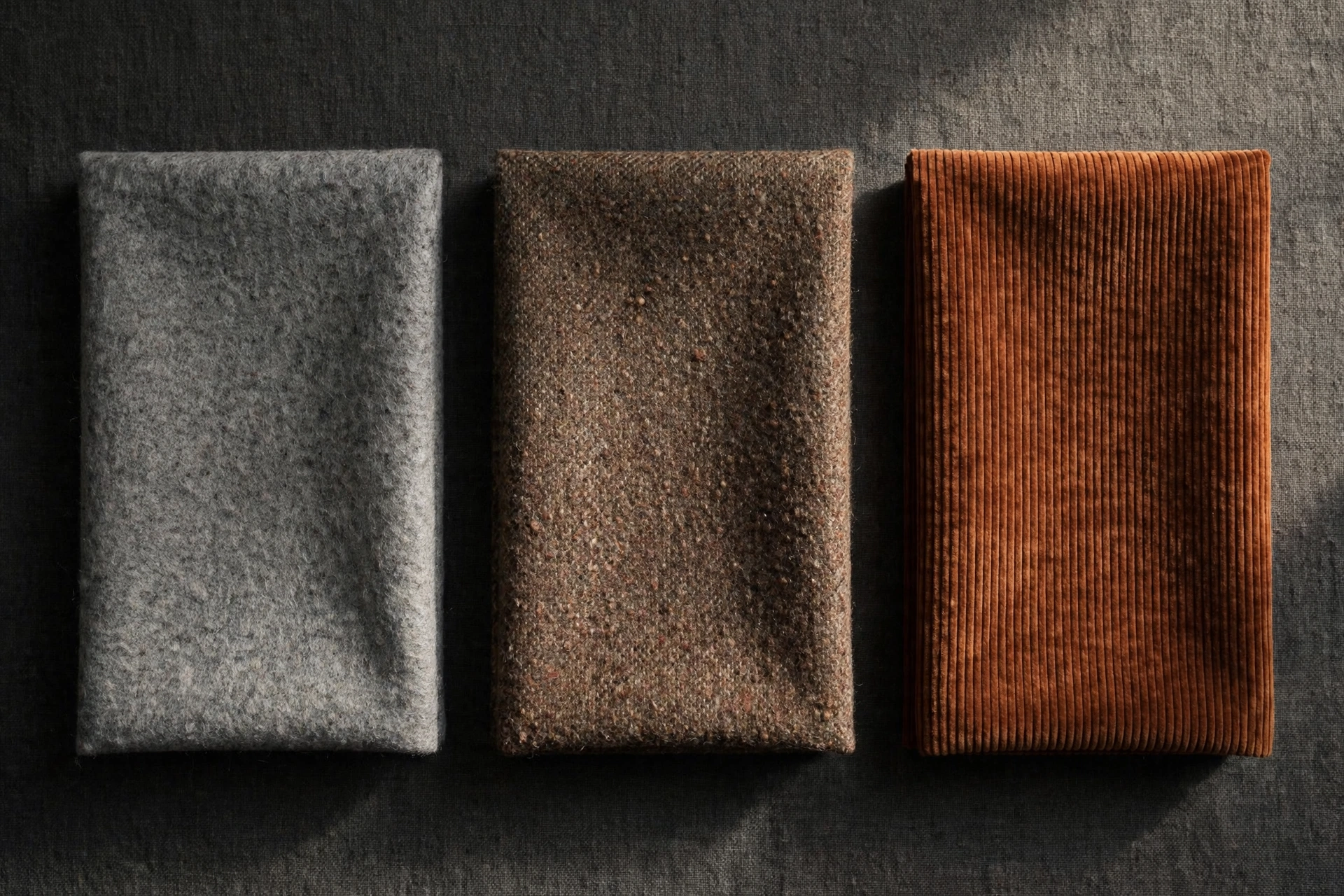
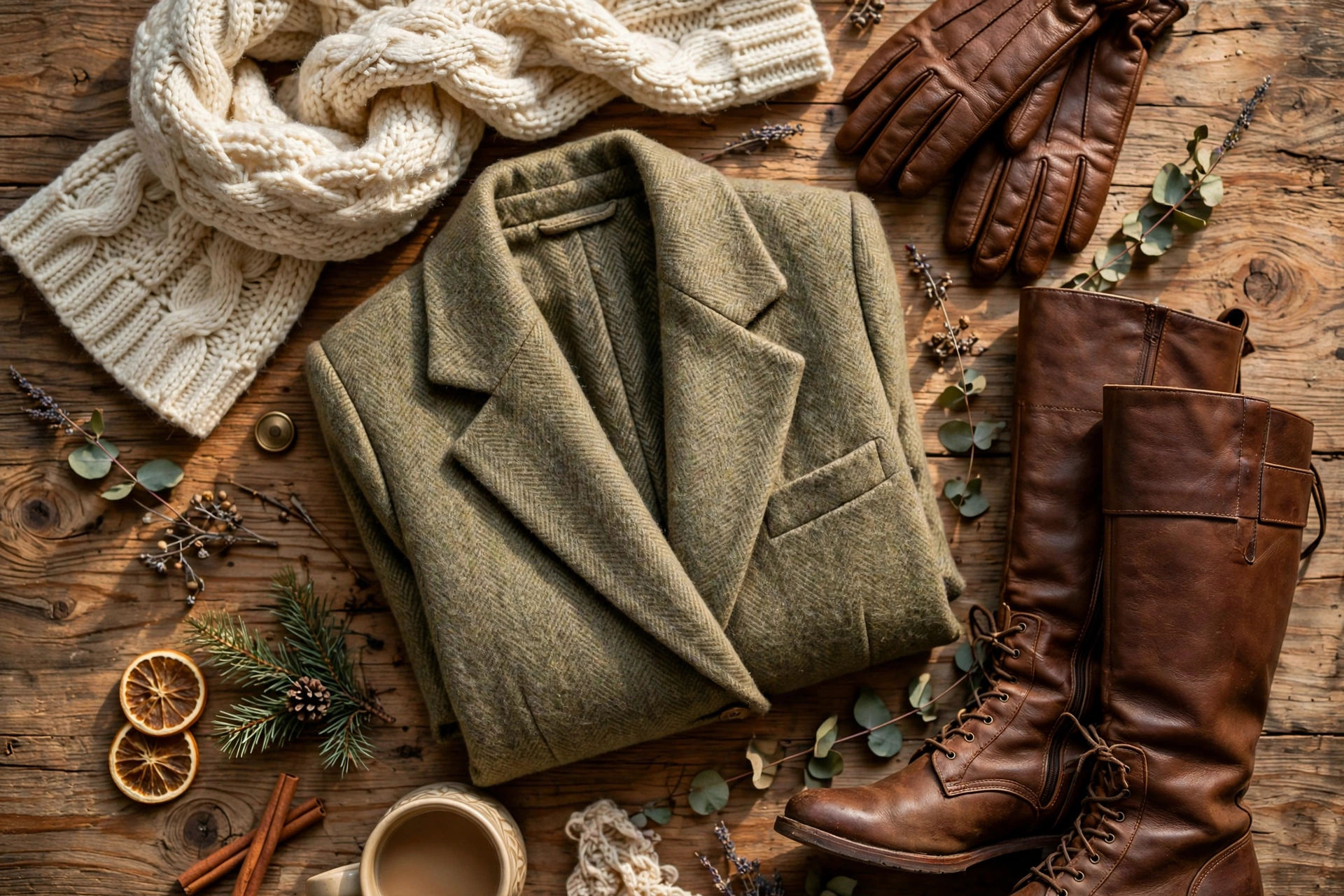
Not every blazer fabric holds up well against cold weather layering. Wool and wool-blend blazers are the obvious first choice, offering natural warmth and a slightly heavier drape that holds its shape well under a coat. Tweed blazers add texture and visual warmth, working especially well for a classic winter aesthetic. Corduroy blazers have become a popular seasonal option too, offering a cozier, more textured alternative to traditional wool.
Lighter fabrics like linen or thin cotton-blends, which work well the rest of the year, generally aren’t ideal for winter blazer outfits on their own. They’re better saved for indoor wear or layered under a warmer coat rather than relied upon for outdoor warmth.
Outfit Formula 1: Blazer, Turtleneck, and Wool Trousers
A wool blazer layered over a fitted turtleneck, paired with matching or coordinating wool trousers, creates a warm, monochromatic outfit that still reads as intentionally styled rather than simply bundled up. This combination works well for cold-weather workdays or errands where you’ll be spending time both indoors and out.
Outfit Formula 2: Blazer Over a Chunky Sweater
Layering a slightly oversized blazer over a chunky knit sweater adds textural contrast and visual interest, while the sweater provides genuine warmth underneath. This pairing works particularly well with straight-leg jeans and ankle boots for a relaxed, cold-weather casual look.
Outfit Formula 3: Blazer Under a Long Wool Coat
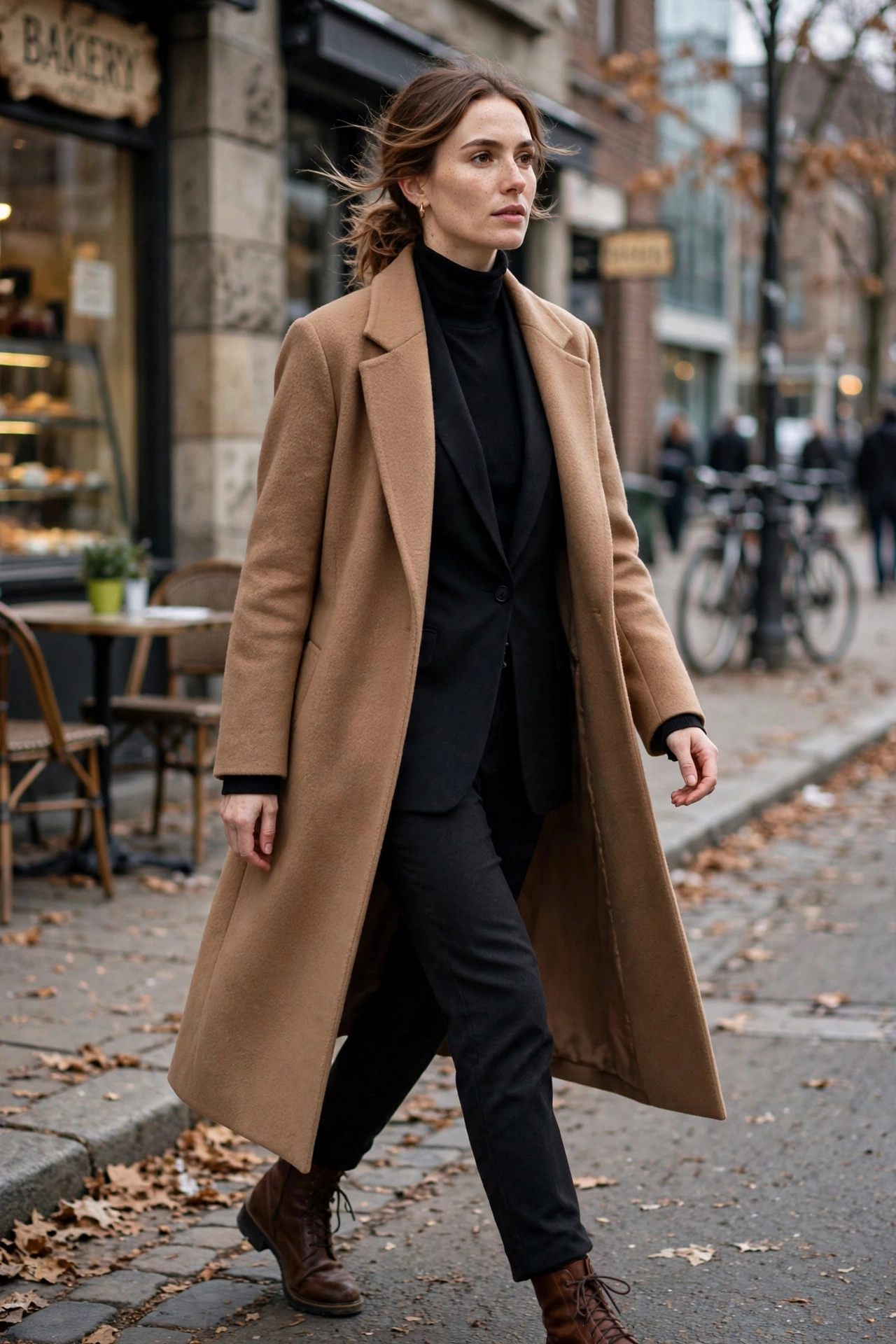
For genuinely cold days, wearing a fitted blazer underneath a long wool coat creates a polished, layered silhouette when the coat is removed indoors. You’re never left in just a t-shirt once the outer layer comes off. This formula works especially well for travel days or events where you’ll move between outdoor and indoor spaces frequently.
Outfit Formula 4: Blazer with Leggings, Boots, and a Scarf
For a more relaxed winter look, a longline blazer paired with fleece-lined leggings, tall boots, and a chunky scarf balances comfort with polish. This combination is especially practical for cold-weather errands or casual outings where you want warmth without sacrificing structure entirely.
Color Palettes for Winter Blazer Outfits
Deep, rich tones work particularly well for winter styling: charcoal, forest green, burgundy, and navy all read as seasonally appropriate while still pairing easily with neutral basics. Camel and cream remain versatile year-round but feel especially cozy paired with chunky knits and wool trousers during colder months. Black, while always reliable, benefits from being broken up with a textured scarf or a richer-colored knit underneath to avoid feeling flat against grey winter skies.
Accessorizing for Warmth and Style
Winter accessories can do double duty, adding both function and visual interest. A chunky knit scarf adds warmth around the neck while softening the blazer’s structured lines. Leather gloves keep hands warm without bulk. A wool or felt hat adds a finishing touch that also genuinely helps retain body heat. Tall boots, whether leather or suede, both look polished and provide better protection against cold and wet conditions than flats or sneakers.
Common Mistakes to Avoid
- Relying on the blazer alone as your outermost layer in genuinely cold weather. A blazer simply isn’t insulated enough on its own; always plan for a coat when temperatures drop significantly.
- Choosing very lightweight fabrics for outdoor winter wear. Linen and thin cotton blazers are better suited to indoor layering or warmer transitional days than a full day outdoors in the cold.
- Skipping a base layer underneath the blazer. A turtleneck or long-sleeve top underneath adds crucial warmth without changing the outfit’s overall silhouette.
- Forgetting that bulky layers change how a blazer fits. Sizing up slightly for winter blazers, to accommodate a sweater or turtleneck underneath, generally gives a more comfortable and better-proportioned result than forcing a summer-fit blazer over thick layers.
For more everyday blazer styling ideas across seasons, our casual blazer outfits guide covers additional foundational tips.
For further reading on cold-weather layering strategies, Saks Fifth Avenue’s winter layering guide offers useful additional context.
Final Thoughts
Casual blazer outfits for winter come down to smart layering rather than avoiding blazers altogether during colder months. With the right base layer underneath, a warm enough fabric, and a coat on standby for genuinely cold days, a blazer remains just as versatile and stylish in winter as it is any other time of year.
FAQ
Can a blazer be worn as a winter coat?
Not on its own in genuinely cold weather. A blazer works best as a mid-layer, with a proper coat added on top for outdoor warmth.
What’s the warmest blazer fabric for winter?
Wool and wool-blend fabrics offer the best natural warmth, with tweed and corduroy as cozy, texture-rich alternatives.
What should I wear under a blazer in winter?
A fitted turtleneck or long-sleeve top works best as a base layer, adding warmth without changing the outfit’s overall silhouette.
Should I size up my blazer for winter layering?
Yes, sizing up slightly helps accommodate a sweater or turtleneck underneath comfortably without the blazer feeling tight across the shoulders.
What colors work best for winter blazer outfits?
Deep, rich tones like charcoal, forest green, burgundy, and navy feel especially seasonal, while camel and cream stay versatile and cozy.

2 Comments