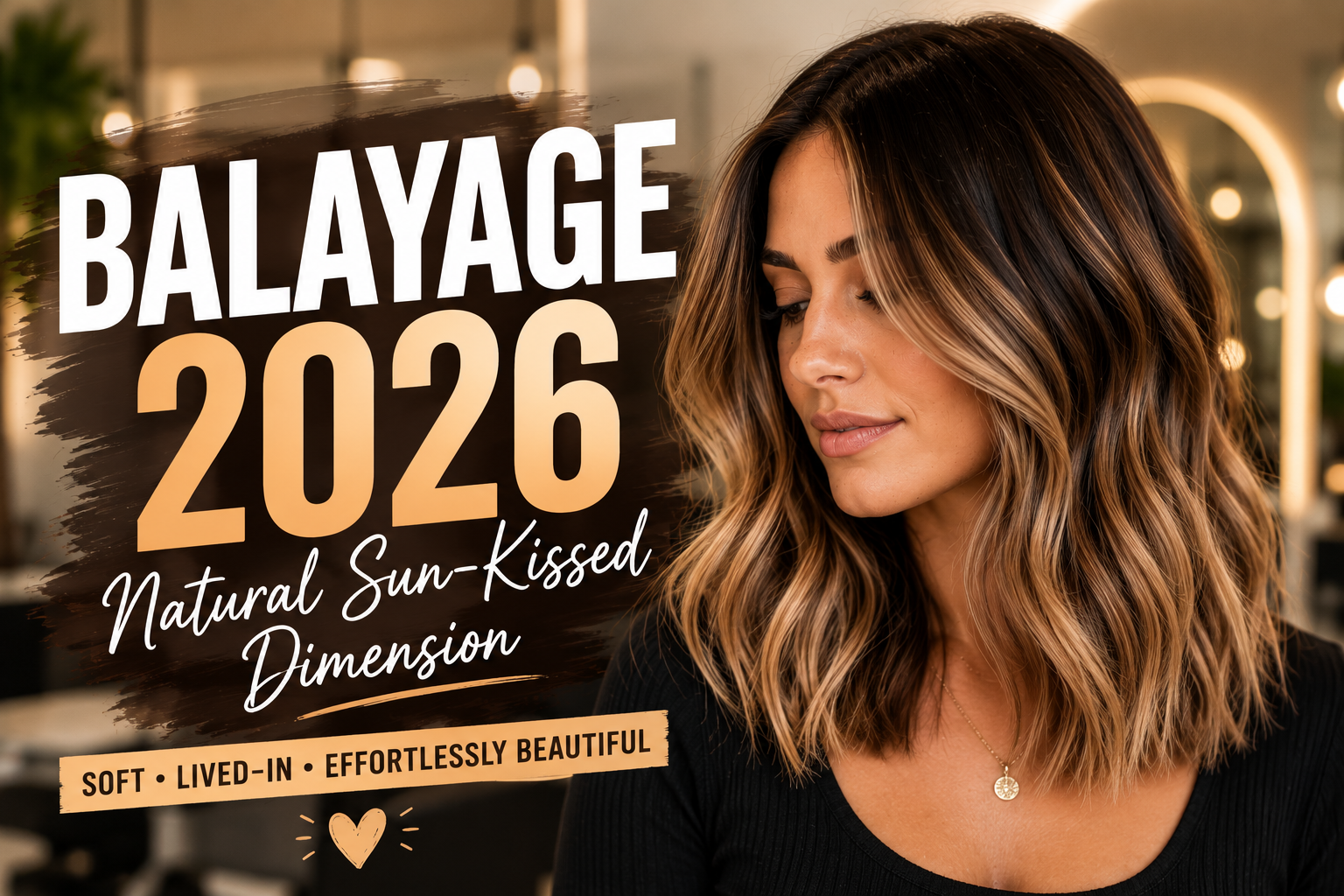
Discover balayage hair color for 2026 how the hand-painted technique works, who it suits, and how to maintain that natural sun-kissed look.
Balayage has held its place as one of the most requested hair coloring techniques for over a decade now, and in 2026, it continues to evolve rather than fade. After years of working with clients who come in specifically asking for balayage often without fully understanding what makes it different from other techniques I’ve learned that explaining the “why” behind balayage is just as important as the technique itself.
This guide covers everything you need to know about balayage hair color: what it actually is, who it suits, how it’s applied, and how to maintain that soft, sun-kissed look long after you leave the salon chair.
One thing I always emphasize to clients is that balayage isn’t a single, fixed look it’s a technique that can be adapted endlessly depending on the desired outcome. Two people can both request balayage and walk away with dramatically different results, one with subtle, barely-there dimension and another with bold, high-contrast color, simply based on how the colorist chooses to apply the technique. Understanding this flexibility is key to communicating clearly about what you actually want during your consultation.
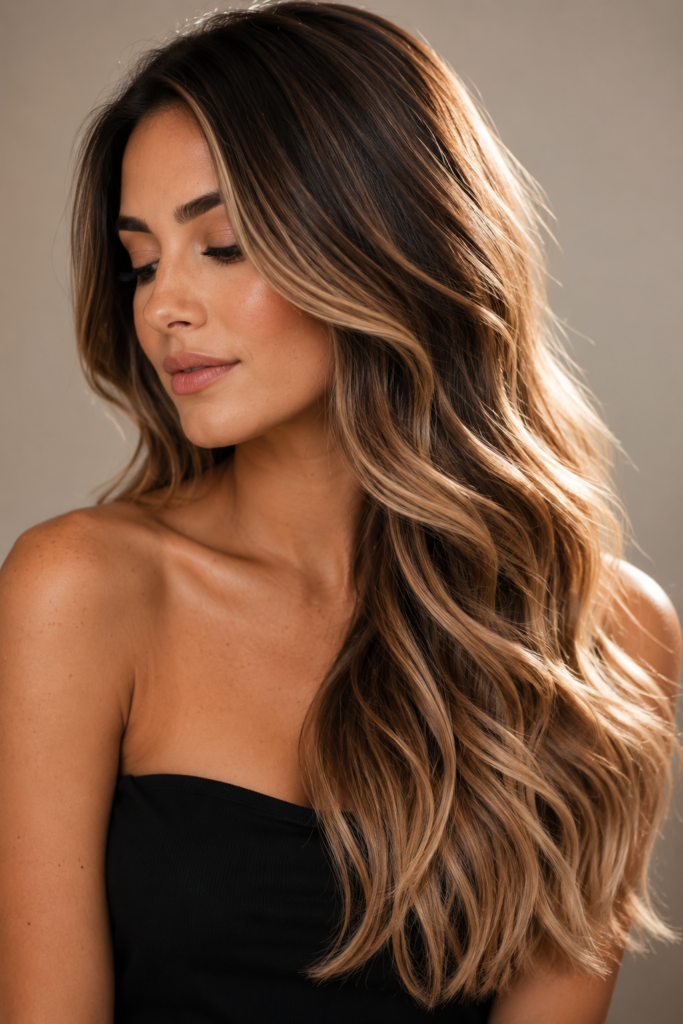
It’s also worth understanding balayage as a philosophy as much as a technique. At its core, it’s built around the idea of imitating how hair naturally lightens through everyday life a bit brighter around the face, a bit brighter at the ends, and progressively darker as you move toward the roots. Once you understand that underlying logic, it becomes much easier to describe exactly what you want, whether that means requesting more concentration around your face or a softer, more diffused overall effect.
What Exactly Is Balayage?
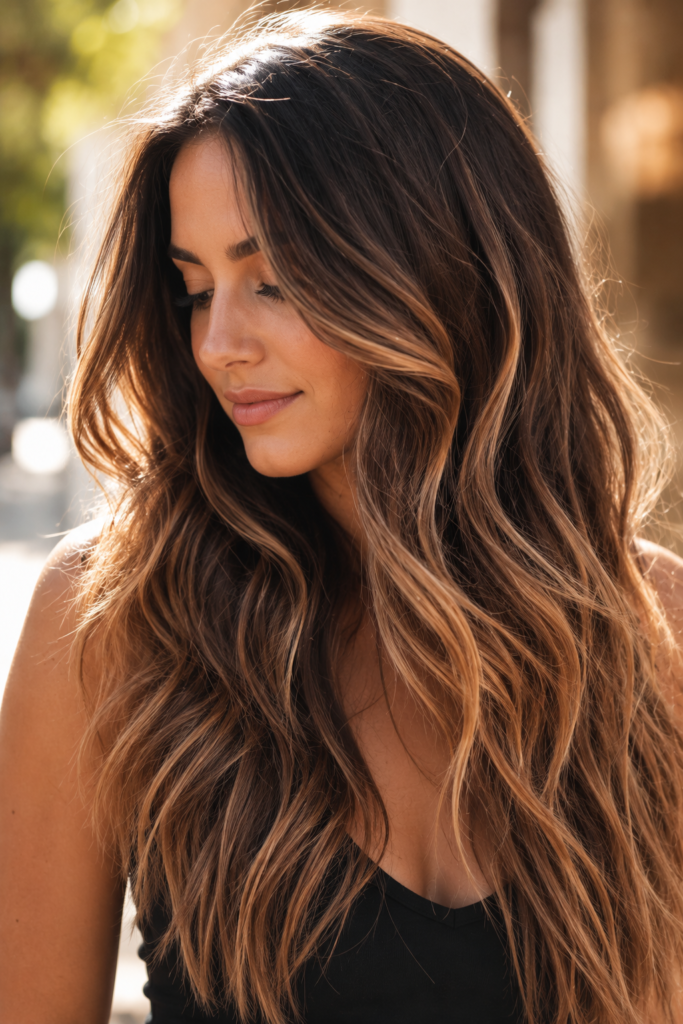
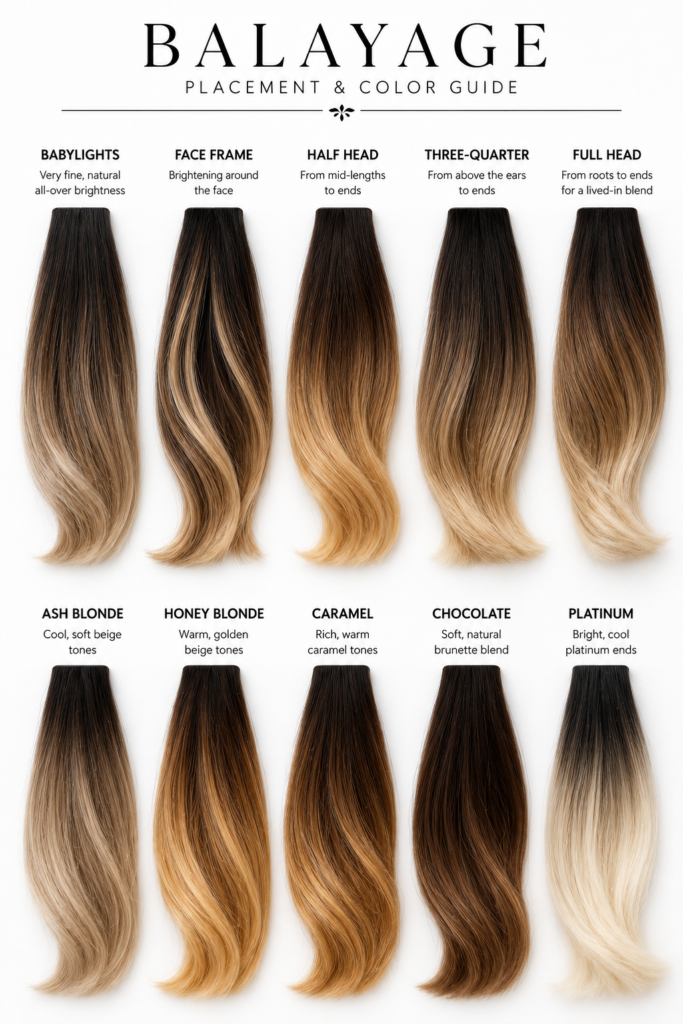
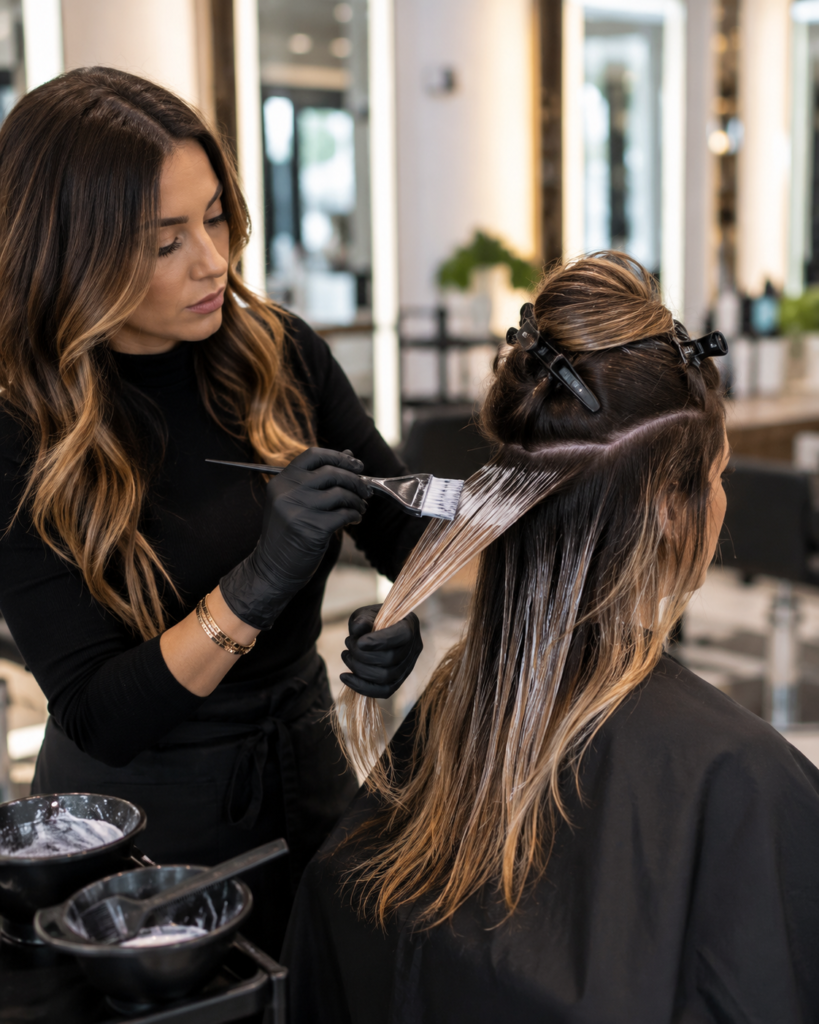
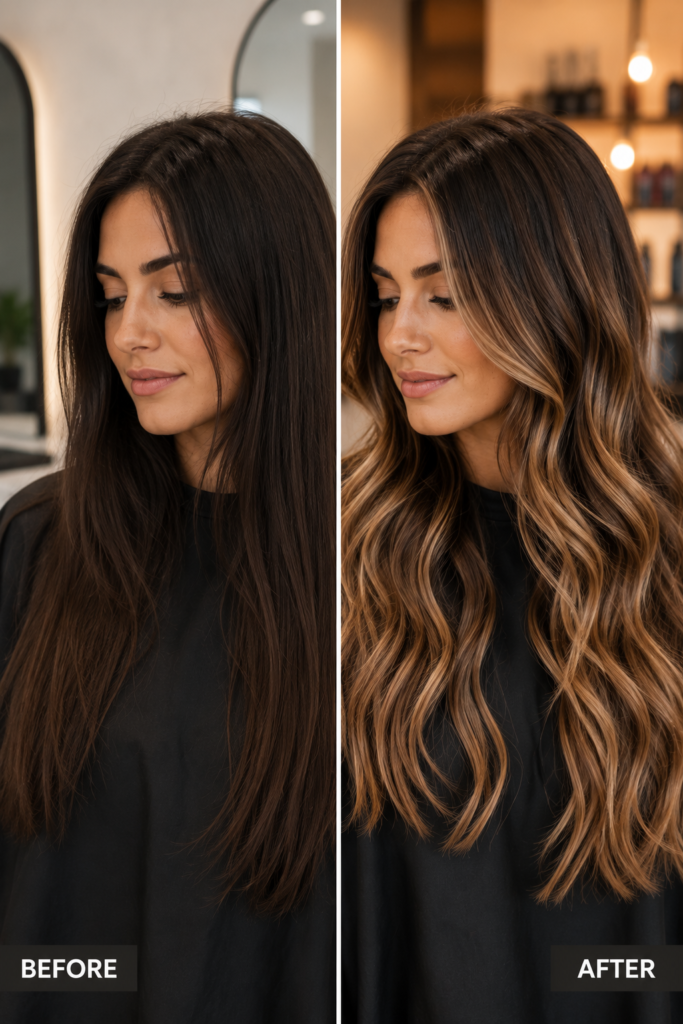
Balayage is a French hair coloring technique that translates roughly to “to sweep” or “to paint,” referring to the freehand method colorists use to apply lightener directly onto the hair rather than using foils. Unlike traditional foil highlights, which create more uniform, structured color sections, balayage is hand-painted in a sweeping motion that mimics the way hair naturally lightens from sun exposure.
The result is a soft, graduated color transition, typically darker at the roots and gradually lightening toward the ends, creating a natural, lived-in look rather than the more obvious, uniform pattern often associated with traditional highlights.
It’s worth noting that balayage originated decades ago in French salons, long before it became a global mainstream term, and its rise in popularity is closely tied to a broader cultural shift toward “your hair but better” color rather than obviously processed, salon-fresh looks. This origin also explains why balayage is fundamentally an artistic, freehand skill rather than a fixed formula every colorist develops their own personal painting style over years of practice, which is part of why portfolios matter so much when choosing who to trust with this technique.
Why Balayage Continues to Trend in 2026
Balayage’s staying power comes down to several key factors that continue to resonate with clients:
- Its inherently low-maintenance growth pattern, since there’s no harsh line of demarcation at the roots
- A continued preference for natural, sun-kissed color over obvious, uniform highlighting patterns
- Versatility across nearly every hair color, length, and texture
- The customizable nature of the technique, allowing colorists to create anything from subtle, barely-there dimension to dramatic, high-contrast color
- Growing demand for “your hair but better” color that feels effortless rather than overtly processed
In 2026, we’re also seeing balayage increasingly combined with other techniques like lowlights and money-piece framing to create even more customized, multi-dimensional results. This layering of techniques reflects a broader trend across the industry: rather than treating each coloring method as a rigid, standalone service, colorists are increasingly building custom formulas that borrow the best elements of several approaches to create a genuinely one-of-a-kind result for each client.
There’s also a practical, lifestyle-driven reason balayage continues to dominate. As more people juggle busy schedules and want color that photographs well without constant upkeep, a technique that grows out gracefully and doesn’t demand monthly root touch-ups has an obvious appeal. This is especially true for clients balancing salon visits against travel, work commitments, or simply a preference for spending less time and money on maintenance appointments.
Balayage and the Seasons
Balayage’s popularity remains fairly consistent year-round, though there are subtle seasonal variations in how clients typically request it. Summer often brings requests for brighter, more sun-kissed placement with heavier lightening toward the ends, mimicking the way hair naturally lightens from increased sun exposure during warmer months.
Winter balayage requests, on the other hand, often lean toward richer, more subtle dimension using warmer tones like caramel or chestnut rather than bright blonde, complementing the season’s typically deeper wardrobe palette. Because balayage grows out so gracefully, many clients choose to adjust the placement and tone seasonally without needing a complete color overhaul each time.
Many colorists also treat seasonal balayage appointments as an opportunity to reassess the overall placement pattern rather than simply refreshing the same formula. A client might request slightly heavier face-framing pieces in summer to brighten their complexion for warm-weather activities, then dial that back in favor of an overall softer, more subtle effect heading into the cooler months all without needing to start the color from scratch each time.
How Balayage Interacts With Hair Texture
Hair texture plays a significant role in how balayage looks and performs. Straight hair tends to showcase the graduated color transition very clearly, since light travels smoothly down each strand, making the placement pattern highly visible and precise.
Wavy and curly hair, meanwhile, often benefits even more from balayage’s soft, blended nature, since the natural movement and dimension of curls can make foiled highlights look less intentional, whereas balayage’s organic placement tends to complement curl patterns beautifully. Colorists often adjust their painting technique specifically for curly hair, sometimes stretching curls straight during application to ensure even color distribution throughout each curl’s full length.
Thicker, denser hair may require a colorist to work in smaller, more meticulous sections to ensure the lightener saturates evenly throughout, while fine hair often takes color more quickly and may require closer monitoring during processing to avoid over-lightening.
It’s also worth noting that hair length affects how a colorist approaches placement. On longer hair, there’s more room to create a gradual, multi-stage transition from root to end, while shorter hair requires a more compressed placement strategy to achieve a similar sense of graduated dimension within a much smaller amount of visible length. This is one of the reasons an experienced colorist will often adjust their entire approach based on length rather than applying the exact same technique regardless of how much hair they’re working with.
Who Should Try Balayage?
Balayage is remarkably versatile, but certain factors influence how the technique will look and perform:
Any Natural Hair Color: Balayage works beautifully on blonde, brunette, red, and black hair alike, since the technique simply lightens sections rather than requiring a specific base color.
Those Wanting Low-Maintenance Color: Because balayage grows out gradually without an obvious root line, it’s an excellent choice for those who don’t want to visit the salon every 4-6 weeks for touch-ups.
All Hair Lengths: Balayage adapts well to both short and long hair, though the placement pattern and technique may be adjusted slightly depending on length and desired effect.
People New to Highlighting: Because balayage tends to look more forgiving and natural than traditional foil highlights, it’s often recommended as a great starting point for those new to coloring their hair.
Those With Active or Frequently Traveling Lifestyles: Balayage’s low-maintenance growth pattern makes it particularly appealing for people who don’t have the time or flexibility for frequent salon visits, since the color continues to look intentional and polished well beyond the point where traditional highlights would need a touch-up.
The Process: How Balayage Is Applied
Understanding the application process helps clients have more informed conversations with their colorist:
Sectioning – The colorist divides hair into sections to ensure organized, even placement throughout the head.
Hand-Painting – Lightener is painted freehand onto the hair using a brush, typically applied more heavily toward the mid-lengths and ends while leaving the roots darker or untouched.
Processing – Hair is left to process, often without foils, allowing the lightener to create a soft, natural gradient as it develops.
Toning – After rinsing, a toner is applied to neutralize any unwanted brassy tones and achieve the desired final shade.
A full balayage service typically takes 2-4 hours depending on hair length, thickness, and the complexity of the desired placement pattern.
It’s also worth understanding that some colorists incorporate a technique called “backcombing” or teasing at the root of each section before painting, which helps create an even softer, more diffused blend at the point where the color transition begins. This small but important detail is part of what separates a seamless, professional balayage result from one that looks more segmented or obviously placed.
Balayage vs. Highlights vs. Ombre: Key Differences
Understanding these distinctions helps clients communicate more clearly with their colorist:
Highlights use foils to create more uniform, structured sections of lightened hair throughout.
Balayage is hand-painted, creating a softer, more graduated, natural-looking transition.
Ombre refers to a more dramatic, distinct transition from dark roots to significantly lighter ends, often with less blending than balayage.
Many colorists blend these techniques together depending on the desired final look, which is why terms like “balayage highlights” or “balayombre” have become common in modern salon vocabulary.
Understanding these terms as points on a spectrum, rather than entirely separate categories, tends to be the most useful mental model. On one end sits highly structured, uniform foil work; on the other sits soft, freehand painting with minimal contrast. Most requested looks in 2026 actually live somewhere in the middle, borrowing precision from foiling techniques and softness from balayage to create a result that’s both polished and natural-looking.
Maintaining Balayage Hair Color
One of balayage’s biggest selling points is its low-maintenance nature, but proper aftercare still matters for keeping the color looking fresh:
Use color-safe, sulfate-free shampoo. This helps preserve both the toned color and the overall health of lightened sections.
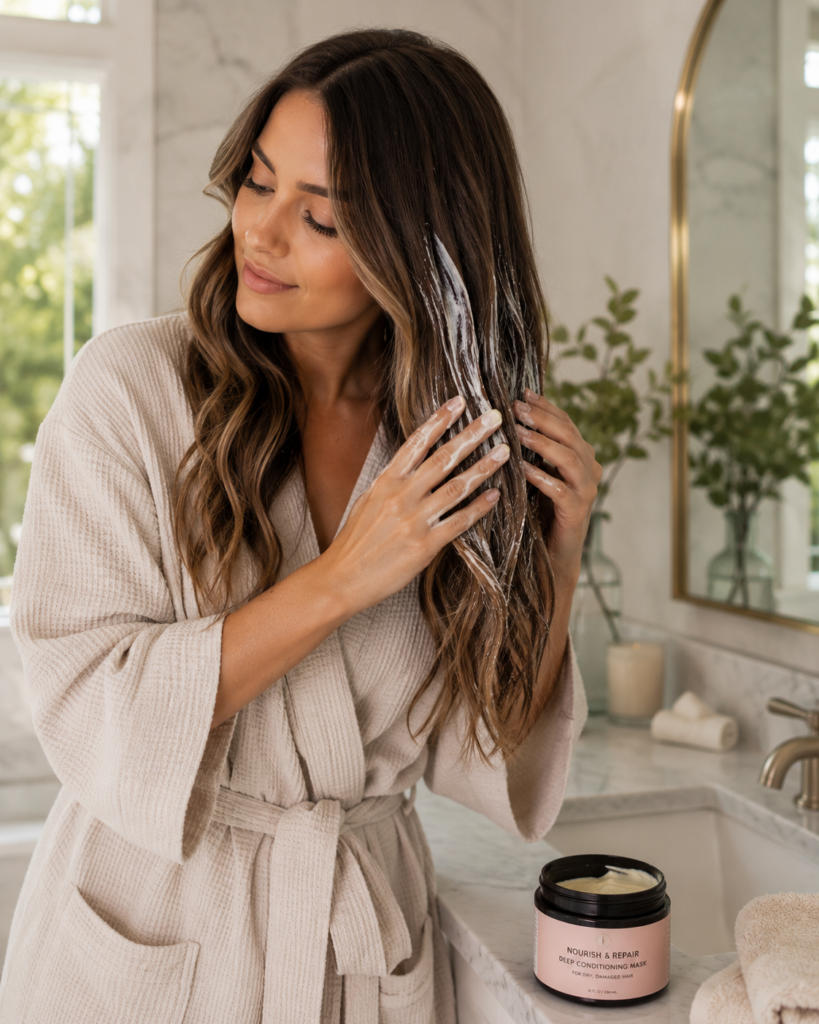
Deep condition regularly. Since balayage involves lightening, hair can become more porous and prone to dryness, making weekly deep conditioning treatments important for maintaining shine and softness.
Refresh with toner periodically. Even though balayage doesn’t require frequent root touch-ups, a toning refresh every 8-10 weeks helps prevent brassiness and keeps the color looking crisp.
Limit heat styling. Lightened sections are more susceptible to heat damage, so using a heat protectant consistently helps preserve both color and hair health.
Get regular trims. Trimming every 8-10 weeks prevents split ends from making the color transition look uneven or dull at the tips.
Use a bond-building treatment periodically. Since balayage often involves some degree of lightening, incorporating a bond-repairing treatment every few weeks can help maintain internal hair strength and reduce breakage over time.
Protect hair before sun and water exposure. Chlorine, saltwater, and prolonged UV exposure can all affect how lightened sections hold their tone, so applying a leave-in protectant before swimming or extended time outdoors helps preserve the color’s intended warmth or coolness.
Beyond specific products, it’s worth remembering that balayage’s low-maintenance reputation refers primarily to root touch-up frequency, not to overall hair care needs. Lightened sections still require consistent attention to stay healthy and vibrant, so treating balayage as entirely “maintenance-free” is a common misconception that can lead to gradually drier, duller-looking color over time.
How Much Does Balayage Cost?
Pricing varies based on hair length, thickness, and desired intensity:
- Partial balayage (face-framing/money piece): $100-$200
- Full head balayage: $150-$350
- Balayage combined with lowlights or additional dimension: $200-$450+
Balayage’s cost-per-visit may be higher initially compared to simple root touch-ups, but its low-maintenance growth pattern often means fewer total salon visits per year, which can balance out overall cost for many clients.
When evaluating cost, it’s worth thinking beyond the single appointment and considering the full-year picture. A client getting balayage every 3-4 months may end up spending a similar or even lower total amount annually compared to someone getting traditional highlights every 6 weeks, even though the individual balayage appointment carries a higher price tag. This long-term view is often what makes balayage feel like better value despite the higher upfront cost per visit.
Common Mistakes to Avoid
Based on years of seeing balayage transformations succeed and occasionally miss the mark, here are the most frequent issues:
Choosing an inexperienced colorist – Balayage is a freehand technique that relies heavily on the colorist’s skill and artistic eye; an inexperienced colorist may create results that look patchy or uneven.
Requesting too much contrast at once – Dramatic lightening in a single session can be damaging, especially on darker natural hair.
Skipping toner – Without proper toning, balayage highlights can look brassy or yellow rather than soft and dimensional.
Neglecting aftercare – Regular shampoo and lack of deep conditioning can cause lightened sections to become dry, brittle, and prone to breakage.
DIY-ing at home – Hand-painting technique requires significant skill and practice; at-home attempts often result in patchy, unnatural-looking color.
Not communicating desired intensity clearly – Balayage can range from extremely subtle to dramatically bold, so failing to clearly communicate the desired level of contrast with your colorist often leads to results that don’t match expectations.
Assuming balayage requires zero maintenance – While it’s genuinely low-maintenance compared to other techniques, skipping toning refreshes and proper hair care can still cause the color to fade unevenly or lose its intended vibrancy over time.
Not bringing enough reference context – A single reference photo rarely tells the whole story. Bringing a few images that show different angles, lighting conditions, and placement intensities gives your colorist a much clearer picture of the range of results you’d be happy with.
Ultimately, the success of a balayage service comes down to clear communication and finding a colorist whose portfolio matches the specific style of balayage you’re hoping to achieve, whether that’s soft and barely-there or bold and high-contrast.
Talking to Your Colorist About Balayage
Because balayage is such a customizable technique, the consultation matters enormously. Beyond bringing reference photos, it helps to describe your desired result in terms of contrast level, placement concentration, and overall maintenance expectations. Telling your colorist whether you want something office-appropriate and subtle, or something bold enough to be the main feature of your look, allows them to plan the painting pattern accordingly from the very first section.
It’s also worth discussing your hair’s history honestly, including any previous color, chemical treatments, or heat damage, since this affects both how the lightener will process and how much contrast can safely be achieved in a single session. A good colorist will use this conversation to set a realistic plan, whether that means achieving your desired look in one appointment or building toward it gradually over a couple of visits.
Final Thoughts
Balayage remains a timeless, versatile technique because it prioritizes natural-looking dimension over rigid uniformity. Its low-maintenance growth pattern, combined with its adaptability across hair colors, lengths, and textures, explains why it continues to be one of the most requested coloring techniques year after year.
If you’re considering balayage in 2026, prioritize finding a colorist with strong hand-painting skills and a solid portfolio of natural-looking transformations, and commit to a simple but consistent aftercare routine to keep your color looking fresh and healthy long-term.
Frequently Asked Questions (FAQ)
Q1: How often do I need touch-ups for balayage? One of balayage’s biggest advantages is its low-maintenance growth pattern, with most people needing touch-ups only every 3-4 months, though a toning refresh may be needed more frequently.
Q2: Does balayage work on dark hair? Yes, balayage works beautifully on dark hair, though achieving significant lightness may require multiple sessions to protect hair health.
Q3: Is balayage less damaging than traditional highlights? Balayage can be gentler since lightener is often applied without foils and doesn’t always touch the scalp, but the level of damage ultimately depends on how much lifting is required to achieve the desired shade.
Q4: Can balayage be done on short hair? Absolutely. Balayage adapts well to shorter lengths, though the placement technique may be adjusted to suit the shorter hair structure.
Q5: What’s the difference between balayage and ombre? Balayage creates a soft, blended, natural-looking transition, while ombre typically features a more distinct, dramatic shift from dark roots to significantly lighter ends.
Q6: Can balayage be combined with gray blending? Yes, many colorists use balayage placement to soften the appearance of graying hair, since the technique’s natural, graduated style can blend gray strands in a way that looks less like an obvious cover-up and more like natural variation.
Q7: Will balayage look different depending on how I style my hair? Yes, quite noticeably. Balayage tends to look softer and more subtle when hair is worn straight, and more dimensional and pronounced when styled with waves or curls, since the movement created by curls and waves helps catch and reflect the graduated color at different angles