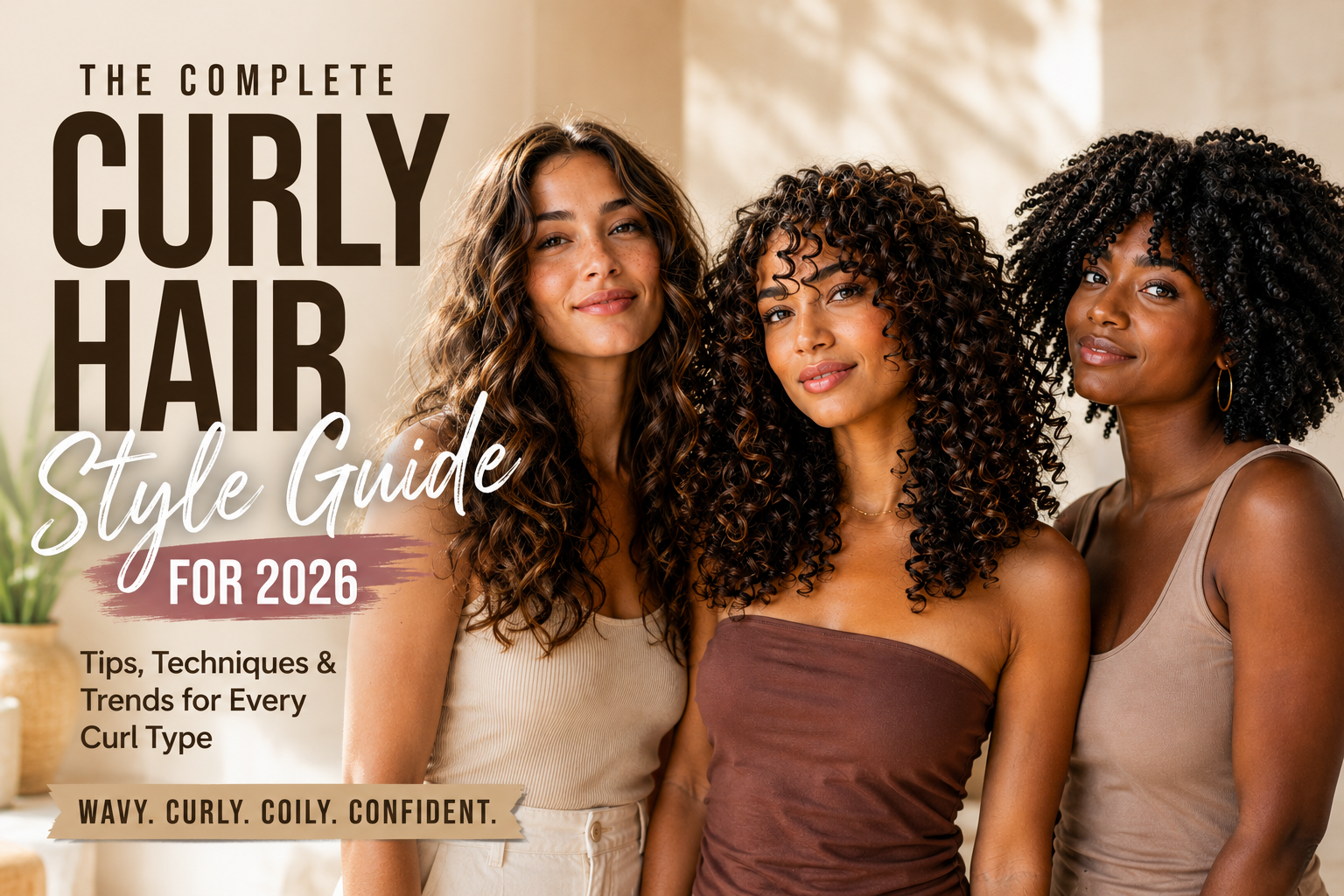
Discover curly hairstyle techniques for 2026 organized by curl type, from loose waves to coily hair, plus habits that help every pattern
Curly hair styling advice often gets written as though all curls behave the same way, which is exactly why so much of it doesn’t actually work once applied to real, specific hair. A loose, bouncy 3A curl and a tightly coiled 4B curl respond to completely different techniques, products, and even styling philosophies, despite both technically falling under the “curly” umbrella.
This guide is organized by curl type rather than by a single universal method, since that’s the only way styling advice for curls actually holds up in practice. Whatever your curl pattern, there’s a version of 2026’s curly hair trends here that’s actually built for it.
2. Loose, Wavy Curls
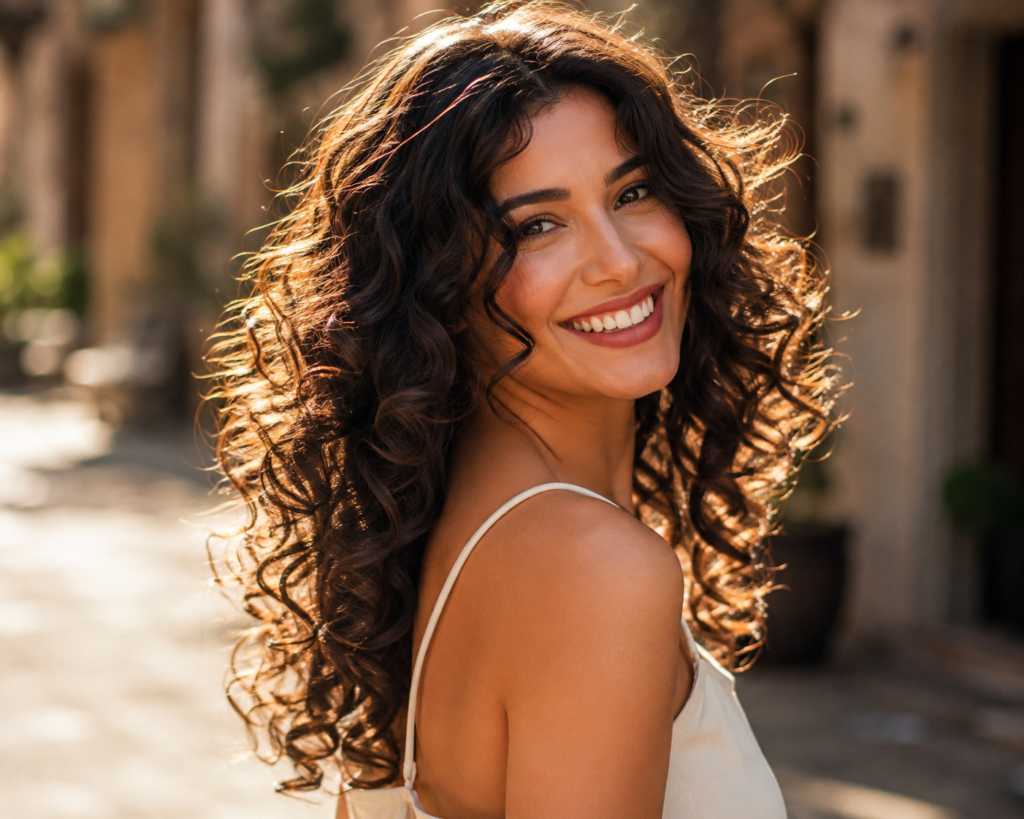
This looser curl pattern often sits closer to a wave than a defined ringlet, and tends to be the most prone to falling flat without the right technique.
Scrunch-and-Diffuse Applying a lightweight mousse to damp hair and diffusing on low heat while scrunching upward helps loose waves hold their shape without weighing them down.
The Sea Salt Texture Method — A light sea salt spray applied to damp hair before air-drying enhances natural texture and volume, particularly effective for this looser curl type.
Overnight Braid Waves — Braiding damp hair before bed and releasing it in the morning remains one of the most reliable heatless methods for adding defined texture to type 2 hair.
3.Defined Ringlets
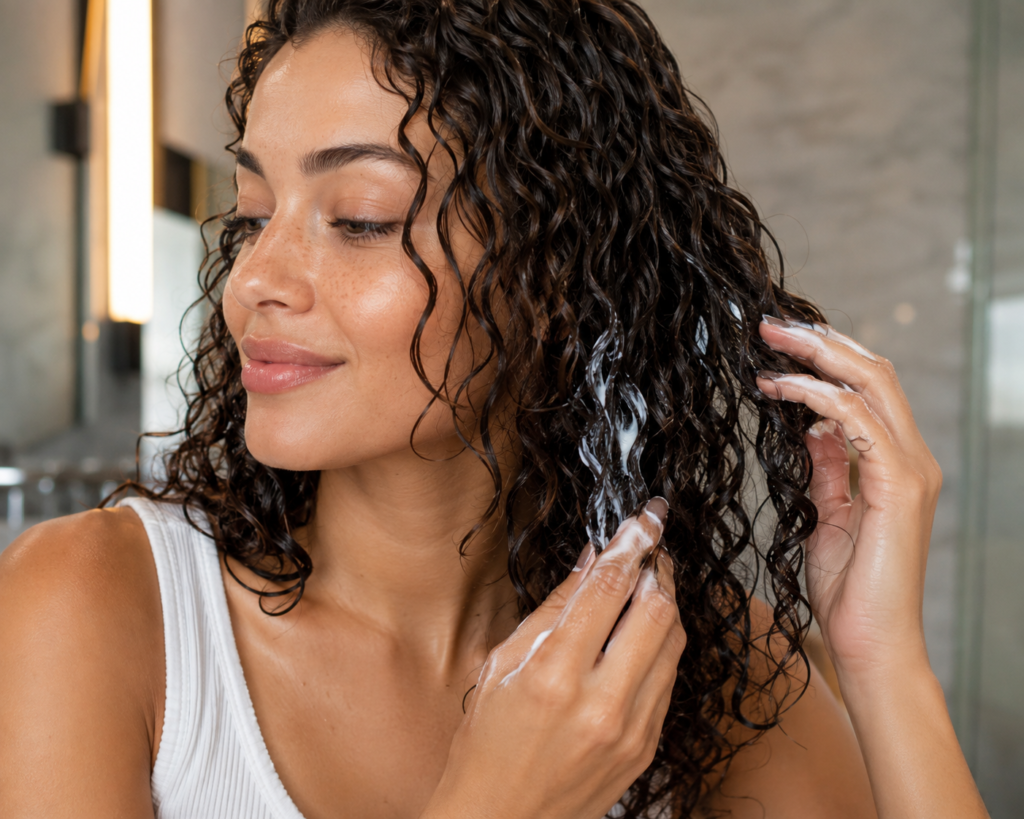
This curl type tends to have the most natural bounce and definition, but is also particularly prone to frizz without proper moisture and product layering.
The Curl Cream and Gel Combo — Layering a moisturizing curl cream underneath a stronger-hold gel, often called the “cream and gel method,” has become the standard technique for locking in definition on this curl type.
Plopping — Wrapping curls in a microfiber towel or soft cotton t-shirt after applying product helps encourage curl clumping and definition while reducing frizz during the drying process.
The Pineapple Method — Gathering curls loosely at the crown before bed preserves the curl pattern overnight, allowing for a quick refresh rather than a full restyle the next morning..
4. Coily Hair
This tightly coiled pattern generally requires the most consistent moisture and the gentlest handling, since its structure makes it more prone to dryness and breakage than looser curl types.
The LOC or LCO Method — Applying products in a specific liquid, oil, cream (or liquid, cream, oil) sequence has become the standard moisture-locking technique for coily hair, helping combat the dryness this curl type is especially prone to.
Twist-Outs and Braid-Outs — Setting hair in twists or small braids before unraveling remains one of the most effective ways to achieve defined, stretched curl definition on coily hair without heat.
Finger Coiling — Individually coiling small sections of hair around a finger creates highly defined, uniform curls, particularly useful for special occasions or when maximum definition is the goal.
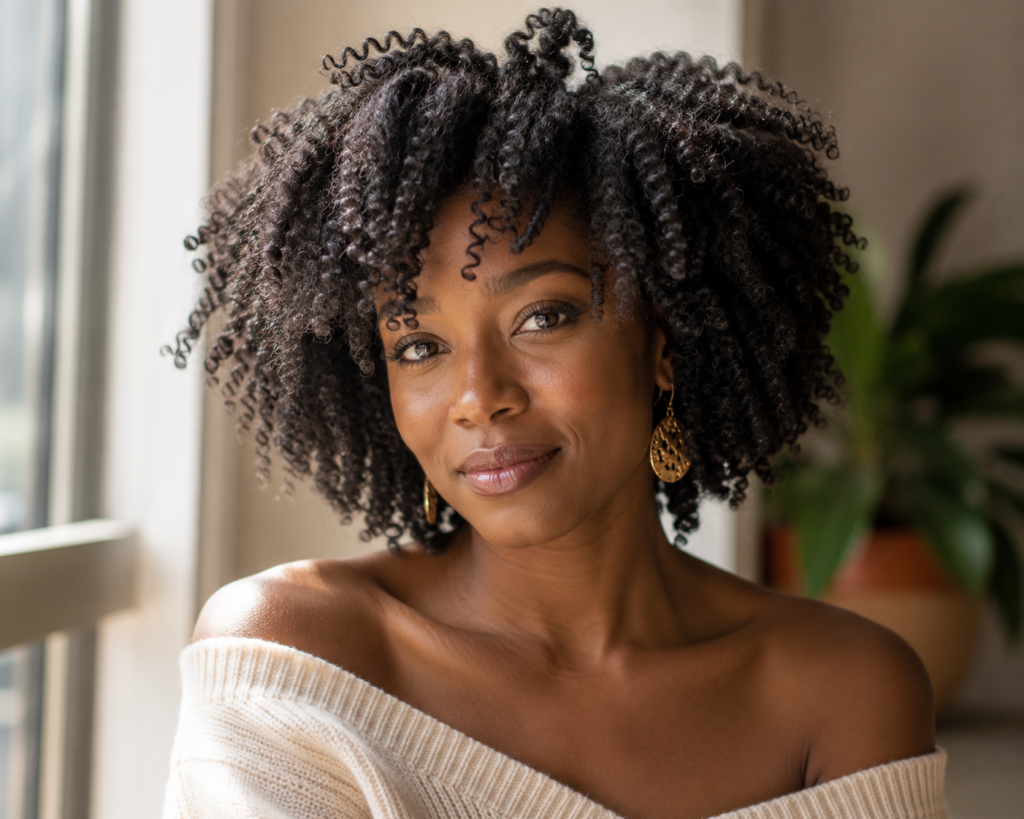
Protective and Updo Options Across Curl Types
Regardless of specific curl pattern, a few styling categories work well across the board for days when curls need to be secured or protected.
The Curly Half-Up — Securing just the top section while leaving the rest of the curl pattern loose works well across all curl types and requires minimal disruption to existing definition.
The Curly Bun or Puff — Gathering curls into a bun or puff, ideally using a soft, curl-friendly hair tie, keeps hair off the neck while preserving most of the underlying curl pattern.
Protective Braided Styles — For coilier curl types especially, braided protective styles offer a longer-lasting break from daily manipulation while still showcasing texture at the roots or edges.
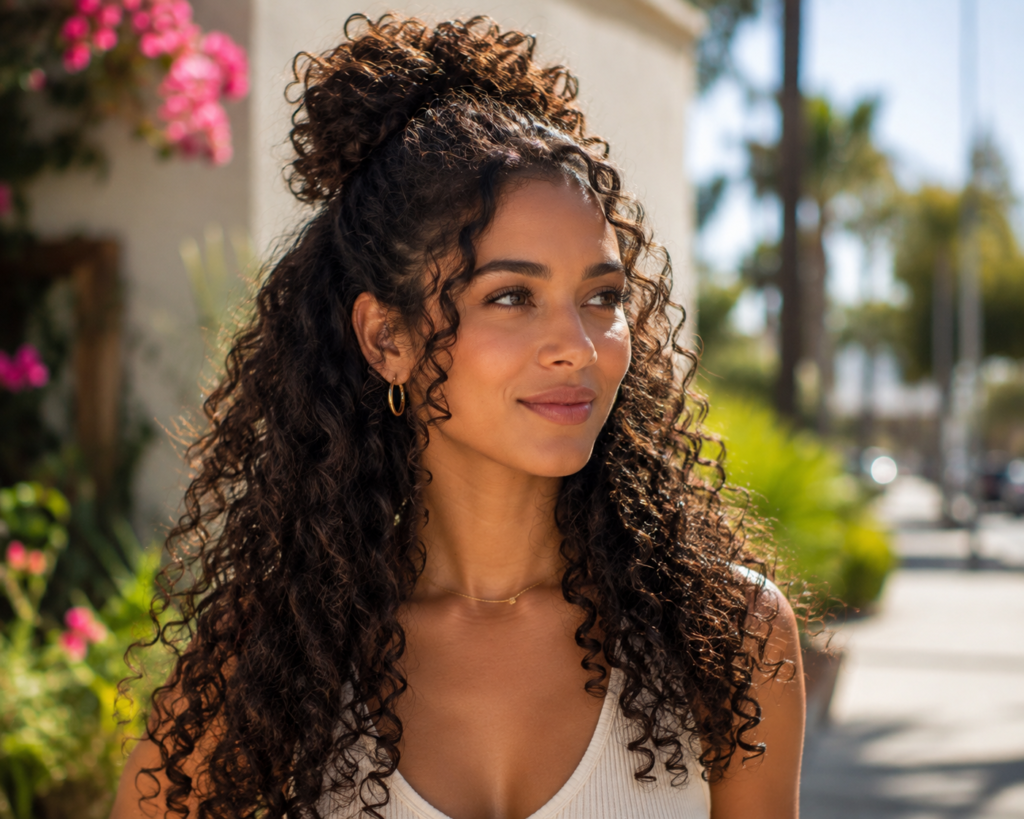
Universal Curly Hair Habits Worth Knowing
A handful of habits genuinely apply across nearly all curl types, regardless of specific pattern. Detangling exclusively on wet, conditioner-coated hair, rather than dry, significantly reduces breakage and frizz for most curl patterns. Sleeping on a silk or satin pillowcase or under a silk bonnet reduces friction and helps preserve styling overnight. Avoiding daily shampooing in favor of a gentler, less frequent wash schedule tends to help most curl types retain moisture and definition for longer between full wash days.
Final Thoughts
The single biggest shift in curly hair styling over the past several years hasn’t been a specific new technique it’s the growing recognition that curl type genuinely changes what actually works. A method that transforms one curl pattern can do very little for another, which is why understanding your own hair’s specific behavior matters more than chasing whatever technique is trending broadly. Start with your curl type, build from there, and the right routine tends to reveal itself fairly quickly.
Frequently Asked Questions (FAQ)
Q1: How can I figure out my curl type if I’m not sure? Looking at how your hair behaves when fully air-dried without product, ranging from loose S-shaped waves to tight, springy coils, is the most reliable way to roughly identify where your hair falls on the curl type spectrum.
Q2: Is the LOC method necessary for all curl types, or just coily hair? While most closely associated with coily hair due to its higher need for moisture, a lighter version of the LOC method can also benefit looser curl types that struggle with dryness or frizz.
Q3: How often should curly hair actually be washed? This varies significantly by curl type and scalp condition, but many curl types benefit from washing every four to seven days rather than daily, to help preserve natural oils and styling definition.
Q4: Can heat styling tools still be used occasionally on curly hair? Yes, though using a heat protectant and limiting heat tool use helps prevent the curl pattern from becoming permanently altered or damaged over time.
Q5: What’s the biggest mistake people make when styling curly hair? Detangling or styling on fully dry hair, rather than wet or damp hair with conditioner or product already applied, tends to be the most common cause of excess frizz and breakage.
Q6: Do protective styles work well for looser curl types, or mainly for coily hair? While protective styles are especially valuable for coily hair, looser curl types can still benefit from occasional braided or twisted protective styles, particularly during high-humidity seasons.