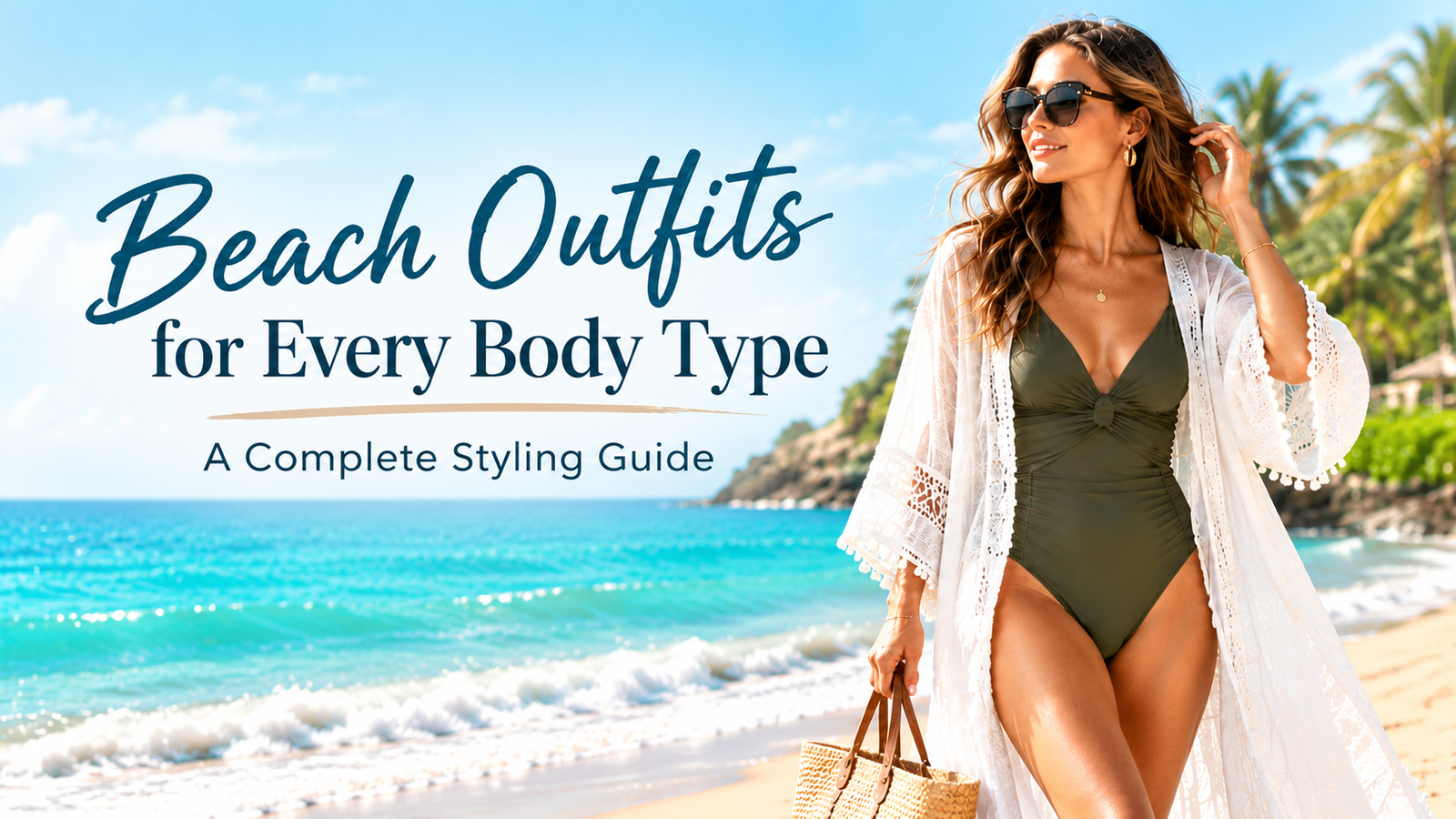
Find the most flattering beach outfits for your body type, from pear and apple shapes to hourglass and athletic builds. Swimsuits, cover-ups, and styling tips for every figure.
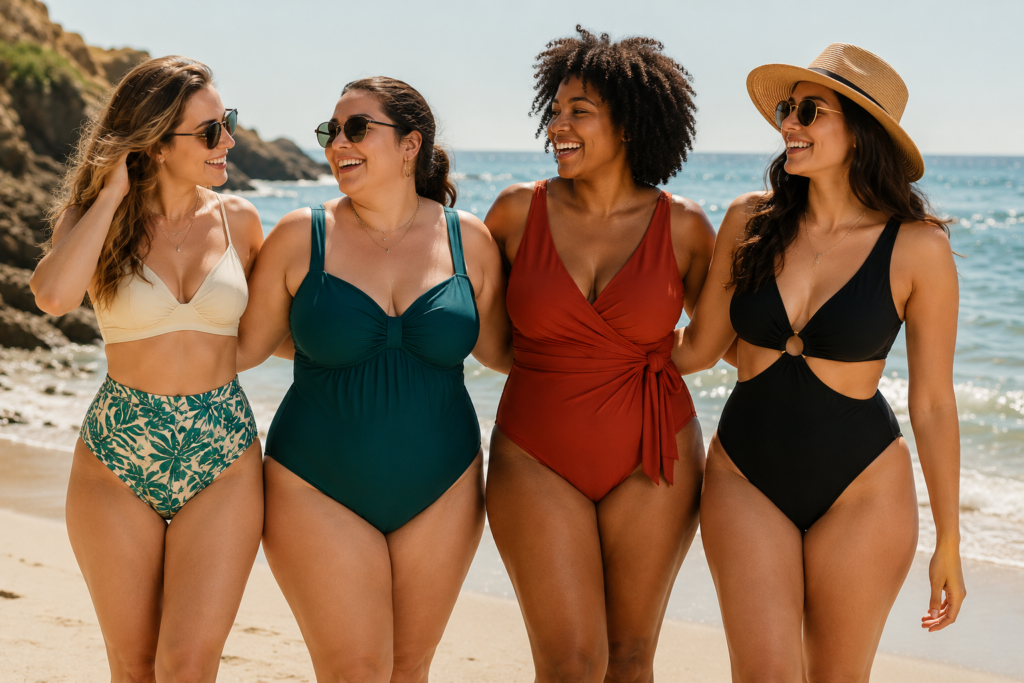
Not every beach outfit works the same way on every body, and that’s not a flaw to fix it’s just a matter of understanding which cuts, details, and proportions naturally highlight what you love about your shape. Once you know the general principles that work for your body type, beach shopping stops feeling like guesswork and starts feeling like a genuinely useful shortcut. Instead of trying on a dozen swimsuits at random and hoping something works, you walk in already knowing which necklines, waistlines, and cover-up shapes tend to suit you best.
This guide breaks down beach styling by body type, covering swimsuits, cover-ups, and full outfit ideas so you can walk into any beach shop or scroll through any online store already knowing what to look for. Along the way, we’ll also cover fabric and construction details that matter regardless of shape, since fit and comfort always play just as large a role as silhouette.
Understanding Body Type Styling Without the Pressure
Before diving into specifics, it’s worth saying clearly: body type guides are tools, not rules. They exist to help narrow down options in a sea of choices, not to dictate what anyone is “allowed” to wear. If a swimsuit style makes you feel confident and comfortable, that matters more than whether it technically matches your shape category. With that said, understanding the general logic behind these guides can genuinely save time and frustration when shopping for beachwear, especially online where trying things on isn’t an option before purchase.
It also helps to remember that most bodies don’t fit neatly into a single category. Many people are a blend of two shapes, or their proportions shift throughout different life stages. Treat these categories as a starting point for experimentation rather than a fixed identity to dress around.
Pear Shape: Balancing Proportions
Pear-shaped bodies carry more width through the hips and thighs relative to the shoulders and bust, so styling generally focuses on adding visual interest and width up top to create balance.
Swimsuits: Look for tops with embellishment, ruffles, halter necklines, or bold patterns to draw attention upward, paired with simpler, darker-toned bottoms like high-waisted briefs or boy shorts. A halter neckline in particular does a lot of work here, since it visually widens the shoulder line. Cover-ups: A structured kimono or cropped jacket that hits at the hip adds shape through the shoulders without adding bulk below the waist. Full outfit idea: A printed or embellished bikini top with a solid high-waisted bottom, layered with a cropped denim jacket and paired with wedge sandals that add a touch of height.
Apple Shape: Creating Definition Through the Middle
Apple-shaped bodies tend to carry more weight through the midsection, with slimmer legs and a less defined waistline, so styling generally focuses on creating shape and drawing the eye vertically.
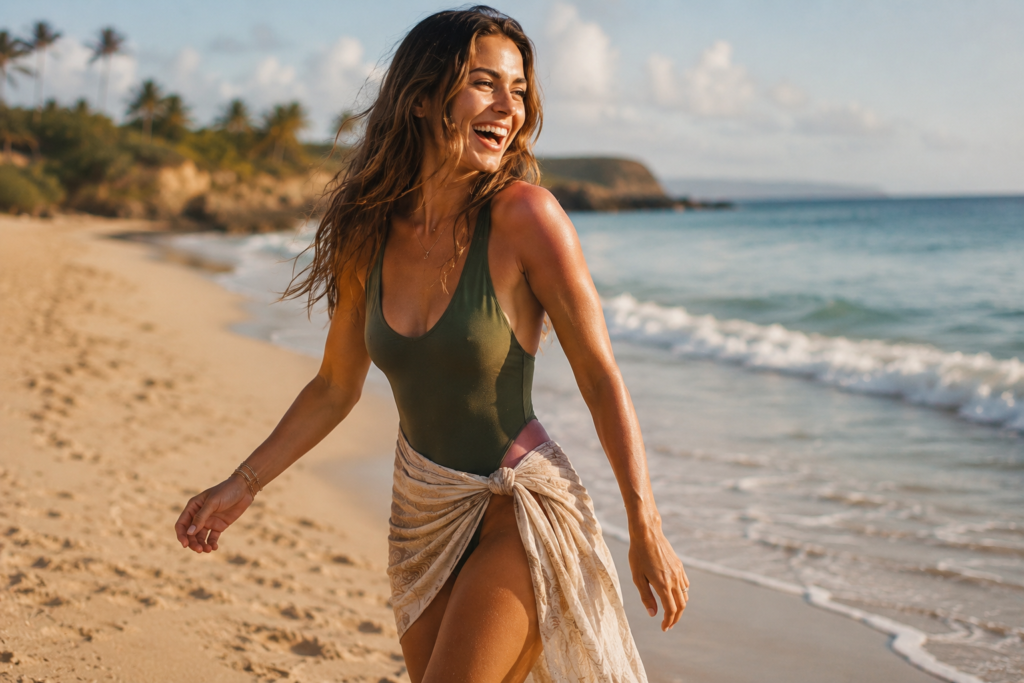
Swimsuits: Empire-waist one-pieces or tankinis that skim rather than cling around the midsection tend to be the most comfortable and flattering choice, along with V-neck or plunge necklines that elongate the torso. Cover-ups: A flowing kaftan or wrap dress that doesn’t cinch tightly at the natural waist allows for comfortable movement while still looking polished. Full outfit idea: An empire-waist one-piece in a bold solid color, paired with a lightweight open kimono and simple flat sandals, finished with statement earrings to draw attention upward.
Hourglass Shape: Highlighting a Defined Waist
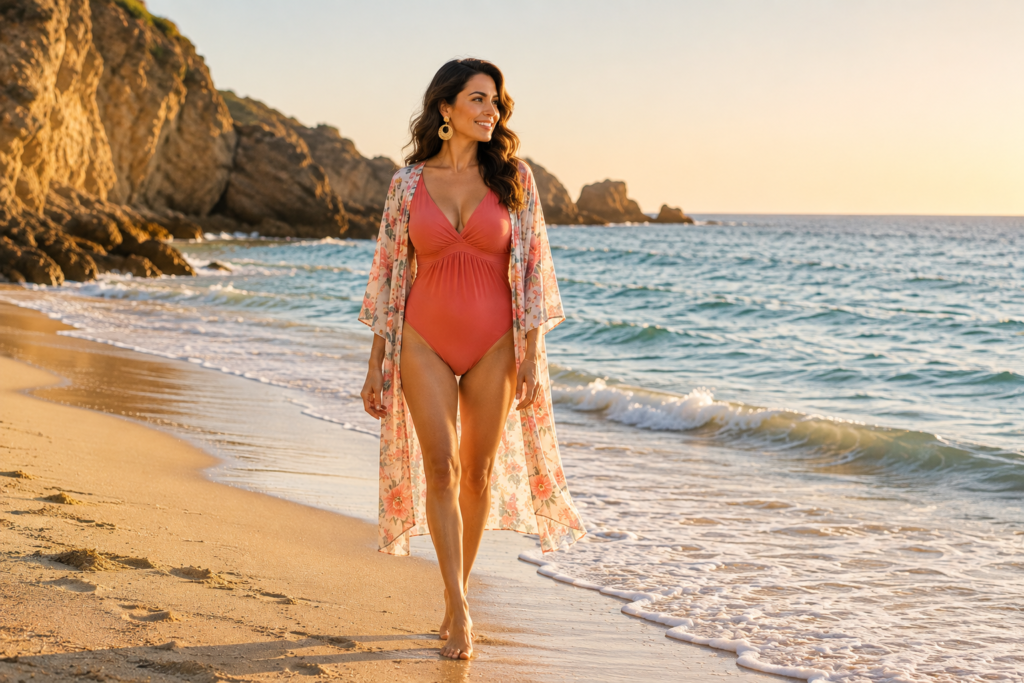
Hourglass bodies have roughly balanced shoulders and hips with a defined waist, which gives a lot of flexibility in swimwear styling since most cuts naturally follow the body’s existing shape.
Swimsuits: High-waisted bikinis, wrap-style one-pieces, and belted swimsuits all emphasize the natural waistline beautifully. Underwire tops provide support while maintaining the proportional balance between top and bottom. Cover-ups: A belted or wrap-style cover-up continues to highlight the waist, while a fitted maxi dress with a defined waistline works equally well for a beach-to-dinner transition. Full outfit idea: A high-waisted bikini in a classic solid color, paired with a belted chiffon cover-up and simple strappy sandals that don’t distract from the overall silhouette.
Athletic or Rectangle Shape: Adding Curves and Dimension
Athletic and rectangle body types tend to have a less pronounced waistline, with shoulders, waist, and hips falling in similar proportions, so styling generally focuses on creating the appearance of curves.
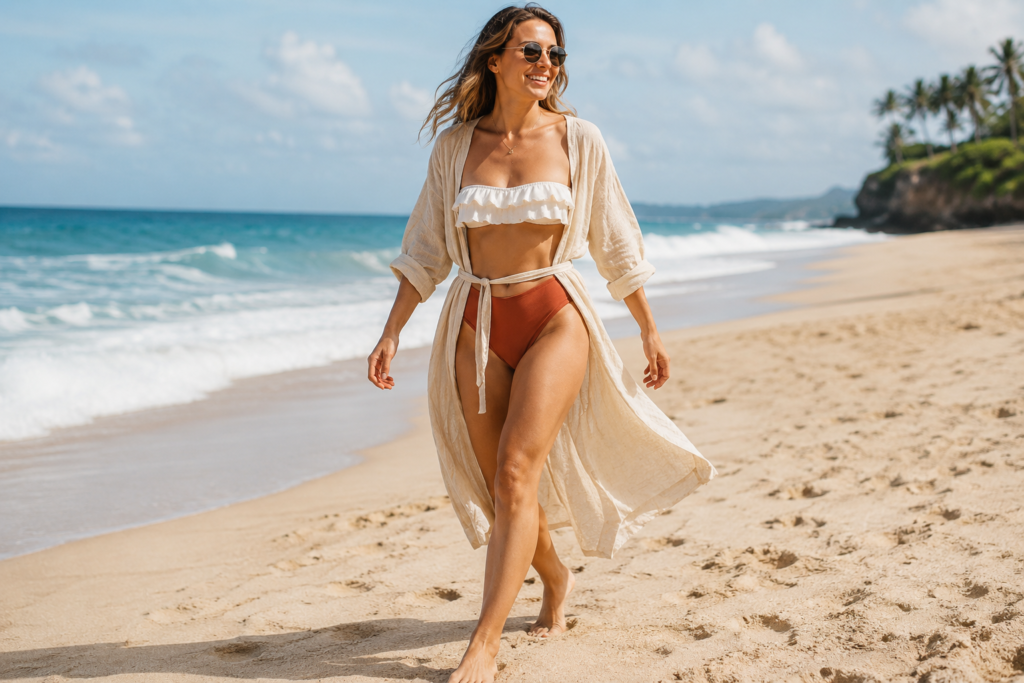
Swimsuits: Ruffled or tiered bikini tops, cutout one-pieces, and bottoms with side ties or embellishment all add visual dimension. Bandeau or bralette-style tops paired with high-waisted bottoms can also create the illusion of a more defined waist. Cover-ups: A cinched or belted wrap dress adds shape where the body doesn’t naturally curve, while ruffled hemlines add movement and visual interest. Full outfit idea: A ruffled bandeau top with high-waisted bottoms, paired with a belted linen cover-up dress and platform sandals for added dimension.
Petite Frames: Elongating the Silhouette
Petite body types, regardless of overall shape, often benefit from styling choices that create the illusion of length rather than visual weight or bulk.
Swimsuits: High-cut leg lines and high-waisted bottoms both elongate the legs, while smaller-scale prints tend to overwhelm a petite frame less than large, bold patterns. Cover-ups: Shorter cover-ups, or longer ones with a high slit, both maintain the appearance of leg length rather than shortening the frame. Full outfit idea: A high-cut one-piece in a small-scale print, paired with a short kimono cover-up that hits above the knee, finished with simple flat sandals to avoid visually cutting the leg line.
A useful additional tip for petite frames is to avoid oversized, bulky beach bags or accessories that can visually overwhelm a smaller frame — proportionally scaled accessories tend to look more intentional and polished in photos.
Tall Frames: Playing with Proportion and Boldness
Tall body types generally have more room to experiment with bold prints, dramatic silhouettes, and longer cover-up lengths without feeling overwhelmed by fabric.
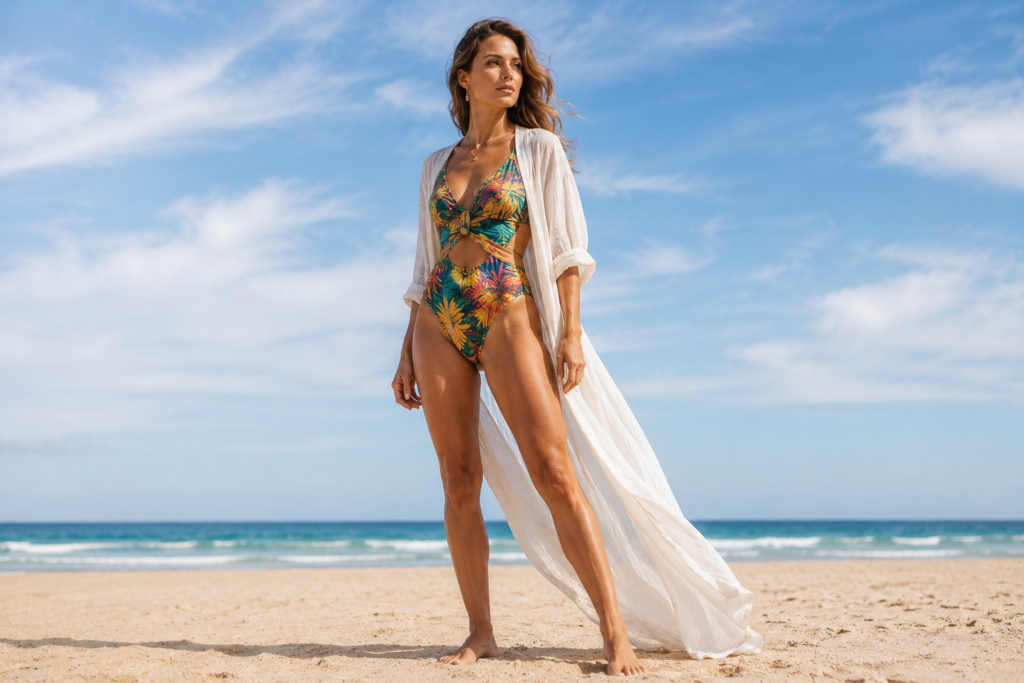
Swimsuits: Bold, large-scale prints and cutout details read beautifully on a taller frame without appearing busy. High-waisted bottoms and one-pieces with vertical seaming can also elongate the torso further if desired. Cover-ups: Long, flowing maxi kaftans or duster-style cover-ups take full advantage of a taller frame’s proportions. Full outfit idea: A bold printed one-piece with cutout detailing, paired with a long, flowing duster cover-up and simple slide sandals.
Full Bust: Support and Coverage Considerations
Regardless of overall body shape, a fuller bust often benefits from specific swimsuit construction details that provide support and prevent discomfort throughout the day.
Swimsuits: Underwire tops, wide adjustable straps, and full-coverage cups all provide meaningful support, while halter and racerback styles help distribute weight more evenly across the shoulders. Avoid thin, unlined triangle tops without adjustable support, since they tend to shift and require constant readjustment. Cover-ups: Structured wrap styles or button-front shirts offer more coverage and support than sheer, unstructured fabrics, and often feel more comfortable for extended wear throughout a beach day.
Fabric and Construction Details That Matter for Every Body
Beyond silhouette, the quality and construction of a swimsuit plays a huge role in how it performs and feels, regardless of body type. Compression or higher-spandex fabrics hold their shape better throughout the day and offer a smoothing effect without feeling restrictive. Wide, adjustable straps reduce digging and slipping, which matters most for anyone carrying more weight in the bust. Fully lined fabric prevents see-through issues once wet, a common frustration with thinner or lower-quality swimwear. Reinforced seams at stress points extend the lifespan of a swimsuit significantly, especially with repeated wear and washing over a season.
Building Confidence Beyond the “Rules”
While body type guides offer a useful starting point, the most important factor in any beach outfit is genuinely feeling comfortable and confident. Trying on a range of styles beyond what a guide suggests often reveals unexpected favorites, and comfort — both physical and emotional — should always take priority over strictly following a styling formula. The best beach outfit is ultimately the one that lets you stop thinking about your outfit and start enjoying the water.
Common Body Type Styling Mistakes to Avoid
A few missteps show up repeatedly regardless of body type. Choosing a swimsuit based on trends alone rather than personal comfort and support needs often leads to a suit that looks great in photos but feels impractical to actually wear. Over-focusing on “hiding” a body part rather than highlighting a favorite feature can lead to outfits that feel more restrictive than confident. Ignoring fabric quality and construction in favor of price or trend can result in swimwear that loses shape quickly or offers inadequate support. Assuming body type rules are strict requirements rather than general starting points can unnecessarily limit style choices that might otherwise feel fun and confident to try.
A Simple Formula for Any Body Type
If you’re unsure where to start, this general approach works across nearly every shape: choose a swimsuit with the level of support you personally need, add one styling detail (a ruffle, a cutout, a bold color) that makes you feel excited to wear it, then layer a cover-up that matches your comfort level for coverage. From there, accessories like a hat, sunglasses, and sandals do the rest of the work in pulling the look together.
Final Thoughts
Understanding general body type styling principles can make beach shopping faster and less overwhelming, but the real goal is finding pieces that make you feel genuinely comfortable and confident in your own skin. Use these guidelines as a starting point, not a strict rulebook, and don’t be afraid to try styles outside your “assigned” category if something catches your eye.
FAQ
Do I have to follow body type rules when choosing a swimsuit?
No, body type guides are meant to be helpful starting points, not strict requirements. The most important factor is finding a swimsuit that feels comfortable and makes you feel confident.
What swimsuit style works best for a fuller bust regardless of body type?
Underwire tops with wide, adjustable straps and full-coverage cups tend to offer the most support and comfort, while halter or racerback styles help distribute weight evenly.
What’s the most versatile cover-up for petite frames?
A short kimono or cover-up that hits above the knee tends to maintain the appearance of leg length better than a longer style, especially when paired with a high-cut swimsuit.
Can tall women wear bold prints at the beach?
Yes, taller frames generally have more visual space to carry bold, large-scale prints and dramatic silhouettes without appearing overwhelmed by the pattern