Discover the 2026 corset belt trend the best silhouettes, styling formulas, and mistakes to avoid for this waist-defining accessory.
There’s a particular kind of accessory that keeps returning every few years, each time slightly reinvented, and the corset belt is having exactly that moment right now. Once confined to costume closets and the occasional runway shock piece, the wide, structured belt has quietly become one of the most flexible items in a modern wardrobe. It can nip in an oversized blazer, add shape to a slip dress, or turn a plain button-down into something that looks deliberately styled rather than thrown on.
What makes the 2026 version different from earlier corset-belt trends is restraint. Instead of the rigid, boned silhouettes associated with historical corsetry, today’s iterations lean softer structured enough to define a waist, flexible enough to wear all day without discomfort. This guide walks through why the trend has resurfaced, how to choose the right style for your body and wardrobe, and the styling formulas that make this piece genuinely wearable rather than just photogenic.
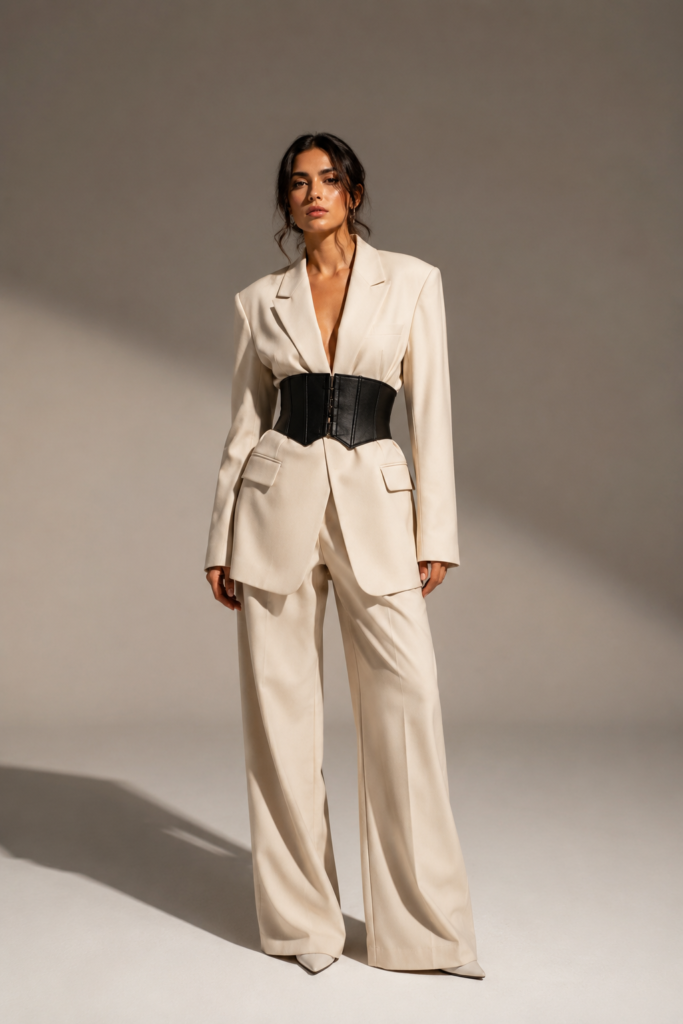
Why Is This Trend Back Right Now?
A few converging forces explain the timing:
- The tailoring pendulum has swung back toward structure after several years dominated by loose, unstructured silhouettes, and belts are the easiest way to introduce shape without buying new pieces.
- Runway momentum from recent seasons has normalized visible waist-defining accessories as everyday wear rather than occasion-only statement pieces.
- The rise of “dopamine dressing” has made bold accessories, including wide belts in unexpected colors and textures, a low-commitment way to experiment.
- Secondhand and vintage shopping has put more genuine 1990s and Y2K corset belts back into circulation, feeding demand for new interpretations.
- Social media styling content has demystified the belt, showing that it works over everyday basics rather than only elaborate outfits.
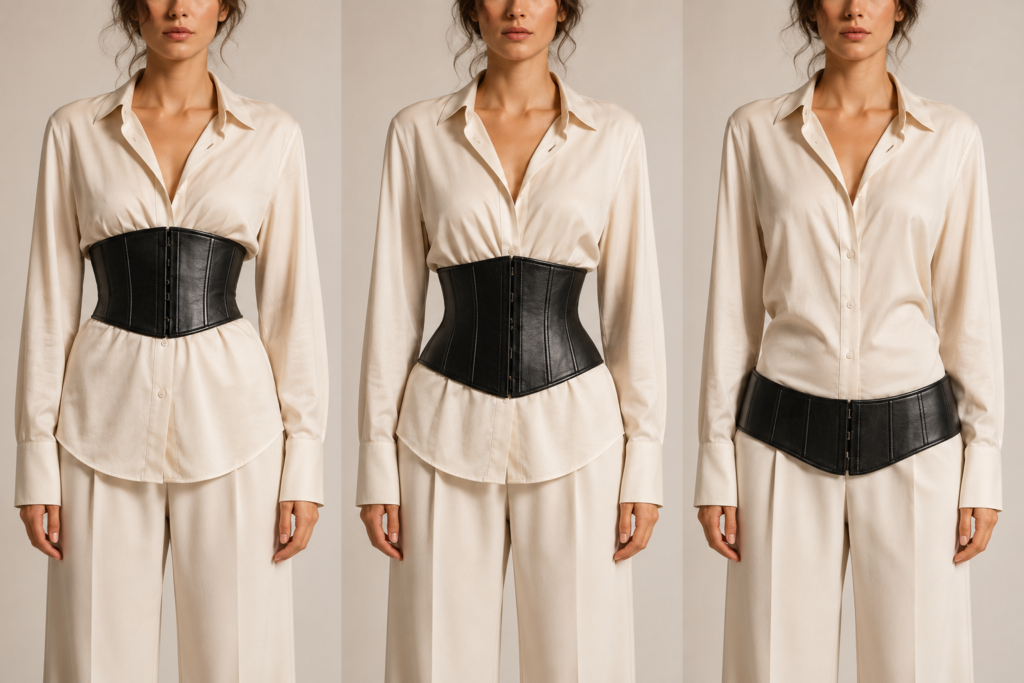
Three Corset Belt Silhouettes Worth Knowing
Not every wide belt behaves the same way on the body, and choosing the right structure matters more than choosing the right color.
The Underbust Corset Belt sits just below the bust and is the most dramatic option, best suited to dresses and fitted tops where you want the waist to be the visual focal point of the outfit.
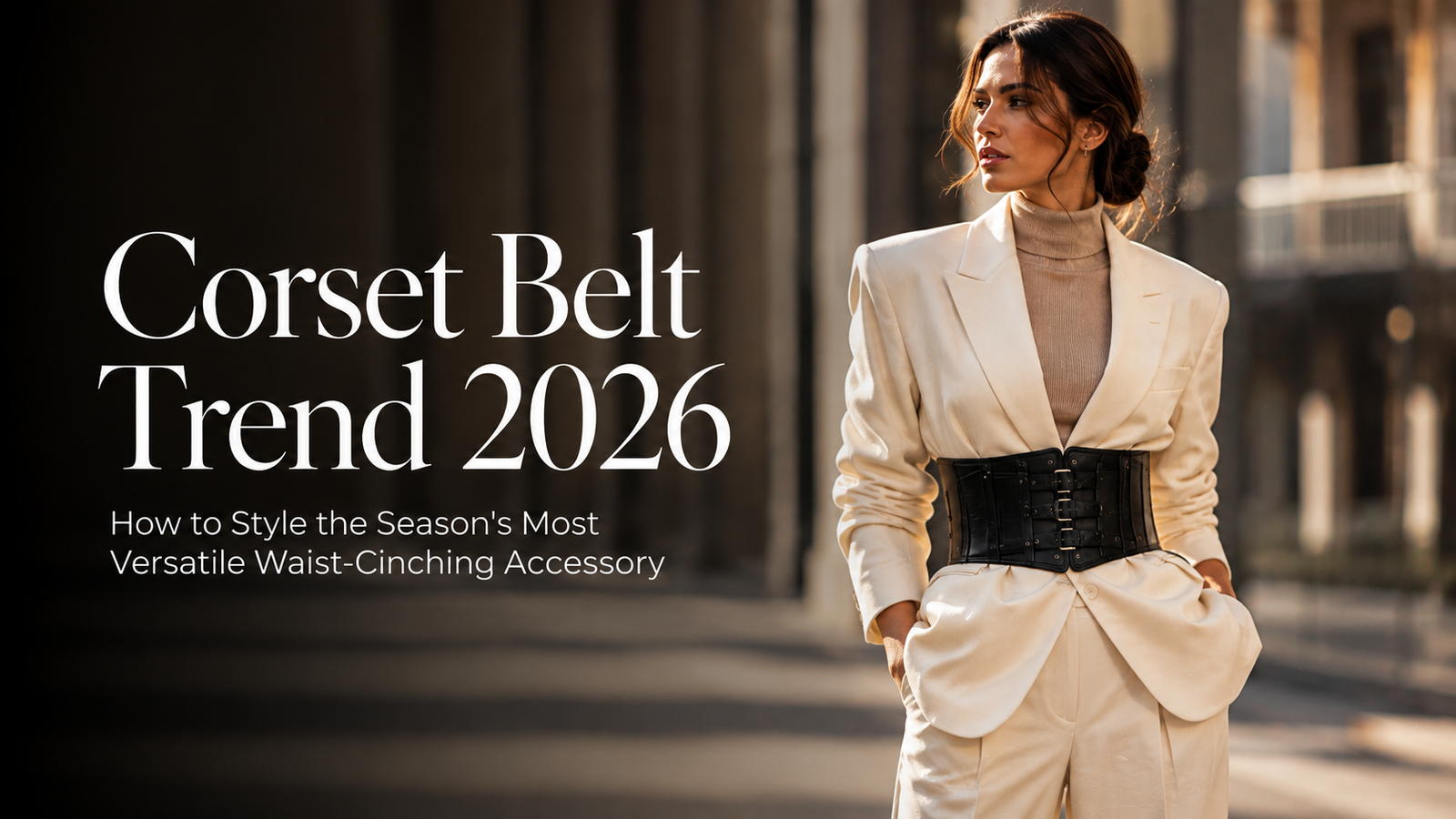
The Waist-Cincher Belt sits at the natural waistline and is the most versatile of the three, working over blazers, button-downs, sweaters, and dresses alike without overwhelming the rest of the look.
The Low-Slung Hip Belt sits just below the natural waist and reads as more relaxed and streetwear-influenced, pairing especially well with slouchier trousers and longer tops where a high cinch would look out of place.
Five Styling Formulas That Actually Work
Rather than treating the corset belt as a single-outfit statement piece, these are repeatable combinations worth building into a regular rotation.
- Oversized Blazer + Cincher Belt + Straight Trousers — the belt adds definition to an otherwise boxy silhouette without sacrificing the relaxed feel of the blazer.
- Slip Dress + Underbust Belt + Ankle Boots — turns a simple slip dress into an evening-ready look by adding visible structure at the bust line.
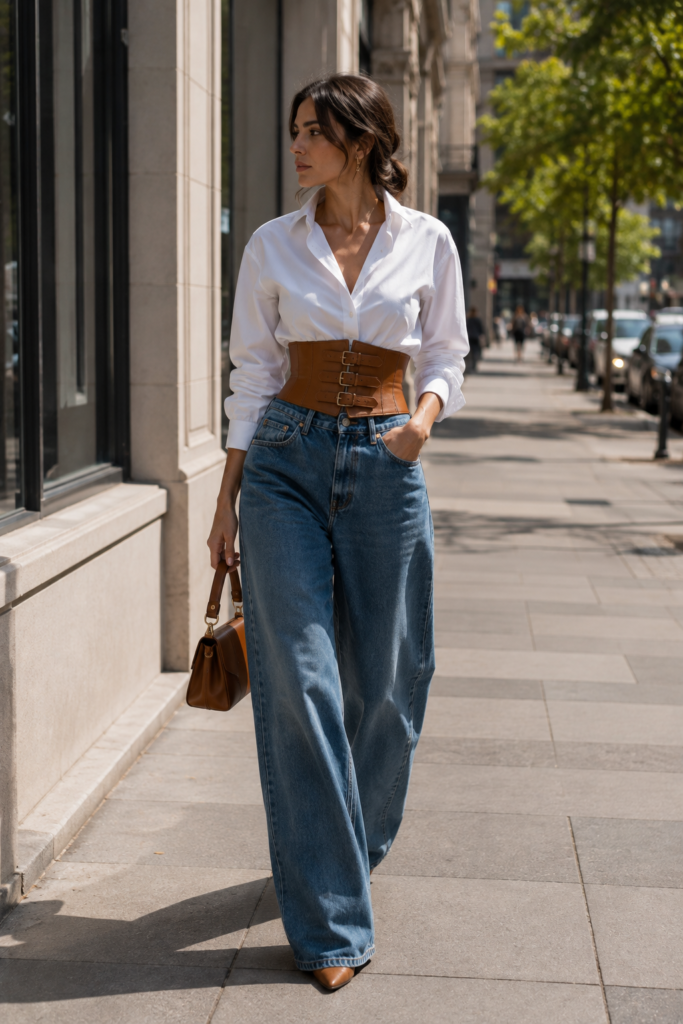
- Button-Down Shirt + Waist Belt + Wide-Leg Jeans — the classic tucked-shirt formula, elevated by swapping a thin belt for a wider structured one.
- Long Cardigan + Hip Belt + Leggings or Fitted Pants — prevents a long, loose cardigan from reading shapeless by anchoring the waist visually.
- Midi Skirt + Fitted Top + Cincher Belt — reinforces the waistline between two already-fitted pieces for a more polished, finished silhouette.
What Fabric and Structure Should You Look For?
Comfort over a full day of wear depends heavily on construction, and a few details separate a belt worth owning from one that will sit unworn in a drawer.
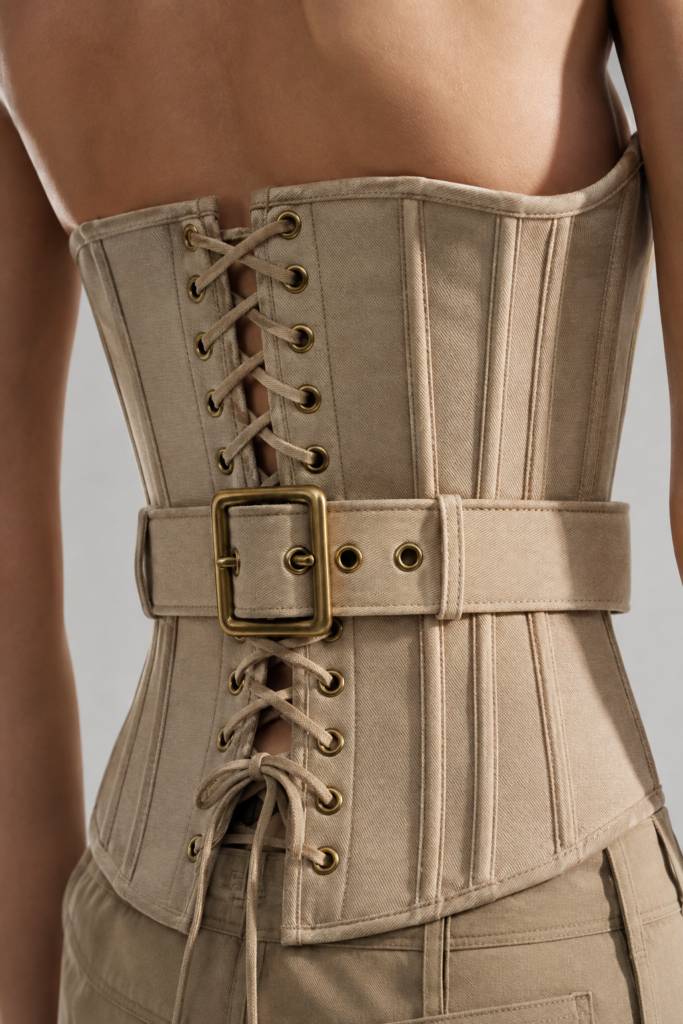
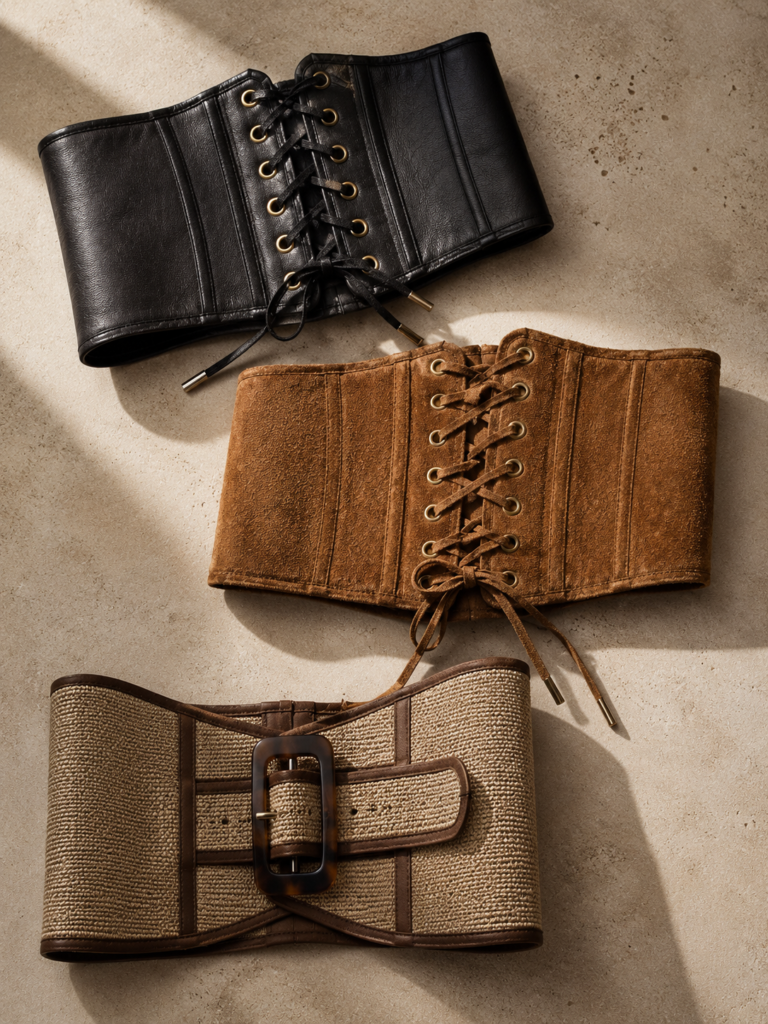
Look for boning or rigid panels only at the sides and back, with a softer, more flexible front panel that won’t dig in while sitting. Elastic side panels allow the belt to move with natural breathing and movement rather than fighting against the body all day. Wide, adjustable closures — hook-and-eye combined with lacing, or a substantial buckle tend to hold shape better over time than a single small clasp. Genuine or high-quality faux leather holds structure noticeably better than fabric-only versions, which can lose their shape after repeated wear.
How to Choose the Right Width for Your Frame
Belt width interacts with torso length in ways that are easy to overlook when shopping.
Shorter-Torso Frames generally look best in a mid-width belt, since an extremely wide corset belt can visually shorten the torso further. Longer-Torso Frames can comfortably wear the widest, most dramatic belt styles without the proportions feeling overwhelming. Petite Frames often benefit from choosing a belt that sits slightly higher, closer to the natural waist, to avoid cutting the body into an unflattering lower proportion. Curvier Frames tend to see the most dramatic waist-defining effect from this trend, since the contrast between belt and hip creates a clear hourglass line.
Mistakes That Undercut the Look
A handful of recurring missteps tend to separate a polished corset-belt outfit from one that feels like it missed the mark.
Sizing the belt too tightly, which creates visible discomfort and unnatural bunching in the fabric above and below it rather than a clean line. Pairing the belt with clothing that is already extremely fitted everywhere else, leaving no contrast for the waist definition to stand out against. Choosing a belt color that matches nothing else in the outfit, making it read as an afterthought rather than an intentional styling choice. Wearing the belt so low that it sits on the hips rather than the waist when the outfit calls for a defined waistline, which flattens rather than enhances the silhouette.
Seasonal Adaptation: Making It Work Year-Round
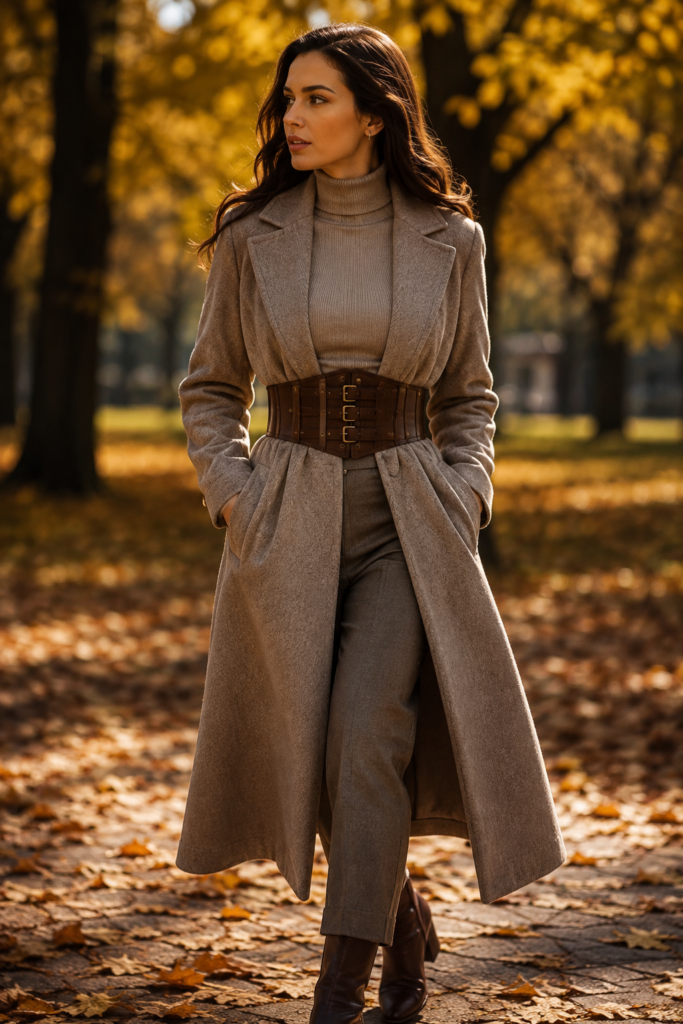
The corset belt isn’t limited to warm-weather outfits. Over a fitted turtleneck and paired with a long wool coat, it becomes a cold-weather layering piece that adds shape beneath bulkier outerwear. In transitional months, it works especially well over a lightweight trench, cinching the coat itself rather than the outfit underneath. For warmer seasons, pairing it with linen trousers or a cotton maxi dress keeps the structured element from feeling heavy or overly formal.
Where This Trend Is Headed Next
Early signals suggest the corset belt is moving further into everyday wardrobes rather than staying an occasion-only piece. Expect to see more relaxed, unstructured hybrid versions that borrow the visual language of corsetry without the full structure, along with a growing range of colors and textures beyond the classic black leather starting point. As with most accessory trends that survive their first viral moment, longevity will come down to comfort and versatility — both of which this piece increasingly delivers.
Final Thoughts
The corset belt’s return isn’t a passing costume-inspired novelty; it reflects a broader shift back toward defined silhouettes and intentional styling. Whether the goal is adding shape to an oversized piece or finishing off an already-fitted outfit, the key to wearing this trend well comes down to choosing the right width and structure for your frame, and treating the belt as a genuine styling tool rather than a one-off statement accessory.
Frequently Asked Questions (FAQ)
Q1: Is a corset belt comfortable to wear all day? Yes, when the construction includes flexible side panels rather than rigid boning throughout, most people find a well-made corset belt comfortable for a full day of wear.
Q2: Can a corset belt be worn over knitwear? Yes, it works particularly well over fitted or lightly ribbed sweaters, adding shape without bulk.
Q3: What size should I buy if I’m between sizes? Sizing up is generally recommended, since a belt that’s slightly loose can still be adjusted via lacing or buckle, while one that’s too small often can’t be worn comfortably at all.
Q4: Does this trend work for petite frames? Yes, though a slightly narrower width and a higher waist placement tend to produce the most flattering proportion for shorter torsos.
Q5: Can a corset belt be worn with a dress that already has a defined waist? It can, but it works best layered over dresses with a looser or less defined waistline, since two competing waist details can visually compete rather than complement each other.
Q6: How do I keep a leather corset belt in good condition? Storing it flat or on a wide hanger rather than folded prevents creasing, and conditioning the leather every few months keeps it from stiffening or cracking.
Q7: Is this trend office-appropriate? In more relaxed or creative workplaces, yes particularly the waist-cincher style worn over a blazer or button-down; more traditional office settings may call for a subtler, narrower version.