Discover 10 pool and beach hairstyles for 2026 that survive water and wind, plus the prep and recovery routine that makes them last.
There’s a specific kind of disappointment that comes from spending twenty minutes on your hair only to watch it collapse the second you jump in the pool or catch a gust of ocean wind. Summer plans rarely pause for a hair emergency, which is why the styles that actually hold up around water, humidity, and wind deserve more attention than the ones that only look good in a still photo.
This isn’t a list of “cute” hairstyles that happen to be near water in the photos. Every style below has been chosen specifically because the technique behind it resists frizz, holds through submersion, and doesn’t require a mirror and twenty bobby pins to fix once you’re back on the sand. Below are ten styles worth trying this season, followed by the prep and aftercare that make the biggest difference in how well any of them actually perform.
10 Hairstyles Built to Survive Water and Wind
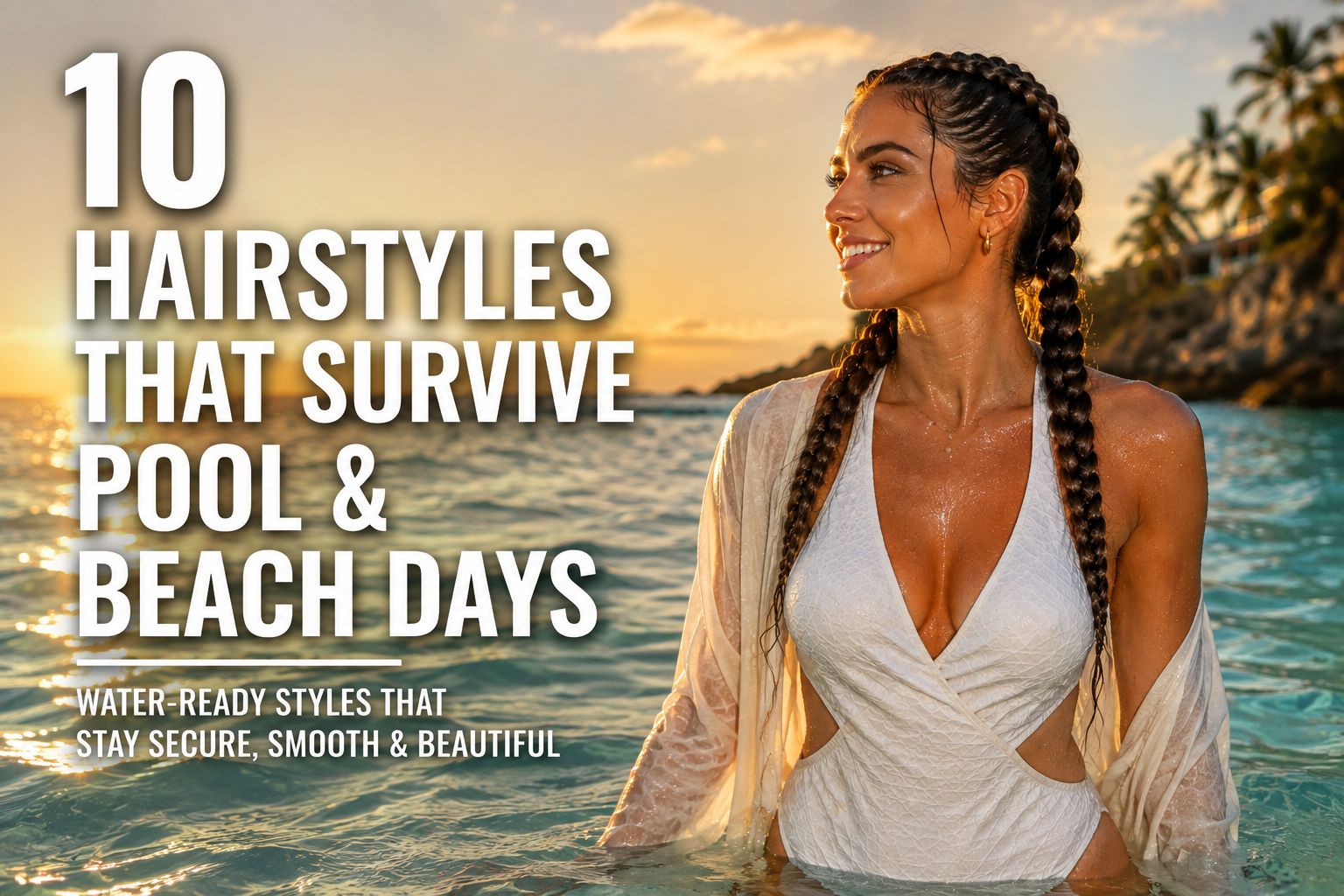
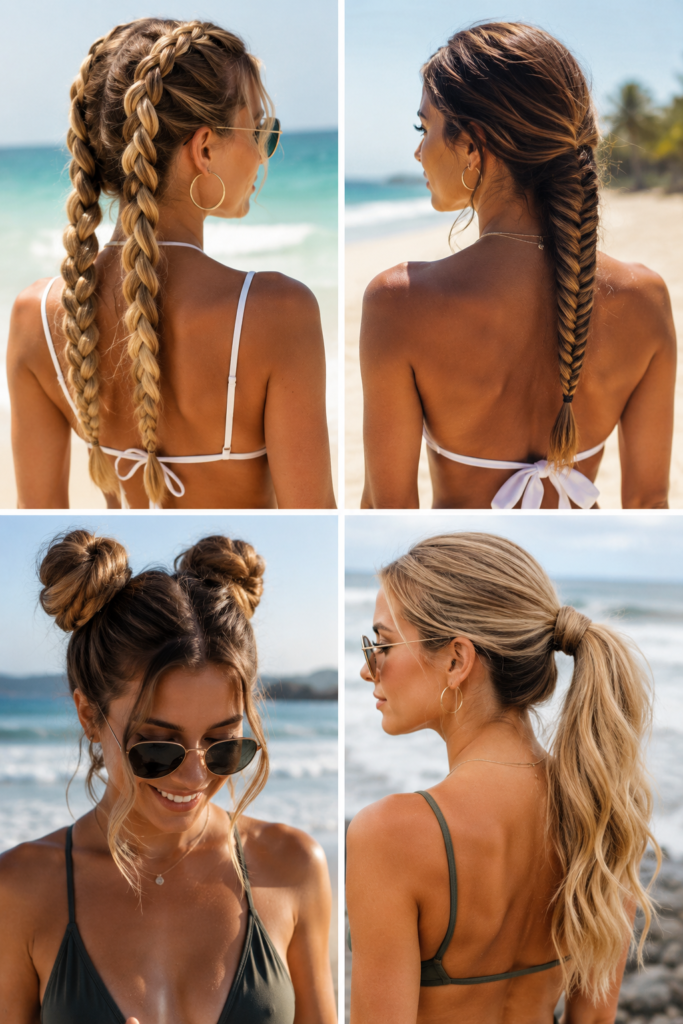
- The Double Dutch Braid — Two French-style braids woven close to the scalp stay secure through waves and pool laps alike, and the tight weave means far less flyaway frizz once your hair dries.
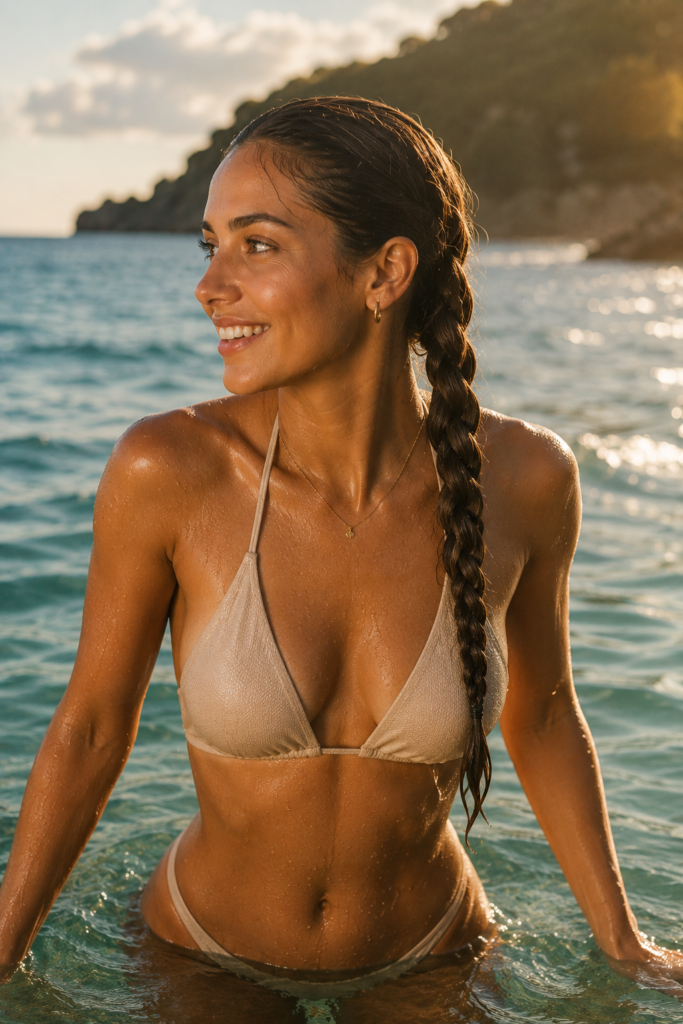
- The Low Fishtail Braid — Sitting at the nape of the neck, a fishtail braid distributes tension evenly across the strands, which helps it hold its shape even after repeated dunking.
- The Slicked-Back Bun — A bun secured with a strong elastic and smoothed down with a bit of gel keeps hair fully off the face and neck, making it the most practical option for anyone doing serious swimming rather than just wading.
- The Half-Up Twisted Knot — Twisting the top section into a small knot keeps hair out of your eyes while leaving the length loose enough to dry naturally into soft waves.
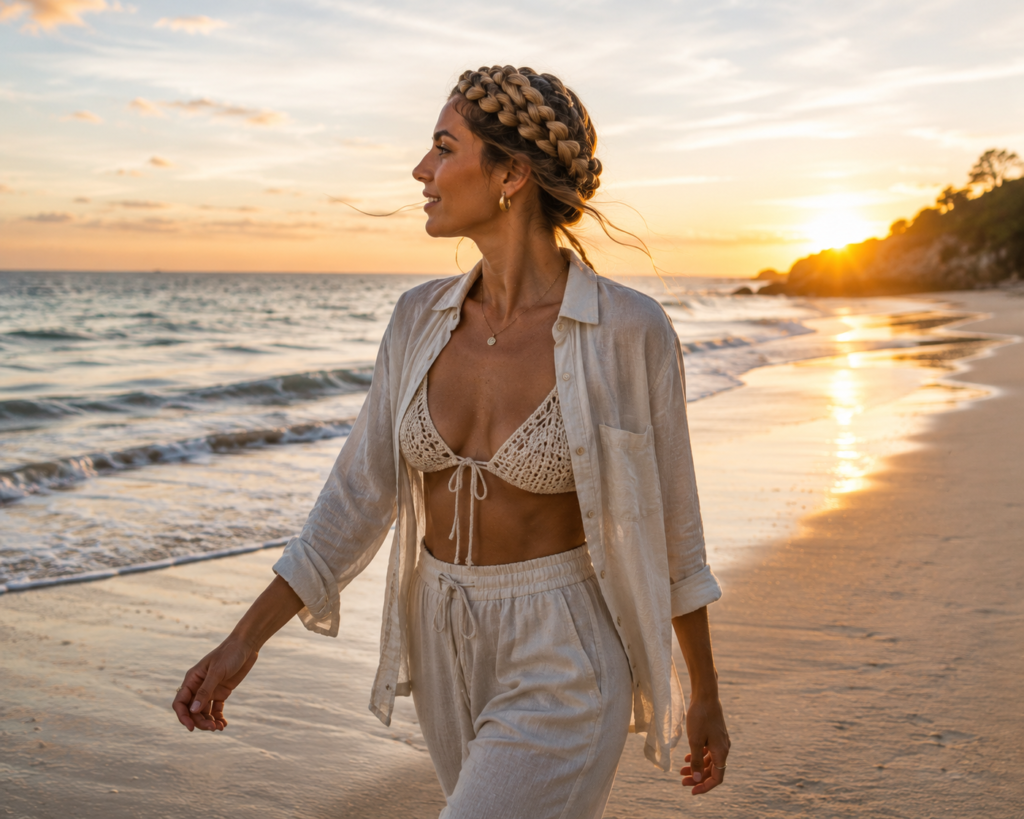
- The Triple Braid Crown — Three thin braids wrapped around the head like a crown combine security with a more polished, dressed-up look for beach parties or evening events near water.
- The Space Buns — Two symmetrical buns positioned high on the head resist wind exceptionally well and have become one of the most photographed beach-day styles for exactly that reason.
- The Wrapped Ponytail — A standard ponytail elevated by wrapping a small section of hair around the elastic hides the tie and gives a cleaner, more finished look that survives splashing without unraveling.
- The Waterfall Braid — A partial braid that lets sections “fall” out as you go creates a romantic, textured look that works well for beach days that involve more lounging than swimming.
- The Micro-Braided Sections — For those wanting maximum protection, sectioning the whole head into small, tight braids offers the longest-lasting hold across multiple days of sun and water exposure.
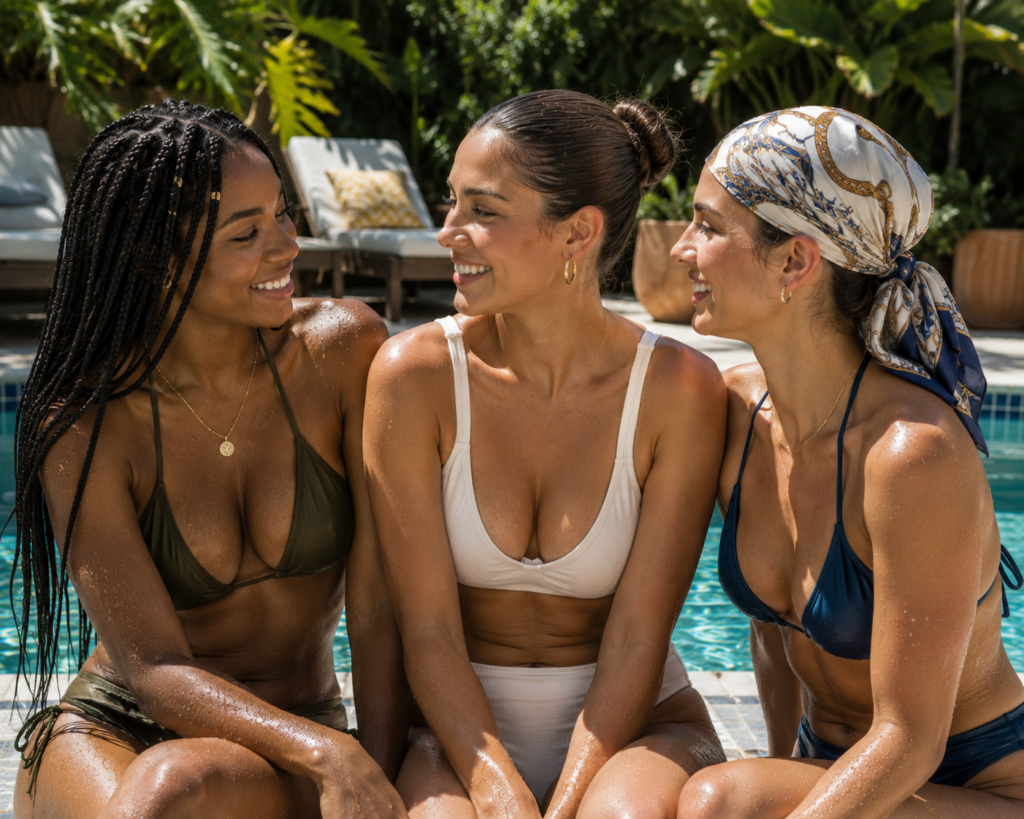
- The Silk Scarf Wrap — Wrapping hair fully in a silk or satin scarf before entering the water protects strands from chlorine and salt entirely, making it the top choice for color-treated or chemically processed hair.
Why Braided and Tied-Back Styles Perform Best
There’s a simple mechanical reason braids and tightly secured styles dominate this list: loose strands are what catch wind, tangle in salt water, and frizz first when exposed to humidity. Braiding distributes tension across many small sections rather than concentrating it at a single point, which is why a braid holds its shape through hours of movement in a way that loose waves simply can’t. Tied-back styles offer a similar advantage by removing the variable of wind and water contact almost entirely.
Prep Steps Before You Get In the Water
A few minutes of preparation before swimming makes a measurable difference in how your hair looks afterward.
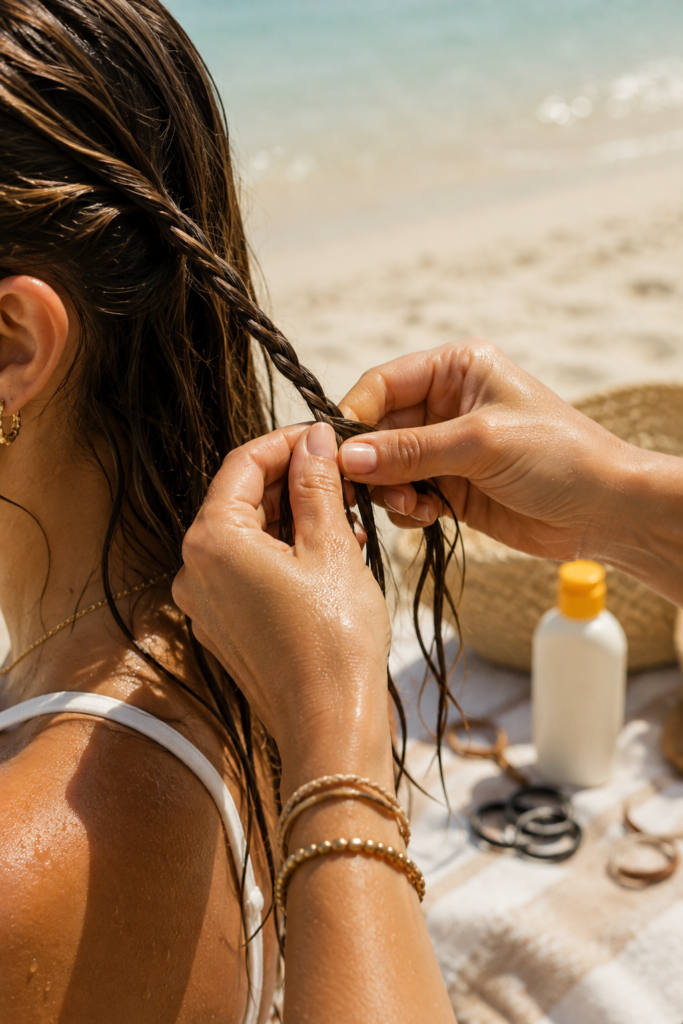
Rinse hair with fresh water before entering a pool or ocean, since pre-saturated hair absorbs noticeably less chlorine or salt water than completely dry hair. Apply a leave-in conditioner or a small amount of oil to the lengths, which creates a light protective barrier against both chlorine and salt. Secure the chosen style tightly but not painfully, since a braid that’s too loose will unravel quickly, while one that’s too tight can cause breakage at the hairline. Avoid applying heavy products before swimming, as many oils and creams can react poorly with chlorine and leave hair feeling coated rather than protected.
Post-Swim Recovery Care
What you do immediately after swimming matters just as much as the prep.
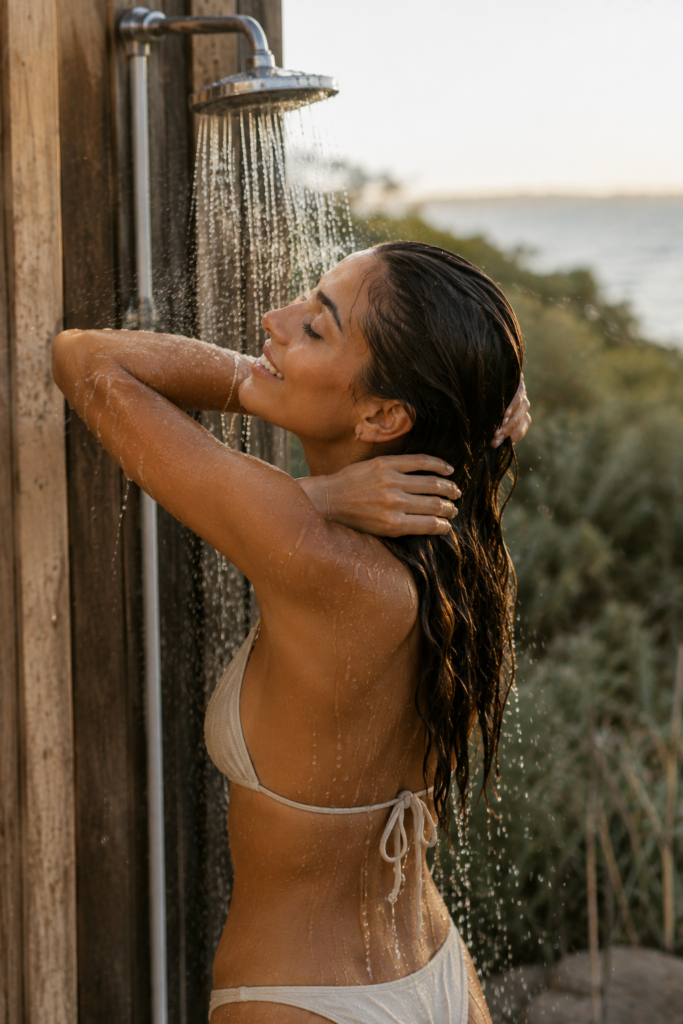
Rinse thoroughly with fresh water as soon as possible after leaving the pool or ocean to remove chlorine and salt before they have time to dry into the hair shaft. Use a clarifying shampoo once you’re home to fully remove any mineral buildup, particularly important after repeated days of pool exposure. Follow with a deep conditioning treatment, since both chlorine and salt water are drying and can leave hair feeling brittle without extra moisture afterward. Detangle gently with a wide-tooth comb starting from the ends, rather than brushing from the roots down, to avoid unnecessary breakage in hair that’s already stressed from sun and water exposure.
Mistakes That Undo a Good Water-Ready Style
A handful of habits tend to sabotage even a well-chosen hairstyle.
Skipping the pre-swim rinse, which leaves hair fully exposed to chlorine absorption with no protective barrier in place. Choosing a style that’s too loose for actual swimming, since gentle waves and loose half-up styles tend to fall apart within minutes of real water contact. Leaving chlorine or salt water to air-dry without rinsing, which allows mineral buildup to settle into the hair shaft and cause dryness and discoloration over time, especially on lighter or color-treated hair. Brushing out a braid immediately after unraveling it, which flattens the wave pattern the braid created and undoes much of the visual benefit of having braided it in the first place.
Adapting These Styles for Different Hair Types
Fine Hair tends to benefit most from tighter, smaller braids, since finer strands hold a defined shape better than they hold loose waves after water exposure. Thick or Curly Hair often does best with fewer, larger braids or a secured bun, since heavier hair can pull looser styles out of shape more quickly. Color-Treated Hair should prioritize full coverage options like the scarf wrap or a slicked bun with a swim cap underneath, since chlorine exposure accelerates fading significantly. Short Hair can still achieve a wind-resistant look through small twists secured with pins close to the scalp, even when a full braid isn’t possible.
Final Thoughts
The best pool and beach hairstyle isn’t necessarily the most elaborate one it’s the one that matches how much time you’ll actually spend in the water and how much recovery effort you’re willing to put in afterward. A tight braid or secured bun will always outperform loose waves the moment water gets involved, but the real difference between a good beach day and a bad hair day usually comes down to the few minutes of prep beforehand and the rinse immediately after.
Frequently Asked Questions (FAQ)
Q1: Does chlorine really damage hair, or is that a myth? Chlorine is genuinely drying and can strip natural oils from the hair shaft, which is why pre-swim prep and post-swim rinsing both make a noticeable difference over repeated exposure.
Q2: Can I still wear my hair down at the beach without it looking wrecked? Yes, though loose styles generally hold up better with a light protective product and are best reserved for beach days with less direct water exposure rather than active swimming.
Q3: Will braiding wet hair before swimming work as well as braiding it dry? Slightly damp hair actually holds a braid better than fully dry hair, since the added moisture helps the strands grip together more effectively.
Q4: How often should I use a clarifying shampoo during a beach vacation? Every one to two days of heavy pool or ocean exposure is generally enough to prevent noticeable buildup without over-stripping natural oils.
Q5: Are swim caps still worth using under these hairstyles? Yes, particularly for color-treated or chemically processed hair, since a swim cap adds a layer of protection that no styling technique alone can fully replicate.
Q6: What’s the single most important step for protecting hair at the pool? Rinsing with fresh water immediately before and after swimming consistently makes the biggest measurable difference in preventing chlorine absorption.
Q7: Do these styles work for very short hair? Most of the braided options require some length, but small twists pinned close to the scalp can achieve a similar wind- and water-resistant effect on shorter cuts.