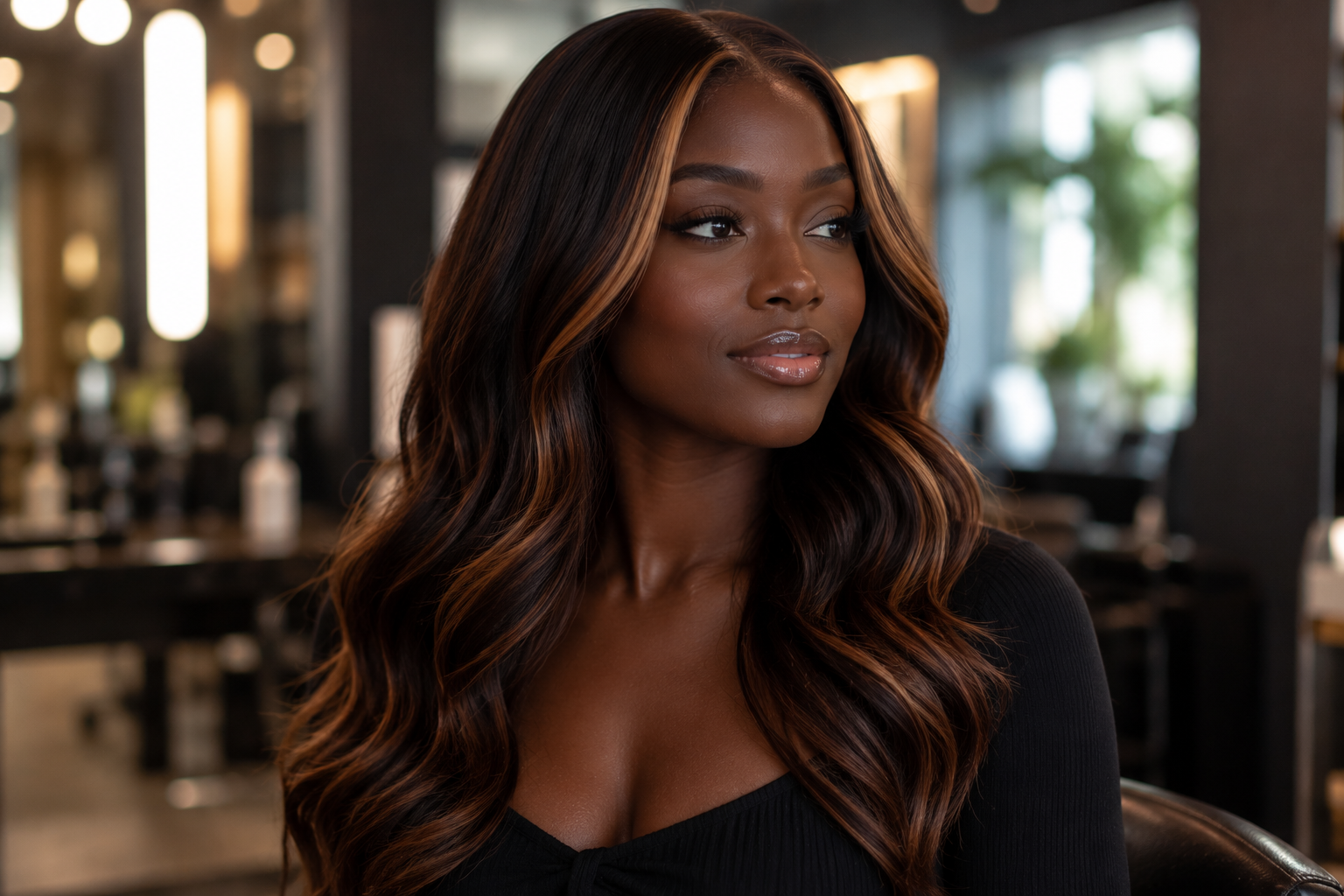
Discover the best spring hair color shades for dark skin in 2026 espresso, burgundy, and honey tones that enhance your natural richness.
There’s a specific kind of magic that happens when hair color is matched correctly to dark skin — it doesn’t just look good, it makes the whole face look richer, more radiant, and more alive. After watching countless spring color transformations play out on deep-skinned clients, one pattern keeps repeating: the shades people gravitate toward instinctively this time of year are almost always the ones that honor their natural depth rather than fighting it.
This guide breaks down everything you need to know about choosing spring hair color for dark skin in 2026: how to work with your natural depth confidently, which shades enhance it most beautifully, and how to avoid the handful of tones that tend to wash out or flatten rich complexions instead of complementing them.
Something worth understanding upfront is that dark skin isn’t one single undertone. Deep skin can carry warm (golden, red, coppery), cool (blue, neutral), or olive undertones, which means the “best” shade isn’t universal the common thread isn’t the depth of the skin itself, but matching the hair’s warmth level to the undertone running beneath it.
How to Recognize Your Undertone Within Dark Skin
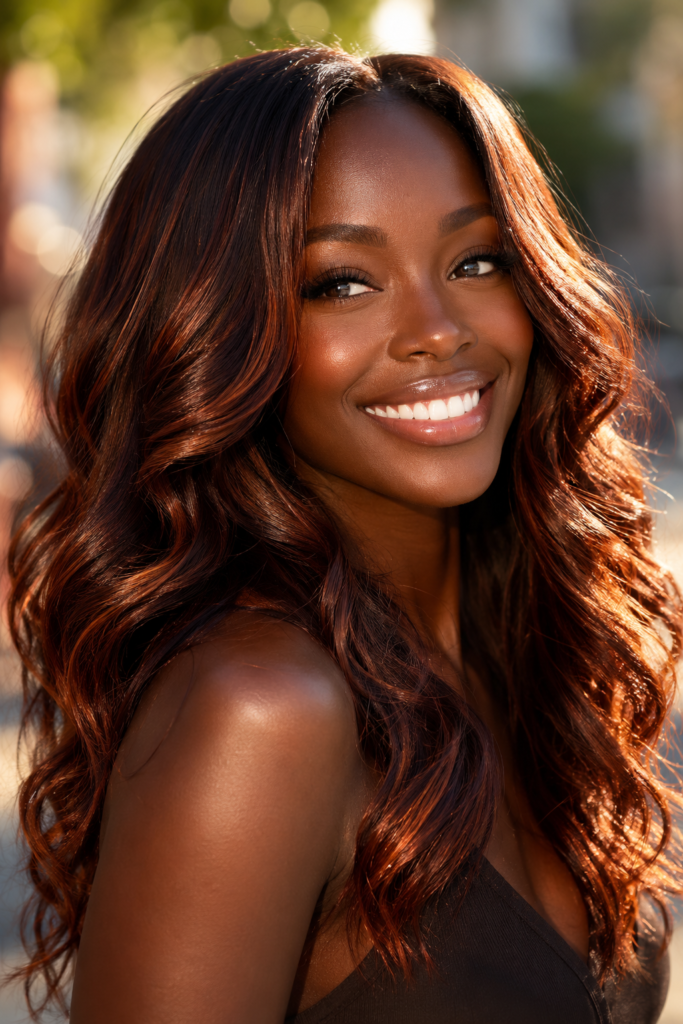
Dark skin undertones typically show up as golden, red, or coppery undercurrents for warm tones, blue or neutral undercurrents for cool tones, and a muted greenish balance for olive undertones all of which can occur regardless of how deep the overall complexion is. A few common signs include how veins appear on the wrist, whether gold or silver jewelry looks more flattering, and how skin responds to direct sun exposure.
Deep-skinned individuals with warm undertones often notice that shades within the espresso, copper, and honey families feel instinctively “right,” while those with cooler undertones may find jewel tones like plum, burgundy, and blue-black feel more harmonious. Olive-undertoned deep skin often sits comfortably between both worlds, handling a wide range of rich, dimensional color beautifully.
Understanding this undertone isn’t just useful for hair color; it’s the same underlying principle that guides makeup and clothing color choices, which is why getting hair color right within this framework tends to make the entire look feel more cohesive.
Why Spring Hair Color for Dark Skin Is Trending in 2026
Several factors are shaping this year’s approach to spring color specifically for dark-skinned clients:
A strong industry-wide shift toward rich, dimensional color that adds depth rather than lightening it away Growing appreciation for jewel tones and warm espresso blends that amplify natural richness instead of neutralizing it Increased demand for money-piece highlighting techniques that create high-contrast brightness without a full lightening service A move toward deeper, richer formulas even within traditionally “light” categories like blonde, favoring honey and caramel over platinum Social media exposure showcasing how dramatically the right rich-toned color can transform a look for deep complexions specifically
Colorists have noted that dark-skinned clients are increasingly requesting color that feels like an extension of their natural coloring rather than a departure from it, which lines up neatly with 2026’s broader preference for “enhanced natural” results over obviously processed color.
Best Shades for Dark Skin This Spring
Dark skin has a naturally wide and forgiving range of flattering hair colors, but a few shades stand out as especially harmonious this season:
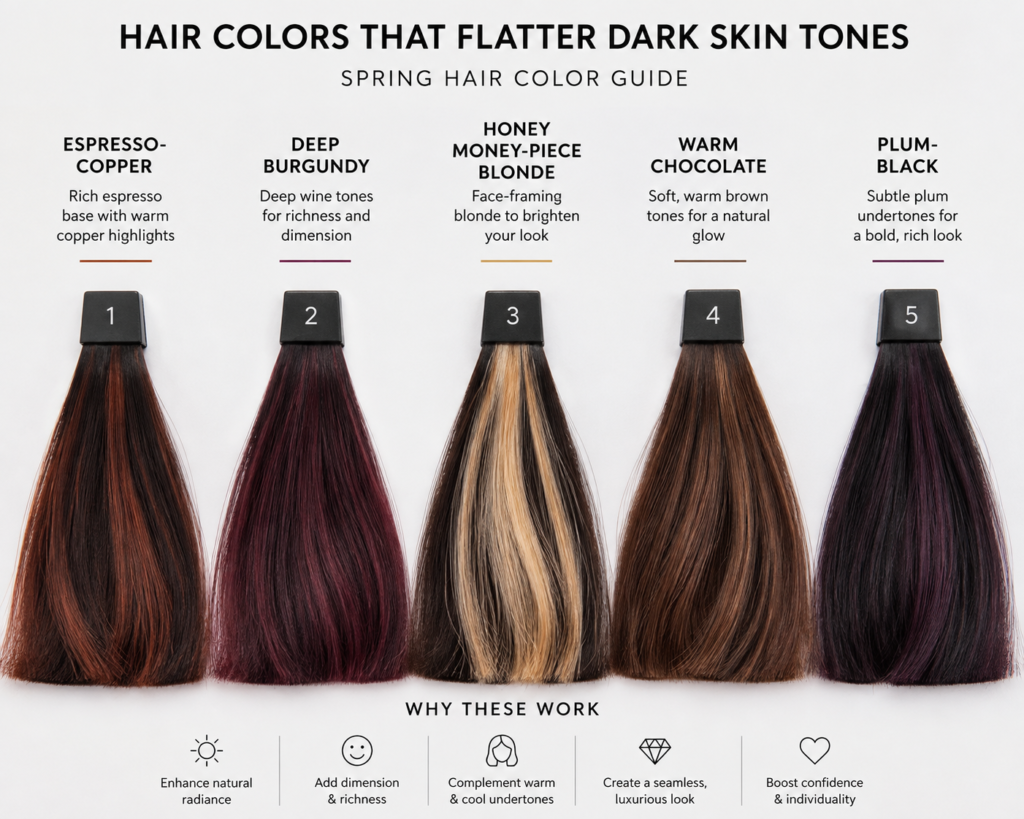
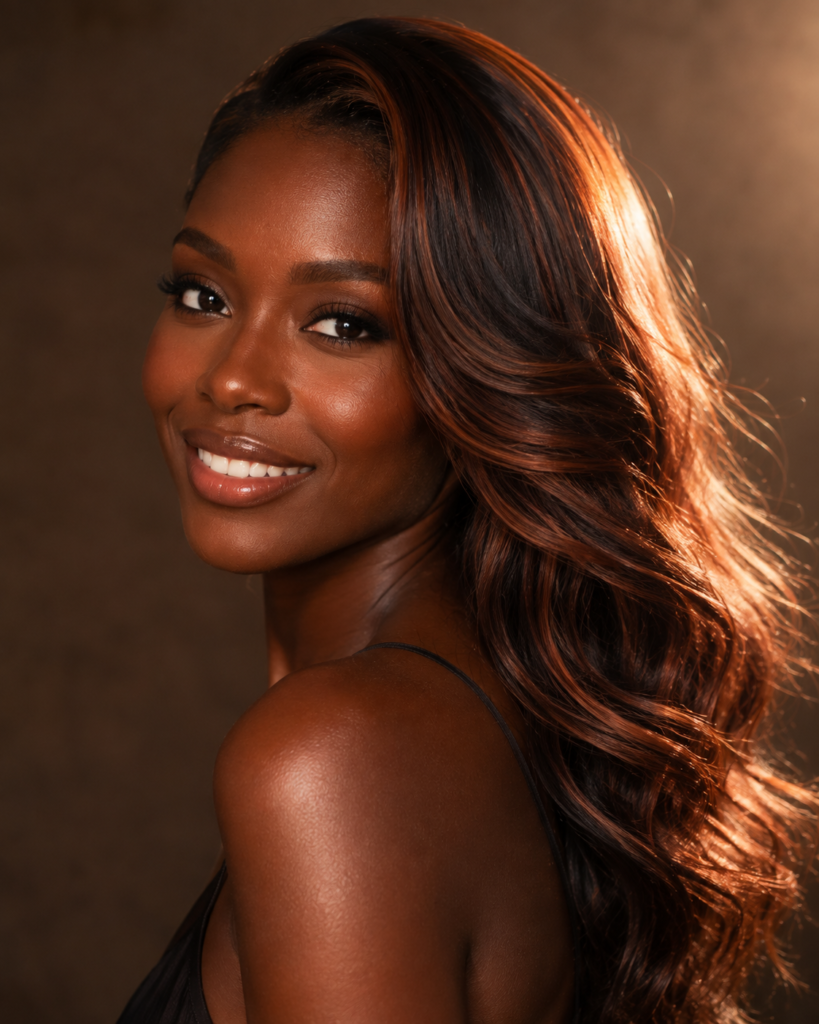
Rich Espresso with Copper Undertones: A deep base with subtle copper glimmers adds warmth and shine without lightening the overall look, and tends to look especially radiant in spring’s brighter natural light.
Deep Burgundy: Rich and jewel-toned without being overly dramatic, burgundy is one of the most universally flattering deeper choices across a wide range of skin depths and undertones.
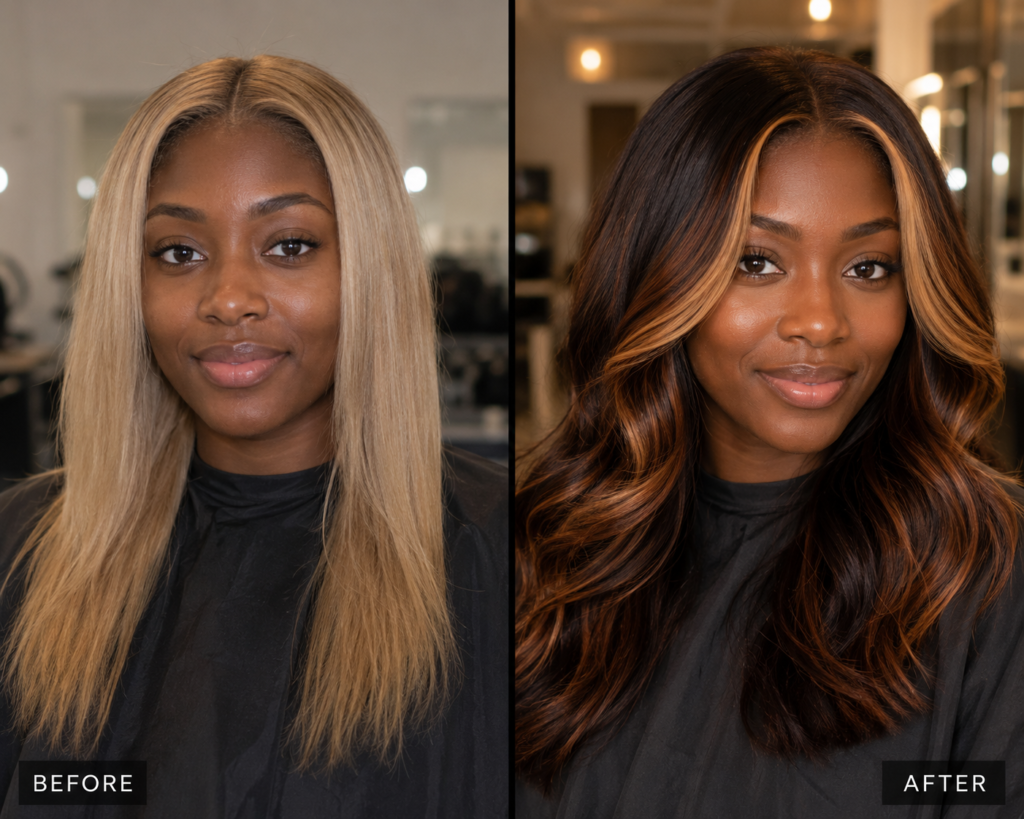
Honey Money-Piece: A concentrated panel of golden brightness framing the face creates high-impact contrast without requiring an all-over lightening service, since the underlying warmth in both the hair and skin work together rather than competing.
Warm Chocolate Balayage: A slightly softer option for those wanting dimension without going too bold, this shade adds glow while still reading as polished and grounded.
Plum-Black: The subtle jewel undertone of this shade pairs particularly well with cool or neutral undertones, creating a fresh, dimensional effect that feels perfectly suited to spring while staying close to natural depth.
Shades to Approach Carefully on Dark Skin
While dark skin has a generous flattering range, a few shades require more careful formulation to avoid an unbalanced result:
Extremely Ashy or Cool-Toned Blonde: Very cool, gray-based blonde tones can sometimes create a visual tug-of-war against deep skin, making the overall look appear washed out or overly stark if not carefully balanced.
Flat, Overly Light All-Over Color: Going too light all at once without dimensional placement can flatten the natural richness that makes dark skin so striking in the first place.
Overly Pink or Mauve Tones: Cool pastel or rose-gold shades can sometimes clash with certain dark-skin undertones unless a colorist carefully adjusts the base to include enough depth to balance the overall effect.
As always, these aren’t hard rules an experienced colorist can adapt almost any shade family to work with deep skin through careful formulation, strategic placement, and the right underlying base color.
The Process: Getting Rich-Toned Spring Color Right
A thoughtful approach to color for dark skin typically includes a few specific considerations:
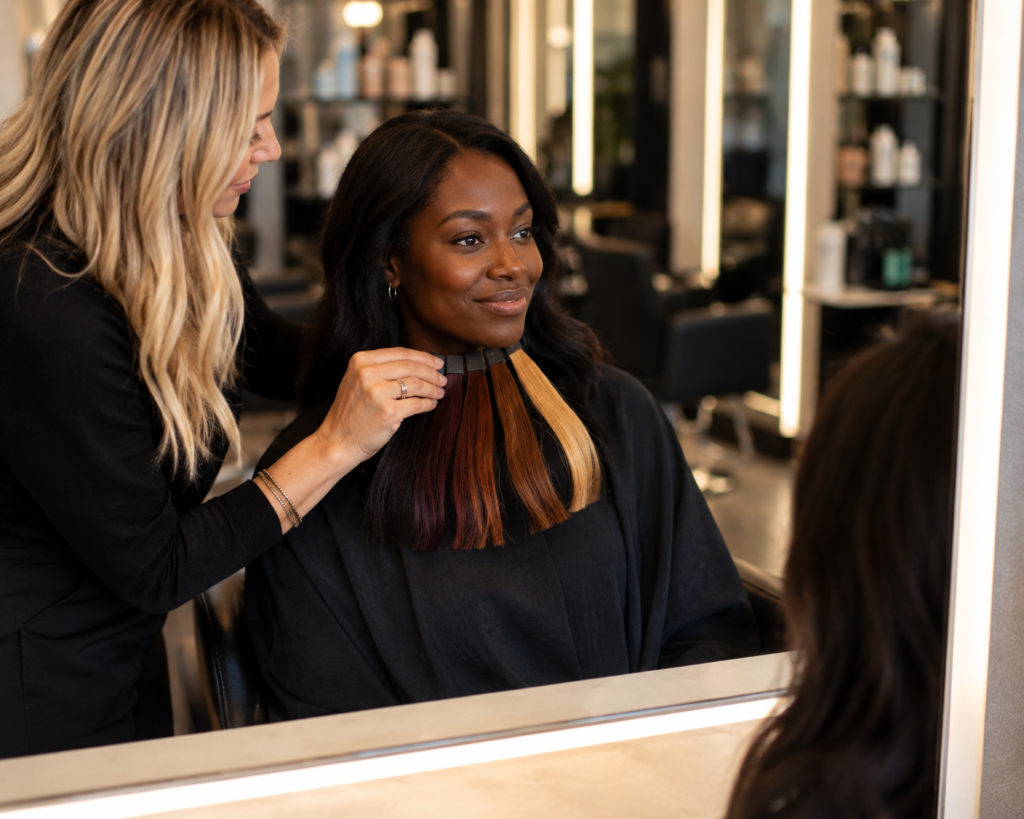
Undertone Confirmation – Beyond a quick glance, a good consultation examines your undertone in natural daylight and considers how your skin has responded to past hair colors.
Depth-Forward Formulation – Rather than defaulting to standard lightening formulas, colorists working with dark skin often lean into espresso, copper, and jewel-tone base colors from the start.
Dimensional Placement – Techniques like money-piece highlighting or foiled balayage using warm or jewel tones create a rich, multi-dimensional look that enhances dark skin’s natural depth even further.
Gloss Finishing – A final tinted gloss ties the color together, ensuring it reads as rich and cohesive rather than flat or dull.
Maintaining Rich-Toned Spring Color
Rich tones like espresso, burgundy, and honey money-pieces are especially beautiful but can fade unevenly if not maintained properly:
Use color-safe shampoo formulated for deep or jewel tones. These help preserve the pigments that make rich-toned color look vibrant rather than dull.
Refresh gloss or toner regularly. A toning treatment every 6-8 weeks helps maintain the exact richness balance your colorist created, since deep and jewel pigments tend to fade or shift faster than expected.
Deep condition weekly. Money-piece and balayage looks often involve some lightening, so consistent moisture keeps hair looking glossy and prevents the color from appearing dull.
Protect hair from spring sun. While a little natural sun enhancement can look beautiful on rich-toned hair, too much UV exposure without protection can cause uneven fading or an unwanted brassy shift.
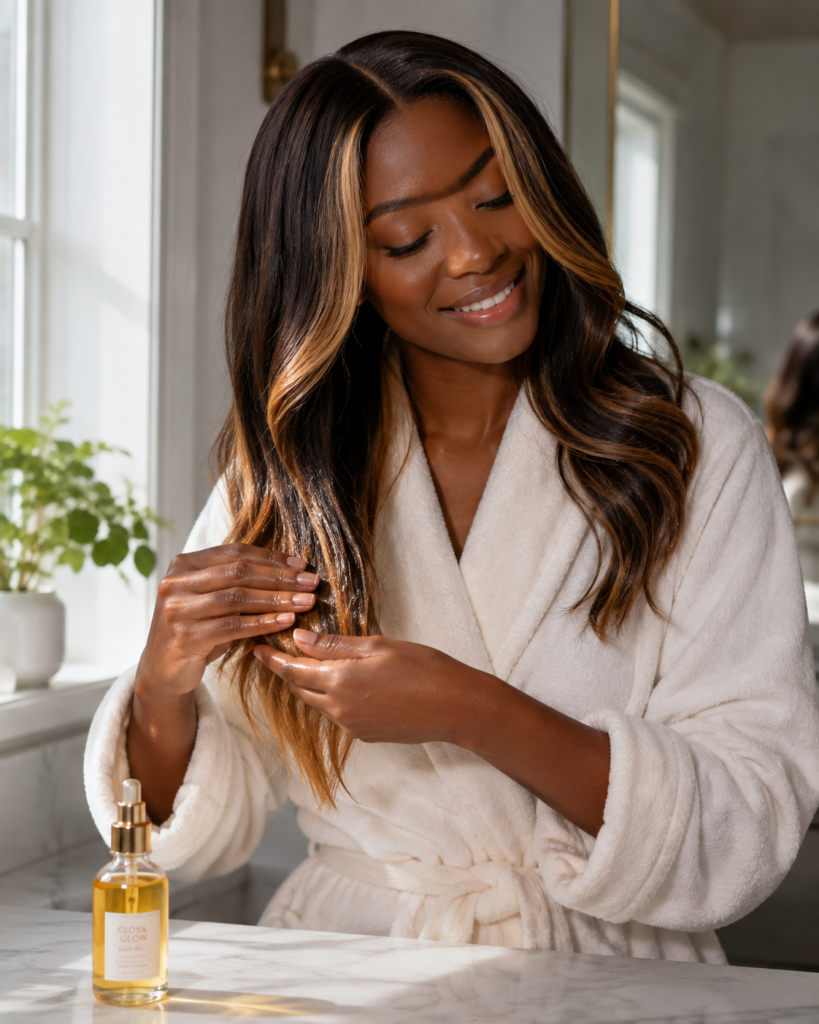
Use a weekly glossing hair oil. This adds shine and helps rich tones catch the light more vibrantly, enhancing the overall glow effect between salon visits.
How Much Does Spring Color for Dark Skin Typically Cost?
Pricing varies depending on the specific shade and technique:
Toning/gloss refresh: $70-$150 Money-piece or partial highlights with rich-tone formulation: $150-$300 Full color transformation with dimensional placement: $200-$450+
Because rich-toned formulations often require a colorist skilled specifically in deep, jewel, and copper pigment mixing, it’s worth prioritizing experience in this area over the lowest available price.
Common Mistakes to Avoid
Based on years of seeing spring color transformations succeed and occasionally miss the mark on dark skin, here are the most frequent pitfalls:
Defaulting to overly light tones without adjustment – Trend-driven light shades don’t automatically suit every skin depth, and dark skin often needs a richer adaptation of trending colors rather than the exact high-lift version.
Skipping the gloss step – Rich tones need consistent toning to stay looking deep and cohesive rather than fading into a duller, flatter shade.
Not considering hair porosity – Highly porous hair can absorb rich or jewel pigments unevenly, leading to patchy or inconsistent results if not addressed before coloring.
Ignoring how sun exposure affects rich tones – Spring and summer sun can shift warm and copper tones more dramatically than cooler ones, so proactive UV protection matters more for this group.
DIY box dye without undertone consideration – Generic at-home formulas often don’t account for the specific balance needed to make rich tones look intentional rather than muddy or uneven.
Talking to Your Colorist About Dark Skin and Spring Color
A productive consultation starts with sharing which past hair colors have made you feel your most radiant, along with any that felt slightly off or washed out. This kind of feedback helps your colorist understand your specific undertone and depth level, rather than starting from a generic base.
It’s also worth discussing how much natural sun exposure you expect this spring and summer, since this affects how a colorist formulates for longevity — a shade meant to hold up under frequent outdoor exposure may need a slightly different toning approach than one intended for a more indoor lifestyle.
Final Thoughts
Spring hair color for dark skin is really about leaning into what already works naturally — espresso, copper, burgundy, and honey-based shades that echo the richness already present in the complexion. Rather than fighting against this depth with overly light, flattening formulas, the most flattering spring results tend to come from embracing and enhancing that natural richness.
If you’re planning a spring refresh in 2026, prioritize a colorist experienced in deep and jewel-tone formulation, be open about which past colors have felt most flattering, and commit to the toning maintenance that keeps rich shades looking vibrant and radiant throughout the season.
Frequently Asked Questions (FAQ)
Q1: How can I tell what undertone I have within dark skin? Green or blue-toned veins on the wrist, how skin responds to direct sun, and a natural preference for gold or silver jewelry are all common indicators of warm versus cool undertones.
Q2: Do undertones vary within dark skin the way they do in lighter skin? Yes, dark skin can carry warm, cool, or olive undertones just like any other depth — undertone and depth are separate characteristics.
Q3: Is very light blonde ever flattering on dark skin? It can be, but it typically requires careful formulation and dimensional placement (like a money-piece) to avoid looking flat or washed out.
Q4: How often should I refresh toner on rich-toned hair color? Roughly every 6-8 weeks, since deep and jewel pigments tend to shift a bit faster than expected and benefit from more frequent refreshing.
Q5: Can rich-toned hair color help even out my complexion? Yes, when properly matched, rich hair tones can enhance natural glow and create a more harmonious, cohesive overall appearance.
Q6: Does dark skin limit my options to only deep hair colors? Not entirely with the right formulation adjustments and dimensional placement, many lighter shades can be adapted to work beautifully, though deeper, richer colors typically require less adjustment to look naturally flattering.
Q7: Will spring and summer sun affect my rich-toned hair color differently than other tones? Yes, warm and copper tones especially can shift more noticeably with sun exposure, sometimes becoming more golden or brassy, which makes proactive UV protection especially worthwhile during sunnier months.