There is a version of short hair that plays it safe — a version that chooses the cut everyone else is already wearing, pairs it with the colour that requires the least explanation at the salon, and calls itself modern. That version has never been interesting, and in 2026 it is particularly invisible. The short hair that is commanding attention this season is not playing it safe. It is playing it precise.
Precision is the operative word. Short hair in 2026 has moved past the phase where the goal was simply to be short, or to be bold, or to make a statement about one’s willingness to commit to a cut. That phase served its purpose. What has replaced it is something more technically considered: a moment in which the best short hair looks are built from the understanding that every element — the exact geometry of the cut, the specific temperature of the colour, the placement of tonal variation, the angle of the fringe — is doing a job. When those elements are chosen in conversation with each other, the result is short hair that looks like it could not be any other way. When they are chosen in isolation, the result is short hair that simply looks done.
What follows is not a list of trends in the casual sense of that word. These are four colour-and-cut pairings that represent the clearest thinking in short hair right now — systems in which the colour was built for the cut and the cut was built to show the colour at its most precisely itself. Understanding why they work is as important as knowing what they are.
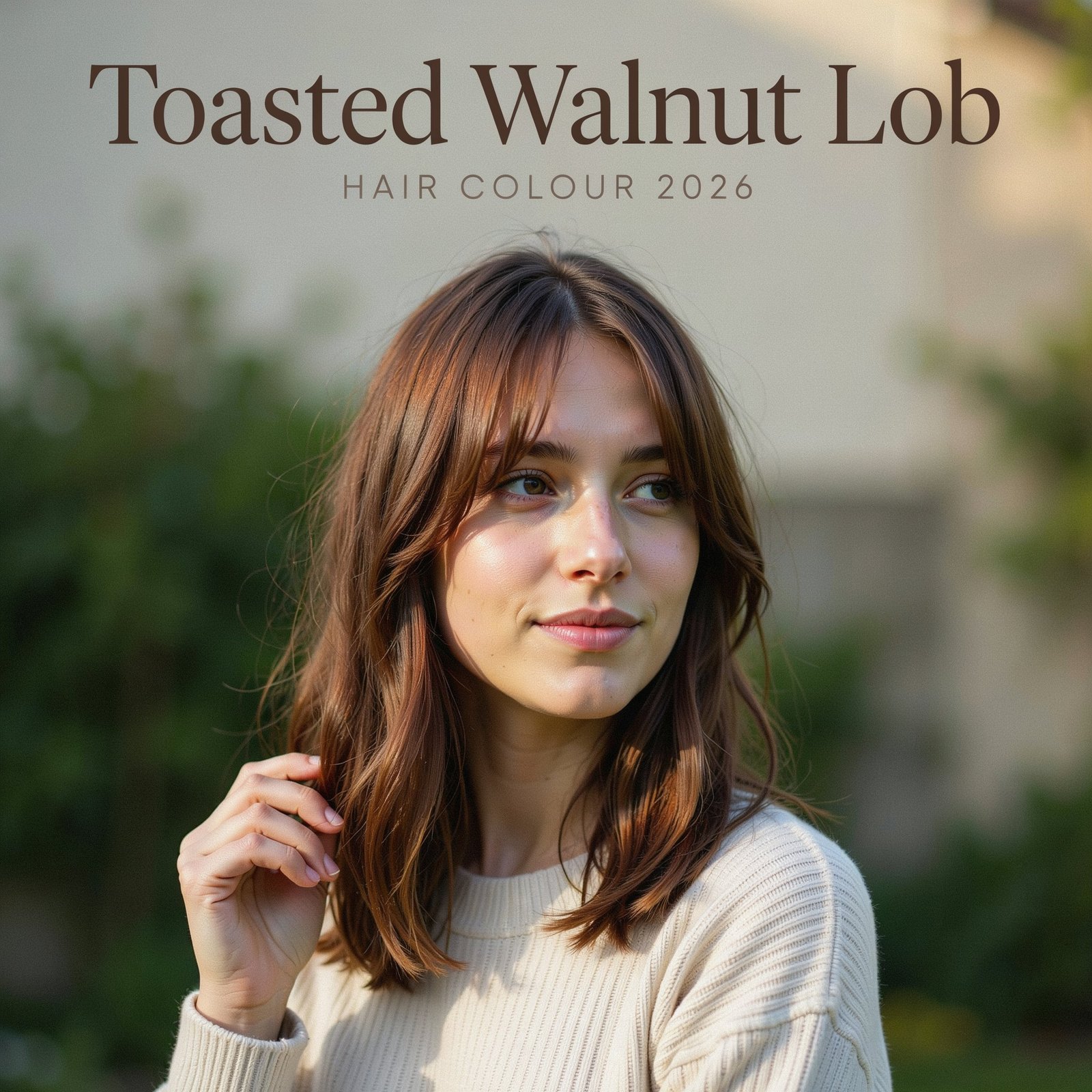
1. Toasted Walnut and the Curtain-Fringe Lob — The Warm Brunette Colour That Earned Its Moment
The lob — the long bob that sits somewhere between the collarbone and the shoulder — has been a fixture of the modern haircut vocabulary for long enough that it risked becoming furniture: present, functional, unremarkable. Its 2026 version has changed that. The curtain-fringe lob, with its centre-parted fringe that sweeps outward in two soft, face-framing sections and a slightly more layered, textured body than its predecessors, has brought the lob back into a conversation it had drifted out of. And the colour that has woken it up is toasted walnut: a deep, warm brunette that reads like a naturally rich medium brown in low light and reveals copper-kissed warmth under direct sun or artificial lighting.
Toasted walnut is not a loud colour. It does not announce itself. What it does instead is deepen everything around it — the texture of the cut looks more dimensional, the movement of the layers looks more intentional, the curtain fringe looks more considered — because its warmth creates a visual richness that cool or neutral tones at this depth simply do not generate. The copper tones sit specifically in the level 5 to 6 range, warm enough to glow in golden-hour light but grounded enough to read as an entirely believable version of someone’s natural hair colour. On a curtain-fringe lob, that richness becomes the cut’s defining quality.
What the colour involves: A medium brunette base, typically level 5 to 6, with a warm copper-brown toner applied to the lengths. Subtle balayage — hand-painted in the loosest possible sense, barely lifting — through the mid-lengths to create the copper warmth without obvious highlights. A gloss finishing step with a warm-amber tone. The goal is a colour that looks like the best version of natural, not like a colour at all.
What the cut involves: A length sitting at or just below the collarbone, with a curtain fringe parted in the centre and textured at the ends so it dissolves into the face-frame rather than creating a hard edge. Internal layering concentrated in the mid-lengths rather than throughout, preserving weight at the ends. Works on medium to thick hair where the layering creates movement without sacrificing the body that makes the curtain fringe sit correctly.
Why they work together: The curtain fringe is the lob’s focal point in 2026, and toasted walnut’s warmest tones — the copper and amber that emerge in light — concentrate naturally at the face-frame and fringe where the lightening is placed. The fringe becomes, in the right light, the warmest and most luminous part of the cut. The rest of the lob reads darker, richer, more grounded. This tonal contrast — warm and bright at the face, deeper through the body — is the specific effect that makes the curtain-fringe lob look complete rather than simply cut.
Maintenance reality: Toasted walnut grows out gracefully on most brunette bases because the shadow root was built into the formula rather than treated as an afterthought. A warm-toned colour-depositing conditioner used once weekly maintains the copper quality between appointments. The cut needs trimming every seven to nine weeks — the curtain fringe in particular will lose its shape and begin to behave like an accident rather than a decision once it passes a certain length.

2. Birch Blonde and the Soft Shag Bob — The Cool Blonde Colour That Cannot Be Faked
There is a particular quality to hair that looks genuinely lived-in — textured and slightly undone in a way that took real skill to achieve and reads as entirely effortless. The soft shag bob, which sits at jaw to chin length with curtain layers, face-framing sections, and a deliberately imprecise set of ends that look like three weeks of growth have softened a once-sharper cut, has that quality built into its construction. Birch blonde — a pale, cool-neutral blonde with near-white tones at the surface and a faintly ashy, greige depth — is the colour that takes the soft shag bob from worn-in to intentional.
Birch blonde sits in the space between platinum and natural blonde: too pale and cool to pass as naturally sun-lightened, but without the high-contrast starkness of true platinum. It is the kind of blonde that looks deliberate without looking laboured. What distinguishes it from other pale blondes of recent seasons is its tonal complexity — there is a greige quality running through the root and mid-lengths, a coolness that is closer to birchwood than to bleach, that makes the colour feel organic even at a level that clearly required a skilled colourist and multiple sessions to achieve. On a soft shag bob, its cool, near-white surface tones catch the light differently across each layer of the cut, and this variation is exactly what gives the cut’s deliberately imprecise shape its sense of depth.
What the colour involves: Lightening to a very pale blonde — level 9 to 10 — with a toner in the cool beige-white range, something with more of a greige quality than a pure silver or violet direction. A root shadow two to three levels deeper than the lengths, applied in a soft, diffused way that makes the transition invisible. Toning shampoo maintenance at home is non-negotiable for keeping the cool quality of the colour between appointments.
What the cut involves: A bob length at chin to jaw, with curtain layers that begin at the cheekbone and build downward. The ends are point-cut and disconnected — not blunt, not razored, but somewhere between the two. A fringe is optional; when present it sits as a longer, curtain-style fringe that blends with the face-framing layers rather than sitting as a separate, defined element.
Why they work together: The soft shag bob needs a colour that can carry visual interest across a cut that deliberately avoids the clean lines and geometric precision that create interest in more architectural short cuts. Birch blonde’s multi-tonal quality — its shift from the deeper root through the tonal mid-lengths to the near-white surface — provides the dimension that a flat, single-process colour would fail to deliver on a cut built around texture rather than shape. The paleness of the colour also makes the bob’s layered construction legible in a way that darker colours at this length would not.
Maintenance reality: Birch blonde requires toning appointments every six to eight weeks to maintain its cool, near-white quality — without regular toning it will drift toward a warmer, brassier blonde that works against the greige direction the colour was built for. The soft shag bob, however, is one of the more forgiving cuts in terms of growth: it actually improves slightly in the weeks after a trim, as the ends soften and the layers settle.

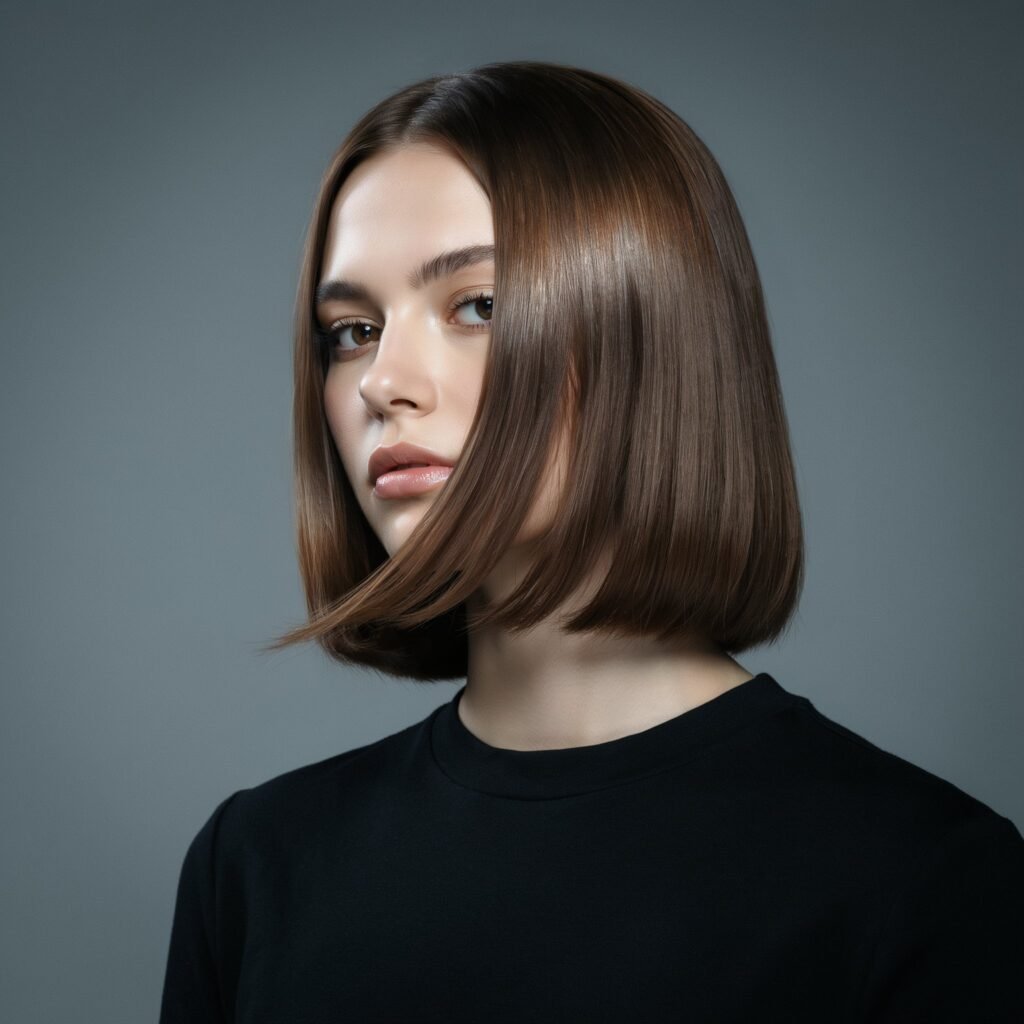
3. Cocoa Gloss and the Asymmetric Bob — The Brunette Colour That Makes Geometry Visible
The asymmetric bob — one side distinctly longer than the other, with the contrast between lengths creating a diagonal line across the face — is having a particular moment in 2026. Not the extreme asymmetry of its early-2010s iteration, which read as editorial to the point of impracticality, but a softer version in which the length difference is two to three centimetres: perceptible, intentional, and deeply flattering in the way that a diagonal line through the face almost always is. The colour that is making this cut sing is cocoa gloss: a medium-deep brunette finished with a high-shine glossing treatment that gives the colour a surface quality closer to polished lacquer than to hair.
The gloss is the point. Cocoa brown at this depth — level 4 to 5, warm without being red, deep without being dark — is a beautiful colour on its own terms. What the glossing step adds is not tone but surface quality: a light-reflective, cuticle-sealing finish that transforms the colour from rich into luminous. The warmth of cocoa sits at a temperature that reads differently in different lights — cooler and more neutral in the shade, warmer and more amber in sunlight — and the gloss amplifies that tonal shift, making the colour feel alive in a way that the same formula without the gloss would not. On an asymmetric bob, the diagonal line between the shorter and longer sides becomes a shift in luminosity as much as a shift in length.
What the colour involves: A warm medium brunette base, single-process or with a slight root shadow to add depth. The defining step is the in-salon glossing treatment applied over the colour — a clear or warm-tinted gloss that seals the cuticle and adds the high-shine finish that makes the colour read as lacquered rather than simply brown. At-home maintenance with a bond-building or shine-enhancing serum preserves the surface quality between appointments.
What the cut involves: An asymmetric bob in which the shorter side sits at or just below the ear and the longer side sits at the jaw or slightly below it. The diagonal line between them is the cut’s architectural statement. Minimal internal layering — this is a shape-based cut, not a texture-based one, and the gloss colour requires a smooth surface to show correctly. A slight graduation at the back creates volume without disrupting the diagonal line at the front.
Why they work together: Cocoa gloss’s high-shine surface and the asymmetric bob’s diagonal geometry are solving the same problem from opposite directions: both are creating visual movement and interest on a short cut through means other than texture. The shine creates movement through light; the asymmetry creates movement through shape. Together they produce a short haircut that is quietly dynamic — one that changes as the wearer moves — in a way that neither the colour alone nor the cut alone would achieve.
Maintenance reality: The gloss fades over six to eight weeks and a toning gloss refresh keeps the shine and warmth at full intensity. The asymmetric bob needs trimming every six weeks with precision — the diagonal line blurs quickly without regular maintenance, and a blurred diagonal line reads as a haircut that grew out rather than one that was made.
4. Rose Gold Brunette and the Modern Shingle Bob — The Most Unexpected Colour of the Season
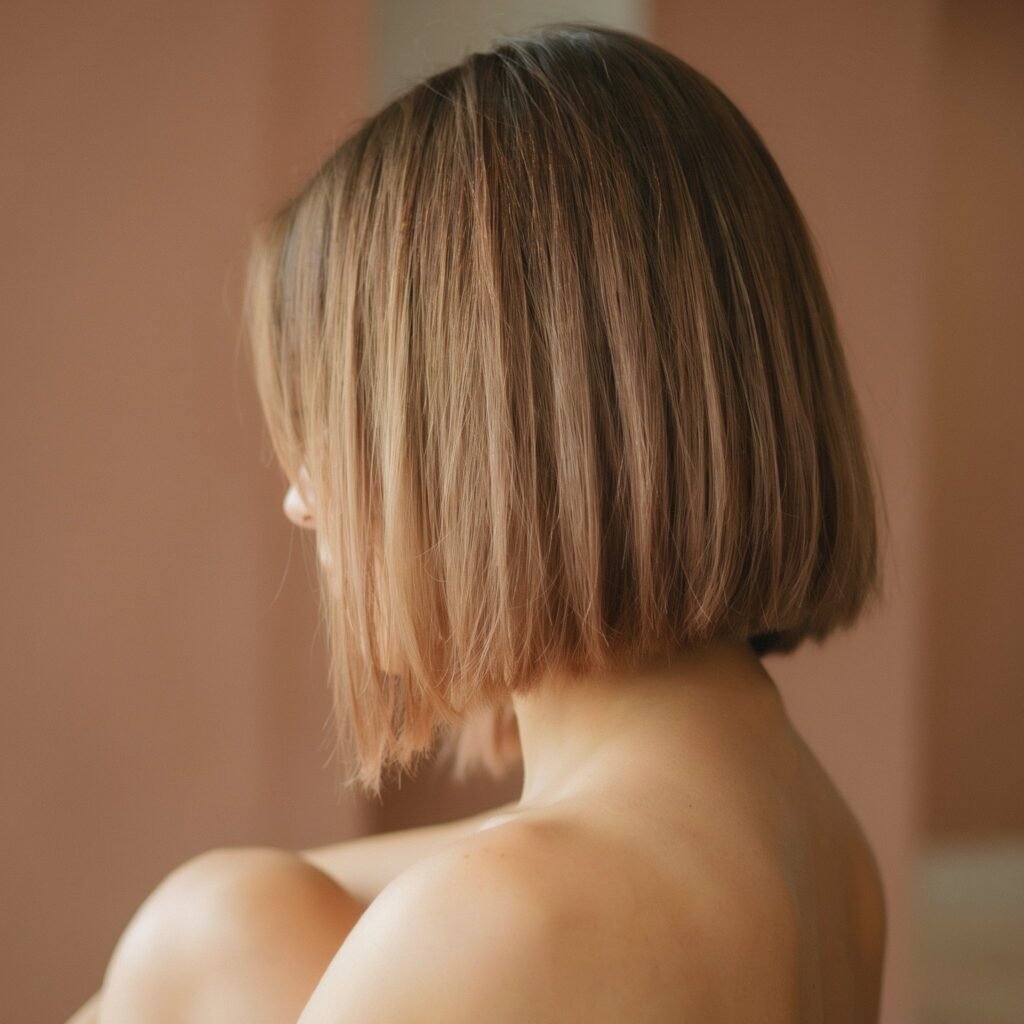
The shingle bob — close-cut at the nape, stacked through the back to create volume at the crown, and typically worn at or just below the jaw — is the season’s most underestimated short cut. The colour redefining it is rose gold brunette: a warm medium brunette with a deliberately pink-gold iridescence through the lengths that is subtle enough to read as a dimensional effect rather than an obvious colour choice, and visible enough to make the shingle bob’s stacked back a genuine focal point.
Rose gold brunette is not the vivid rose gold of 2016 and 2017. It is what rose gold became when it matured: a brunette-first colour with rose-warm tones woven through it as a secondary quality rather than the primary statement. In direct warm light it glows with a quality that reads as almost metallic — the pink-copper tones catching the warmth of the light in a way that straight brunette tones simply do not. In neutral light it reads as a rich, slightly warm brunette with an unexplained richness that draws the eye without announcing its source. This is the specific quality that makes rose gold brunette exceptional as a short hair colour in 2026: its iridescence operates at the threshold of visibility, present enough to make the colour remarkable, absent enough to make it wearable across every context.
What the colour involves: A medium brunette base with a pink-copper toner applied through the lengths, typically over a very light pre-lightening to allow the rose-warm tones to register without needing to fully lift to blonde. A glossing step with a warm rose toner. The colour is most successful on medium brunette bases where the lift is minimal and the tonal result is a warm, iridescent depth rather than a pastel.
What the cut involves: A jaw-length bob with significant graduation through the back — the stacked shingle shape that builds from close-cut at the nape to fuller at the crown. Textured crown layers that allow the rose-warm tones of the colour to catch light at multiple angles simultaneously. The nape graduation is the cut’s most distinctive feature and requires a skilled hand to execute correctly.
Why they work together: The shingle bob’s stacked back is essentially a series of surfaces set at different angles, and rose gold brunette’s iridescent quality means each surface reads the colour slightly differently depending on the light. The nape — the shortest, most closely cut section — falls into the deepest, most purely brunette tone. The crown layers catch the rose-warm iridescence most vividly. The transition between them, built by the graduation, becomes the visual heart of the pairing.
Maintenance reality: Rose gold brunette requires a colour refresh every seven to eight weeks — the pink-copper tones fade from the surface first, shifting toward a warmer amber that is still beautiful but no longer the intended colour. The shingle bob’s precision graduation needs trimming every five to six weeks; the nape in particular loses its shape quickly and a grown-out shingle bob loses its defining quality faster than almost any other cut.
The Colour Directions That Are Building
Several other colour-forward short hair directions are gaining pace through 2026. Warm espresso — a deeply saturated, near-black brown with a subtle warm undertone — on a blunt chin-length bob is the season’s most quietly committed colour statement. It photographs as near-black in most light and reveals its warmth only in direct sun or strong artificial light, which gives it an exclusivity that brighter colours cannot replicate. Honey bronde, which splits the difference between brunette and blonde with warm, ambiguous tones that shift depending on the light and the day, is becoming the preferred short hair colour direction for anyone who wants to avoid the maintenance of true blonde without giving up warmth. And dove grey — genuinely, properly grey, not silver or platinum but the specific cool, matte grey that reads as the colour of morning fog — is being worn on the season’s most graphic short cuts by the women who understand that grey in 2026 is not a concession but a choice.
The Colour Is the Commitment
What every pairing in this article makes clear is that in short hair, colour is not decoration. It is structure. The cut provides the geometry, but the colour provides the meaning — the warmth that makes a shape feel approachable, the coolness that makes it feel precise, the iridescence that makes a stacked graduation worth looking at twice. When the colour and the cut are chosen as a single decision, neither element is simply supporting the other. They are the same argument, made in two different materials.
Bring that argument to your next appointment. Know what you want the colour to do for the cut. Know what the cut will do for the colour. The results will be the difference between hair that looks considered and hair that simply looks done.