There is a particular kind of confidence that belongs to short hair. Not the confidence of a dramatic statement or an attention-seeking gesture, but the quieter, more earned confidence that comes from knowing exactly what you want and being entirely at peace with it. Short hair in 2026 does not ask for permission. It does not hedge its bets with length. It commits — to the cut, to the colour, to the person wearing it — and asks in return only that you meet it with the same certainty.
What is happening in short hair colour and cut culture in 2026 is a conversation about precision. When hair is short, there is nowhere to hide. The colour cannot rely on length and movement to carry it. The cut cannot rely on volume and weight to create interest. Every decision — the exact tone, the placement of highlights, the angle of the fringe, the weight of the nape — shows. And because everything shows, everything matters.
The most requested short hair looks of this season are the product of that understanding. They are combinations where the colour was chosen for the cut and the cut was chosen for the colour. Where a warm tone was selected because it works with the geometry of a specific shape. Where a cool, muted colour was chosen because it suits the energy of a particular cut in a way that a warmer version never would. These are not arbitrary pairings. They are systems — and understanding them as systems is what makes the difference between short hair that looks considered and short hair that simply looks short.
There is also a strong current of softness running through 2026’s short hair trends. After years of hard, graphic short cuts — severe bobs, razor-sharp pixies, architectural shapes that required a great deal of maintenance and a great deal of certainty — the direction has shifted toward short hair that is rounder, softer, and more wearable. Cuts with more texture, more movement, more of the lived-in quality that longer styles have been celebrating for several seasons. Short hair in 2026 does not want to look like it is trying. It wants to look effortless. The colour and cut combinations in this article are the means by which that effortlessness is achieved.
1. Sandy Blonde and the Textured French Bob — The Short Hair Pairing of the Season
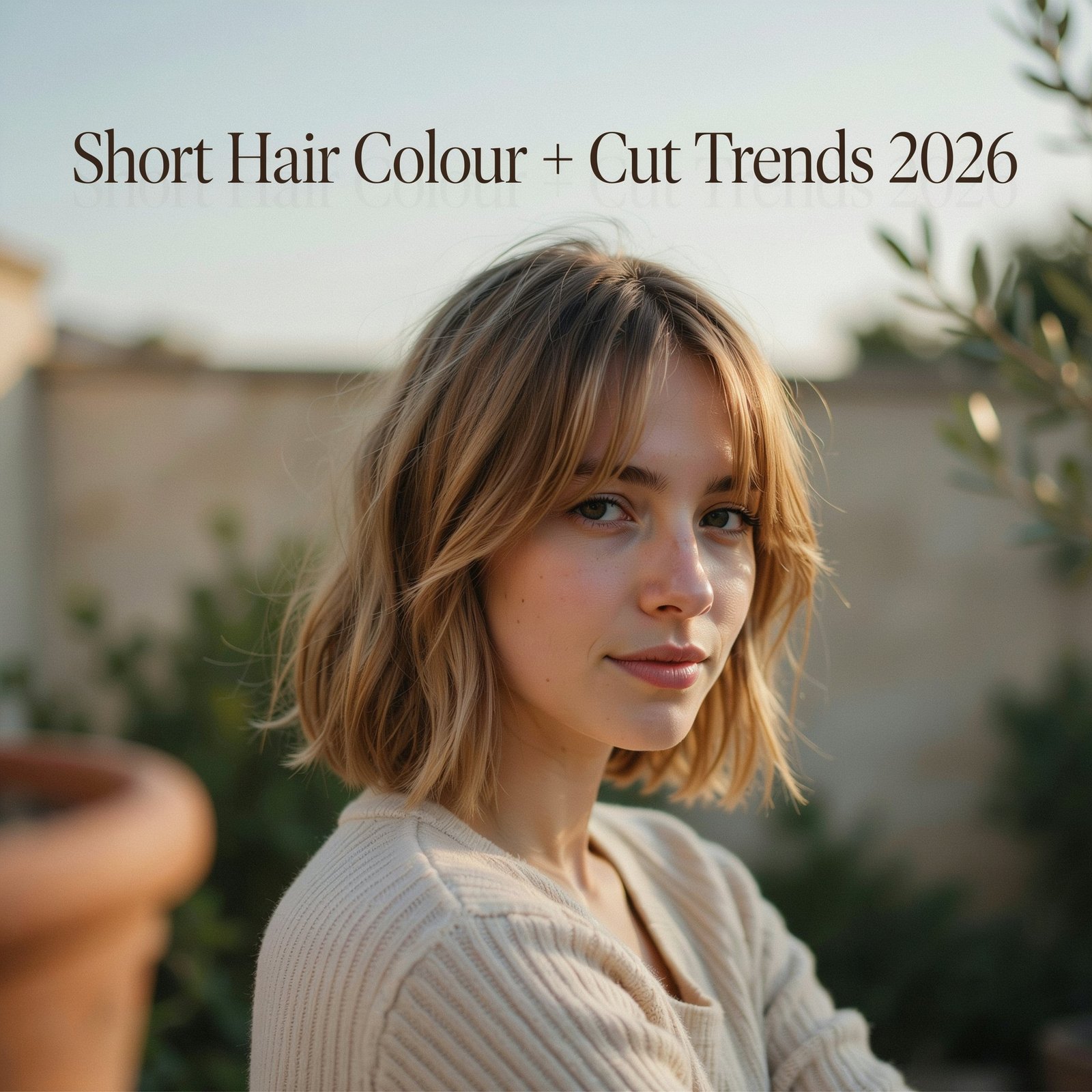
If one colour-and-cut combination defines short hair in 2026 more than any other, it is sandy blonde worn on a textured French bob. These two things were, in a meaningful sense, made for each other — the sandy blonde palette, with its warm beige-gold tones that sit exactly between ash and honey, is the colour that the French bob’s particular shape has always deserved, and the textured French bob is the cut that shows sandy blonde at its most alive.
The French bob — jaw-length, with a fringe that sits at or just above the brow, and a shape that is rounder and fuller than a standard bob — has been one of the most consistently requested cuts of the past two years. Its 2026 version is less blunt and more textured than its predecessors: the ends are piece-y and slightly undone, the fringe is softer and more swept than the graphic, geometric fringes that came before, and the overall shape has a roundness that works with face shapes rather than imposing a strict silhouette on them.
Sandy blonde as a colour is built from multiple tones — a slightly darker, golden-beige root that transitions into warmer, honeyed mid-lengths, and the palest, most sun-bleached tones at the ends and around the fringe. It is a colour that looks genuinely sun-kissed rather than obviously coloured. On a French bob, it does something particular: the warmth of the colour softens the geometric precision of the cut, and the cut’s blunt shape shows off the tonal range of the colour in a single, legible line.
What the colour involves:
- A base that can range from light brown through to naturally blonde, with lightening adjusted accordingly
- Balayage or a face-frame placement that concentrates the lightest, most golden tones around the fringe and face
- A warm beige-gold toner rather than a cool ash — sandy blonde lives or dies by its warmth
- A glossing step to maximise shine on the shorter length, where flat colour can otherwise look one-dimensional
What the cut involves:
- A rounded, jaw-length shape that is fuller at the cheekbone and slightly shorter at the nape
- A soft fringe sitting at the brow or just above it, textured at the ends rather than cut in a hard line
- Piece-y, undone ends created through point-cutting or razor finishing
- Works most beautifully on fine to medium hair where the texture can be built without weight
Why they work together: Sandy blonde’s warmth makes the French bob’s shape feel approachable rather than severe. The fringe — which is often the focal point of the cut — catches the lightest, most sun-touched tones of the colour, drawing attention upward to the face in a way that darker colours at the fringe would not. And the textured, piece-y ends of the 2026 French bob show the colour’s tonal variation more dynamically than a blunt, clean cut ever could.
Maintenance reality: Sandy blonde on a French bob requires attention to both the colour and the cut on a similar schedule. The bob needs trimming every six to eight weeks to maintain its shape — short cuts lose their precision faster than long ones. The colour, placed as balayage rather than at the root, grows out gracefully, and a toning gloss every six to eight weeks keeps the warmth from shifting toward brassiness. This is manageable rather than high-maintenance, provided both appointments are treated as one decision rather than two separate ones.

2. Mushroom Brown and the Bixie — The Most Wearable Short Colour of 2026
The bixie — that particular length between a bob and a pixie that has been building steadily through the last year — has found its signature colour in 2026, and it is mushroom brown: a cool, muted, slightly greige brunette that is one of the most wearable and universally flattering colours of the season. The pairing of mushroom brown and the bixie is, in the language of 2026 hair, the safe choice that somehow still looks considered, unexpected, and entirely its own.
Mushroom brown is the brunette equivalent of mushroom blonde — a colour that reads as almost natural even when it is not, because its tones (cool beige, taupe, and a slight grey-green in certain lights) sit so close to the natural variation of medium brunette hair that the eye registers it as real rather than done. It is a colour that works on a wide range of natural bases, that photographs exceptionally well, and that grows out without any of the hard demarcation lines that make other colour choices feel higher maintenance than they are.
On a bixie, mushroom brown does something that warmer brunette tones cannot: it makes the cut’s geometry visible without making it look harsh. The cool tones of the colour pick up the light differently than warm tones do — with a slight, almost metallic quality in direct light, a deeper earthiness in shade — and this tonal shift makes the bixie’s layers and the movement between the shorter crown and the longer face-framing pieces legible in a way that is understated but precise.
What the colour involves:
- A cool brunette base, typically lifted one to two levels from the natural base before toning
- A mushroom or greige toner — something with taupe, ash, and a slight green-grey undertone — applied to the lengths
- A shadow root that is slightly warmer than the lengths, creating a soft contrast that prevents the colour from looking flat
- Optional: fine, ribbon-like highlights through the upper layers to add dimension without changing the overall cool direction of the colour
What the cut involves:
- A length that sits somewhere between a long pixie and a short bob — typically just below the ear at the sides, with slightly longer pieces framing the face
- Significant texture through the crown, with layers that create volume and movement at the top of the head
- A close-cut nape that is the bixie’s most defining architectural feature
- Versatility: the bixie can be worn sleek and polished or textured and undone depending on the day and the occasion
Why they work together: The bixie’s short length means the colour occupies a very small surface area — which means every tone in the colour is visible simultaneously, without the separation of length that longer styles use to create dimension. Mushroom brown’s multi-tonal quality — its shift between cool greige and deeper taupe — creates the dimension that a single-process colour would fail to provide on a cut this short. The result is a colour that looks richer and more complex than it appears in the colour formula, which is exactly what short hair needs from its colour.
Maintenance reality: Mushroom brown is one of 2026’s better-behaved short hair colours. It grows out gracefully because the shadow root was built in from the beginning. The cool tones can fade toward warmer territory over six to eight weeks, but a toning shampoo used once or twice a week manages this at home without a salon visit. The bixie needs a trim every five to seven weeks to maintain its shape — more frequently than longer cuts, but each appointment is quicker and less costly than a full restyle.
3. Cherry Cola and the Shaggy Pixie — Short Hair’s Most Confident Colour Moment
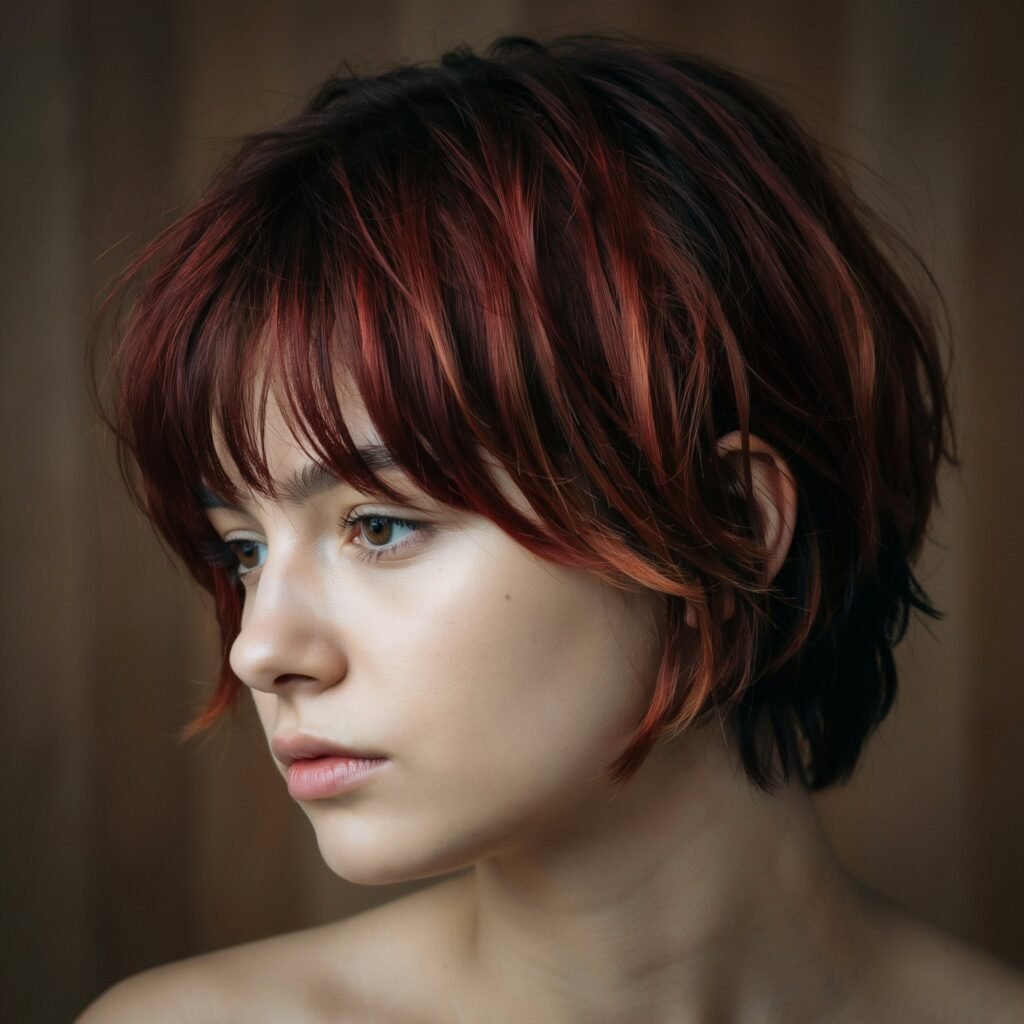
Not every short hair combination in 2026 is quiet. Cherry cola — a deep, richly saturated red-brown that sits at the intersection of burgundy and auburn, with enough darkness to feel glamorous and enough red to feel alive — is the season’s most confident colour choice for short hair, and it has found its ideal structural partner in the shaggy pixie.
The shaggy pixie is the natural evolution of the classic pixie for a moment that values texture, imperfection, and movement over precision and geometry. Where the traditional pixie is tight, clean, and architectural — every angle deliberate, every line controlled — the shaggy pixie is looser, longer through the top and fringe, and built around a kind of deliberate dishevelment that reads as effortless even when it is not. It is a cut that suits natural texture, that looks better slightly grown out than freshly cut, and that has an energy — slightly rock-influenced, slightly editorial, entirely its own — that the classic pixie does not have.
Cherry cola on a shaggy pixie creates a colour-and-cut pairing that is, in the most straightforward sense, striking. The depth of the colour — its dark base with the red and burgundy tones that emerge in direct light — is amplified by the shaggy pixie’s texture. The longer, piece-y top sections catch the light in a way that reveals the red undertones; the shorter sides fall into the deeper, cola-brown base; and the fringe, typically the most expressive part of the shaggy pixie, becomes the place where the colour is most vivid.
What the colour involves:
- A deep, brunette base, typically level 3 to 4 (dark brown to medium-dark brown)
- Red and burgundy tones layered through the lengths — this is not a flat single-process but a multi-tonal red-brown
- A glossing step is essential: cherry cola is a colour that requires shine to read correctly; without it, the depth flattens into something that simply looks dark
- Can be achieved on natural dark brunette bases without pre-lightening, which is one of its most practical advantages
What the cut involves:
- A longer, more textured crown than a classic pixie — typically two to three inches at the top, with layers that create movement
- A fringe that is longer, softer, and more swept than a traditional pixie fringe
- Close-cut or tapered sides that contrast with the textured, layered top
- Point-cut and razor-finished ends throughout for the shaggy, undone quality
Why they work together: Cherry cola’s tonal complexity needs a cut that reveals it rather than conceals it. The shaggy pixie’s layered, textured construction creates exactly the light-catching variability the colour needs — different sections of the cut sit at different angles, pick up light differently, and show different aspects of the colour’s red-brown depth. A flat, geometric cut would compress cherry cola into a single, undifferentiated dark tone. The shaggy pixie opens it up.
Maintenance reality: Cherry cola sits at a moderate-to-high maintenance level for colour, and the shaggy pixie is actually one of the more forgiving short cuts in terms of growth. The colour fades from the outside in — the surface tone shifts toward auburn, then toward a warm brown — rather than growing out with a hard demarcation line, which buys time between appointments. A colour-depositing red-brown conditioner at home extends this further. Plan for a colour refresh every six to eight weeks and a cut every seven to nine weeks to maintain the shaggy texture.
4. Ice Platinum and the Micro Bob — The Short Hair Combination That Stops Traffic
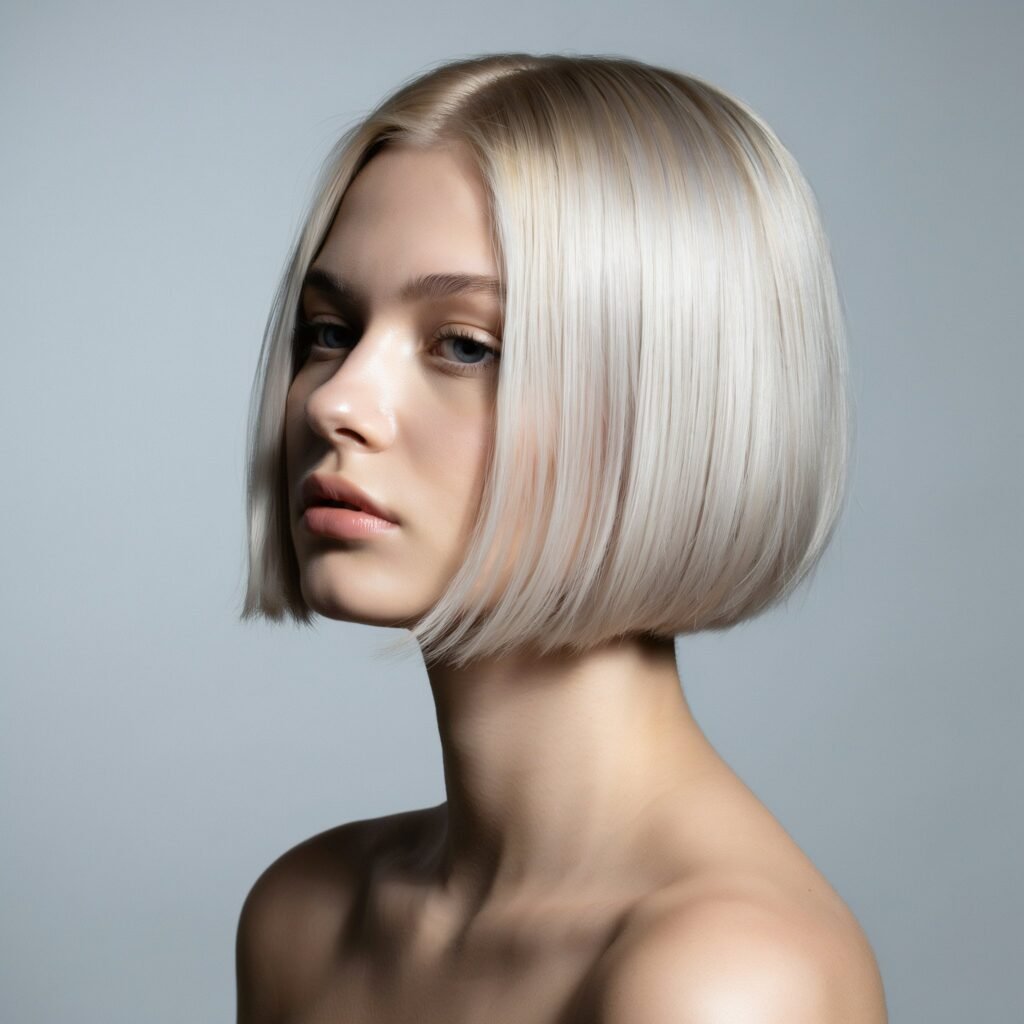
The micro bob — sitting at or above the jaw line, shorter and more graphic than a standard bob, and defined by a clean weight line and a precision that the longer bob deliberately avoids — is 2026’s most architectural short cut. It demands a colour that matches its clarity and its willingness to be seen. Ice platinum is that colour.
Ice platinum in 2026 is not the yellow-tinged or orange-tinged platinum of DIY bleach. It is the result of careful, considered lightening followed by a toner that sits in the cool white-silver spectrum — a colour that has an almost luminous quality in natural light, that photographs as something between white and the palest imaginable silver, and that requires the kind of technical skill that makes it worth finding the right colourist before committing to it.
On a micro bob, ice platinum does what it does on no other cut: it makes the geometry of the cut itself the visual subject. The weight line — that clean, horizontal line at which the bob ends — catches the light uniformly across its length when the hair is platinum, creating an almost architectural effect that plays with how the eye reads the shape. The contrast between the pale, luminous colour and the sharp geometry of the cut is the whole point. Neither works without the other in the same way.
What the colour involves:
- Multiple lightening sessions to reach the very pale blonde needed for platinum — this is not achievable in a single appointment on medium or dark bases
- A violet or blue-based platinum toner to neutralise any remaining warmth and achieve the cool, ice-white finish
- Regular toning appointments every four to six weeks — platinum is the highest-maintenance colour in this article and that is simply the truth
- Protein treatments and deep conditioning are non-negotiable at this level of lightening; the health of the hair underpins the quality of the colour
What the cut involves:
- A blunt weight line that sits at or just above the jaw — the micro bob’s defining feature
- Minimal to no internal layering — the micro bob is about shape, not texture
- A straight or slightly curved fringe, or a centre or side part worn without a fringe depending on personal preference
- Works on all hair types but is most precise on fine to medium hair where the blunt ends hold their line cleanly
Why they work together: Ice platinum and the micro bob are, in the vocabulary of 2026 hair, absolute partners. The platinum amplifies the micro bob’s line — a warm blonde or brunette micro bob has shape; a platinum micro bob has presence. The cut, in return, justifies the colour’s high maintenance demands by providing a structure that shows off the platinum’s luminosity with maximum clarity. There is no ambiguity in this pairing. It knows exactly what it is.
Maintenance reality: This is the most committed combination in the article. Platinum requires the most maintenance of any colour, and the micro bob requires the most precision of any cut. But both reward that commitment. The platinum, when maintained correctly with regular toning and quality home care, is one of the most beautiful colours in existence. The micro bob, trimmed every five to six weeks, looks crisper and more intentional than almost any other cut. The investment is real; so is the return.
The Short Hair Colours and Cuts That Are Building Momentum
Beyond the four signature pairings above, several shorter-hair directions are gathering pace through 2026 that are worth understanding.
Caramel brunette gloss on a stacked bob — a layered bob that is close-cut at the nape and builds through internal layers to a fuller crown — is quietly one of the season’s most sophisticated combinations. The gloss treatment deepens the caramel tones and adds the kind of surface shine that the stacked bob’s movement shows off beautifully.
The pageboy cut — a blunter, rounder version of the French bob, with a fringe that sits squarer and more graphic at the brow — is having a cultural moment for the first time in decades, worn almost exclusively with soft, cool-toned colours. Dove grey on a pageboy is 2026’s most unexpected short hair look, and it works.
Copper on a short shag — a looser, more textured short cut than either the shaggy pixie or the bixie — is the short hair analogue of the longer shag-and-copper-balayage pairings that have been everywhere this year. On a shorter length, the copper is more vivid, more visible, and more expressive.
Root smudge technique on short brunette hair — blending the natural root into the coloured lengths with a deliberately soft, slightly smoky transition rather than a hard demarcation — is replacing traditional touch-up appointments as the preferred maintenance approach for short brunette styles. It extends the life of the colour while making the root growth look intentional.
Short Hair as a Complete Statement
The argument that 2026 is making about short hair is one that has been made before but rarely this clearly: the colour and the cut are not separate decisions. They are a single decision, arrived at together, and the quality of the result reflects the degree to which they were considered as a system.
When a colourist chooses a sandy blonde because they know it will open up the French bob’s fringe. When a stylist textures the crown of a bixie because they know the mushroom brown’s cool tones need that variability to come alive. When a platinum is applied in a specific way because the micro bob’s weight line will show off the toner’s exact result with complete clarity. This is the standard — colour and cut in conversation, each making the other more precisely itself.
Bring both questions to your next appointment. Know what you want the colour to do for the cut, and what you want the cut to do for the colour. The results will be the difference between hair that looks done and hair that looks right.