Explore the latest hair style trends for 2026, including layered cuts, bobs, bangs, long hairstyles, and modern looks that defining the year.
There is a version of a haircut that exists purely to exist. It sits within the safe middle distance of neither too short nor too long, neither too shaped nor too grown-out, and it asks nothing of the person wearing it and receives nothing in return. In 2026, that haircut has been retired.
The hair style story of this season is built on the idea that a cut is a structure — not a starting point, not a blank canvas, not a maintenance decision. The shapes dominating 2026 are precise where they need to be precise and deliberately undone where that serves the cut better. They reward good technique. They reward intention. They reward a conversation at the salon that goes deeper than “just a trim” or “same as last time.”
What makes 2026’s style direction particularly compelling is the way the season navigates the tension between structure and softness. The cuts that matter most this year are neither severely architectural nor shapeless and effortless — they occupy a space between those poles that takes considerably more skill to achieve than either extreme. A blunt bob that is not quite blunt. Layers that have weight rather than simply movement. A fringe that is present enough to change the face but not so heavy it reads as costume.
Length is no longer the defining question. In 2026, it is what the cut does at the ends, through the interior, and around the face that determines whether a style is remarkable or merely present.
This guide covers eight of the most beautiful hair style trends for 2026 — each explored in full so you understand not just what the cut looks like, but how it is built, worn, and made to feel entirely your own.
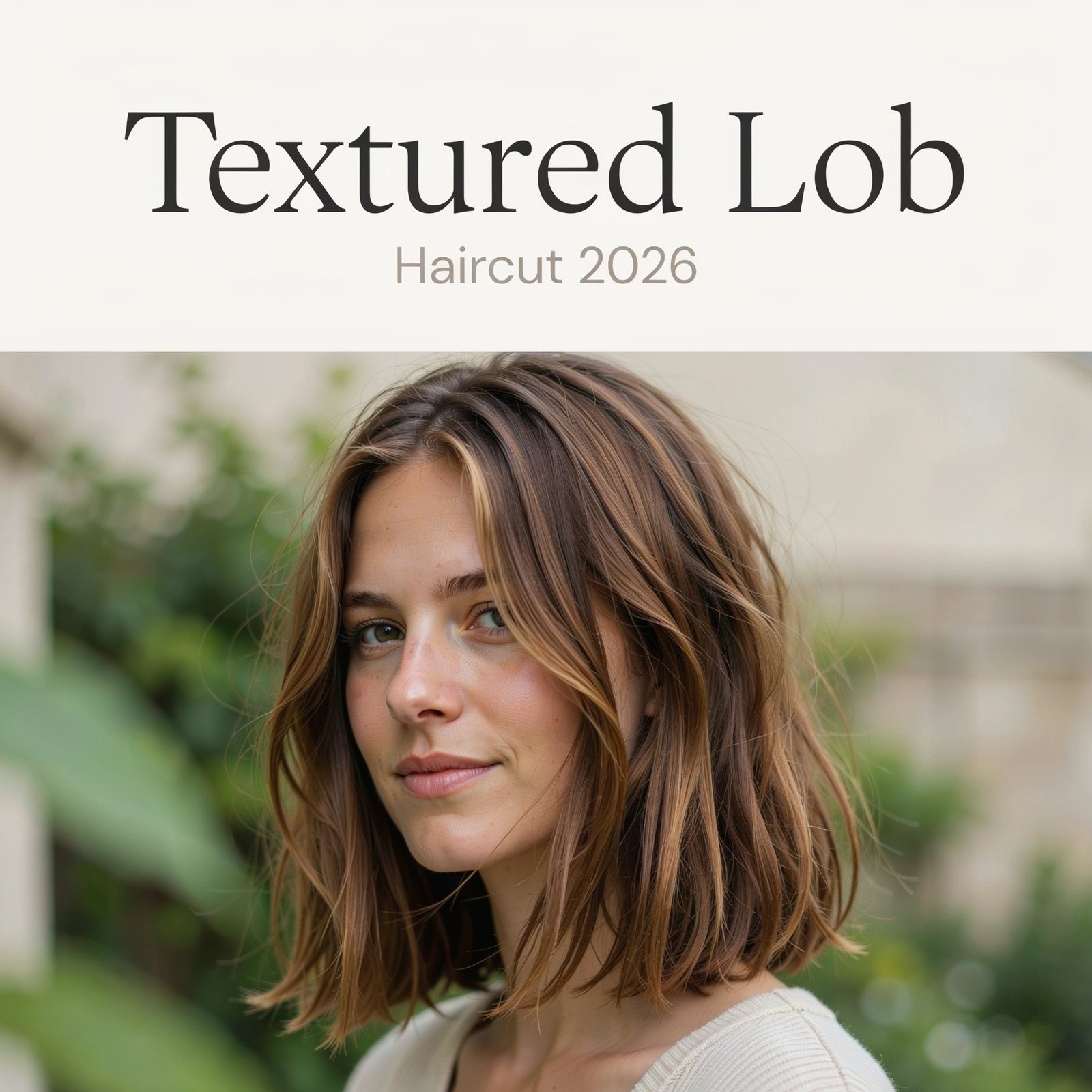
1. The Textured Lob — The Length That Has Finally Mastered Itself
The lob has been a fixture of every hair trend conversation for the better part of a decade. In 2026, it earns its permanent position by becoming something technically specific rather than simply a length. The textured lob of this season sits between the collarbone and the shoulder — neither the blunt bob nor the mid-length — and it is defined not by where it falls but by how it is cut: with internal texture and personalised weight removal that gives the style movement, softness, and a lived-in quality that structured lobs have historically struggled to deliver.
Why the 2026 textured lob is different from what came before:
- The texture is internal, worked through the mid-lengths and ends with precision point-cutting rather than applied at the surface through styling
- The ends are soft — not blunt, not heavily layered, but softened so the perimeter reads as natural rather than cut
- It moves with the wearer rather than sitting static, which is the quality that has made previous lob iterations feel high-maintenance despite their medium length
How this cut is built:
- Cut to a perimeter length between collarbone and shoulder — the precise point depends on face shape and neck length
- Internal texture removed through the mid-lengths with point-cutting or slide-cutting to reduce weight without shortening the exterior length
- The ends softened and personalised — fractionally longer through the interior to encourage movement
- No harsh graduation at the nape; the back should fall clean and soft
Who the textured lob works for:
Any hair type, but it is particularly transformative on medium to thick hair that has been wearing a blunt perimeter and finding it heavy. The internal texture removal takes weight away from exactly where blunt cuts carry it most, without sacrificing any of the length.
Styling directions for this cut:
- Air-dried with a curl cream for natural texture and movement
- Blow-dried smooth with a round brush for a polished, editorial finish
- Set with a large-barrel wand for loose, effortless waves that the internal texture allows to fall perfectly

2. The Sculpted Bob — Architecture You Can Wear
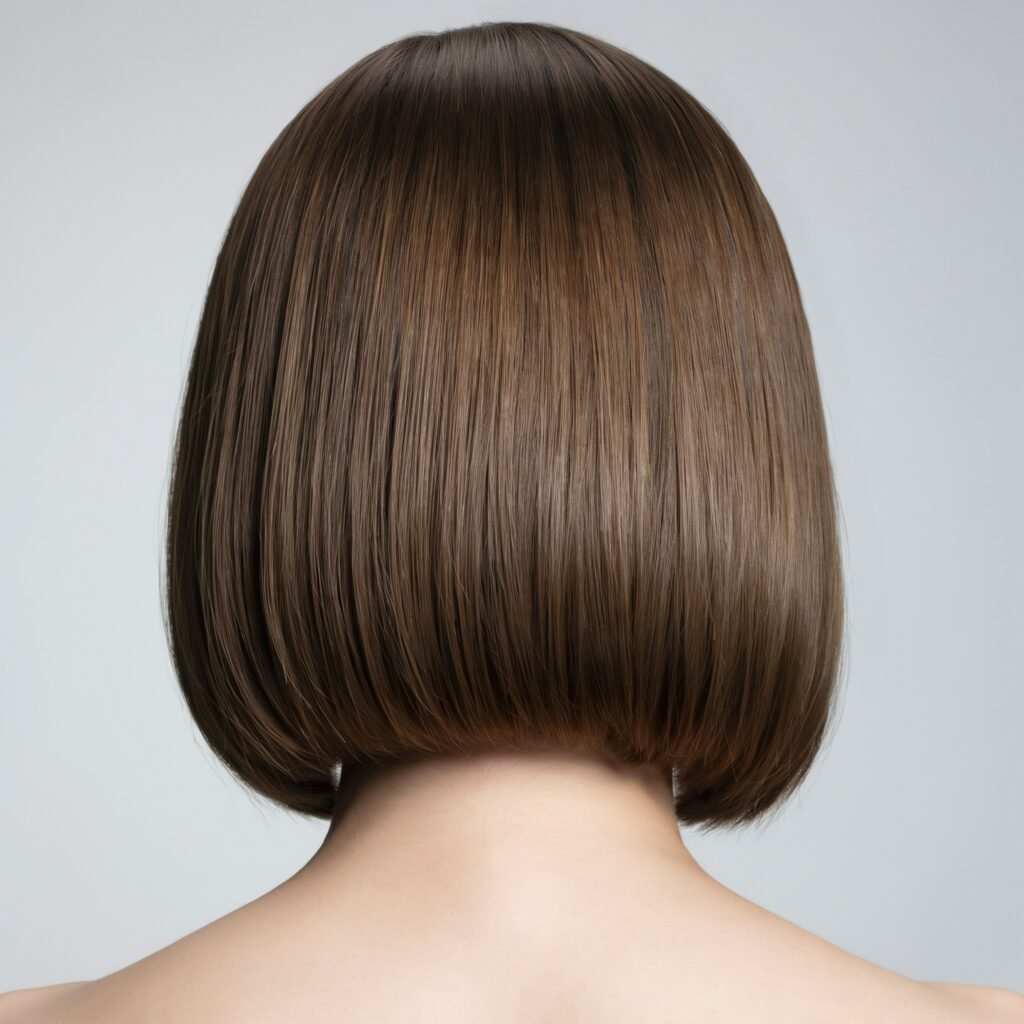
The sculpted bob is 2026’s most decisive short-to-medium length statement. It sits at or just below the jaw — a classic bob length — but it is cut with a precision and an attention to graduation that gives it a structural quality entirely unlike the soft, grown-out bobs that have dominated recent seasons. The shape is considered from every angle: the back has a clean, precise graduation; the sides fall with intention; the perimeter — whether blunt or slightly bevelled — reads as a decision rather than a default.
What makes the sculpted bob the cut of 2026:
- Its clarity of shape reads as confident in a way that softer, less defined cuts cannot replicate
- The precision graduation through the back creates the kind of clean nape that frames the neck and makes the entire silhouette more elegant
- It works equally in straight-smooth styling and in natural texture, because the shape is strong enough to be visible regardless of how the hair moves
How this cut is built:
- Establish a clean perimeter at or just below the jaw — the exact length determined by face shape and personal preference
- Work the back with a precise graduation: tighter at the nape, releasing through the crown, so the back sits close without being a layered bob
- The sides should connect to the back without a visible line — seamless graduation is non-negotiable
- The perimeter can be blunt for the sharpest result, or fractionally softened for a more wearable daily finish
The sculpted bob spectrum:
- Classic sculpted bob — jaw-length, blunt perimeter, the most architectural version
- Textured sculpted bob — the same precise graduation with a softened, point-cut perimeter
- Asymmetric sculpted bob — fractionally longer on one side, for those who want the structure with an additional layer of intention
Styling directions:
- Blow-dried smooth with a flat brush for the cleanest possible line
- Diffused or air-dried on naturally wavy hair — the graduation holds the shape even through movement
- A drop of shine serum through the lengths for the lacquered finish that complements the cut’s precision
3. Curtain Fringe — The Face-Frame That Never Left but Finally Arrived
Curtain fringe is not a new idea. It has been in and around the trend conversation for several years. What makes 2026 its definitive moment is the refinement of how it is cut and how it sits — not the long, barely-there version that functions more as centre-parted lengths than as a fringe, and not the heavy, close-cropped version that requires constant styling. The 2026 curtain fringe has weight and presence. It falls to the brow or fractionally below, parts softly in the centre, and frames the face with the specific combination of structure and softness that only a well-executed fringe can deliver.
Why the 2026 curtain fringe is the fringe to try:
- Its length — at or just below the brow — means it genuinely changes the face, which is the entire purpose of a fringe
- The soft centre part makes it adaptable: worn forward for a more dramatic frame, swept further to each side for a subtler effect
- It grows out gracefully — the graduation through the sides means the awkward in-between fringe stage is considerably less awkward than with blunt or heavy fringes
How this cut is built:
- Take the fringe section from the natural recession point on each side, graduating into the lengths through the sides
- Cut to the brow or fractionally below — long enough to part in the centre without folding, short enough to read as a genuine fringe rather than simply long lengths
- Point-cut through the perimeter of the fringe for softness — a blunt fringe edge fights the curtain shape
- Blend the fringe into the sides with precision so there is no visible line where the fringe ends
Who the curtain fringe works for:
Almost any face shape — the centre part creates length, which flatters wider face shapes, while the soft framing adds width at the forehead for those with longer face shapes. The adjustment is in the weight and length of the fringe rather than the concept.
Styling directions:
- Blow-dry forward and then sweep to each side with a round brush for the signature curtain shape
- Air-dry with minimal product — the fringe holds its part naturally when cut correctly
- A small amount of styling balm worked through the fringe prevents it from separating or frizzing in humidity
4. The Shag — The Cut That Makes Texture the Point
The shag is 2026’s most textural style statement — and it earns its position this season by becoming something more considered than the lived-in, undone shag that has been circulating since its mid-2010s revival. The 2026 shag has intentionality built into every layer. The graduation is specific. The face-framing layers are cut to a precise length rather than simply chopped at whichever point seems right. The fringe — present in the classic version — is a genuine design decision rather than an afterthought. The result is a shag that looks effortless because it has been executed with considerable effort.
What distinguishes the 2026 shag from its predecessors:
- The layers are cut with intention — each layer has a specific length and weight relationship to the layer above and below it
- The face-framing layers are the most considered element: cut short enough to frame the face and long enough not to require constant pinning back
- The overall shape has volume through the crown without the poodle-roundness that poorly executed shags can produce
How this cut is built:
- Establish the shortest layer — typically around the crown at a length that suits the face shape and desired silhouette
- Work through the layers methodically, each one a deliberate length longer than the last, so the graduation is visible and intentional
- The face-framing layers are cut separately and with care: they should start at or near the cheekbone and graduate into the lengths
- The fringe, if included, should connect to the face-framing layers — not sit as a separate element but as the forward continuation of the overall shape
The shag spectrum:
- Classic shag — medium length, full layers, fringe included, the most iconic version of the cut
- Modern shag — longer through the body with shorter face-framing layers, a more wearable daily interpretation
- Mini shag — shorter, sitting above the shoulder, the most graphic and intentional version
Styling directions:
- Diffused on natural texture — this is the cut that makes wavy and curly hair extraordinary
- Rough-dried and then worked through with fingers and a small amount of texture paste
- Salt spray applied to damp hair before diffusing for the most textural, lived-in result

5. The Sleek Long Bob — The Power Cut of the Season
The sleek long bob is 2026’s most quietly powerful style. It sits between the collarbone and the mid-chest — longer than the textured lob, shorter than a true mid-length — and it is worn smooth. Not simply blow-dried smooth, but smooth in the way that requires technique, the right tools, and hair that has been cut with a clean, slightly bevelled perimeter designed to lie flat and move as a single, cohesive piece rather than as a collection of individual lengths. In a season that is otherwise largely textural, the sleek long bob is a counterpoint that reads as sharp, intentional, and exceptionally grown-up.
Why the sleek long bob is compelling in 2026:
- Its clean, smooth surface creates a visual impact that textured styles cannot replicate — the light travels along the lengths in a single, unbroken movement
- The length flatters the widest range of face shapes, sitting long enough to elongate without the weight of truly long hair
- It reads as professional and elevated in contexts where textural cuts can feel overly casual
How this cut is built:
- Cut a clean perimeter between the collarbone and the mid-chest — the precise length is personal, but the clean perimeter is non-negotiable
- A very slight bevel through the underside prevents the ends from flipping and helps the style sit flat
- Minimal interior layering — this is not a layered cut; the weight and the movement come from the perimeter, not from interior texture removal
- Any face-framing should be extremely subtle — fractionally longer through the face, not separate layers that disturb the clean movement
Styling directions:
- Blow-dry with a large round brush working section by section from the nape upward — the direction of the blow-dry is as important as the products applied
- A flat iron passed once through the lengths after blow-drying for the smoothest possible finish
- A small amount of lightweight oil through the ends for the mirror-like surface quality that makes this cut extraordinary
6. Grown-Out Pixie — The Short Cut With a Direction
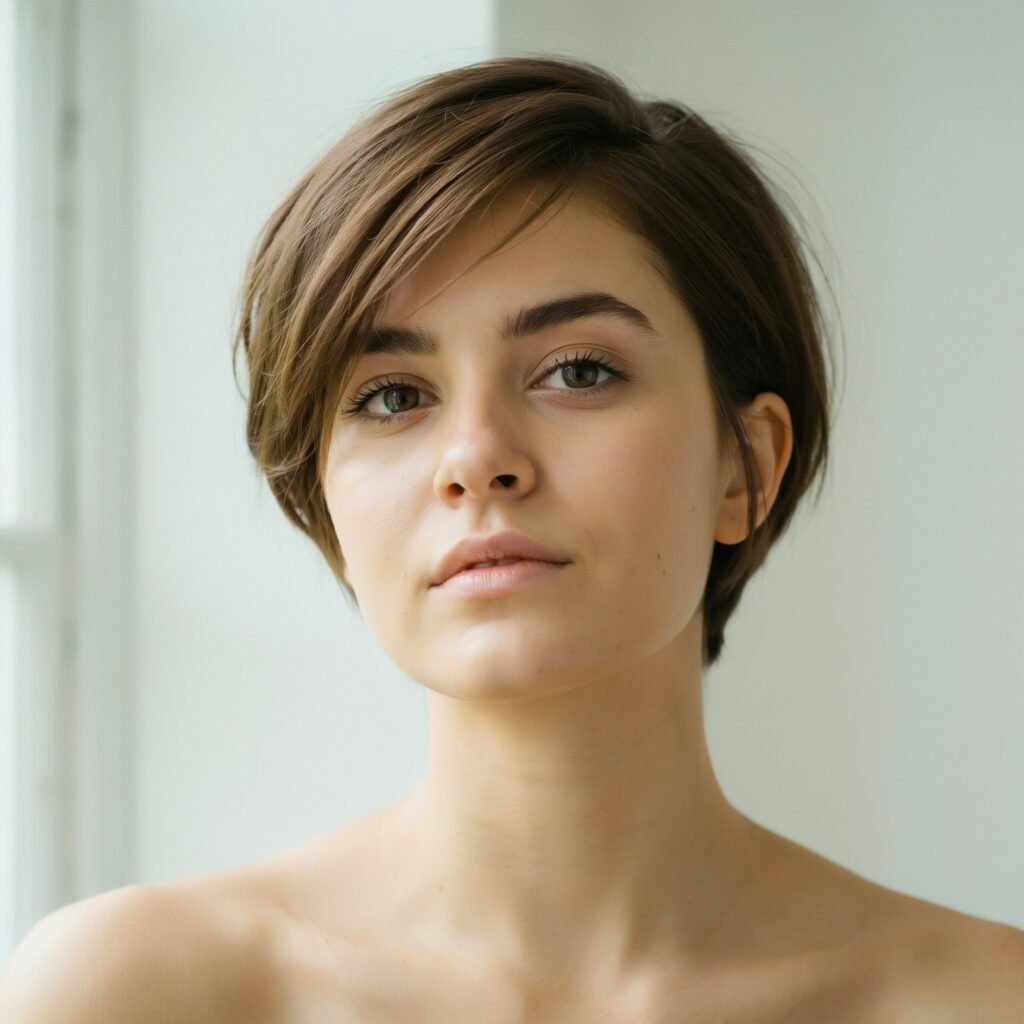
The grown-out pixie is the most misunderstood cut in the 2026 conversation, which is precisely what earns it a place on this list. This is not a pixie that has been neglected. It is not a cut waiting to become something else. It is a specific length and shape — sitting somewhere between a proper pixie and a very short bob, with length through the top, softness through the sides, and a nape that is clean but not severe — that has been embraced as a style in its own right. In 2026, the women wearing it are not growing it out. They are stopping here, intentionally.
Why the grown-out pixie is a style choice, not a phase:
- The length through the top — typically enough to move and part — gives the cut softness that a close-cropped pixie cannot offer
- The softness through the sides frames the face and ears in a way that short-back-and-sides pixie cuts never quite manage
- It occupies a length category that is deeply flattering on strong bone structure and utterly transforms the face in a way that longer cuts cannot
How this cut is built:
- The top sits at a length of two to four inches — enough to part softly and to move, but short enough to sit close to the head
- The sides are tapered or scissor-cut to sit just at or slightly below the ear, with a soft blend rather than a hard line
- The nape should be clean — either tapered or cut to a clean, low line — for the precise finish that elevates the cut
- The transition from the nape through the sides and into the top must be seamless: no visible lines, no abrupt changes in weight
Styling directions:
- Worked through with a small amount of pomade or styling cream for a polished, intentional finish
- Air-dried for a softer, more casual approach
- A light-hold wax through the top for the slightly undone styling that suits the cut’s grown-in quality
7. Long Layers With a Blunt Perimeter — The Mid-Length Reinvented
Long layers with a blunt perimeter is the 2026 answer to the mid-length question, and it resolves the tension that has plagued the length for years. Heavily layered mid-lengths lose their weight and look thin at the ends. Blunt mid-lengths look heavy and shapeless through the interior. The 2026 version resolves this by keeping the perimeter clean and blunt — full weight at the ends — while removing interior weight through long, soft layers that create movement without sacrificing the fullness and solidity of the overall shape.
Why this combination works where others have failed:
- The blunt perimeter keeps the ends full and healthy-looking, which is the element that makes mid-length hair genuinely beautiful rather than simply average
- The long interior layers create movement through the mid-lengths without shortening anything — the length is entirely preserved
- The shape adapts to every styling direction: smooth, wavy, or naturally textured, the layers create movement while the perimeter holds the shape
How this cut is built:
- Establish a clean, blunt perimeter at the desired mid-length — typically sitting between the shoulder and the mid-chest
- Work long layers through the interior only: not touching the perimeter, not creating shorter layers through the crown, but removing weight and creating movement through the mid-lengths alone
- The face-framing can be blunt to match the perimeter or very softly graduated — both work, and the choice is personal
- Finish with point-cutting through the very ends of the perimeter to soften slightly without losing the fullness
The long layers with blunt perimeter spectrum:
- Minimal layers — the most subtle version, barely-there interior movement with a strong blunt perimeter
- Classic version — balanced layers with a clean perimeter, the most universally flattering interpretation
- Strong layers — more visible interior movement, almost approaching a shag, with the blunt perimeter as the grounding element
8. The Micro Fringe — The Commitment That Pays Off
The micro fringe is 2026’s most decisive style statement — and one of its most divisive. Short, sitting above the brow at a length that ranges from directly at the brow arch to as much as a centimetre above it, the micro fringe is not a compromise. It is not a long fringe that has been trimmed too short. It is a deliberate, considered style element that changes the geometry of the face entirely, frames the forehead as an asset, and makes the wearer look like someone who knows exactly what they want from their hair. In 2026, it is being worn with everything from long waves to sculpted bobs to textured shags.
Why the micro fringe is compelling now:
- Its shortness creates a graphic quality that longer fringes simply do not have — it is visible and intentional from every distance
- Against the soft, textural cuts dominating the rest of the season, the micro fringe reads as the sharpest possible counterpoint
- The commitment required to wear it correctly is, paradoxically, what makes it compelling — it takes confidence, and confidence always reads as a style choice
How this cut is built:
- Section the fringe from the natural recession points and establish a clean perimeter above the brow — the exact height is personal, but the geometry must be precise
- Cut with a straight, flat edge rather than a soft or point-cut perimeter — the micro fringe earns its impact from its clean line, not its softness
- The blend into the sides must be managed carefully: too abrupt and the fringe reads as a disconnected rectangle; too gradual and it loses its graphic quality
- Maintenance is every three to four weeks — this fringe grows fast and the length is its entire identity
Who the micro fringe works for: Women with strong brows and defined features where the fringe becomes part of a graphic overall look. Also extraordinarily effective on those with fine or flat hair, where the fringe adds a visual element that the body of the hair cannot.
Styling directions:
- Blow-dried forward and flat with a fine-tooth comb for the cleanest possible line
- A very small amount of styling balm to prevent separation and hold the shape
- No product for the most natural, undone version — the cut holds its shape regardless
The Principles Behind Every 2026 Cut
Three ideas run through every style trend in this season and are worth understanding before your next appointment.
The face-frame is a design decision, not an afterthought. In 2026, the pieces around the face — whether that is a fringe, a curtain fringe, face-framing layers, or the absence of any of those things — are being considered with as much care as the perimeter of the cut. How the hair meets the face determines how the face reads. This is not a minor consideration.
Weight removal is as important as length. The most transformative thing a colourist can do for a cut in 2026 is not to take length off but to take weight out in exactly the right places. Interior texture removal — worked through the mid-lengths without touching the perimeter — is the technique that separates a cut that moves from a cut that simply sits.
Maintenance is part of the style. Every cut on this list has an honest maintenance requirement. The micro fringe needs trimming every three to four weeks. The sculpted bob loses its shape at six weeks without a tidy-up. The textured lob, by contrast, grows gracefully. Know what you are signing up for before you commit to a shape — not to avoid commitment, but to make the right one for your life.
The Cut Is the Foundation
Every other decision in a hair appointment — colour, treatment, product — sits on top of the cut. A strong cut makes colour look better, makes texture look more intentional, makes the entire result look like a decision rather than an accident. In 2026, that foundation is being built with more precision and more intention than it has been in years.
Bring the specificity to your next appointment. Know the length, the texture, the face-frame, the maintenance. Know whether you want structure or softness or the precise calibration between the two that makes the most compelling cuts this season so difficult to achieve and so impossible to forget.
For Hairs colour check this link. https://womenwearz.com/hair-colour-trends-2026-the-most-beautiful-shades-and-techniques-defining-the-season/