Discover the best bridal makeup ideas for 2026, from natural glowing looks to glamorous wedding makeup style. Find inspiration for your perfect wedding day look.
There is a version of bridal makeup that exists to be inoffensive. It is matte where matte is considered safe, glowing where glow has been deemed appropriate, and applied with such careful neutrality that it could belong to any face on any wedding day in any of the last fifteen years. It asks nothing of the woman wearing it and communicates nothing about her — not her colouring, not her sensibility, not her relationship with her own face. It is the makeup equivalent of a template, populated with a bride rather than designed for one. In 2026, that version of bridal makeup has been replaced.
The bridal beauty story of this season is rooted in a single, clarifying idea: makeup for a wedding is not a category separate from makeup for a person. It is the most refined, most considered version of how that person already looks — elevated by occasion and professional execution, but not fundamentally altered by either. The looks that define 2026 are specific where specificity serves the face, and restrained where restraint is more powerful than addition. They reward the kind of bridal trial that goes beyond choosing between glossy and matte, or warm and cool. They reward the conversation that asks what the bride actually looks like when she is at her most beautiful, and builds from that answer.
What makes 2026’s bridal direction genuinely distinct is the resolution it has found between staying power and skin quality. For years, those two things were in opposition — the finishes that lasted twelve hours were the finishes that looked like a mask at hour three. The techniques and formulations that dominate this season have changed that equation. The looks that matter most in 2026 are built on skin preparation that does more work than any product applied on top of it, layered with colour in sequences that give depth without weight, and finished with techniques that preserve the skin’s own character rather than replacing it. A foundation layer so well executed that it reads as skin. A lip so precisely chosen that it looks like the bride’s mouth on the best day of her life. A lash that frames the eye without announcing itself.
The photography is not an afterthought in 2026. Every look on this list has been considered in relation to how it reads across the full day — in the getting-ready light, in the ceremony, in the portraits taken outdoors, and in the reception at night.
This guide covers eight of the most beautiful bridal makeup looks for 2026 — each explored in full so you understand not just what the look is, but how it is built, worn, and made to feel entirely like the woman it belongs to.
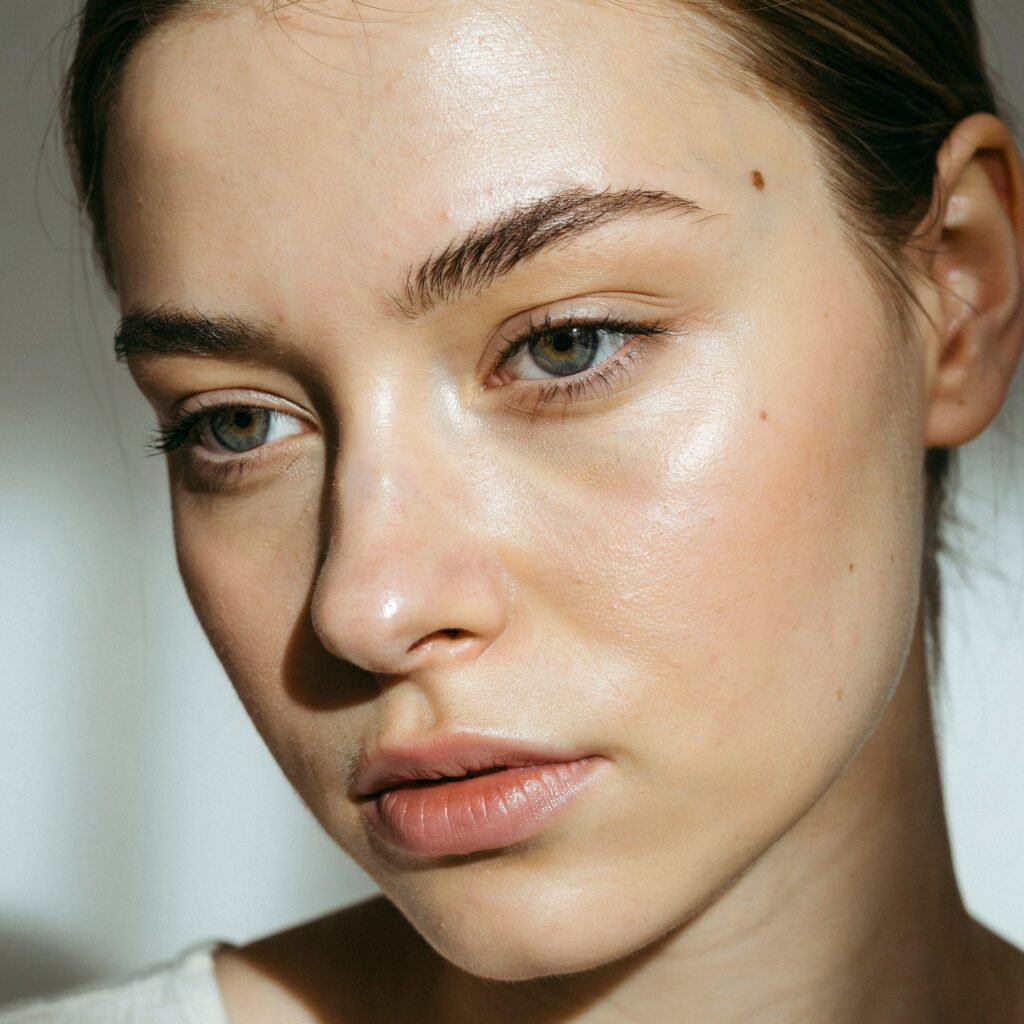
1. The Luminous Skin Look — The Bridal Base That Finally Stopped Trying
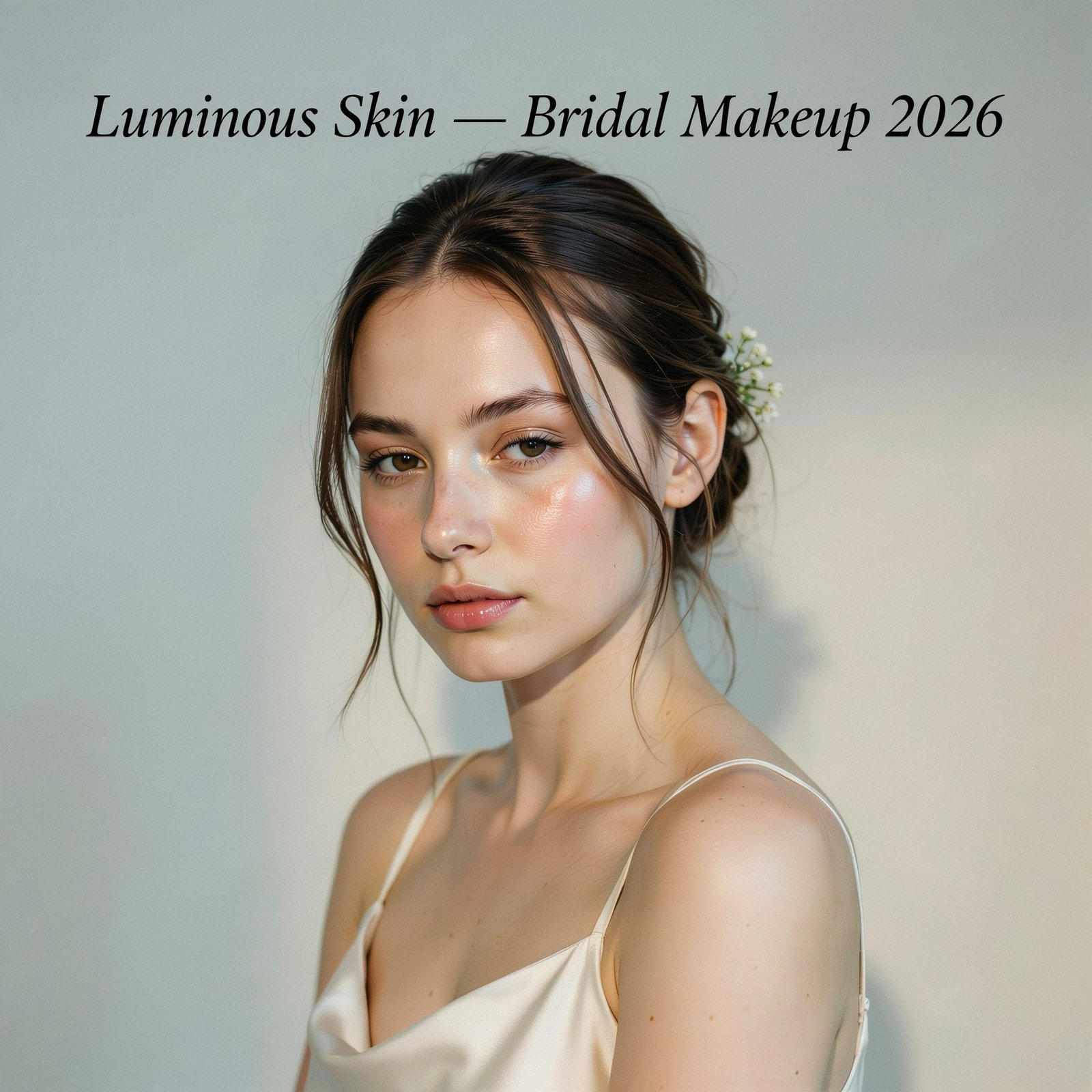
The luminous skin look is 2026’s most technically demanding bridal foundation and its most quietly radical departure from what bridal base has historically been. It does not look like foundation. It looks like skin — specifically, like skin that has been slept in, hydrated, and photographed in the most flattering light that has ever fallen on it. The luminosity is not applied as a product on the surface. It is built from beneath: skincare, strategic concealing, and a coverage technique that adds evenness without adding opacity. The finish is what happens when nothing is wrong with the base and there is nothing left to hide.
Why the 2026 luminous skin look is different from what came before:
The preparation is the product — a sequence of skincare applied in the days before the wedding and on the morning itself does more for the finish than any foundation formula; the skin that arrives in the chair determines the skin that leaves it. Coverage is deposited, not draped — thin layers applied with a damp sponge, built only where the skin needs them, leave the areas that are already even entirely untouched. The luminosity is internal — a liquid highlighter or a luminous primer pressed beneath the foundation at the cheekbones, the brow bone, and the centre of the nose gives the skin its dimension from within rather than sitting on its surface.
How this look is built:
Begin with skincare in the days before — a barrier-supporting routine that prioritises hydration and avoids anything that might cause reactivity close to the wedding. On the morning, apply a hydrating primer to clean skin and allow it to absorb for at least ten minutes before touching anything else. Press a liquid highlighter in a shade close to the skin tone onto the high points — not dragged, but pressed in with fingertips. Apply foundation in thin layers using a damp sponge, building only where the skin needs coverage and leaving the rest. Conceal only what the foundation has not resolved, using a shade that matches the foundation rather than lightening. Set with the minimum possible powder — translucent, pressed lightly with a brush over the centre panel only, leaving the outer face entirely unchecked.
Who the luminous skin look works for:
Every skin type with the correct preparation. Oily skin requires a mattifying primer in the centre panel only and a light powder set, but the outer face and the high points should remain untouched. Dry skin requires more hydration in the days before and a dewy-finish foundation rather than a serum formula. The look is the most photographically faithful of any finish — it looks in photographs what it looks like in person.
Accessory pairings:
Minimal base means more room for colour elsewhere — this is the foundation for every other look on this list. Worn alone with groomed brows and a clear gloss, it is the most pared-back bridal statement of the season.
2. The Tinted Lip — The Bridal Mouth That Earned Its Colour
The tinted lip is 2026’s most enduring bridal colour statement — and it earns its permanence this season by becoming something technically specific rather than simply a stain applied in the vicinity of the lips. The 2026 tinted lip sits in the space between a conditioned, glossed mouth and a fully lined, opaque lip — the colour is visible and chosen, but the texture is still lip-like, which is the distinction that makes it bridal rather than editorial. The shade is always within the bride’s own colouring: a berry that is one level deeper than her natural lip, a coral that reflects the warmth in her skin tone, a rose that she could have been born with on a good day. The tinted lip of 2026 reads as amplification, not transformation.
What makes the 2026 tinted lip different from previous iterations:
The shade is derived from the bride’s own colouring rather than chosen from a trend palette — the formula for finding it is to identify the bride’s natural lip colour and shift it by exactly one value in saturation or depth. The texture is translucent to medium — a tinted balm, a sheer lipstick, or a lip stain worn alone, never layered to opacity. It is finished at the outer corners — the colour is most saturated where the lips meet at the corners and slightly more translucent at the centre, which is the reverse of most lip application but the technique that makes the tinted lip read as natural.
How this look is built:
Exfoliate the lips the night before — a sugar scrub followed by an overnight balm means the surface is smooth and the colour will sit evenly. On the day, apply a tinted lip balm or a sheer lip liner in the chosen shade across the entire lip, starting at the corners. Allow it to settle and then decide whether to add a second layer to the corners only for depth, or to leave it at one layer throughout. A very small amount of clear gloss at the centre of the lower lip adds dimension without changing the colour. Do not set — the tinted lip is meant to be alive and to move.
Who the tinted lip works for:
Every skin tone and lip shape. The technique of deriving the shade from the bride’s own colouring rather than from a trend means the correct tinted lip exists for every face — the task is finding it at the trial, which requires bringing the bride’s natural colour into the conversation and working from there rather than from a reference image.
Accessory pairings:
The tinted lip is the strongest argument for restraint on the eye — the two elements in opposition become the two elements in conversation. A defined but unshowy eye with a tinted lip is the most balanced bridal face of the season.
3. The Defined Lash — The Eye That Reads Across a Ceremony
The defined lash is 2026’s answer to the bridal eye question, which has historically produced results that are either so subtle they disappear in photographs or so dramatic they read as evening wear at eleven in the morning. The 2026 version resolves this by treating the lash as a design decision in its own right: an individual lash application, a strip applied with precision and trimmed to begin inside the natural lash line, or a mascara technique so thorough it rivals either. The eye reads in close-up portraits and in images taken at distance, which is the technical brief that most bridal lash decisions fail to meet.
Why the defined lash is the bridal eye decision of 2026:
Its effect is present in every photographic condition — the ceremony’s outdoor light, the portrait setting’s directional flash, the reception’s warm interior. It works on every eye shape because the application is calibrated to the specific eye rather than placed identically on every face. It grows well through the day — the defined lash at the end of the evening is a softened version of itself, never a collapsed or migrated one.
How this look is built:
Begin with a lash-strengthening primer applied to clean, dry lashes and allowed to dry before any further product. If using individual or cluster lashes, map the eye first — the outermost cluster should sit fractionally inside the natural outer corner, never beyond it. Apply from the outer corner inward, placing each cluster at the base of the natural lash rather than on the lid. If using a strip, trim from the outer end to begin inside the natural lash line, apply adhesive in two thin passes, allow to become tacky, then place at the lash base and press with a clean cotton bud along its entire length. Finish both methods with a single coat of black mascara applied to the roots only — this marries the natural lash to the applied one so no gap is visible.
The defined lash spectrum:
Classic defined lash — a full strip trimmed precisely, mascara through the roots, a single coat on the lower lash with a small brush. Romantic defined lash — individual clusters concentrated at the outer half of the eye with the inner half left natural, for a softer, more fanned effect. Minimal defined lash — mascara alone, applied in four thin coats to the upper lash with a separating comb run through between each coat, lower lash untouched.
Accessory pairings:
A clean, defined brow at the same intensity as the lash — the two elements frame the eye as a pair, and the disparity between an elaborate lash and an unconsidered brow is visible in photographs. The defined lash is also the look that most clearly benefits from a setting liner at the upper waterline — a white or flesh-toned liner pressed into the upper waterline opens the eye fractionally in photographs.
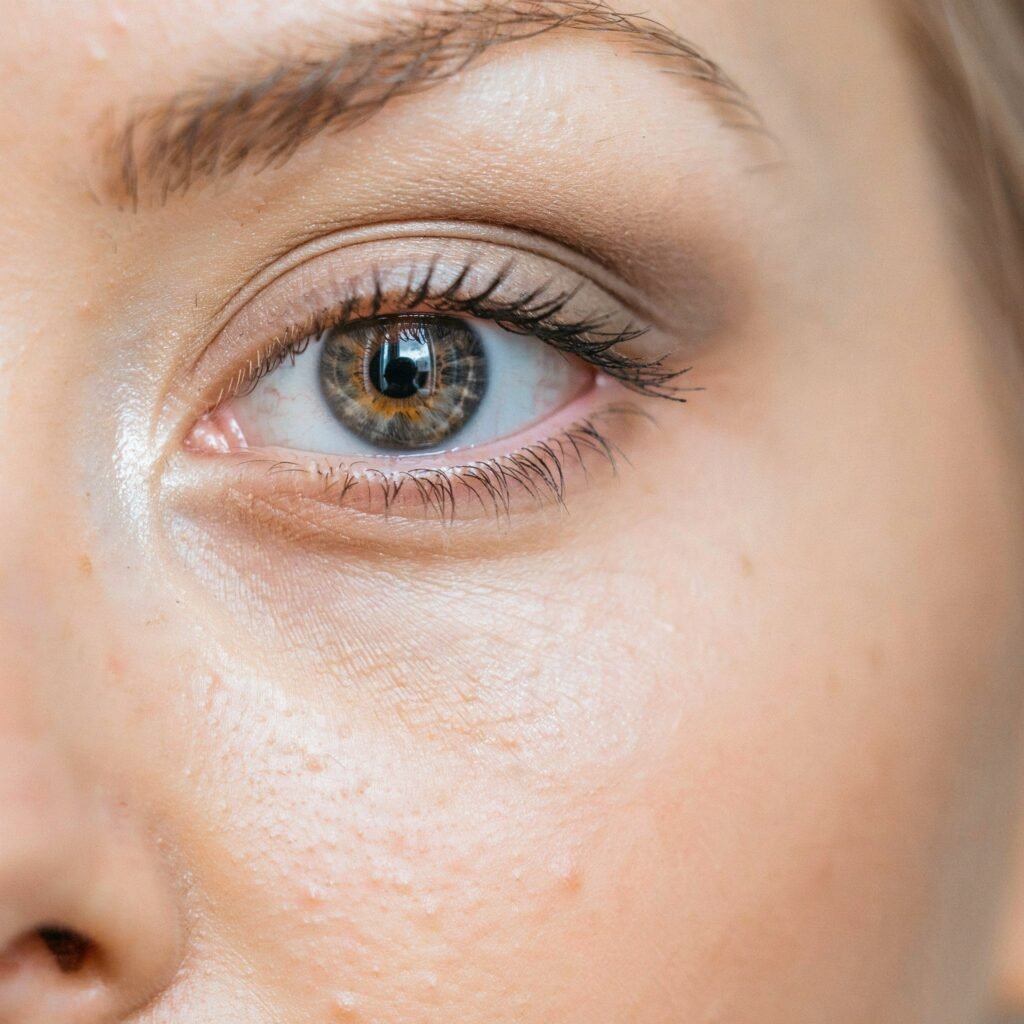
4. The Blurred Liner — The Eye Definition That Left Sharp Edges Behind
The blurred liner is summer 2026’s most romantically imperfect bridal eye decision — and it earns its position this season by becoming something more considered than the smudged kohl that has been circulating for several years. The 2026 blurred liner is specific about where its imprecision lives: the line is placed with intention along the upper lash line and then worked with a small brush immediately, so the result is a shadow rather than a mark, a depth rather than a border. There is a meaningful difference between a liner that is blurred and a liner that is smeared, and the 2026 version is entirely the former.
What distinguishes the 2026 blurred liner from its predecessors:
The line is placed first with a kohl or a gel pencil directly at the lash line, as close to the roots as possible. The blurring is immediate — a small flat brush or the clean fingertip works the product before it has set, pushing it upward and outward by a matter of millimetres. The colour is soft this season — a brown-black or a deep grey rather than a true black, which reads as depth without hardness. The lower lash line is left entirely clean, which is the detail that keeps the blurred liner from reading as nighttime.
How this look is built:
Apply a long-wearing kohl in brown-black directly at the upper lash line, drawing in short strokes from the inner corner to the outer. Using a small, flat eyeshadow brush, immediately work the product upward — not outward, not in circles, but directly upward by two to three millimetres — until the line has become a shadow. The outer third of the line can be blurred slightly more than the inner two thirds for a soft, lifted effect. Allow to set for sixty seconds, then apply the defined lash over the top — the lash base sits at the line and unifies the two elements. The lower lash line receives no liner. No other eyeshadow is necessary.
Who the blurred liner works for:
Every eye shape, with a single calibration: on hooded eyes, the blur should move upward rather than outward, so the shadow is visible when the eye is open. On round eyes, the blur concentrates at the outer third only. On almond-shaped eyes, the full blurred line as described reads without modification.
Accessory pairings:
A flush of warm colour on the cheeks — the blurred liner and a warm blush read together as the most complete bridal face of the season, the warmth in the cheek balancing the depth at the eye.
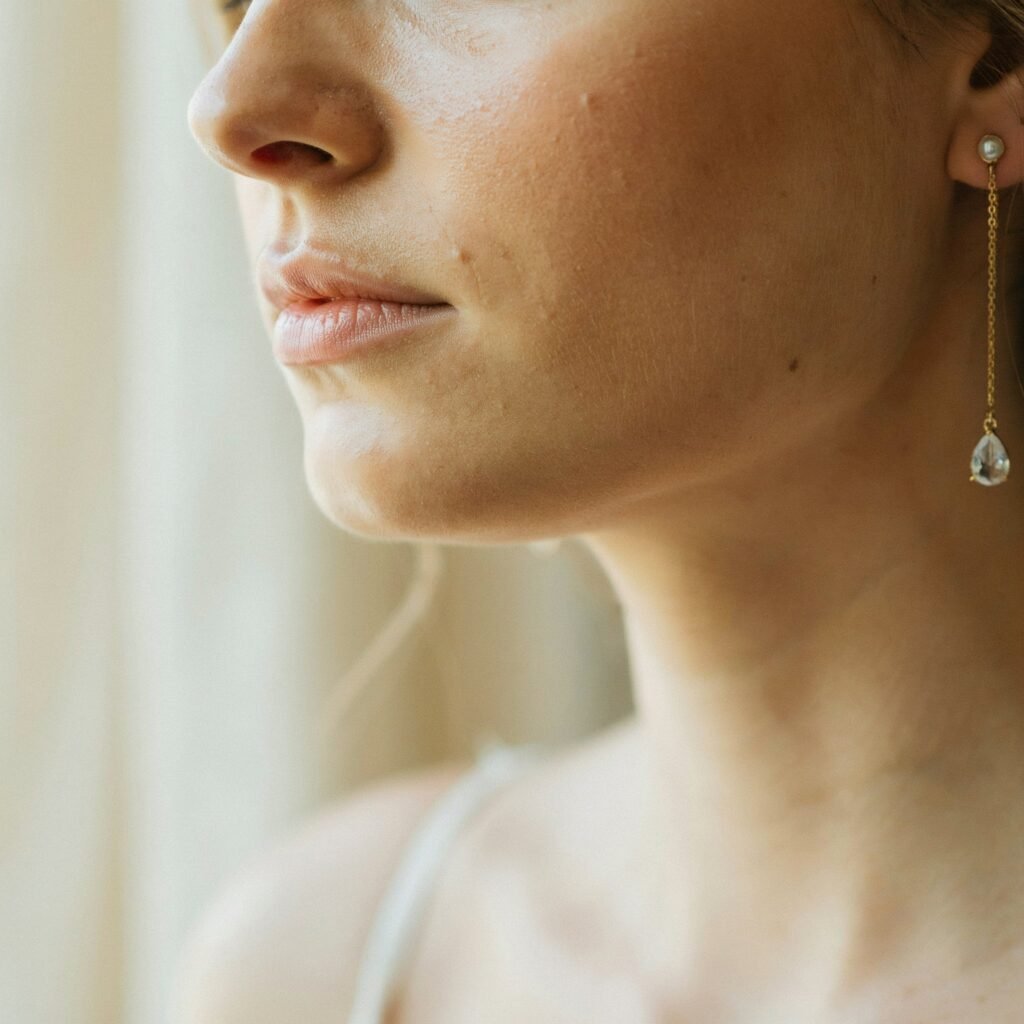
5. The Sculpted Cheek — The Bridal Contour That Removed the Evidence
The sculpted cheek is 2026’s most quietly powerful bridal technique. It is not a contour in the editorial sense — not a stripe of brown product dragged beneath the cheekbone and blended into visibility. It is the removal of flatness from the face through placement of warm and cool tones so well blended that the structure they create reads as bone rather than product. The sculpted cheek of 2026 is compelling not because it transforms the face but because it reveals the face — the face that is already there, made more visible.
Why the sculpted cheek is compelling in 2026:
Its structure reads in photographs taken at distance, which is where most bridal images are made — a face with well-placed cheek colour has more visual authority in a wide ceremony shot than a face without it. Against the skin-forward direction of the season’s other bridal choices, it reads as the single technical intervention that justifies every natural choice around it. It adapts completely to the skin tone it is placed on — the product is irrelevant; the technique and placement are everything.
How this look is built:
Apply a matte bronzer in a shade two values deeper than the skin tone to the hollows of the cheeks — not swept across the full cheek but placed beneath the cheekbone with a contour brush and blended upward toward the temple with a clean blending brush. Apply a cream blush in a warm rose or peach to the apples of the cheeks — pressed in with the fingers rather than swept on with a brush, which deposits the colour into the skin rather than sitting on its surface. A very small amount of a warm-toned highlighter pressed to the top of the cheekbone, directly above the blush, adds the final dimension. The three products should have no visible boundary between them — the face reads as one continuously varied surface.
Accessory pairings:
The sculpted cheek is the look that makes statement earrings more present — the definition at the cheekbone frames the jaw and the neck in a way that flat, uncontoured skin cannot. Long earrings, jewelled drops, and ear cuffs all read more clearly against a face with this level of considered cheek work.
6. The Bridal Brow — The Frame That Changes the Wedding Portrait
The bridal brow is not a new consideration. Brows have been part of every bridal beauty conversation for as long as there have been bridal beauty conversations. What makes 2026 its defining season is the refinement of the philosophy behind how they are approached: full enough to read across the face as a feature rather than a hairline suggestion, defined enough to frame the eye in photographs, and precisely calibrated to look like the bride’s own brow on its best possible day rather than a brow drawn on from memory. The bridal brow of 2026 is not an addition to the wedding look. It is the element that makes the look specifically hers.
Why the bridal brow is the bridal detail of 2026:
It changes the wedding portrait in a way that no other single element can — the framing quality of a well-groomed, well-filled bridal brow is visible in photographs even when every other element is perfectly executed. It works with every look on this list — the skin-forward base, the tinted lip, the blurred liner — because the brow is the one constant that ties the face together regardless of what else is present. It grows and evolves through the wedding day as the bride’s natural brow does, which means it never looks more artificial at hour eight than it did at hour one.
How the bridal brow is built:
Groom no sooner than two weeks before the wedding — the brow should be in its most natural, fully grown shape for the trial, and refinement from there should be minimal. Fill only where the natural brow has gaps, using a product one shade lighter than the brow hair. Apply in short, hair-like strokes in the direction of growth — never as a solid fill. Define the arch and the tail precisely, but allow the front third of the brow to remain soft and slightly diffuse, which is the detail that stops a bridal brow from reading as drawn. Set with a clear or tinted brow gel applied in the direction of growth.
Accessory pairings:
The defined brow with no other eye makeup — no liner, no shadow, no lash — is the most modern bridal eye statement of 2026. The brow alone, at the right weight and shape, does more for the face in a photograph than almost any other single decision.
7. The Glass Lip — The Bridal Mouth Reinvented
The glass lip is 2026’s most universally considered bridal mouth — and the season’s most honest acknowledgement that some beauty ideas are perennial because they are correct. A lip that reads as extraordinarily healthy, hydrated, and dimensional needs no colour beyond itself. The glass lip of 2026 is not a clear gloss worn over nothing — it is a prepared, tinted, and sealed lip that reflects light in a single, unbroken movement across its entire surface, which requires specific layering to achieve and specific products to maintain across a full wedding day.
What distinguishes the 2026 glass lip from earlier interpretations:
The base is a sheer tinted liner in the bride’s natural lip tone — not drawn on the outline but pressed across the entire surface, which gives the gloss something to hold to and prevents the pooling at the centre that unstained glass lips produce. The gloss is applied in a single, centred drop to the lower lip and pressed — not swept — across both lips together, which distributes it evenly and prevents the thick, painted look that a brush-applied gloss produces. The sealing layer is a clear, non-sticky topcoat applied after the gloss has settled — this is the detail that makes the glass lip last through a ceremony and into portraits.
How this look is built:
Exfoliate and apply a conditioning balm the night before. On the morning, press a sheer tinted liner or a tinted lip balm across the entire lip surface. Allow to set for two minutes. Apply a single drop of a thick, high-shine gloss to the centre of the lower lip, press lips together, and hold for three seconds. Using a clean finger, press any excess inward from the corners toward the centre so the gloss is thicker at the middle of the mouth and thinner at the edges. Apply the clear sealing topcoat in one pass over the top. Reapply the gloss only — not the liner — every two hours.
Accessory pairings:
The glass lip worn with a clean, skin-forward base and groomed brows is the single most elegant bridal face of the season — the restraint of every other element makes the mouth’s reflective quality the only thing the eye needs to settle on.
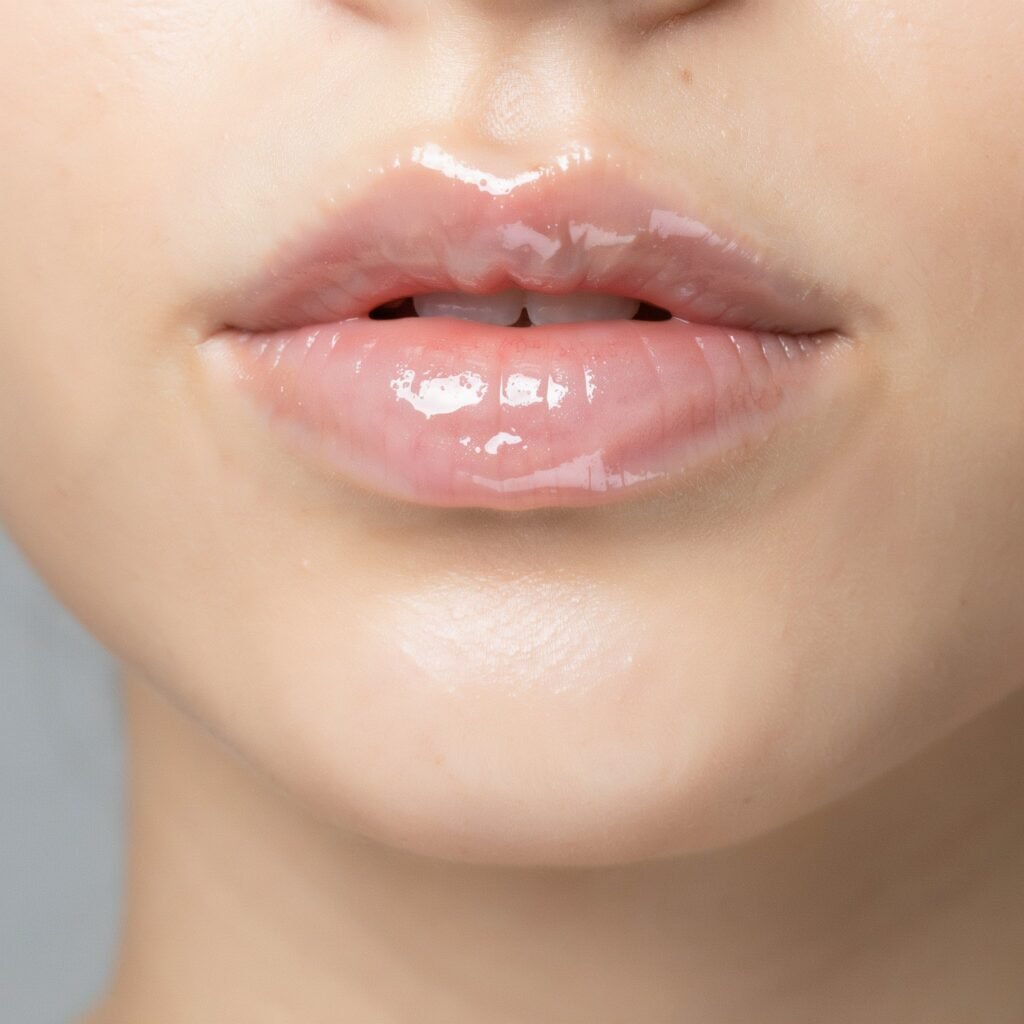
8. The Bridal No-Makeup Makeup — The Short-Appointment Look With Full Authority
The bridal no-makeup makeup is 2026’s most decisive beauty statement — and the season’s most powerful argument for brides who want to look like themselves to approach their wedding day without compromise. This is not a bare face that has been lightly tidied. It is a face that has been considered entirely on its own terms: every element chosen to enhance what is already there rather than to add anything new. In 2026, the bride who wears almost nothing is not making the best of it. She is making the most of it.
Why the bridal no-makeup makeup is the season’s most considered look:
Its restraint is the asset — the decision to use only the products that serve the specific face takes more skill than any elaborate technique, because there is nothing to hide behind and nothing to supplement what is not working. The skin is the entire statement, which means the preparation for this look begins not on the morning but weeks before. Every product that is present must be invisible in its application and unmistakable in its effect.
How this look is built for a bridal context:
Begin a skin-strengthening routine no fewer than six weeks before the wedding — the brief is luminous, even, healthy skin, and no product applied on the day can replicate what consistent skincare has built over months. On the morning, a tinted moisturiser or a skin tint in an exact shade match, applied with clean fingers. A concealer only where genuinely necessary — beneath the eye, on any redness — in the thinnest possible layer. A cream blush pressed to the cheeks with the fingertips in a warm tone that reads as flush rather than colour. A single coat of brown-black mascara. A tinted lip balm in the bride’s own colouring. A setting mist over the top, held at arm’s length and allowed to fall rather than sprayed directly. Nothing else.
Accessory pairings:
The no-makeup makeup bride is the bride for whom statement jewellery reads most clearly — against a face that makes no claims of its own, a pair of earrings, a necklace, or a headpiece carries all the visual intention the look needs. This is the face that every accessory was designed to sit beside.
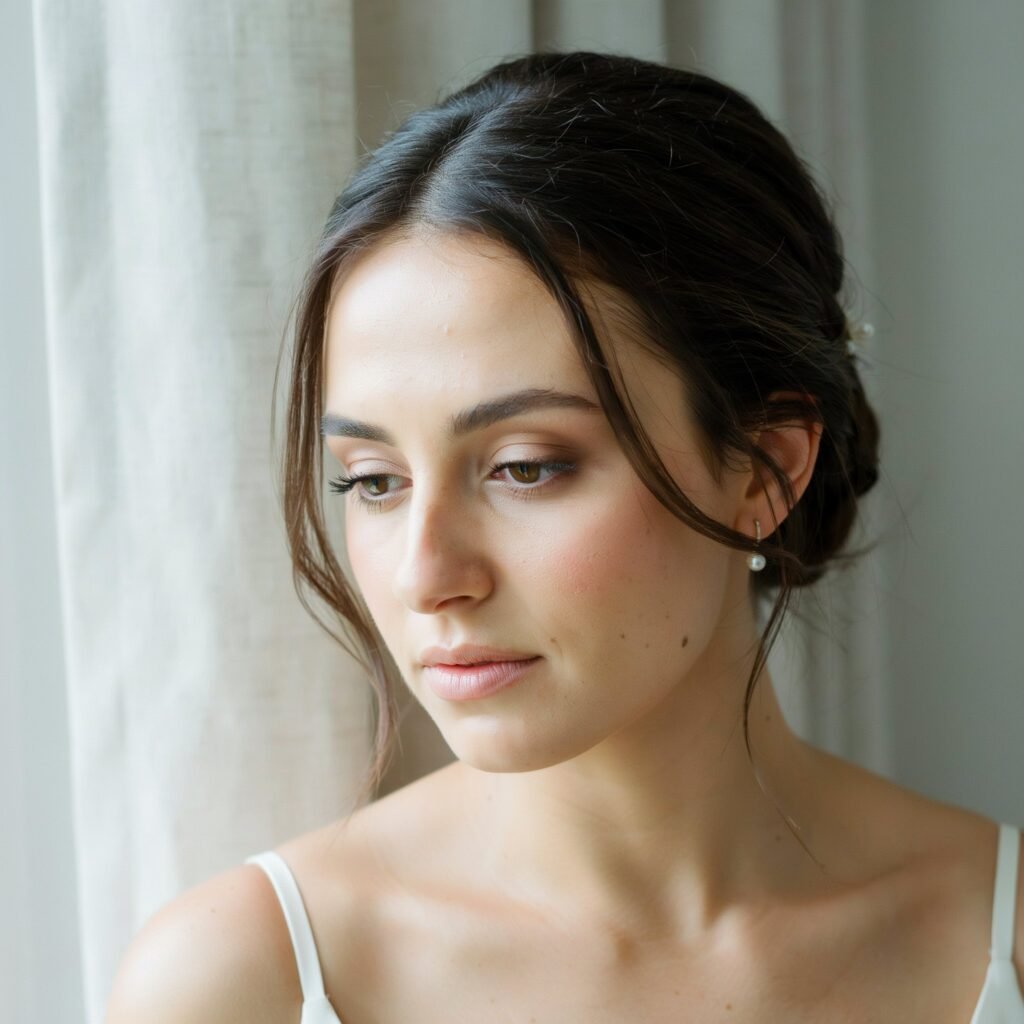
The Principles Behind Every 2026 Bridal Look
Three ideas run through every look on this list and are worth understanding before the trial appointment.
The look should look like the bride, not like bridal makeup. Every look on this list has been built on the specific premise that the most beautiful wedding makeup is the makeup that looks like the woman wearing it — not the makeup that looks like it belongs to a wedding. This requires a deeper conversation at the trial than “what does the dress look like” or “bold lip or neutral.” It requires understanding what the bride’s skin does naturally, what she feels most like herself in, and what the day’s conditions — the light, the length, the environment — will demand. The answer to those three questions is a more useful brief than any reference image.
The trial is where the look is made, not chosen. Choosing a look from an image is the beginning of the process, not the end of it. The trial appointment is where the specific version of that look — the one that works on this skin, for this face, with this accessory and this dress — is built. Brides who come to their trial with an image and leave with a faithful reproduction of it have missed the most valuable part of the process. Brides who come with an image and leave with something that looks entirely like them have used the trial correctly.
Longevity is part of the brief. Every look on this list should be as beautiful at the end of the reception as it was at the ceremony. The looks that fail at weddings are always the looks that were not built for duration — foundations applied too thickly to hold through warmth and movement, lip colours chosen for their initial intensity rather than their wear, products layered without considering how they will interact over twelve hours. A bridal look that looks its best at the end of the evening, slightly lived-in and entirely itself, is a better bridal look than one that looks perfect in the getting-ready photograph and nowhere else.
The Look Is the Portrait
On a wedding day, the face is in every photograph. It is in the getting-ready images, in the ceremony, in the portraits taken in every kind of light, in the reception, and in every candid captured between. It is the most consistently present element of the bride’s appearance across the entire day, which means that the conversation about what it should be is one of the most consequential conversations in the entire planning process — and one that deserves the same attention, the same research, and the same clarity of intention as every other element.
In 2026, that conversation is being had with more honesty and more specificity than it has been in years. The result is a season of bridal looks that appear to be the bride at her most beautiful, nothing more and nothing less — considered, personal, and completely impossible to mistake for anyone but the woman wearing them.
Bring the specificity to the trial. Know the look, the skin, the accessory. Know whether the day demands a defined lash or demands a glass lip. Know what your face does and decide whether to build from that or refine it — and know that in 2026, every look on this list has been built from it.
For Bridal Hairstyle check this link. https://womenwearz.com/bridal-hair-styles-2026-the-most-beautiful-wedding-hair-looks-defining-the-season/