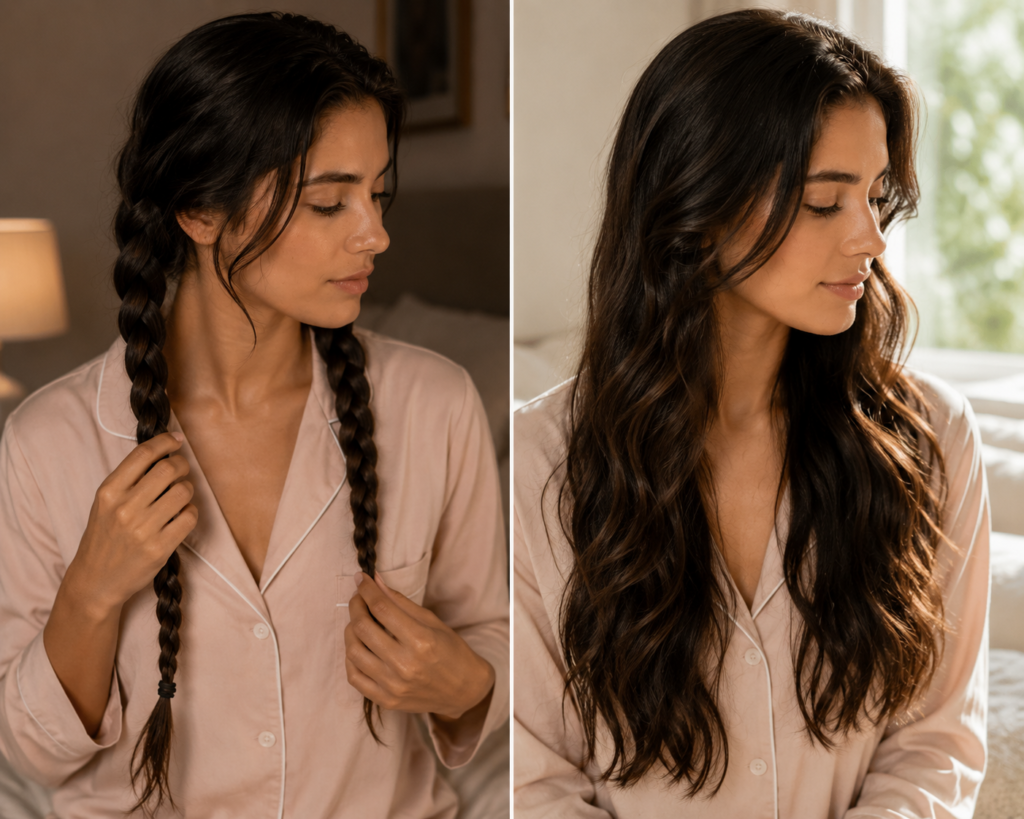
Discover overnight braid waves for 2026 the exact technique, braid types, and tips for gorgeous heatless curls every morning
Few styling techniques deliver as much reward for as little active effort as the overnight braid. It’s the kind of trick that sounds almost too simple to work braid your hair before bed, sleep, unravel it in the morning yet when done correctly, it produces some of the softest, most natural-looking waves you can achieve without ever touching a hot tool. After years of recommending this technique to clients looking for a healthier styling alternative, I’ve found it’s one of the few methods that consistently over-delivers relative to how little it actually asks of you.
This guide breaks down everything you need to know about overnight braid waves in 2026: the exact technique that produces the best results, how braid type and tightness change the final wave pattern, and how to troubleshoot the most common reasons this method doesn’t work the first time someone tries it.
The biggest misconception about overnight braiding is that any braid, done any way, on any type of hair, will produce roughly the same result. In reality, small adjustments braid size, number of braids, how damp your hair is when you start change the final wave pattern significantly, which is exactly why understanding the mechanics behind this technique makes such a difference in your results.
Why Overnight Braid Waves Are Trending in 2026
This technique has surged in popularity for several clear reasons:
- Continued growth of the heatless styling movement, with overnight braiding as one of its most accessible entry points
- Zero cost and zero special equipment required, making it one of the most widely accessible styling techniques available
- Growing awareness that repeated heat styling contributes to long-term hair damage and dryness
- Social media demonstrations making the technique easy to learn and replicate at home
- A cultural shift toward “get ready the night before” routines that reduce morning time pressure
Stylists have also noted that overnight braiding has become something of a gateway technique — many clients who start with a simple overnight braid go on to experiment with other heatless methods once they see how effective and low-effort this one is.
How Braid Type Changes the Final Wave Pattern
One of the most useful things to understand about this technique is that the type of braid you choose directly determines the shape and tightness of your final waves.
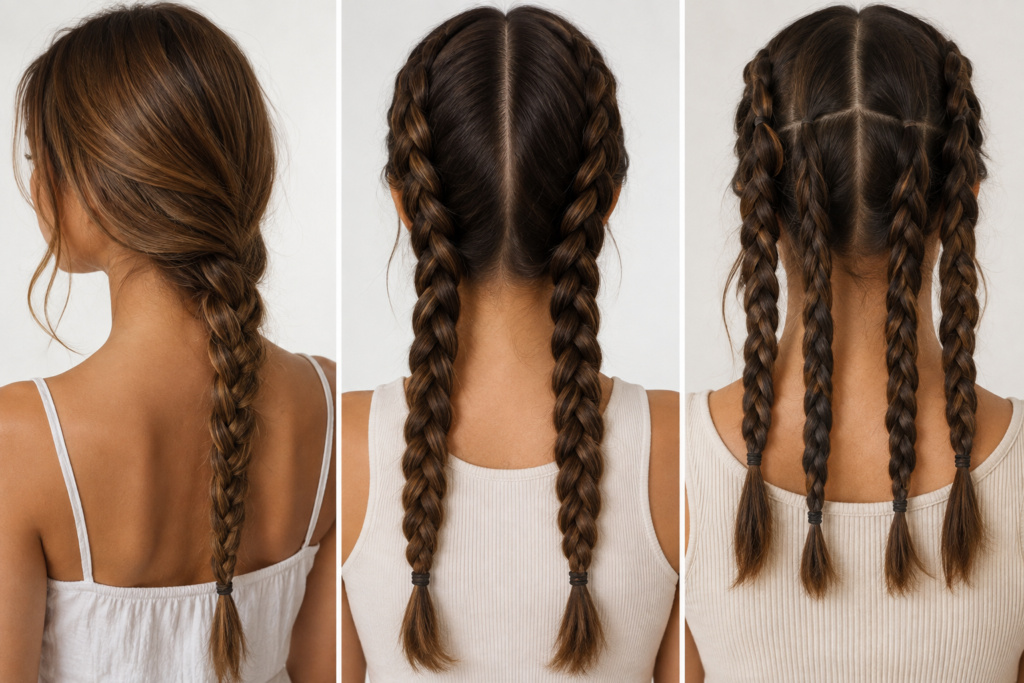
Single Loose Braid: One large, loosely woven braid down the back produces soft, broad waves with a relaxed, undone texture ideal for those wanting subtle, barely-there movement rather than defined curls.
Two Braids: Splitting hair into two sections and braiding each side separately creates a slightly more structured wave pattern, often with a bit more volume at the crown and a soft part running down the middle.
Multiple Small Braids: Sectioning hair into four or more smaller braids produces tighter, more defined waves, closer in appearance to a crimped or textured look, and is the best option for those wanting maximum volume and definition.
French or Dutch Braids: Incorporating a braiding pattern that starts close to the scalp adds extra volume at the roots, which can be especially helpful for those with fine hair looking to boost overall body.
The Step-by-Step Technique for Best Results
Achieving reliably beautiful overnight braid waves comes down to following a consistent process:
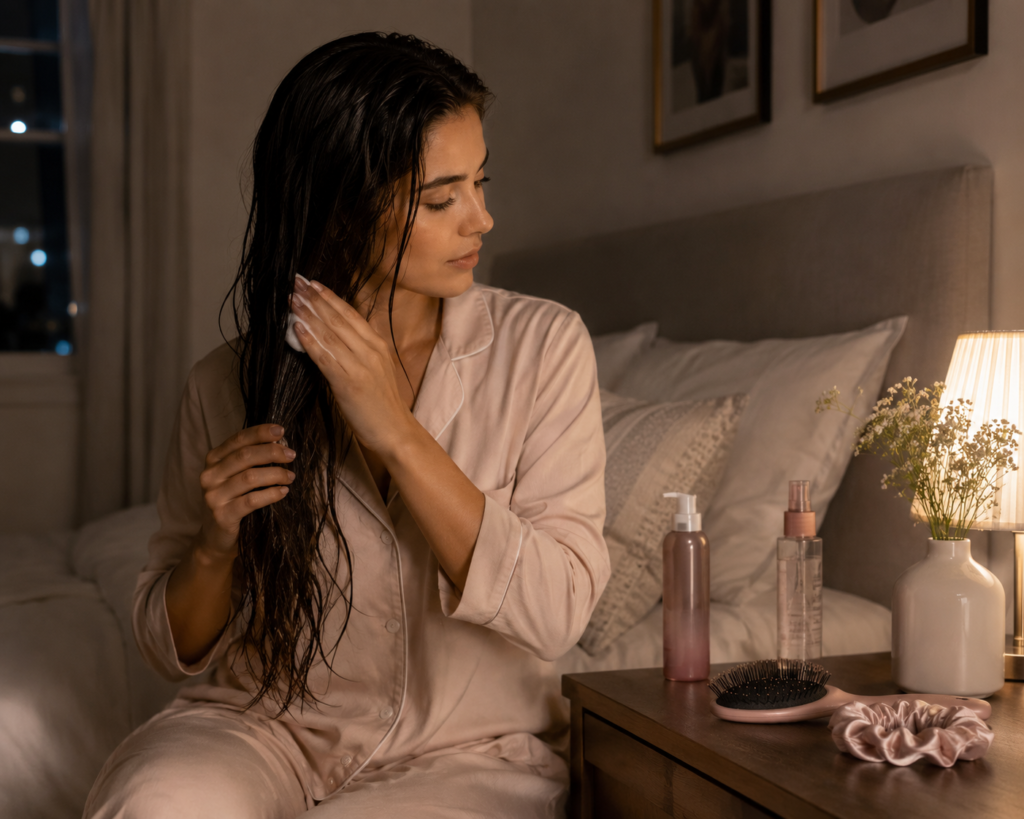
Start With Damp, Not Wet Hair – Hair that’s too wet won’t dry fully overnight, leading to a limp or undefined result in the morning; hair that’s just damp to the touch sets much more effectively.
Apply a Lightweight Styling Product – A small amount of mousse, curl cream, or texturizing spray helps the braid hold its shape and gives the resulting waves more definition and hold once released.
Choose Your Braid Pattern Based on Desired Wave Size – As outlined above, the number and size of braids you create directly shapes your final result, so decide in advance whether you want soft, broad waves or tighter, more defined texture.
Secure With a Soft Hair Tie – Using a fabric-covered or silk scrunchie rather than a tight elastic band helps prevent breakage and creasing at the ends of the braid.
Sleep on a Silk or Satin Pillowcase – This reduces friction overnight, helping preserve the braid’s shape and preventing frizz from forming while you sleep.
Unravel Gently in the Morning – Carefully undo the braid with your fingers rather than a brush, since brushing through the waves can loosen and flatten the pattern significantly.
Finish With a Light Texturizing Spray or Dry Shampoo – A light mist at the roots and through the lengths helps set the finished style and adds a bit of extra texture and hold for the day ahead.
How Hair Texture and Length Affect the Technique
Not every hair type responds to overnight braiding the same way, and understanding your own hair’s tendencies helps set realistic expectations.
Straight Hair: This texture typically needs a slightly longer overnight setting time and benefits from a bit more product to help the waves hold their shape once the braid is released, since straight hair has little natural texture of its own to rely on.
Wavy Hair: Often the easiest texture to work with, wavy hair tends to enhance and extend the pattern created by an overnight braid with minimal additional effort or product needed.
Curly Hair: While overnight braiding can work on curly hair, many curly-haired individuals find twist-outs or Bantu knots produce more predictable, defined results, since braiding can sometimes stretch out natural curl pattern rather than enhancing it.
Very Long Hair: Longer hair generally holds overnight braid waves for a longer period once released, since the added weight helps the wave pattern stay put throughout the day.
Shorter or Medium-Length Hair: This length range often produces some of the prettiest, most bouncy results from overnight braiding, since there’s less weight pulling the wave pattern loose.
Common Mistakes That Prevent Overnight Braid Waves From Working
Based on years of hearing about this technique going right and occasionally not working as expected, here are the most frequent issues:
Starting With Hair That’s Too Wet – This is by far the most common reason the technique fails; hair needs to be damp, not soaking, to set properly overnight.
Braiding Too Tightly – An overly tight braid can create unnatural-looking kinks rather than soft waves, and can also cause unnecessary tension and breakage, especially near the hairline.
Skipping Product Entirely – Bare, product-free hair often doesn’t hold a wave pattern well once released, particularly on straight or fine hair textures.
Sleeping on Cotton Rather Than Silk or Satin – Cotton pillowcases create more friction, which can cause the braid to loosen overnight and lead to more frizz in the final result.
Brushing Out the Waves Immediately – Running a brush through freshly released overnight waves tends to eliminate the defined pattern almost entirely; finger-styling preserves the texture far better.
How to Extend the Life of Overnight Braid Waves
Once you’ve achieved a set of waves you’re happy with, a few habits can help extend how long they last:
Avoid Excessive Touching Throughout the Day – Constantly running fingers through the waves can cause them to loosen and fall out prematurely.
Use a Light-Hold Hairspray If Needed – A small amount can help lock in the pattern without making hair feel stiff or unnatural.
Protect the Style Overnight for a Second Day – Loosely re-braiding or wrapping hair in a silk scarf before bed can help preserve the waves for a second, slightly softer day of wear.
Use Dry Shampoo to Refresh Roots – This helps maintain volume and freshness without needing to rewash and restyle the entire head of hair.
Overnight Braid Waves for Special Occasions
While this technique is often used for everyday, low-effort styling, it can absolutely be adapted for more polished, special-occasion looks. Starting the process a day or two in advance, using slightly tighter, more numerous braids for more defined texture, and finishing with a bit of extra product for hold and shine can elevate the simple overnight braid into a look polished enough for a wedding, party, or special event.
Many people find that waves created this way hold up remarkably well throughout a long event, since the pattern was set gradually overnight rather than rapidly with a hot tool, which can sometimes be more prone to falling out with movement or humidity.
Final Thoughts
Overnight braid waves remain one of the most accessible, genuinely effective heatless styling techniques available, requiring nothing more than a bit of product, a braid, and a good night’s sleep. The key to consistently great results lies in understanding how braid size and hair dampness affect your final wave pattern, and being patient enough to let the technique work fully overnight rather than rushing the process.
If you’re trying overnight braid waves for the first time in 2026, start with a single loose braid on damp hair to get a feel for how your specific hair responds, then experiment with different braid patterns and product amounts to find the exact combination that produces your ideal wave pattern.
Frequently Asked Questions (FAQ)
Q1: How damp should my hair be before braiding overnight? Hair should feel damp to the touch but not dripping wet; fully saturated hair often doesn’t dry completely overnight, resulting in a limp or undefined wave the next morning.
Q2: Will overnight braiding work on very short hair? It can, though very short hair may not hold a full braid well; smaller twists or a simple loose plait near the crown can sometimes work as an alternative for shorter lengths.
Q3: How long do overnight braid waves typically last? Most people get one full day of well-defined waves, with a softer, looser version often lasting into a second day with minimal touch-ups.
Q4: Can I use this technique on color-treated hair? Yes, and it’s actually a great option for color-treated hair, since it avoids the additional heat exposure that can accelerate color fading.
Q5: Why do my overnight braid waves look frizzy instead of smooth? This is often caused by sleeping on a cotton pillowcase rather than silk or satin, or by braiding hair that’s too dry rather than damp.
Q6: Is one braid or multiple braids better for beginners? A single loose braid is generally the easiest starting point, since it requires less precision and still produces reliably soft, natural-looking waves.
Q7: Can I add heat afterward to make the waves last longer? While possible, doing so defeats much of the purpose of the heatless technique; if longer-lasting hold is the goal, a stronger styling product or finishing hairspray is a better heatless-friendly option.