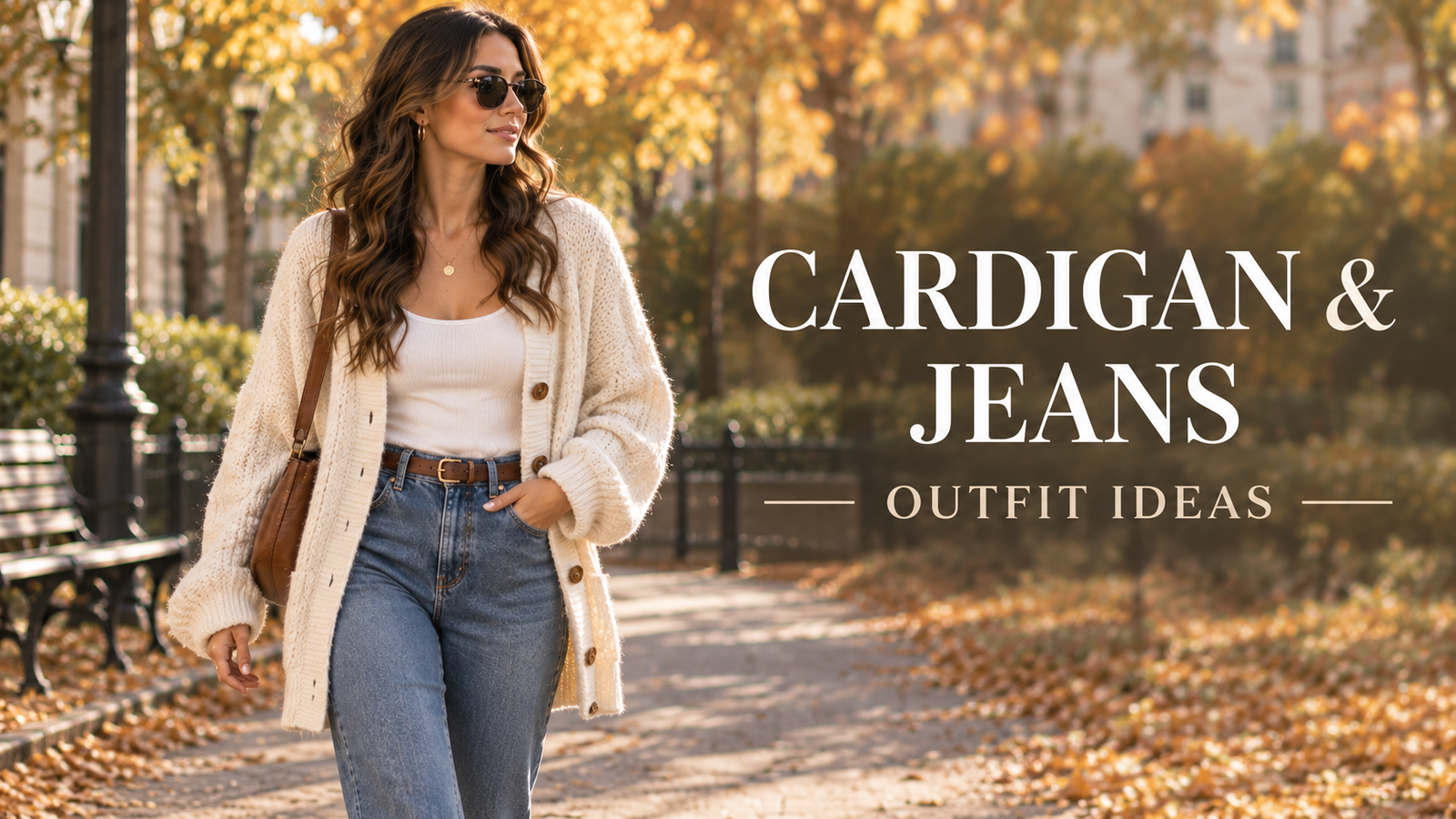
From chunky knits to fitted button-fronts, learn how to style a cardigan with jeans for a look that’s cozy, layered, and always put-together.
Of all the knitwear options in a fall or winter wardrobe, the cardigan might be the most quietly hardworking. It layers over almost anything, adjusts to the temperature by simply buttoning or unbuttoning, and brings a soft, lived-in elegance that a pullover sweater can’t quite replicate. Paired with jeans, it becomes one of the easiest outfit formulas to reach for on repeat.
Unlike a sweater, a cardigan is an open garment by design, which means the outfit underneath usually a simple tank, tee, or fitted knit plays just as important a role as the cardigan itself. That layering opportunity is what makes this pairing so flexible across seasons and occasions.
Why Cardigans and Jeans Are a Natural Match
The open silhouette of a cardigan does something structurally useful: it creates a vertical line down the front of the body, which naturally elongates the figure. Paired with jeans, this vertical line balances out denim’s more rigid horizontal seams, creating an outfit that feels proportioned without much effort.
Cardigans are also temperature-adaptive in a way few other pieces are. Fully buttoned, they function like a sweater. Left open, they act like a light jacket. That adaptability makes them useful across a wider temperature range than a pullover, which only really works one way.
Cardigan Styles and How to Wear Them
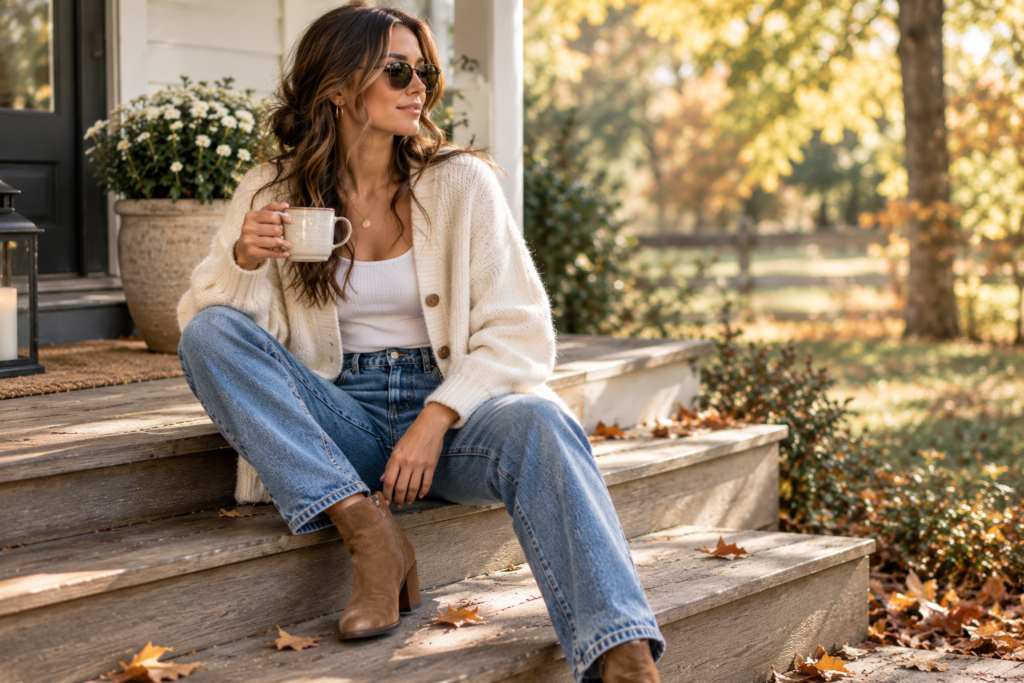
Chunky, oversized cardigans bring maximum coziness and pair best with a fitted layer underneath and slimmer jeans on the bottom to avoid excess bulk.
Fine-knit or ribbed cardigans create a more polished, streamlined look and work well buttoned up over a camisole, especially for elevated or work settings.
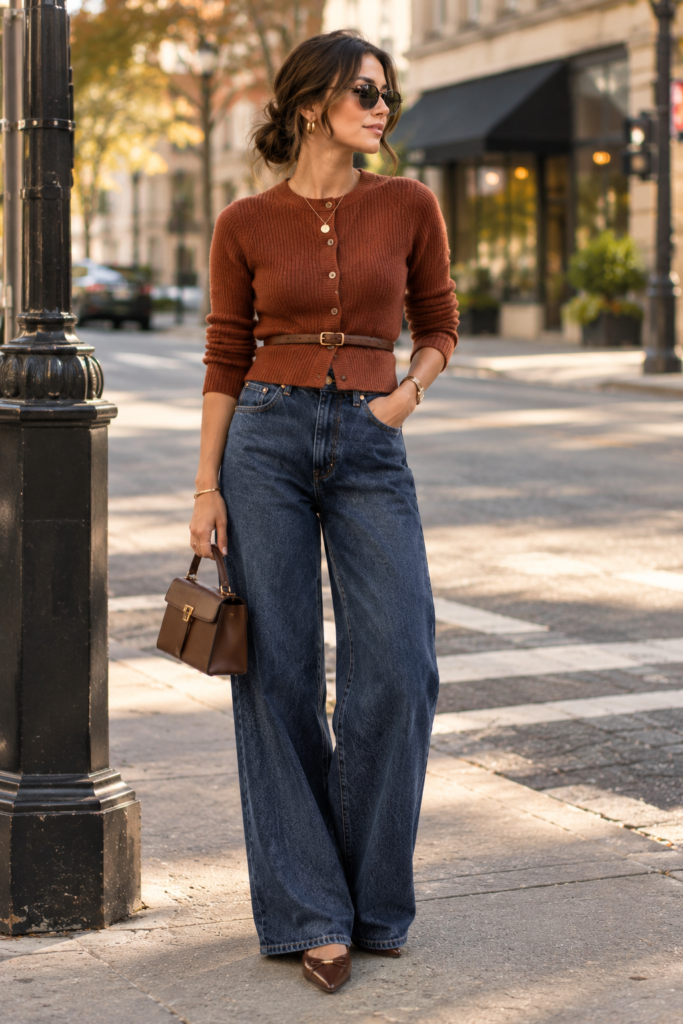
Cropped cardigans are made for high-waisted denim, where the shorter length keeps the waistline visible and the proportions balanced.
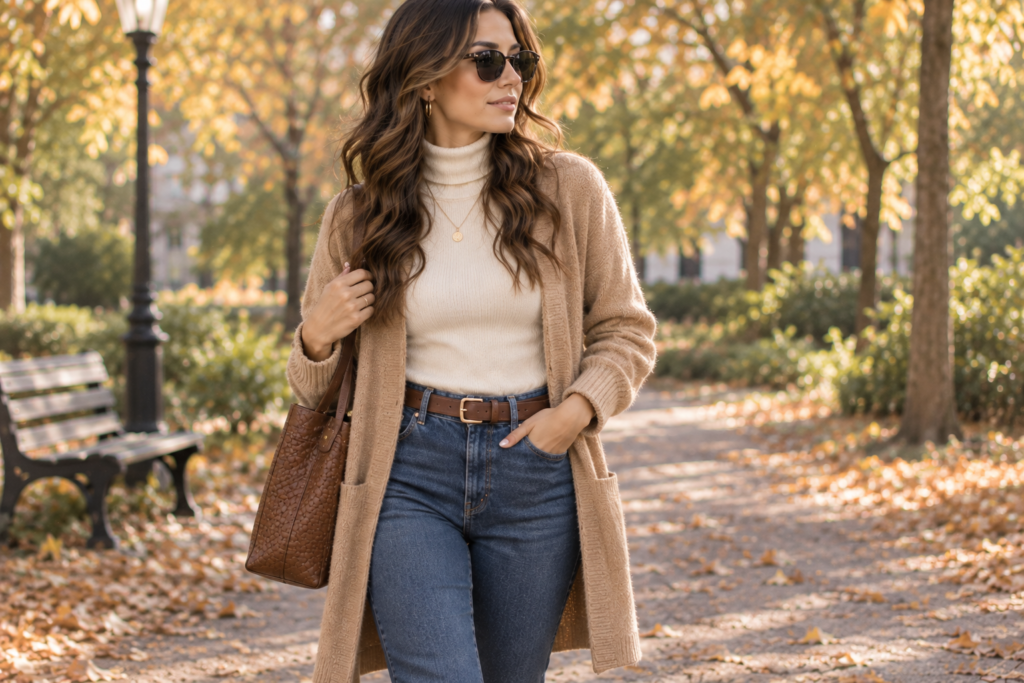
Longline cardigans, which fall past the hip, create a coat-like silhouette and pair especially well with skinny or straight-leg jeans to avoid overwhelming the frame.
Waterfall cardigans, with their draped, collarless front, add a soft, elegant line and tend to look best left open over a fitted underlayer rather than buttoned, since they have no closures to begin with.
Cable-knit cardigans bring textural interest similar to a cable-knit pullover, and work especially well as a standalone outer layer on milder days when a full coat isn’t needed.
Fabric and Weight Considerations
Because a cardigan is worn open as often as it’s buttoned, fabric weight affects how the whole outfit drapes. A lightweight cotton or cotton-blend cardigan works well layered over a tank in transitional weather and doesn’t add much bulk when left open. A heavier wool or wool-blend cardigan provides real warmth and functions almost like outerwear on milder days, but pairs best with a slimmer jean underneath to avoid excess volume. Cashmere cardigans offer a noticeably more refined drape and are a strong choice for dressier or work-appropriate versions of the outfit, while chunkier hand-knit-style cardigans lean deliberately casual and cozy.
Denim Pairings to Know
Straight-leg jeans remain the most balanced option under nearly any cardigan length.
Skinny jeans work particularly well under longline or oversized cardigans, since the slim leg line keeps the overall silhouette from feeling too heavy.
Wide-leg jeans pair beautifully with cropped or fitted cardigans, creating a fashion-forward contrast between a fitted top layer and a fuller-cut bottom.
Barrel-leg jeans, with their rounded shape, pair well with a fitted or cropped cardigan buttoned up, since the structured top keeps the fuller leg from reading as too casual.
Light-wash denim keeps a cardigan outfit feeling casual and daytime-appropriate, while dark-wash denim shifts the same combination toward evening-ready.
What to Wear Underneath
Since cardigans are so often worn open, the underlayer deserves real thought. A simple tank or camisole works for warmer days or indoor settings, while a fitted long-sleeve tee or thin turtleneck adds warmth for colder weather without adding bulk under the cardigan itself.
For a more elevated look, a silky camisole in a contrasting color peeking out from an open cardigan adds a subtle, polished detail. A fine-knit bodysuit is another option worth considering, since its close fit keeps the underlayer from bunching or shifting under a buttoned cardigan throughout the day.
Color and Pattern Pairing
Neutral cardigans oatmeal, cream, grey, and camel pair easily with almost any denim wash and are the simplest starting point for building a cardigan rotation. Richer tones like rust, forest green, or burgundy bring seasonal depth and photograph especially well against both dark and mid-wash denim. Textured or patterned cardigans, such as cable-knit or fair isle styles, tend to look most balanced against plain, unembellished denim rather than distressed or heavily faded washes, since two busy textures can compete rather than complement.
Styling by Occasion
For casual weekends: an oversized cardigan, a plain tee, straight-leg jeans, and sneakers make an easy, comfortable go-to.
For the office: a fitted ribbed cardigan buttoned over a camisole, paired with tailored wide-leg jeans and loafers, feels professional without abandoning comfort.
For layered cold-weather looks: a cardigan worn over a turtleneck, paired with skinny jeans and knee-high boots, adds warmth in stages rather than all at once.
For a dressier evening look: a fine-knit cardigan buttoned up like a top, paired with dark denim and heeled boots, works as a standalone statement piece rather than just a layer.
For travel days: a longline or oversized cardigan worn open over a simple tee, paired with straight-leg jeans and slip-on sneakers, functions as a light jacket during transit without needing an additional outer layer.
For a casual coffee catch-up: a cropped cardigan buttoned over a camisole, with straight-leg jeans and loafers, lands comfortably between casual and put-together for a relaxed daytime meeting.
Layering Strategies
A cardigan’s open front makes it one of the easiest pieces to layer both under and over. Worn over a turtleneck, it adds a second color or texture without much added bulk, since both pieces are typically close-fitting or lightweight. Worn under a structured coat, a chunkier cardigan adds warmth while still allowing the coat to close comfortably, provided the cardigan itself isn’t too bulky. A scarf tucked into the neckline of an open cardigan adds a finishing layer of color and warmth without interrupting the cardigan’s front line.
Common Styling Mistakes
Leaving a chunky cardigan fully open over an equally loose underlayer often erases the waistline entirely a belt or a half-tuck underneath solves this quickly.
Choosing a cardigan that’s too short to layer comfortably over a sweater, or too long to tuck in cleanly, can throw off proportions check the length against what’s worn underneath.
Skipping structure altogether. A cardigan is inherently soft and shapeless, so pairing it with an equally soft, wide-leg jean can leave the whole outfit feeling formless; balancing with a more fitted piece somewhere in the outfit keeps it grounded.
Overlooking the underlayer’s color and fit. A visible underlayer that clashes in color or bunches under a buttoned cardigan can undercut an otherwise well-put-together outfit choose a fitted, coordinating piece underneath.
Choosing too heavy a cardigan for indoor wear. A thick, wool cardigan meant for outdoor layering can feel overly warm in heated indoor settings; a lighter-weight knit is often more practical for all-day wear.
Building a Cardigan Capsule
A well-rounded cardigan rotation includes one oversized chunky cardigan in a neutral tone for maximum coziness, one fitted ribbed cardigan in a rich color for elevated looks, one cropped cardigan for high-waisted styling, and one longline cardigan for a coat-like layering option. Paired with a dark straight-leg jean and a lighter wide-leg jean, this set covers casual, work, and evening dressing without needing much else.
Caring for Cardigans
Because cardigans see frequent wear and repeated buttoning and unbuttoning, a bit of care extends their lifespan. Hand-washing or a gentle cold-water cycle for knits helps preserve both shape and button placement. Laying the cardigan flat to dry prevents stretching at the shoulders, particularly for heavier or oversized styles. Checking buttons periodically and reinforcing any loose threads keeps the closures functional through a full season of wear, and folding rather than hanging helps maintain the garment’s shape over time.
Final Thoughts
The cardigan’s open, adaptable structure makes it one of the most versatile knitwear pieces to pair with denim equally at home layered over a tank on a mild afternoon or buttoned up against the cold. With the right underlayer and a jean silhouette that balances its shape, a cardigan-and-jeans outfit can carry an entire season with very little effort.
FAQ
Should a cardigan be buttoned or left open with jeans? Both work buttoning creates a more polished, sweater-like silhouette, while leaving it open adds a relaxed, layered look. Choose based on the occasion and what’s worn underneath.
What jeans pair best with an oversized cardigan? Straight-leg or skinny jeans balance an oversized cardigan best, keeping the overall silhouette from feeling too heavy.
What should I wear under a cardigan in cold weather? A fitted long-sleeve tee or thin turtleneck adds warmth without bulk, making it easy to layer a cardigan on top without feeling restricted.
Can a cardigan replace a jacket? A longline or chunky cardigan can work as a light outer layer on mild days, though a proper coat is still recommended for genuinely cold or wet weather.
How do I keep a cardigan-and-jeans outfit from looking shapeless? Add a belt at the waist, tuck in the underlayer, or choose a more fitted cardigan style any of these reintroduce shape to an otherwise soft silhouette.
What’s the best cardigan fabric for everyday wear? A mid-weight cotton-blend or fine-gauge wool cardigan tends to be the most practical for everyday rotation, since it layers easily both indoors and outdoors without feeling too warm or too thin.