Discover how to style a turtleneck with jeans for every occasion from polished workwear to relaxed weekends with fit, color, fabric, and layering tips.
The turtleneck-and-jeans pairing has a quiet kind of confidence to it. There’s no fuss, no clutter just a clean line from neck to hem that reads as put-together no matter where you’re headed. It’s the outfit equivalent of a well-edited sentence: nothing extra, nothing missing. What makes the turtleneck such a reliable partner for denim is its shape. Unlike bulkier knits, a turtleneck sits close to the body, which means it rarely fights with your jeans for visual space. That gives you more freedom to experiment with denim silhouettes, since the top half of the outfit is already doing the work of looking intentional.
Why the Turtleneck Elevates Any Denim Look
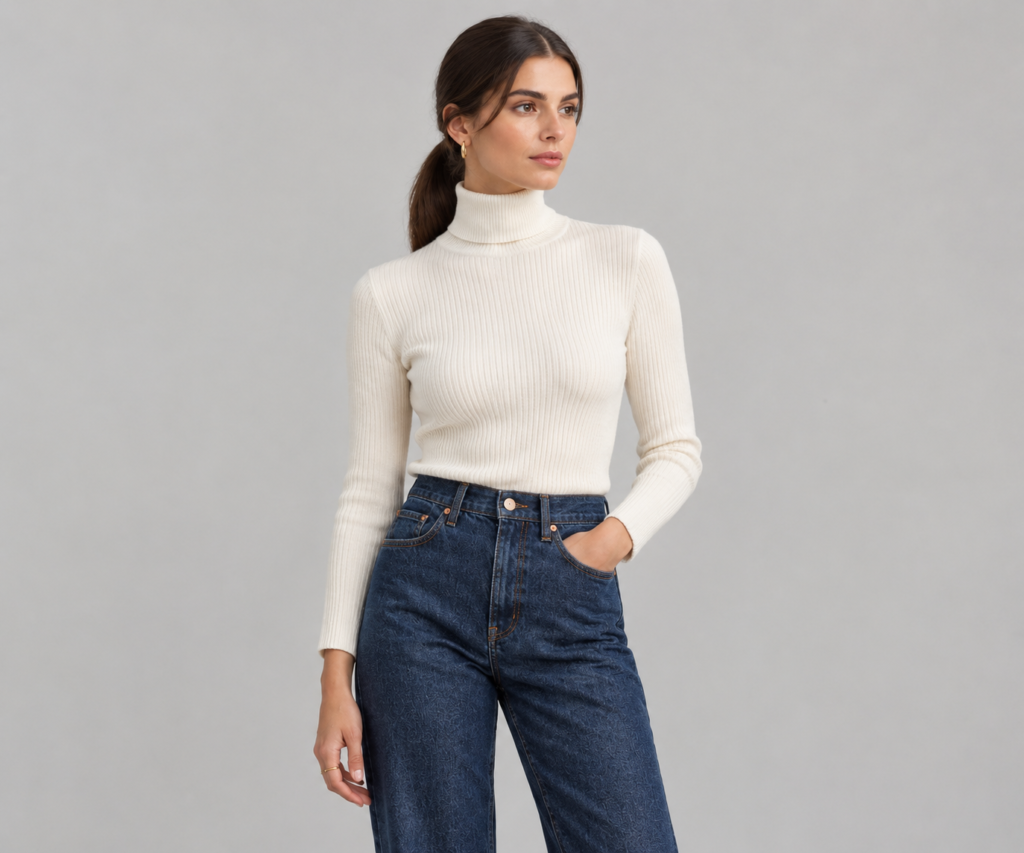
A turtleneck does something few other tops can: it instantly reads as more formal, even when paired with the most casual jeans in your closet. The high neckline naturally elongates the torso, and the close fit creates a streamlined silhouette that photographs well from every angle. This makes it one of the easiest ways to dress up denim without adding a single extra piece.
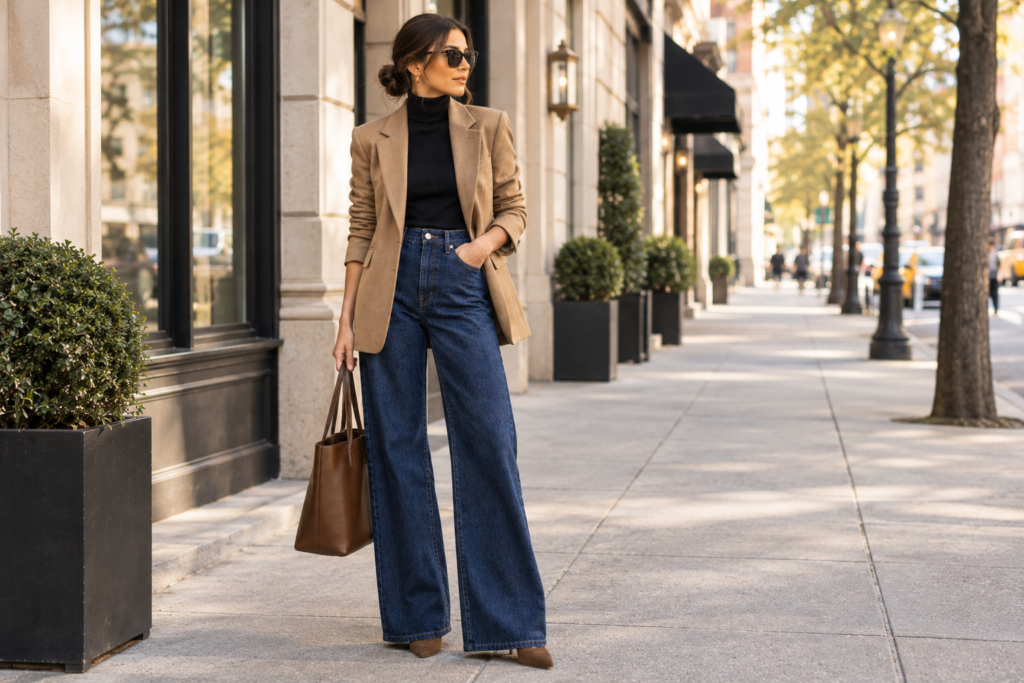
It’s also a layering powerhouse. Because it sits so close to the body, a turtleneck slides easily under blazers, vests, and coats without adding bulk something a chunkier knit simply can’t do. This makes it one of the few sweater styles that works as both a standalone top and a foundational layer, depending entirely on what’s added around it.
Fitted vs. Oversized Turtlenecks
Fitted turtlenecks are the most versatile option and the easiest to dress up. They pair beautifully with wide-leg or flared jeans, since the contrast between a slim top and a fuller-cut bottom creates balance.
Oversized or slouchy turtlenecks bring in a more relaxed mood and work best with slimmer jeans — skinny or straight-leg cuts keep the outfit from reading as sloppy while still letting the sweater’s volume take center stage.
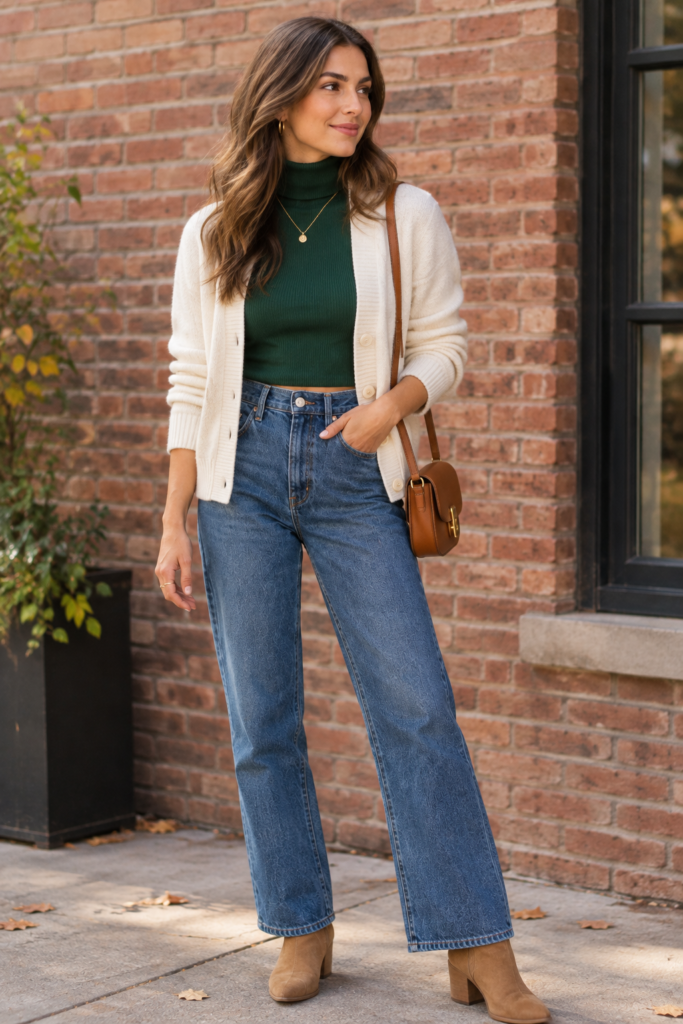
Cropped turtlenecks, a newer addition to the category, are made for high-waisted denim and work especially well as a base layer under an open cardigan or blazer.
A mid-length turtleneck, hitting right at the hip, splits the difference between fitted and oversized it can be tucked for a cleaner line or left untucked for a more relaxed finish, making it one of the more adaptable options in the category.
Fabric Matters More Than It Seems
Because a turtleneck sits so close to the skin, fabric choice affects both comfort and how the silhouette reads. A fine-gauge merino wool turtleneck offers warmth without bulk and layers easily under blazers or coats. A ribbed cotton-blend turtleneck has more structure and holds its shape well when tucked in, making it a strong choice for polished, work-appropriate looks. Cashmere turtlenecks bring a noticeably more luxurious drape and are worth reaching for when the occasion calls for something a little more elevated. Heavier knit turtlenecks, while cozier, add more visible bulk at the neck and torso, so they tend to pair best with a slimmer jean to keep the overall silhouette balanced.
Denim Pairings That Work
Straight-leg jeans are the most foolproof match they balance both fitted and oversized turtlenecks without overwhelming the silhouette.
Wide-leg and flared jeans create a more fashion-forward line and look best with a fitted or tucked-in turtleneck to keep proportions in check.
Skinny jeans pair naturally with turtlenecks tucked in, especially when finished with knee-high boots for an elongated leg line.
Barrel-leg jeans, with their rounded silhouette, pair particularly well with a slim, tucked-in turtleneck, since the fitted top keeps the fuller leg shape from reading as overwhelming.
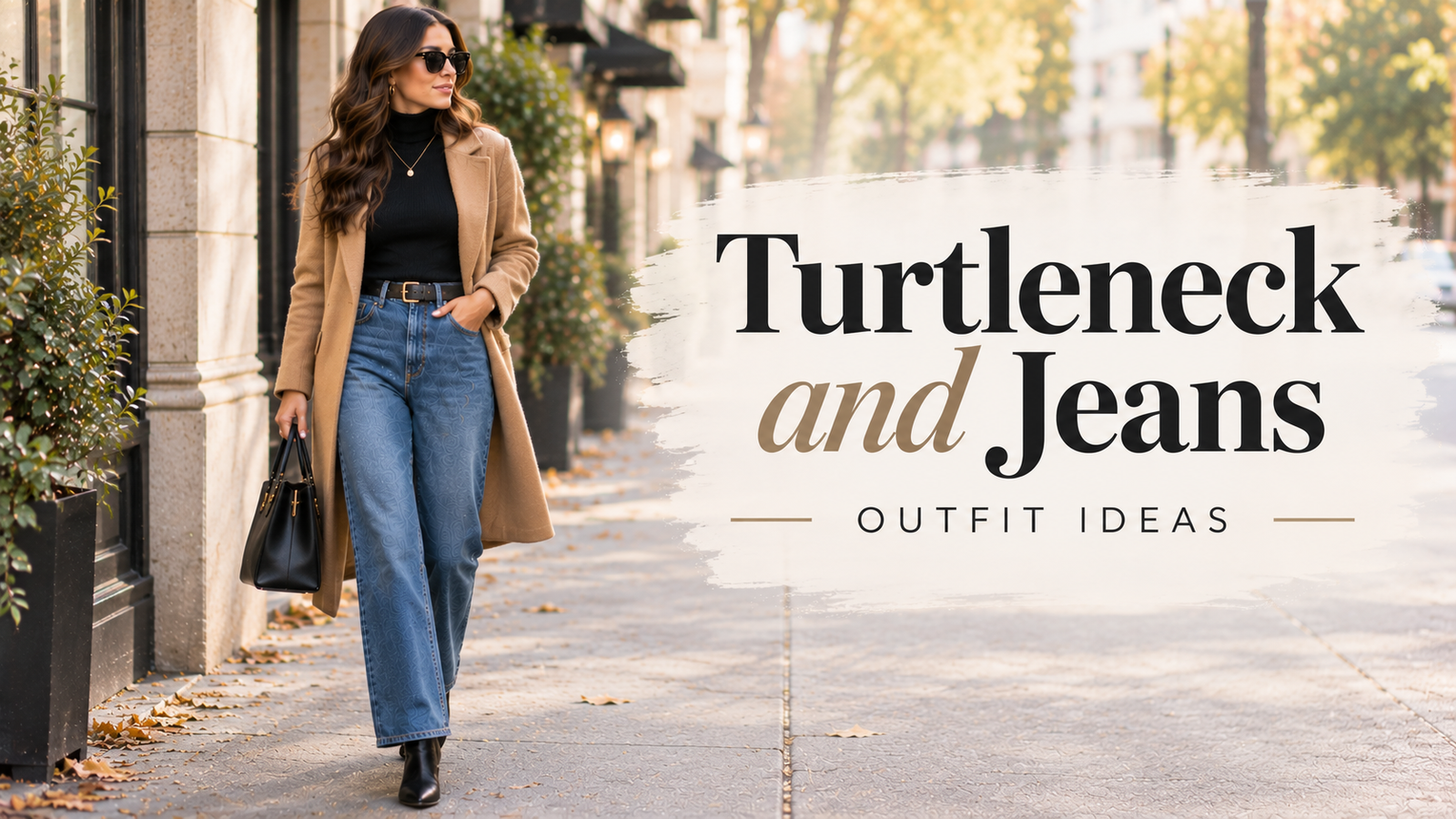
Dark-wash denim tends to push the whole look toward “polished,” while a lighter wash keeps things feeling more relaxed and weekend-appropriate. Black denim paired with a black or neutral turtleneck creates a sleek, monochrome line that’s particularly effective for evening.
Color Pairing Tips
Because a turtleneck sits so close to the face, color choice matters more here than in almost any other top. Warm tones like camel, rust, and cream tend to be universally flattering, while jewel tones like emerald and burgundy add richness without overpowering the outfit. Black turtlenecks remain the most versatile choice of all, working equally well with light and dark denim, and they photograph cleanly against nearly any coat or jacket color layered on top.
Pastel or muted turtleneck tones dusty blue, soft lavender, sage green offer a gentler alternative to the deeper jewel-tone palette and tend to pair especially well with lighter denim washes for a softer, spring-transitional look.
Layering the Turtleneck Through the Seasons
In early fall, a fitted turtleneck on its own with straight-leg jeans and loafers is often enough to feel finished without added layers. As temperatures drop through winter, the same turtleneck becomes a base layer — worn under a cardigan, sweater vest, or wool coat without adding the bulk a chunkier knit would. In early spring, swapping to a lighter-weight cotton-blend turtleneck and pairing it with a lighter denim wash keeps the formula relevant through the transitional weeks before true warm weather arrives.
Styling for Different Occasions
For the office: a fitted turtleneck tucked into tailored straight-leg or wide-leg jeans, finished with a blazer and loafers, reads professional without feeling stiff.
For weekends: an oversized turtleneck with skinny jeans and sneakers keeps things relaxed while still looking finished.
For evening: swap sneakers for heeled boots and add statement earrings the sleek silhouette of a turtleneck makes it surprisingly easy to transition into after-dark styling.
For cold-weather layering: a thin turtleneck works as a base layer under a chunkier cardigan or sweater vest, adding warmth without changing the outfit’s overall silhouette.
For travel days: a fitted, fine-gauge turtleneck with straight-leg jeans and slip-on sneakers or loafers stays comfortable through long stretches while still looking put-together on arrival.
For a casual coffee date: an oversized turtleneck with straight-leg or skinny jeans and ankle boots feels relaxed without looking underdressed for a low-key one-on-one setting.
Accessorizing a Turtleneck-and-Jeans Outfit
Because the turtleneck’s neckline already covers the collarbone, jewelry works best kept simple small stud or hoop earrings, a single ring, or a delicate bracelet tend to be enough. A structured bag adds a finishing detail without competing with the sweater’s clean silhouette. A belt worn over a tucked turtleneck, particularly with high-waisted denim, adds definition at the waist and gives the outfit a more considered, finished shape.
Common Mistakes to Avoid
Choosing a turtleneck that’s too tight around the neck can look constricting rather than sleek look for a comfortable, close-but-not-choking fit.
Pairing an oversized turtleneck with equally loose jeans erases the outfit’s shape entirely; keep at least one half of the outfit fitted.
Skipping accessories altogether can leave a monochrome turtleneck-and-jeans look feeling flat a belt, statement earrings, or a structured bag adds just enough interest.
Forgetting about layering length a turtleneck that’s too short to tuck in cleanly, or too long to layer smoothly under a blazer, can throw off the whole silhouette.
Choosing too heavy a fabric for layering a thick, bulky turtleneck under a fitted blazer can create an unflattering, strained silhouette; save the chunkier knits for standalone wear.
Building a Turtleneck Capsule
A small rotation covers most turtleneck-and-jeans needs: one fitted black turtleneck for maximum versatility, one neutral warm-toned turtleneck like camel or cream for everyday wear, one jewel-toned turtleneck for occasions that call for a bit more color, and one cropped turtleneck for layering under cardigans or blazers. Paired with a dark straight-leg jean and a wide-leg jean, these six pieces alone can carry an entire cold-weather wardrobe.
Caring for Turtlenecks
Because turtlenecks are worn close to the skin and see frequent rotation, proper care keeps them looking fresh longer. Hand-washing or a gentle cold-water cycle designed for knits helps prevent the neckline from stretching out of shape. Laying the sweater flat to dry, rather than hanging it, preserves the fit around the collar and shoulders. For wool or cashmere turtlenecks, a fabric comb can address pilling at friction points like the underarms without needing to replace the piece.
Final Thoughts
The turtleneck-and-jeans combination proves that simplicity, done well, is its own kind of statement. With the right fit, fabric, and a few thoughtful color choices, this pairing moves effortlessly from desk to dinner, holding its shape and its polish the entire way.
FAQ
Is a turtleneck too formal for casual jeans? Not at all an oversized turtleneck with relaxed denim and sneakers keeps the look casual, while a fitted turtleneck with tailored jeans shifts it toward polished.
What jeans pair best with a fitted turtleneck? Wide-leg or flared jeans create the best balance, since the fitted top and fuller bottom complement each other proportionally.
Can I wear a turtleneck under other sweaters? Yes thin, fitted turtlenecks are ideal base layers under cardigans, vests, or heavier knits for added warmth without bulk.
What color turtleneck is the most versatile? Black remains the most universally wearable option, pairing cleanly with any denim wash and layering piece.
How do I keep a turtleneck-and-jeans outfit from looking too plain? Add texture or contrast through accessories a structured bag, statement earrings, or a belt at the waist breaks up the monochrome simplicity.
What fabric turtleneck works best for layering under a blazer? A fine-gauge merino wool or cotton-blend turtleneck layers most easily under a blazer, since it adds warmth without the bulk a heavier knit would create at the shoulders and arms.