Discover the best painted balayage hair ideas for 2026. Explore natural, dimensional colour inspiration, expert tips, and trending salon looks.
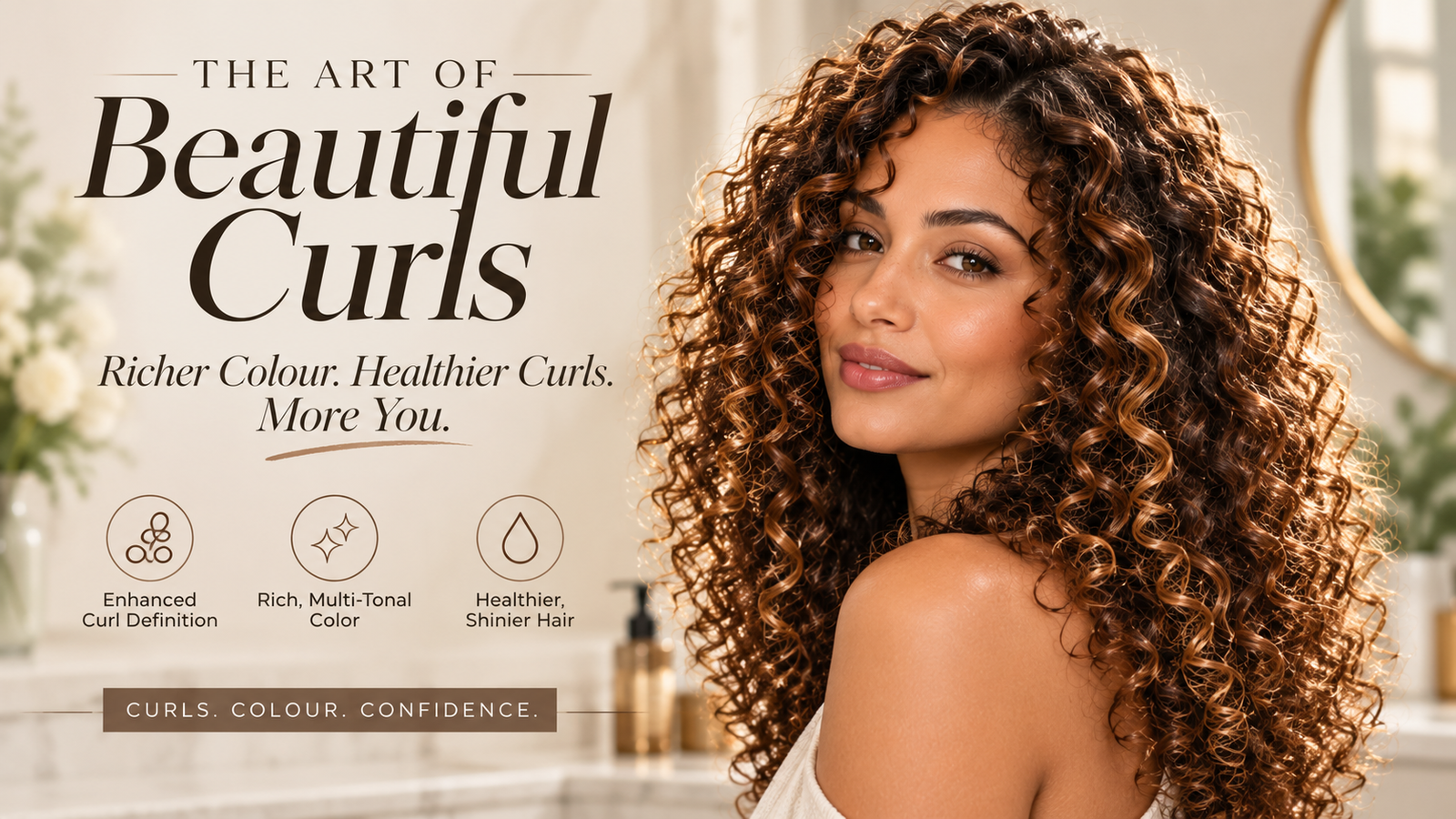
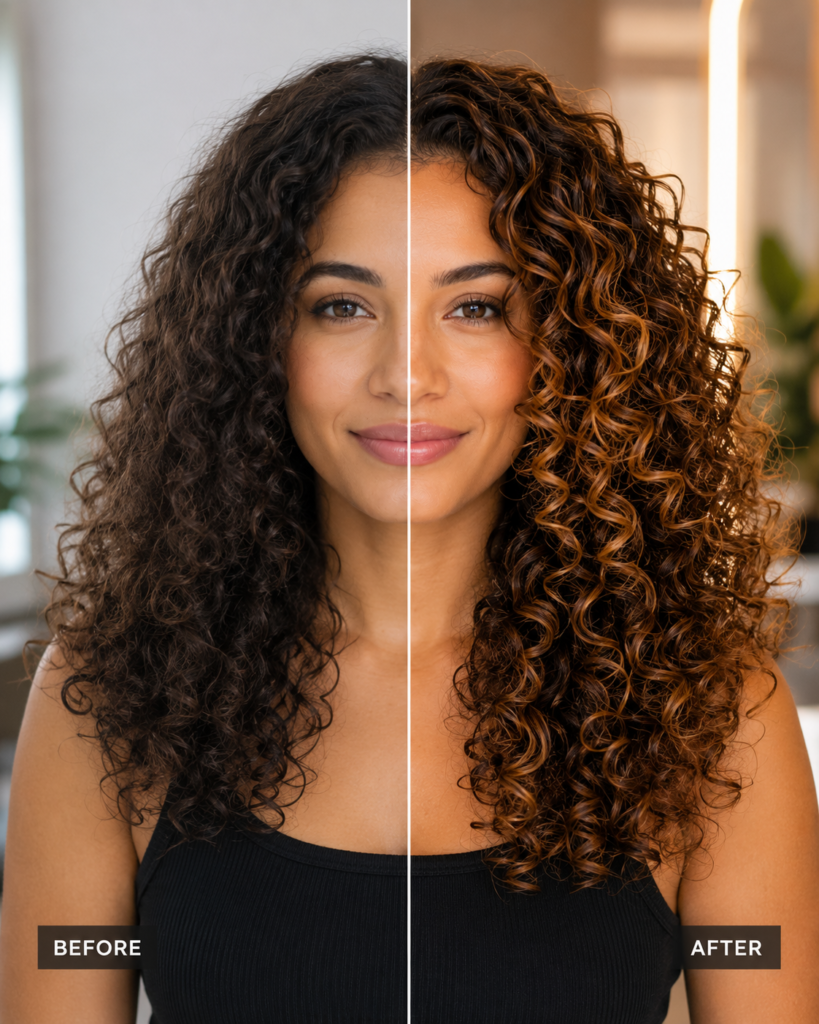
Curly hair color is its own specialty, and after years of working with curly-haired clients, I can say with certainty that the biggest mistake most colorists and clients make is treating curly hair exactly like straight hair when it comes to formulation, placement, and aftercare. Curls behave differently they catch light differently, they dry differently, and they process color differently which means the entire approach to coloring curly hair has to be adjusted to get a result that actually looks intentional and lasts.
This guide breaks down everything you need to know about curly hair color in 2026: which techniques actually work with curl patterns instead of against them, how to choose a shade that enhances your curls rather than flattening them, and how to maintain color without sacrificing your curl definition or hair health.
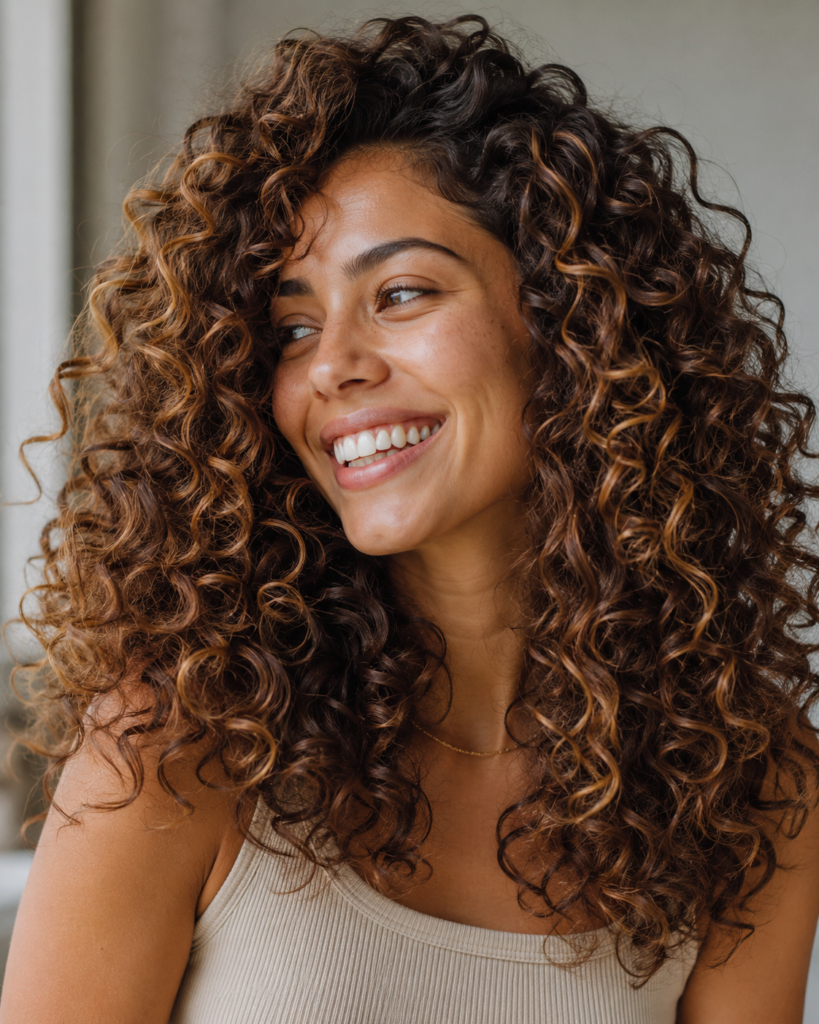
One thing I always tell curly-haired clients before their first color appointment is that curls are essentially a built-in dimension machine. Every curl catches and releases light differently depending on the angle it’s coiled at, which means color placement that looks perfectly even on straight hair can look completely different once it springs back into its natural pattern. Understanding this upfront changes how you should think about color from the very first consultation.
Why Curly Hair Color Requires a Different Approach
Curly hair has a unique structure compared to straight hair the hair shaft is oval or elliptical rather than round, which causes it to coil as it grows. This structural difference affects how color pigment penetrates the hair, how evenly lightener processes, and how the final color reads once the curls dry and spring back into their natural shape.
Because curls bend and overlap on themselves, color that’s painted or foiled the same way it would be on straight hair can end up looking uneven or patchy once the curl pattern reasserts itself. Experienced curly-hair colorists account for this by adjusting sectioning, placement, and even the angle at which color is applied.
This is also why so many curly-haired clients have had disappointing color experiences in the past — not because curly hair can’t hold beautiful color, but because it requires a colorist who genuinely understands curl mechanics rather than applying a one-size-fits-all technique.
Why Curly Hair Color Is Trending in 2026
Curly hair color has seen a significant surge in demand and quality this year, driven by several factors:
- A broader cultural embrace of natural curl patterns rather than heat-straightening before every color appointment
- More colorists specializing specifically in curly and textured hair techniques
- Increased demand for placement methods, like curl-by-curl painting, that are designed for texture rather than adapted from straight-hair methods
- Growing appreciation for how curls showcase dimensional color especially well, since movement reveals more tonal variation than flat, straight styles
- A shift toward “curl-first” consultations, where the colorist works with the client’s natural texture rather than requiring it to be blown out straight
This trend reflects a larger movement within the hair industry toward texture-inclusive education, with training programs and certification courses increasingly dedicated specifically to coloring curly and coily hair types.
Curly Hair Color and the Seasons
Humidity plays a much bigger role in curly hair color maintenance than it does for straight hair, which makes seasonal planning especially important. During humid summer months, curls tend to absorb more moisture from the air, which can cause color-treated curls to frizz more and lose definition slightly faster between wash days.
Many colorists recommend slightly glossier, shine-enhancing toners during summer to help combat this effect, since added shine can make curls look more polished even when humidity is working against definition. In drier winter months, curls often need extra moisture-focused aftercare to prevent color-treated strands from becoming brittle, since indoor heating combined with chemical processing can pull moisture from hair more aggressively than in warmer seasons.
Regardless of season, curly hair generally benefits from a slightly more conservative approach to lightening, since curls are inherently more fragile at the bend points where the hair coils, and moisture loss at these points can lead to breakage that disrupts the overall curl pattern.
How Different Curl Patterns Affect Color Application
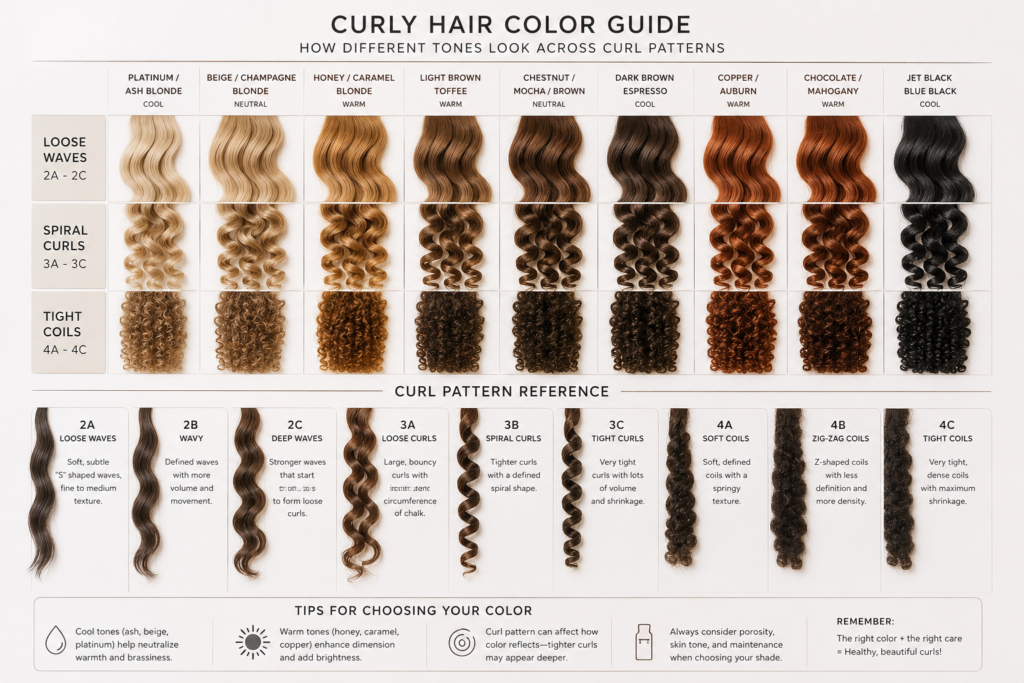
Not all curls are the same, and colorists typically adjust their approach based on curl pattern type, generally categorized from loose waves to tight coils.
Loose Waves: These often behave somewhat similarly to straight hair in terms of color application, though colorists still account for the slight bend when placing highlights or balayage to ensure even distribution.
Spiral Curls: These benefit significantly from curl-by-curl painting techniques, where color is applied following the natural spiral shape rather than in straight sections, ensuring the color reads correctly once the curl springs back.
Tight Coils: These require particularly careful sectioning and often benefit from color being applied while the hair is stretched, since coils can hide significant length and shrinkage, making it easy to miss sections if the colorist doesn’t account for this.
Understanding your specific curl pattern and communicating it clearly during your consultation helps ensure your colorist chooses the most appropriate application method for your hair rather than a generic approach that may not translate well once your curls dry naturally.
Who Should Consider Coloring Curly Hair?
Coloring curly hair is a great option for a wide range of clients, though a few factors are worth keeping in mind:
Those Wanting to Enhance Natural Dimension: Curly hair already has built-in movement and shadow, and adding strategic color can amplify this even further, making curls look even more defined and multi-dimensional.
Clients Transitioning to Their Natural Texture: Many people returning to their natural curl pattern after years of heat styling find that a curl-specific color refresh helps them feel more confident and put-together during the transition.
Those Wanting Low-Maintenance Color: Techniques like curl-by-curl balayage tend to grow out more gracefully than uniform, all-over color, making them a practical option for curly-haired clients who don’t want frequent touch-ups.
Clients With Color-Treated, Damaged Curls: If your curls have lost definition due to past coloring, working with a curl specialist to reformulate your color approach, alongside a stronger moisture and bond-building routine, can help restore both health and pattern definition over time.
The Process: How Curly Hair Color Is Applied
A thoughtful curly hair color service typically follows a slightly different process than a standard straight-hair appointment:
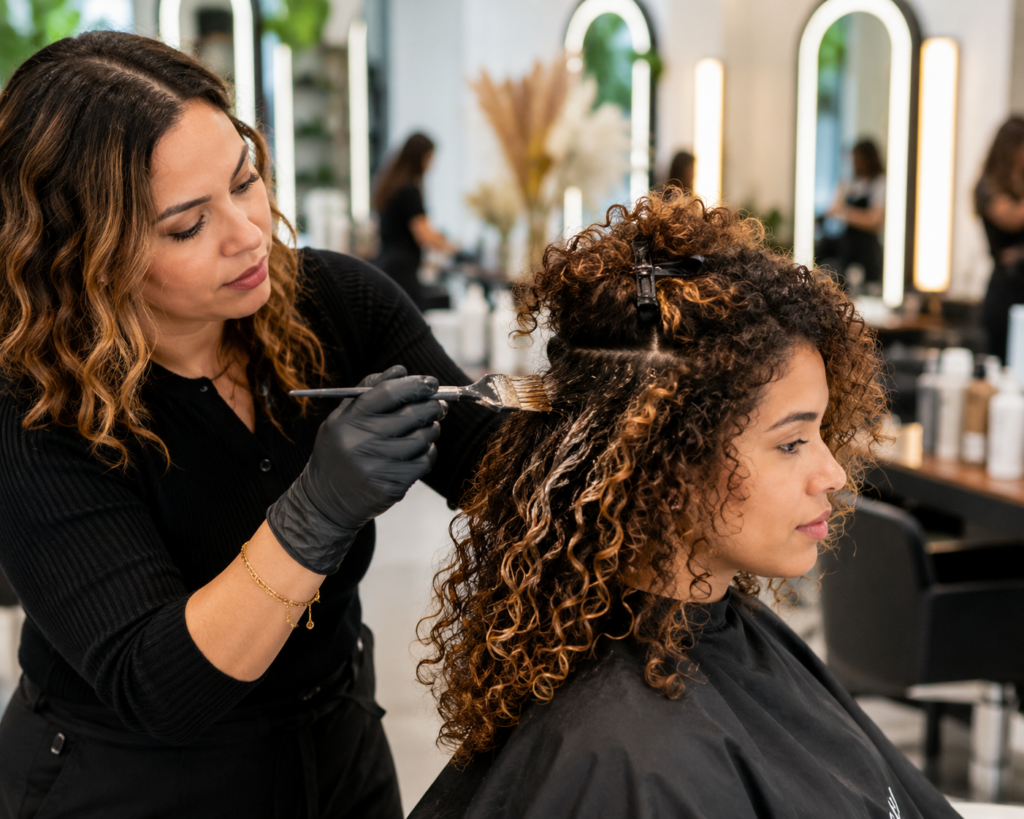
Curl Assessment – The colorist evaluates your natural curl pattern, porosity, and density, often examining the hair both dry and stretched to understand its true length and structure.
Sectioning for Texture – Sections are typically smaller and more numerous than they would be for straight hair, accounting for the way curls overlap and coil.
Curl-by-Curl or Diffused Painting – Rather than painting in flat panels, colorists often follow the direction of individual curls or clusters, ensuring the color pattern will read correctly once curls spring back to their natural shape.
Processing With Care – Since curly hair is often more porous and fragile, processing times are closely monitored to avoid over-lightening, which can significantly compromise curl pattern and elasticity.
Toning and Gloss – A finishing toner or gloss is applied to enhance shine and ensure the final color looks cohesive once the hair is fully dry and curled.
A full curly hair color service can take longer than a comparable straight-hair appointment, often 2.5 to 4 hours, due to the additional care required in sectioning and application.
Maintaining Color on Curly Hair
Curly hair requires a distinct maintenance approach to keep both color and curl pattern looking their best:
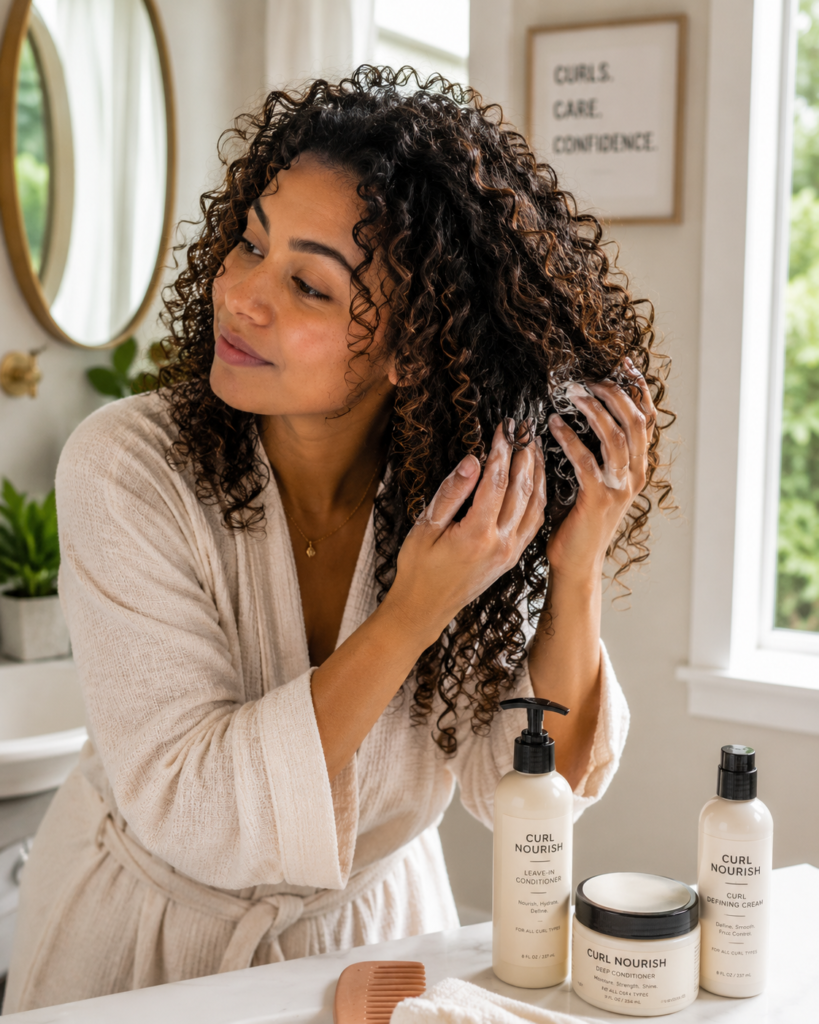
Use sulfate-free, curl-friendly shampoo. Sulfates can strip both color and the natural oils curls need to maintain definition, so a gentle, color-safe cleanser formulated for curls is essential.
Deep condition more frequently than you think you need to. Colored curly hair loses moisture especially quickly, and regular deep conditioning treatments help maintain both curl pattern and color vibrancy.
Avoid brushing dry, colored curls. Brushing disrupts curl pattern and can cause unnecessary breakage, especially on chemically processed hair; detangling wet, conditioned curls with fingers or a wide-tooth comb is generally gentler.
Use a leave-in conditioner or curl cream regularly. These products help seal in moisture and protect color-treated curls from environmental stress, humidity, and friction.
Limit heat styling, and always use a heat protectant when you do use heat. Curly hair is often more porous after coloring, making it especially susceptible to heat damage.
Sleep on a satin or silk pillowcase. This reduces friction that can cause frizz and breakage, helping both curl definition and color vibrancy last longer between wash days.
How Much Does Curly Hair Color Cost?
Pricing for curly hair color can run slightly higher than straight-hair services due to the additional time and specialized technique required:
- Partial curl-focused highlights or balayage: $120-$250
- Full head curly balayage or highlights: $180-$400
- Full color transformations with lightening: $250-$550+
It’s worth seeking out a colorist who specifically lists curly or textured hair experience in their portfolio, since the additional cost is often reflective of the specialized skill and extra time required to do the job well.
Common Mistakes to Avoid
Based on years of seeing curly hair color go both beautifully and poorly, here are the most frequent issues:
Choosing a colorist without curly hair experience – Standard straight-hair techniques often don’t translate well to curls, resulting in uneven or poorly placed color.
Getting hair blown out straight for every appointment – While sometimes necessary for precision, colorists who understand curls can often work with your natural texture, which gives a more accurate picture of how the final color will actually look.
Over-lightening fragile curls – Curls are more prone to breakage at bend points, so aggressive lightening without proper strand testing can cause significant damage.
Skipping curl-specific aftercare – Standard hair care products often aren’t formulated for the unique moisture needs of colored curly hair, leading to faster fading and increased frizz.
Ignoring shrinkage during consultation – Failing to account for how much shorter curls appear when dry versus stretched can lead to miscommunication about desired length and placement.
Talking to Your Colorist About Curly Hair Color
A successful curly hair color appointment starts with an honest conversation about your curl pattern, your current hair health, and your styling habits. Let your colorist know how often you use heat, whether you typically wear your hair curly or straightened, and what your realistic maintenance routine looks like, since all of this affects both the technique chosen and the aftercare plan recommended.
It’s also worth asking your colorist directly about their experience with your specific curl type, since techniques that work beautifully on loose waves may need meaningful adjustment for tighter coils. A colorist confident in their curly hair expertise will welcome this conversation and use it to tailor their approach specifically to your texture.
Final Thoughts
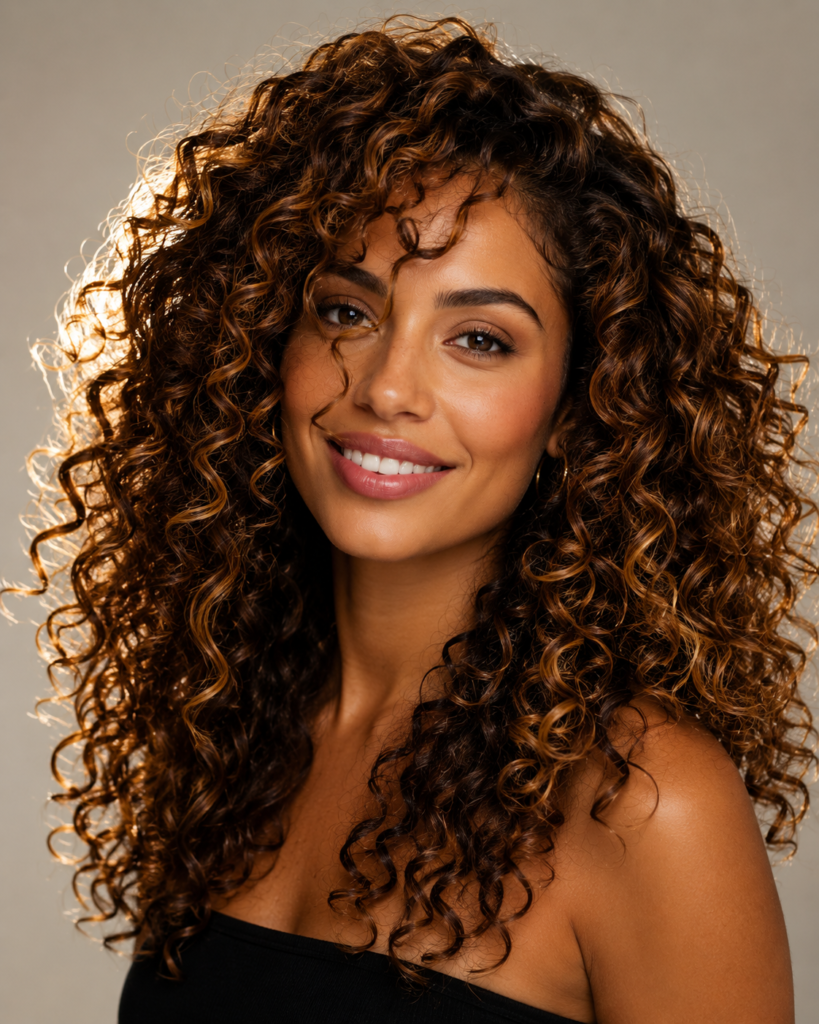
Curly hair color, done well, can be one of the most rewarding transformations because it enhances something your hair is already doing naturally — creating movement, shadow, and dimension. The key to success lies in finding a colorist who understands curl mechanics, communicating your curl pattern and maintenance habits clearly, and committing to a curl-specific aftercare routine that protects both color and definition.
If you’re considering coloring your curls in 2026, prioritize finding a colorist with genuine curly hair experience, be patient with a process that may take a bit longer than a standard appointment, and invest in the moisture-focused aftercare that keeps both your color and your curls looking their healthiest.
Frequently Asked Questions (FAQ)
Q1: Does curly hair color fade faster than straight hair color? It can, since curly hair is often more porous, especially if previously processed, which can cause color to fade a bit more quickly without a consistent moisture-focused aftercare routine.
Q2: Should I get my curls blown out straight before a color appointment? Not necessarily. Many curl specialists prefer to work with your natural texture to accurately assess placement and length, though this can vary by colorist and desired technique.
Q3: Can tight coils hold highlights well? Yes, though colorists often use specialized curl-by-curl techniques to ensure the highlights read clearly once the coils spring back to their natural shape.
Q4: Will coloring damage my curl pattern? Any chemical process carries some risk, but working with an experienced curly hair colorist and committing to proper aftercare significantly reduces the risk of damage affecting your curl definition.
Q5: How often should I get color touch-ups on curly hair? This varies by technique, but many curl-friendly methods like balayage allow for touch-ups every 10-14 weeks, thanks to their naturally graceful grow-out pattern.
Q6: Can I still wear my hair curly right after a color service? Yes, and many colorists actually recommend it, since seeing your curls in their natural state immediately after the appointment gives the most accurate picture of the final result.
Q7: Is curly hair more prone to brassiness after lightening? Curly hair can be more prone to visible brassiness simply because its texture and porosity often absorb and lose toner faster, making consistent use of purple or blue-toned products especially important for lightened curls.