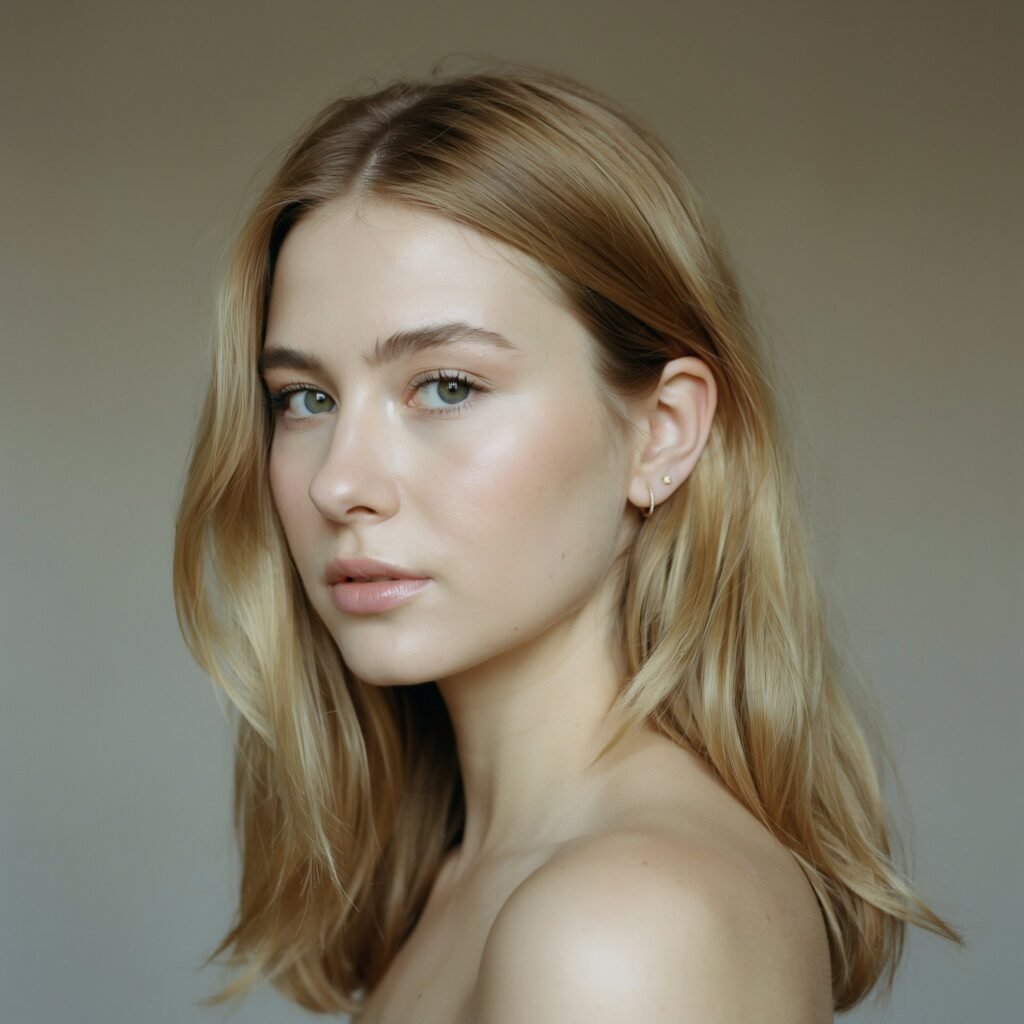
Looking for a fresh hair transformation ? Discover 15 trending hair colours for women in 2026,including blonde, brunette, and balayage style.
There is a version of a colour appointment that ends before it has truly begun. The client sits down, the reference image is shown, the formula is mixed from memory rather than from observation, and the result is applied to a head that was never genuinely looked at. The shade that emerges is recognisable. It belongs to a general category. It will photograph adequately and fade predictably and require replacement in six weeks with something equally adequate. It is a colour that has been done to a person rather than built for one. In 2026, that appointment is no longer acceptable.
The second edit of this season’s colour story is not a continuation of what came before. It is a deepening of it. The shades and techniques in this guide exist in the space that opens up once the foundational directions have been understood — once the soft brunette gloss and the champagne blonde and the copper renovation have established the season’s intent, and the question becomes what sits beside them, what completes the picture, and what the client who has already made one considered colour decision makes next. These are the colours that reward the colourist who has been paying attention and the client who has been building a relationship with their own hair rather than simply managing it.
What distinguishes the second edit from the first is its specificity. Where the opening directions of the season established the broad principles — colour as portrait, maintenance as part of the formula, skin tone as a foundational variable — this guide applies those principles to shades and techniques that require a finer degree of calibration. They are not corrections of what came before. They are refinements. They are the directions that make a colour result go from considered to completely irreplaceable.
The face is still the formula. The undertone is still the starting point. The maintenance window is still part of the brief. And the consultation is still the most important appointment in the colour calendar — not because it precedes the colour, but because it is where the colour is actually made.
This guide covers eight more of the most beautiful hair colour directions for 2026 — each explored with the same depth and specificity as the first, so that the result is not a trend to be replicated but a shade to be built.
Mocha Brunette — The Brown That Understood Depth
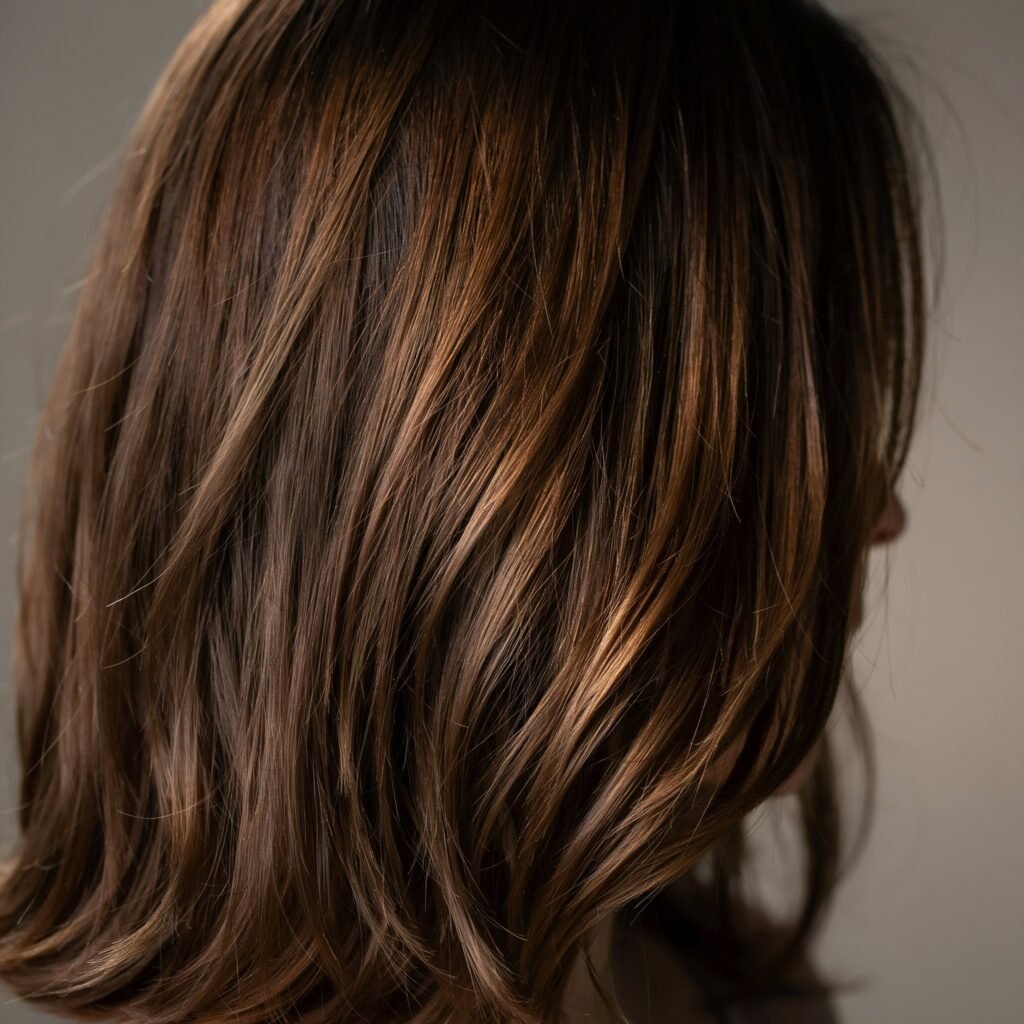
Mocha brunette is 2026’s most sophisticated entry into the dark hair conversation — and it arrives at precisely the right moment. The season has already established its relationship with warmth through the copper renovation and its relationship with gloss through the soft brunette, and the mocha brunette is the shade that occupies the territory between them: deeper than a gloss result, warmer than an ash, and more complex than either. It is a brown that reads as dimensional without reading as highlighted. It is the colour that makes people ask what the client has done differently when what the client has done is simply had the most accurate colour conversation of their appointment history.
Why the mocha brunette is different from every other dark shade:
The warmth is embedded rather than applied — the formula is built from a base that already contains the warm mocha quality, so the result reads as a natural depth rather than a tint placed over natural hair. The depth is multidimensional — a shadow tone through the roots graduates into the richer, warmer mocha at the mid-length and ends, creating movement that single-process dark colour never achieves. It is finished without heaviness — the gloss step applied after the base formula is what separates the 2026 mocha brunette from every flat, opaque dark brown that has come before it.
How this colour is built:
Begin with a consultation that establishes the client’s relationship with warmth — the mocha brunette works because it sits at the precise point where warmth becomes richness rather than orange, and the formula must be specific enough to hold that position on this particular hair. On naturally dark hair, a single-process mocha-brown formula applied at the correct depth with a warm-neutral tonal base achieves the result without a pre-lightening step. On hair that has been coloured cool or ash in previous appointments, a colour correction step removes the cool cast before the mocha formula is applied — attempting to place a warm tone over an established cool result produces muddiness rather than the clean, warm depth the shade requires. Finish with a clear or lightly pigmented gloss over the completed colour, applied for five minutes only — it is the final step that gives the result its surface quality and its distinction from every other dark shade in the brown family.
Who the mocha brunette works for:
Naturally dark to medium brunettes across every complexion. It is particularly powerful on warm and olive skin tones where the mocha quality of the shade mirrors and amplifies the warmth in the complexion, creating the cohesion between hair and skin that makes the result look entirely inevitable rather than chosen.
Maintenance and growth:
The mocha brunette grows out as a deepening rather than a contrast — the shadow at the root means the natural growth reads as an extension of the design rather than a departure from it. The gloss step fades first, which is the signal for a refresh rather than a full recolour. Gloss refresh every six to eight weeks, full formula reapplication every twelve to sixteen weeks.
Honey Blonde — The Blonde That Chose Warmth Without Apology
Honey blonde is 2026’s most unapologetically warm blonde direction — and it earns its position this season by resolving the question that warm blonde has always struggled with: how to read as intentionally golden without reading as yellow, and how to sit beside warm skin without disappearing into it. The 2026 honey blonde has an answer to both questions that is technical rather than philosophical, built through a lifting and layering sequence that places the warmth exactly where it needs to be and withholds it exactly where it would become too much. The result is a blonde that glows rather than shouts, and that reads as entirely personal rather than as a category of warm hair colour.
What makes the 2026 honey blonde different from every warm blonde that preceded it:
The warmth is graduated rather than uniform — the honey quality is concentrated through the mid-lengths and ends, with a softer, less saturated version of the same tone at the root, so the result reads as warmth that builds through the length rather than a flat golden application. The toner is layered rather than single-step — a first-pass warm beige toner neutralises any remaining orange from the lifting process, and a second-pass honey toner builds the golden quality on top of the neutralised base, which is the sequence that produces a warm blonde with clarity rather than muddiness. It is finished at the correct level — the 2026 honey blonde sits between a level eight and a level nine, which is the range where warmth is visible and rich without tipping into the yellow territory that reads as unintentional.
How this colour is built:
Foil placement begins at the top section and the face frame, with a lighter application through the mid-lengths and a minimal application at the ends — the ends of most clients’ hair are already lighter from previous colour and sun exposure, and overlighting them pushes the result past honey into straw. Lift to a consistent pale orange or pale yellow across all foiled sections before beginning the toning sequence — inconsistency in the lift base produces inconsistency in the toner result, and the honey blonde cannot be achieved evenly over a patchy lift. Apply the first toner across the entire lightened area, rinse, assess the base, and then apply the honey toner to the sections that require the most warmth — typically the mid-lengths and the face-framing pieces.
Who the honey blonde works for:
Warm and neutral skin tones where the golden quality of the hair creates cohesion with the complexion rather than contrast. On very cool skin tones, the honey blonde can work when the level is kept high enough — a level nine honey blonde on cool skin reads as luminous because the warmth in the hair and the coolness in the skin create a contrast that neither one could achieve alone.
Maintenance and growth:
The honey blonde fades toward a paler, less saturated version of itself rather than toward an unrelated tone — the warm beige base toner provides the foundation that keeps the fade flattering. Root refresh every eight weeks, full toner reapplication every six to eight weeks to maintain the honey saturation.
Chocolate Cherry — The Dark Shade That Made Depth Dimensional
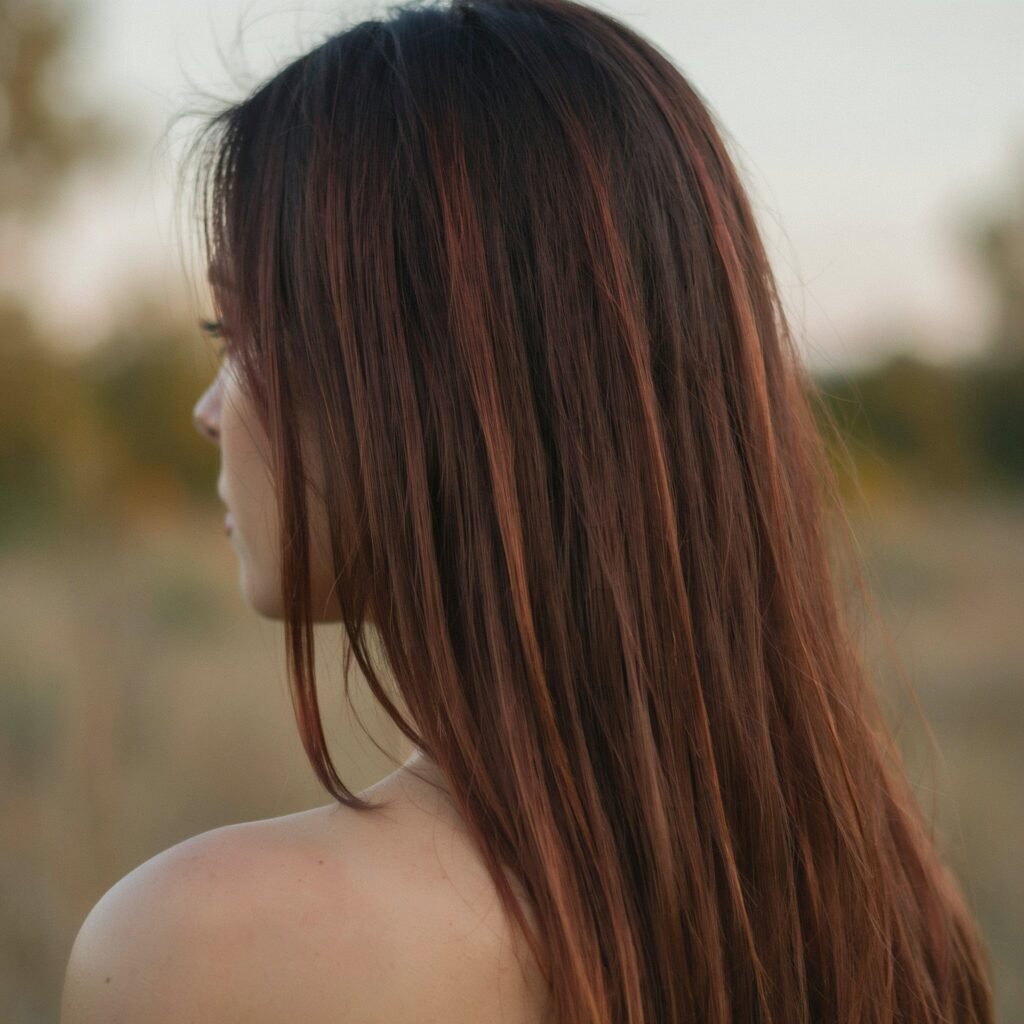
Chocolate cherry is 2026’s most considered entry into the red-brown territory — a shade that has historically existed in two unsatisfying versions: the red that is too red to read as a brown and the brown that is too brown to carry any warmth at all. The 2026 chocolate cherry resolves this by treating the cherry element not as a separate colour applied on top of a brown base but as the warmth within the brown itself — a specific tonal formula that deepens the existing colour while placing red warmth into the mid-tones rather than the surface. The result is a dark brown that catches the light with a visible cherry warmth without reading as a red-haired colour result from any distance.
Why the chocolate cherry is the dark shade of the season:
Its red is a mid-tone rather than a surface tone — the cherry quality lives in the way the colour responds to light rather than in its overall appearance, which is the technical distinction that makes it look like natural depth rather than applied red. It is the most complexion-enhancing dark shade on this list — the warmth within the depth reflects the undertones of every complexion it sits beside, from fair and cool skin where the cherry provides contrast, to warm and deep skin where it creates cohesion. It grows out through the season with genuine elegance — the dark root reads as the deepest depth of the chocolate, and the cherry warmth at the mid-length reads as the colour catching the light, so the grow-out adds dimension rather than producing a visible line.
How this colour is built:
The formula is a two-part process: a dark, neutral-warm base applied first to the roots and any previously uncoloured sections, followed by a cherry-inflected toner or gloss applied to the mid-lengths and ends to build the warmth into the lengths without affecting the root depth. On hair that has been previously coloured a flat or cool dark brown, a gentle colour-removing step through the mid-lengths and ends allows the cherry toner to take with the clarity the shade requires — attempting to place a warm toner over an established cool dark base produces a muddy result rather than a clean cherry warmth. The cherry element is a semi-permanent formula, not a permanent one — the intentional fade of the cherry tone means the colour transitions gracefully over the appointment interval rather than requiring a correction when it fades.
Maintenance and growth:
The chocolate base holds. The cherry mid-tone fades gradually, which softens the result rather than compromising it. A colour-depositing conditioner in a warm cherry-brown shade used twice weekly extends the mid-tone saturation by two to three weeks between appointments.
Sandy Blonde — The Neutral That Refused to Be Boring
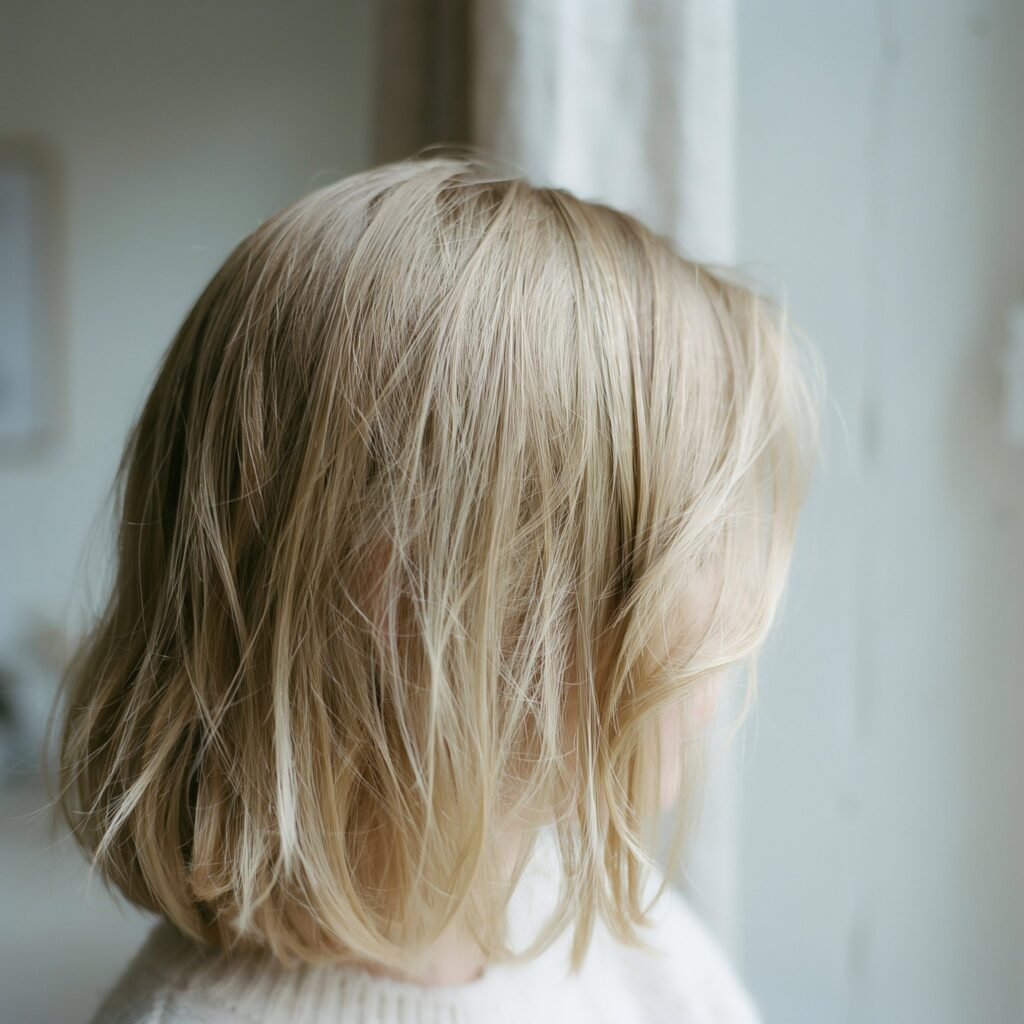
Sandy blonde is summer 2026’s most quietly subversive colour direction — and it earns its position this season not by being the most striking shade on the menu but by being the most precisely calibrated one. The 2026 sandy blonde sits in the neutral territory between warm and cool, belongs to neither camp entirely, and is more difficult to achieve correctly than either a warm champagne blonde or a cool ash blonde for precisely that reason. Its neutrality is not a compromise. It is a choice that requires more accuracy than warmth or coolness does, because there is no direction to fall back on when the formula is slightly off — and in 2026, when slightly off is the only failure mode that matters, sandy blonde is the colour that demands the most from the colourist and rewards that demand most completely.
What distinguishes the 2026 sandy blonde from the neutral blondes that preceded it:
The neutrality is built rather than accidental — the formula is a precise balance of warm and cool tones applied in a specific ratio to produce a result that sits exactly in the middle rather than drifting toward either end. The texture quality is the defining characteristic — sandy blonde reads as dimensional and almost dry-textured rather than glossy, which is the visual quality that gives it its natural, unhighlighted appearance despite the fact that it is built through a foiling and toning sequence. The contrast is the lowest of any blonde on this list — the sandy blonde works because the difference between the lightened and unlightened sections is almost imperceptible at a conversational distance, and the colour appears to be one even, natural tone that simply has extraordinary depth.
How this colour is built:
The foiling technique is the foundation of the sandy blonde result — a very fine, very frequent foiling pattern through the top and mid-lengths creates the even, all-over quality that the shade requires. Individual foils are narrow so that when the hair falls naturally, the lightened and unlightened sections blend without a visible boundary. Lift to a consistent pale yellow — the sandy blonde toner requires a clean, pale base to achieve its neutral quality, and any orange remaining in the lift pulls the toner warm regardless of its formula. Apply a neutral-beige toner across the entire lightened area, then assess and add a touch of warmth or coolness through individual sections based on the result — the final calibration is done in the chair, not in the mixing bowl.
Who the sandy blonde works for:
Naturally light to medium brown hair where the lift required is achievable evenly across the fine foil sections. It is particularly compelling on clients who have previously been both warm and cool blonde and found neither entirely right — the sandy blonde resolves the conflict by sitting between the two positions rather than choosing one.
Maintenance and growth:
The fine foiling technique and the low contrast of the sandy blonde make the grow-out remarkably seamless — the root reads as a slightly deeper version of the same neutral tone for the first eight to ten weeks. Toner refresh every eight to ten weeks maintains the precise neutrality of the shade.
Espresso Brown — The Dark Colour That Earned Its Richness
Espresso brown is 2026’s most powerful statement in the dark hair category — and it arrives this season as the most resolved version of the shade that the dark-hair conversation has ever produced. Previous iterations of espresso brown have failed in one of two directions: too flat to carry depth, producing a result that reads as uniform darkness rather than richness, or too red-shifted to read as brown at all, producing a result that belongs to the cherry family rather than the espresso one. The 2026 version avoids both failures by building the espresso quality from within the formula rather than placing it on the surface — a precise combination of dark, neutral depth at the root and a cool-neutral toner through the lengths that gives the colour its distinction from every other dark shade.
Why the espresso brown is the dark colour of the season:
Its depth is genuine rather than constructed — the formula works at the level the hair already occupies for natural dark-haired clients, adding richness rather than weight. Its coolness is the element that separates it from the mocha brunette and the chocolate cherry — where those shades find their identity in warmth, the espresso brown finds its identity in a cool, almost dark-grey undertone that gives the colour its name and its character. It reads as the most luxurious dark shade in the room — the combination of genuine depth and cool surface quality creates a visual density that warm dark shades cannot replicate.
How this colour is built:
Begin with a thorough analysis of the client’s existing level and undertone — the espresso brown works at levels two through four, and the formula must be calibrated to the specific starting point rather than applied uniformly. On naturally dark hair, the formula is a deposit-only application — a cool-neutral dark brown applied to refresh the colour and add the tonal quality without a lifting step. On previously coloured hair with warm undertones, a very slight lift through the mid-lengths and ends removes the warmth before the cool-neutral formula is applied, preventing the result from reading muddier than intended. The gloss step is applied warm rather than cool in this specific case — a single warm-neutral clear gloss applied for five minutes after the base formula counteracts any grey quality that the cool toner produces on hair with high natural warmth.
Maintenance and growth:
Espresso brown at a dark level fades almost imperceptibly — the depth holds through twelve to sixteen weeks before a refresh is required. The cool tonal quality fades before the depth, which signals a toner refresh at eight to ten weeks to maintain the espresso character before the full formula reapplication.
Rose Brunette — The Colour Detail That Changed the Dark Hair Conversation
Rose brunette is not a new direction in the technical sense. Pink and mauve tones have been applied to dark hair in various forms for several years, most often as a vivid statement that fades rapidly and requires frequent maintenance to remain intentional. What makes 2026 its defining season is the shift in application — no longer a vivid surface tone that announces itself as a fashion choice and fades to something unrelated, but a subtle, embedded warmth applied at a low saturation level that reads as a blush-rose quality within a dark brown base. The rose in the 2026 rose brunette is visible in the right light and invisible in others, which is precisely the quality that makes it one of the most sophisticated colour directions of the season.
Why the rose brunette is the colour detail of 2026:
It operates as a dimension rather than a colour — the rose quality is applied at a low enough saturation that it reads as an unusual warmth within the dark base rather than as a separate colour applied on top of it. It is the most complexion-flattering direction in the dark hair family this season — the rose tone in the hair reflects the pink in fair and medium skin tones in a way that no neutral dark shade achieves, creating a cohesion between hair and complexion that reads as entirely natural. It fades gracefully — the low saturation of the rose formula means the fade produces a slightly warmer version of the dark base rather than an unrelated tone, and the result remains flattering through the entire appointment interval.
How the rose brunette is built:
The rose element is a semi-permanent formula applied after the base dark brown has been applied and processed — it is never mixed into the base formula, because the base formula’s processing chemistry prevents the rose pigment from developing at the correct saturation. Apply the dark brown base first as a standard formula application. After rinsing and before the final shampoo, apply the rose semi-permanent formula to the mid-lengths and ends only — the warmth of the roots will reflect the rose quality without a direct application, and direct root application of the rose formula produces a result that is too saturated at the root and too faded at the ends within two weeks. Process for ten minutes, emulsify with water, and rinse without shampooing — the shampoo step removes a significant percentage of the rose deposit and is the most common technical error in this application.
Style pairings:
The rose brunette worn on hair with a natural wave or curl is the combination that reveals the rose quality most beautifully — the movement through the hair catches the light at different angles and makes the rose warmth visible in moments rather than continuously, which is exactly the subtlety the 2026 version is designed to achieve.
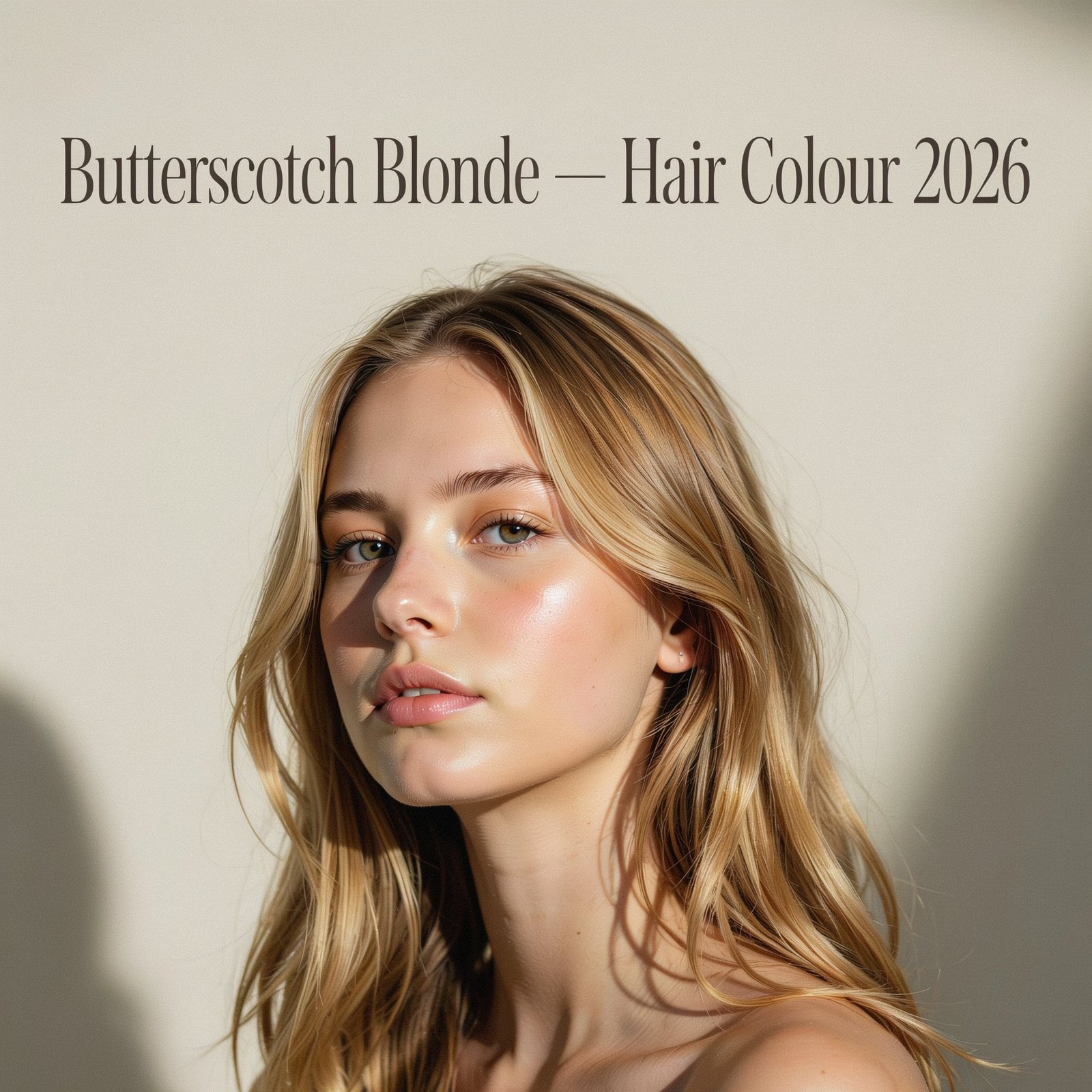
Butterscotch Blonde — The Warm Shade Reinvented With Precision
Butterscotch blonde is 2026’s most generous warm blonde direction — and the season’s most honest acknowledgement that the warmest shades in the blonde family are perennial because they are the most instinctively appealing. This is not a shade that has been reinvented for novelty. It is a shade that has been refined to the point where its execution in 2026 is meaningfully different from how it was applied at its peak: the placement is more selective, the toning is more precise, and the overall effect is of something that has the ease of a colour the wearer was born with and the intention of something built specifically for this complexion, this starting point, and this moment.
What distinguishes the 2026 butterscotch blonde from earlier warm blonde interpretations:
The placement is selective rather than global — the 2026 version concentrates the butterscotch quality through the sections that carry the most natural movement and light, rather than applying the shade uniformly across every lifted section. The toner formula is a two-stage warm application — a gold-based formula applied first to establish the warmth, followed by a honey-amber formula applied to the most prominent sections to add the butterscotch depth — which is the sequence that produces the shade’s characteristic richness rather than a flat golden result. The contrast is higher than in the champagne or honey blonde directions — the butterscotch blonde of 2026 allows more visible difference between the lighter and darker sections, which is the choice that gives the shade its warmth and its dimension.
How this colour is built:
Foil placement concentrates at the top section, the parting, and the first two inches from the face — the sections that carry the most light and that, when lightened to a warm butterscotch tone, produce the most visible warmth in the overall result. The mid-lengths receive a lighter foiling to create the contrast and depth that the shade requires. Lift to a pale orange rather than a pale yellow before toning — the butterscotch toner is a warm formula and it requires a warm base to develop its depth correctly. A pale yellow base will produce a result that reads as honey rather than butterscotch. Apply the gold-base toner to all lifted sections, assess, and then apply the honey-amber toner to the most prominent face-framing and top sections while the hair is still wet.
Maintenance and growth:
The higher contrast of the butterscotch blonde means the root growth is more visible than in the softer warm blonde directions — a root shadow application every eight weeks maintains the design intent and keeps the contrast reading as deliberate rather than as regrowth.
The Dimensional Dark — The Multi-Tonal Statement for Dark Hair
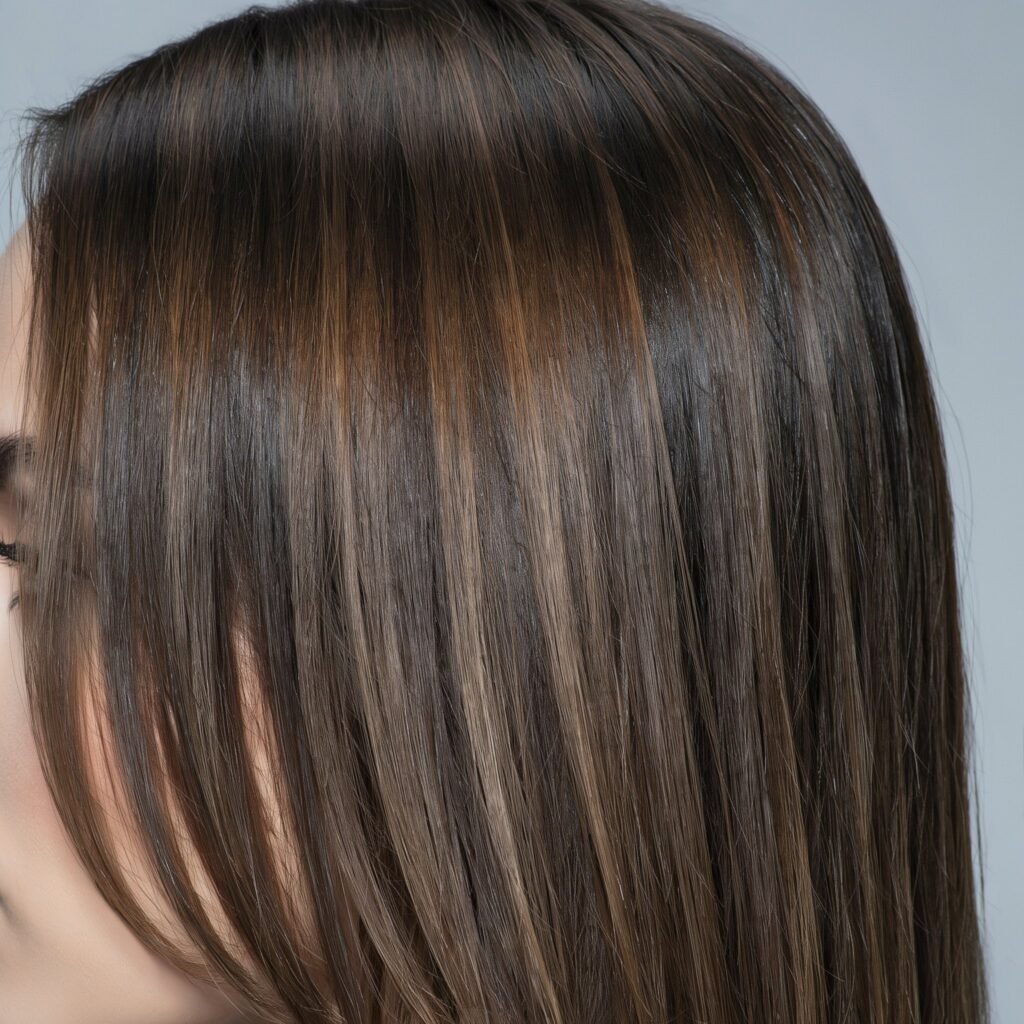
The dimensional dark is 2026’s most powerful argument for clients with naturally dark or previously dark-coloured hair to approach their next appointment without the assumption that depth and flatness are the same thing. They are not. And the dimensional dark is the technique that proves it most completely — multiple tones within a dark palette applied in a deliberate sequence, each chosen to add movement and light-response to a colour family that has historically been treated as a single, uniform block. In 2026, dark hair is not a category. It is a canvas — and the dimensional dark is the most considered approach to working on it.
Why the dimensional dark is the statement of the season for dark hair:
Its complexity is invisible at distance and entirely apparent up close — the tonal variation within the dark palette reads as unusual depth and movement rather than as visible layering, which is the distinction that makes the result look like the most beautiful version of natural dark hair rather than like a technical process. The transition between tones is the technique — a dimensional dark without perfect blending is simply dark hair with uneven colour, and the 2026 version is defined entirely by the precision of its tonal transitions. Every formula is applied in the correct sequence so that each tone develops in relation to the one beside it rather than independently.
How this colour is built for a 2026 context:
Begin the consultation by mapping the existing dark palette — identify the natural depth at the root, the undertone through the mid-lengths, and the condition of the ends, which in previously coloured dark hair are almost always the most compromised and most tonally inconsistent section. The root formula is a cool-neutral dark applied to refresh the depth and establish the foundation. The mid-length formula is the transition tone — half a level lighter than the root, in a warm direction if the client’s complexion suits warmth, or a neutral direction if warmth has historically been the problem. The end formula is a gloss rather than a tint — a clear or lightly pigmented gloss applied to the ends restores the surface quality that dark hair processing typically removes without adding further depth to the section that needs conditioning most. Apply root formula first, blend the boundary before it processes completely, apply the mid-length formula second, and finish with the gloss through the ends.
Maintenance and growth:
The dimensional dark’s maintenance profile is its most significant practical advantage — because the tonal variation is subtle and the contrast between sections is low, the grow-out produces a natural deepening of the root rather than a visible boundary between new growth and coloured hair. Full reapplication appointments are typically every twelve to fourteen weeks, with a mid-appointment gloss refresh through the ends at week six to maintain the surface quality.
The Principles Behind the Second Edit
The directions in this guide share three technical commitments that are worth carrying into the consultation alongside the shade reference.
Subtlety is a technical achievement, not a concession. The most sophisticated results on this list — the sandy blonde, the rose brunette, the dimensional dark — are not subtle because subtlety is easier than intensity. They are subtle because subtlety at this level requires more accuracy than intensity does. A vivid result absorbs imprecision. A subtle result reveals it. The colourist who produces a perfectly calibrated rose brunette or a precisely neutral sandy blonde has executed a more technically demanding result than one who applies a vivid copper or a high-lift blonde — and the client who understands this enters the consultation with the right expectations.
The formula is the consultation’s output, not its input. Clients who arrive with a precise shade in mind and leave with a formula that matches that shade exactly have had a transaction, not a consultation. Clients who arrive with a direction in mind and leave with a formula that works on their specific hair, for their specific complexion, within their specific maintenance reality, have had the appointment that produces results worth living with. The eight directions in this guide are starting points. The formula is always built in the chair.
The most considered result is the one that is still beautiful when it has settled. A colour that requires the appointment-day conditions — the specific light, the fresh toner, the first-day shine — to read at its best is a colour that has not been fully thought through. Every result on this list should look its most complete at week six or week eight: slightly softened, slightly settled, and entirely itself. That is not a diminishment of the result. That is the result working as intended.
The Portrait Continues
The colour appointment is never a single decision. It is a series of decisions made in relation to each other — the depth chosen in relation to the complexion, the warmth chosen in relation to the undertone, the technique chosen in relation to the maintenance window — and the quality of the result depends entirely on how precisely those decisions are made and how completely they are made in relation to each other rather than independently.
In 2026, the colour story does not end with the first eight directions or the second eight. It ends when the client sits in the chair with a colourist who looks at their hair as a specific subject rather than a general one, and builds a formula that could not have been built for anyone else sitting in that chair that day. That is the appointment that produces the result worth having. That is the result the season has been building toward.
Know the direction. Bring the specificity. Leave with the formula that is entirely yours.